Happy Independence Day to all the Zambians out there!

Image source: Wikipedia

Why explore space while millions starve on earth?

As we await more tantalizing images and results from NASA’s Curiosity Mars Rover it is important to ponder the real aim of research, even research that at times seems pointless and wasteful in light of other pressing concerns. Here’s a recap of an exchange from an earlier time regarding a possible exploration mission to the red planet.

In 1970, a Zambia-based nun named Sister Mary Jucunda wrote to Dr. Ernst Stuhlinger, then-associate director of science at NASA’s Marshall Space Flight Center, in response to his ongoing research into a piloted mission to Mars. Specifically, she asked how he could suggest spending billions of dollars on such a project at a time when so many children were starving on Earth. 

Dr. Stuhlinger wrote back, in part saying:

…… I know that you do not expect an answer such as “Oh, I did not know that there are children dying from hunger, but from now on I will desist from any kind of space research until mankind has solved that problem!” In fact, I have known of famined children long before I knew that a voyage to the planet Mars is technically feasible. However, I believe, like many of my friends, that travelling to the Moon and eventually to Mars and to other planets is a venture which we should undertake now, and I even believe that this project, in the long run, will contribute more to the solution of these grave problems we are facing here on Earth than many other potential projects of help which are debated and discussed year after year, and which are so extremely slow in yielding tangible results.

More on this (highly recommended) here.

H/T @vkwhatt

Quick hits

HIV self-testing showing promising results in Malawi.

Kenyan legislators, who make upwards of $175,000 a year, now have $3000 chairs to snooze on.

Jina Moore on the white correspondent’s burden in “Africa.”

This sad event in Zambia adds significance to my planned fieldwork there in the coming year on Chinese-African relations.

And lastly, celebrating the informal economy on the Continent:

[youtube.com/watch?v=Yi0fNa1G4-4&sns=fb]

In which I write about elections and democratic consolidation..

I have a piece in the July issue of the Journal of Democracy emphasizing the need to focus on legislative elections just as much as presidential elections.

Reflecting the immense powers of the typical “big man” president on the Continent, many election watchers (academics, journalists and “democracy practitioners” alike) have tended to focus almost exclusively on the outcomes of presidential elections. I make the case that cleaning up the conduct of legislative elections is equally important in the quest for democratic consolidation in SSA.

More on this here.

Bingu wa Mutharika, Malawian President, is dead

The Daily Nation reports the passing away of Malawian President Bingu wa Mutharika (May he rest in peace).

Vice President Joyce Banda is next in line to run the country, according to the constitution.

But her succession to power could create new political tensions, because Mutharika kicked her out of the ruling party in 2010 as he chose to groom his brother as heir apparent instead of her.

The official silence has heightened anxieties in Malawi, which has seen growing discontent with Mutharika’s government over the last year. Rights groups have accused Mutharika of mismanaging the economy and trampling on democracy.

Mutharika’s death is a trend that will continue in the next couple of years; of Africa independence-era leaders passing on due to natural causes.

The last time I counted about six current African presidents were born after 1959. This number will only go up in the next couple of years. Hopefully, this will mean a new crop of competent leaders without  the baggage of the anti-colonial movement and with enough confidence to chart a new course for their respective countries rather than merely trying to recreate what their dad’s bosses had back home.

This is not to say that younger leaders will automatically be better. Gambia’s Jammeh and the DRC’s Kabila are constantly redefining the possibilities of youthful mediocrity in important leadership positions.

The looming generational change of guard will mostly benefit the few African states (like Malawi, Kenya, Senegal, Tanzania, Zambia, etc) that avoided the scourge of the junior officers in their political history.

President Macky Sall of Senegal could prove to be the first of this new generation of leaders.

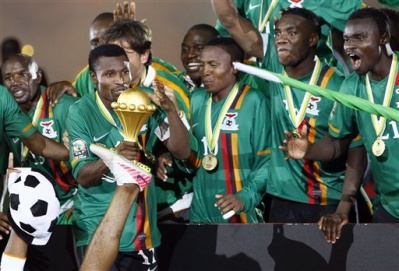
Zambia’s Chipolopolo win the Africa Cup of Nations

Congratulations to the Chipolopolo and their fans all over the world!

Source: Jakarta Post

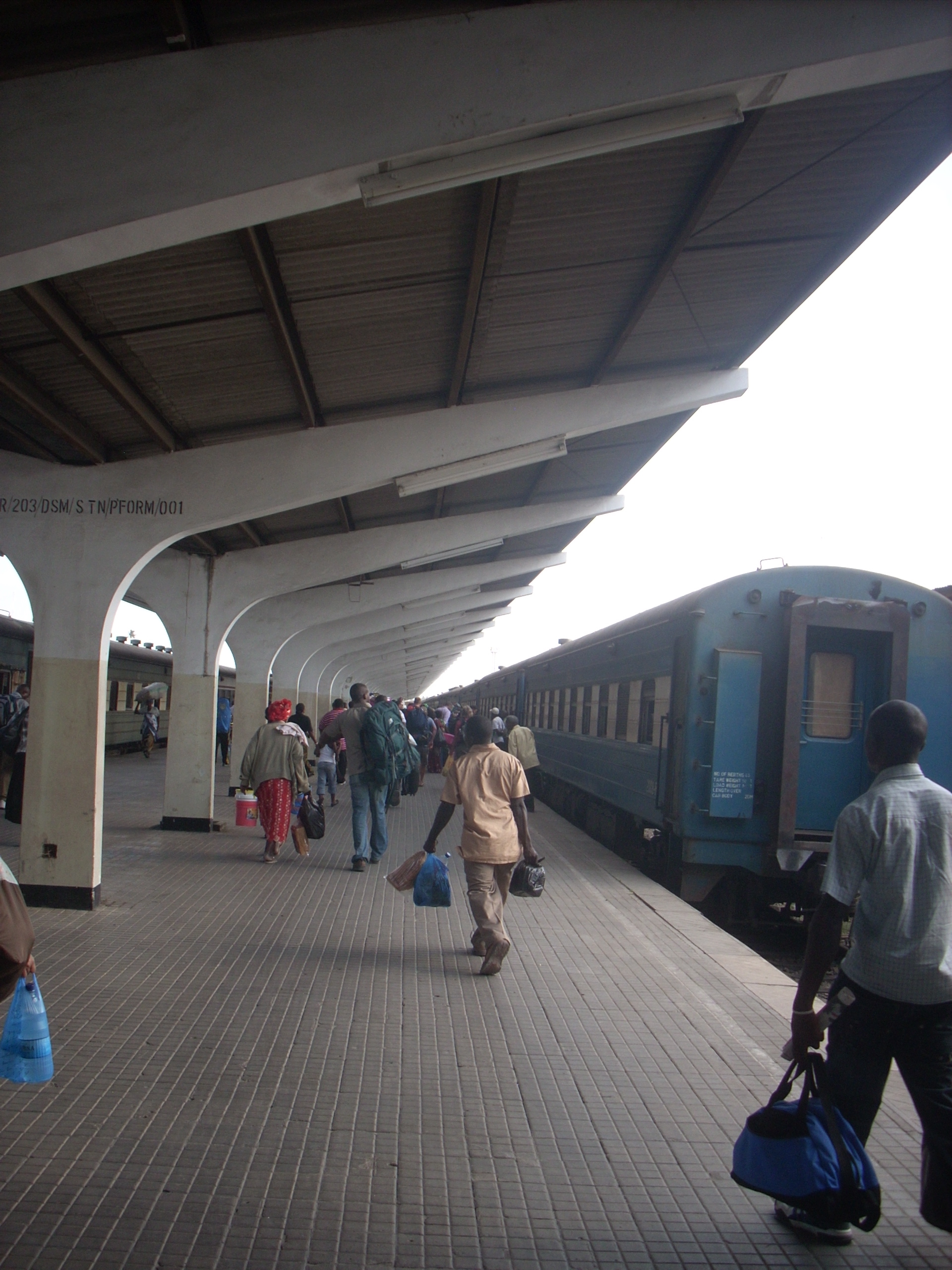
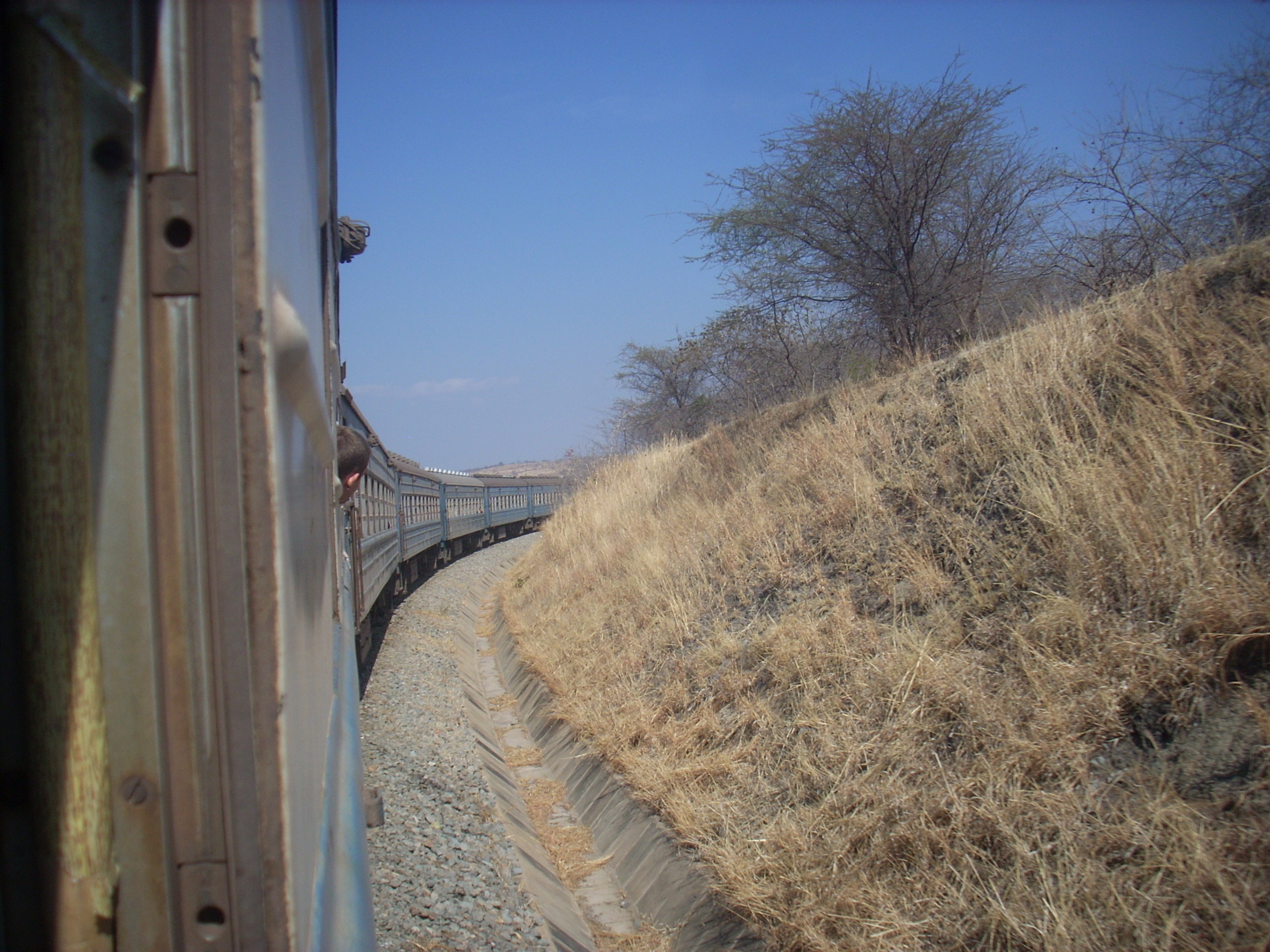
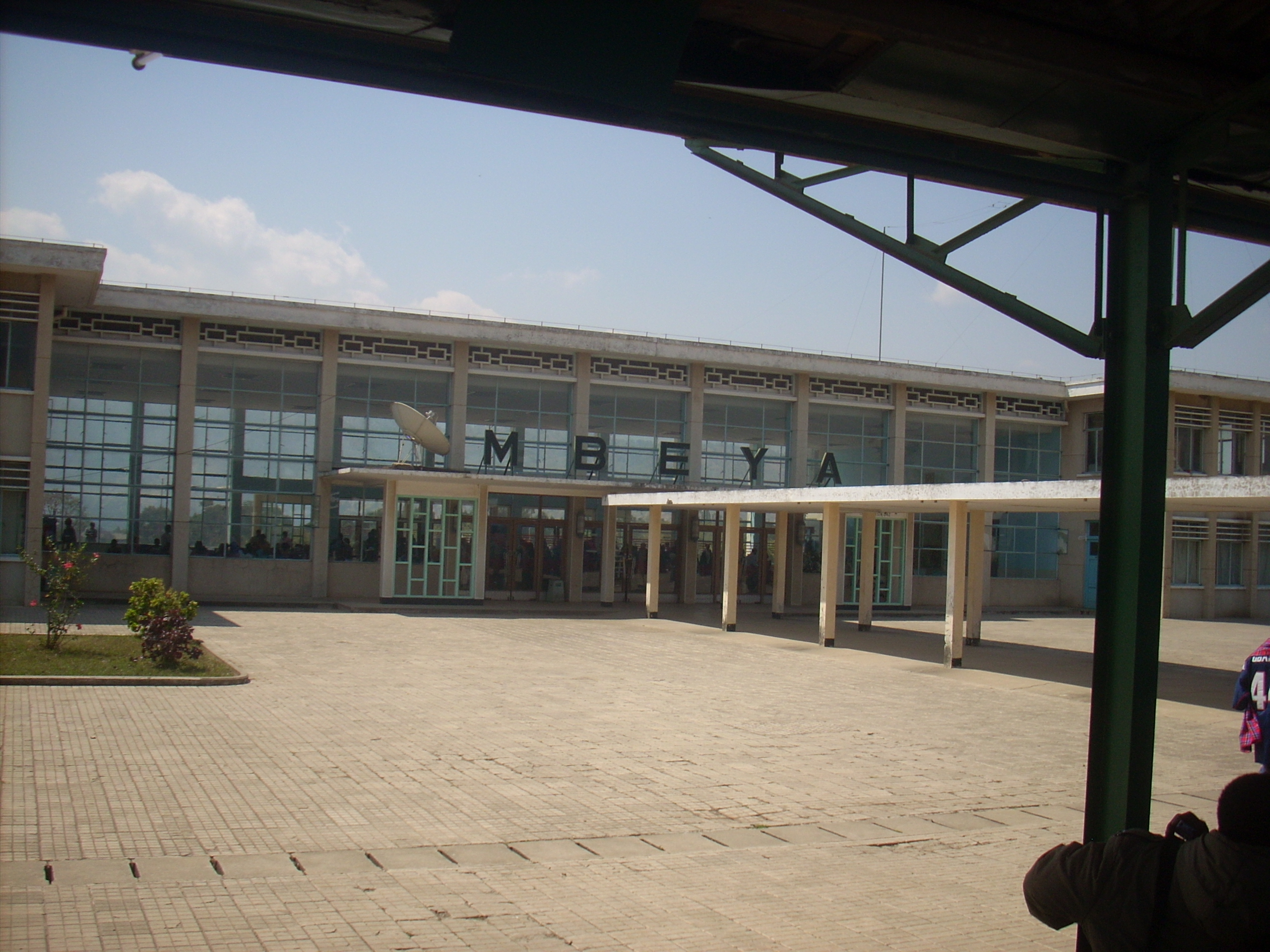
TAZARA Pictures (Preview, see link to original post and more pictures below)

Richard White’s Railroaded proved to be an appropriate reading for the trip

Leaving Dar es Salaam

Most of the two-day ride was across the empty countryside

Mbeya is the biggest station before Kapiri. We broke down here for almost 5 hours

Of course the picture collection wouldn’t be complete without the African sunset

Just a reminder of who built the railway line

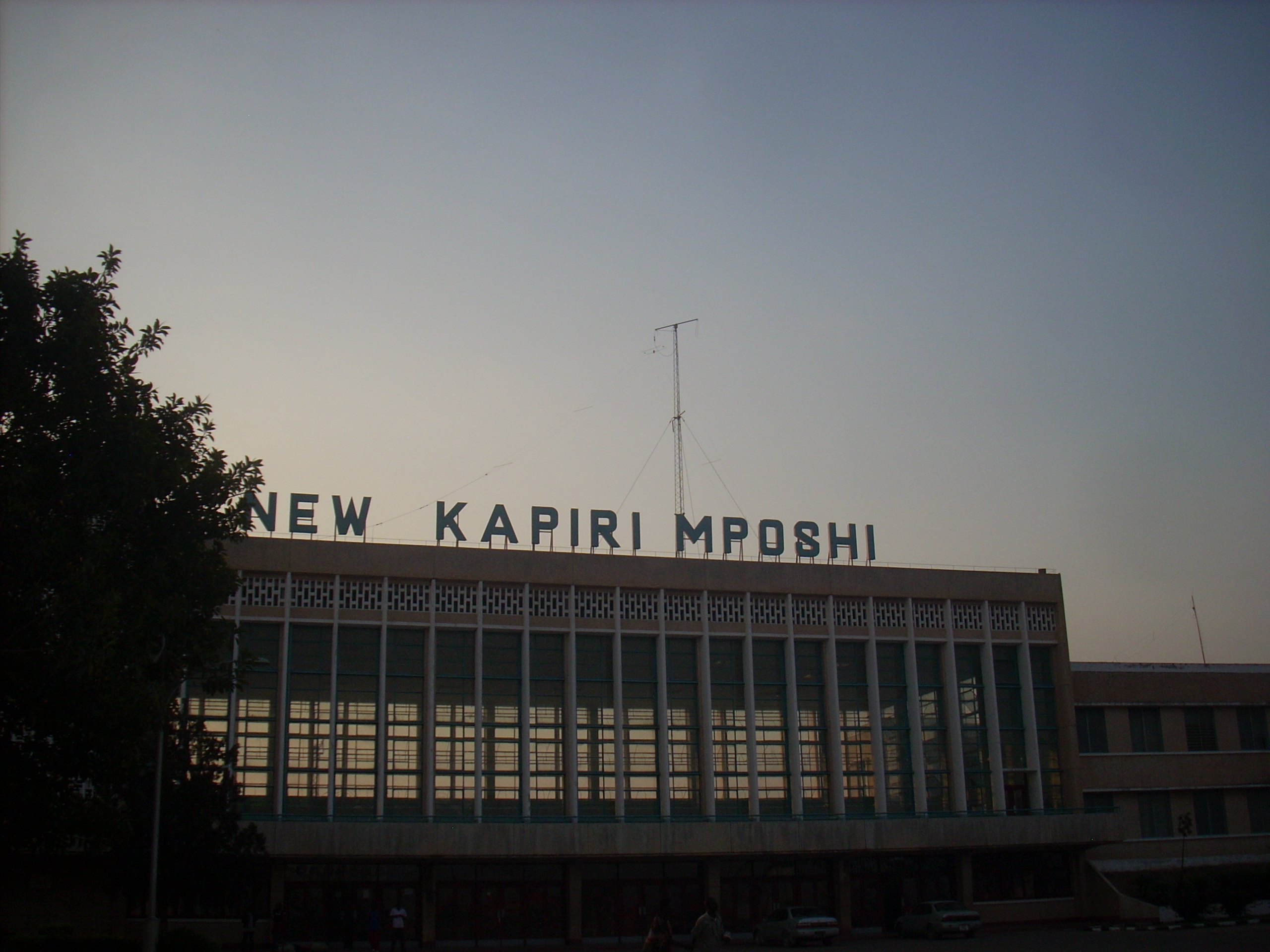
Kapiri Mposhi, final stop on the TAZARA line

The original post is here.

What does a Sata Presidency Mean for Zambia?

UPDATE:

For a closer take on the Sino-Zambian connection check out Louise Redvers’ piece for the BBC.

************************************

So the Economist beat me to writing about what a Sata presidency means for the Zambian economy, especially with regard to foreign investment.

For the two of you out there who are not conversant with the campaign details in the Zambian election, Mr. Sata’s main campaign strategy involved characterizing incumbent President Banda as someone who was out to mortgage Zambia’s future to foreign investors, and especially China.

Here is what the Economist had to say:

“He is too savvy a politician not to realise how much this impoverished country of 13m people needs China’s cash. Over the past decade, the Chinese have invested over $2 billion in Zambia, the GDP of which is only $16 billion. More than half of that came in last year. And China is committed to pouring in billions more. There are now about 300 Chinese companies in Zambia, most of them privately owned, employing around 25,000 locals. Standards differ: some companies treat their workers badly, but most of the big state-owned companies genuinely seek to respect local labour laws.”

The long and short of it is that Sata will definitely kick out a few shady companies that were operating outside the law – and these are not just Chinese firms; the South Africans and Australians also have some shady businesses in Zambia. The former, especially, have a lot of money-laundering operations.

More on this here and here.

On the democracy and governance front, things won’t change much. President Sata’s camp is full of recycled UNIP veterans. UNIP was the independence party that ruled Zambia between 1964 and 1991. Mr. Sata, however, could surprise us by finally passing through a new constitution for Zambia. The last parliament killed the proposed constitution.

when dictators’ oracles fail them

One of the biggest problems in dictatorships is the dearth of dependable information. This problem affects both dictators and their oppressed subjects alike. The same applies to presidents in electoral regimes who surround themselves with “yes men,” the latter who are oftentimes more concerned about pleasing their patron than giving him the right information.

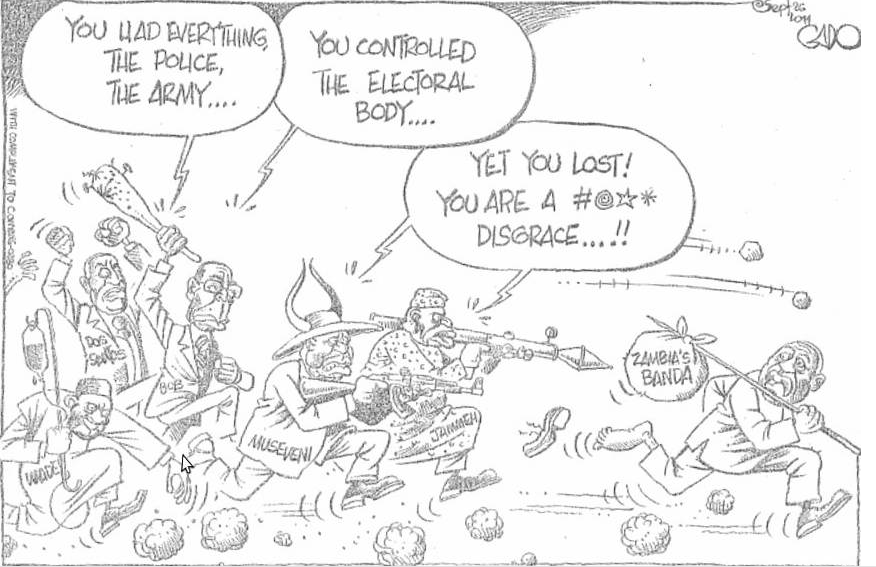
This cartoon from the Daily Nation exemplifies the surprise from some quarters that greeted Rupiah Banda’s defeat in the just concluded tripartite elections in Zambia.

Former president Banda might have been a victim of misinformation, above and beyond the fact that the opposition Patriotic Front run a skillfully crafted campaign complete with this mega hit (in Zambia at least).

[youtube.com/watch?v=G16vj5hJKfw]

HT African Arguments

Quick hits

The world marathon record is back in Kenya, where it belongs.

Zambian Economist has nice maps showing the results of the just concluded general elections.

(Dada) Kim on Haba na Haba has a story on the continuing decline of Malawi into overt and brutal dictatorship. President Bingu wa Mutharika recently appointment his wife and brother to the cabinet. This reminded me of this paper on the inefficient extraction of rents by dictators.

President Zuma of South Africa still hasn’t established his dominance within the ANC (and probably never will).

The drought in the Horn has thus far claimed 10,000 lives. The Bank is increasing its aid package to the region.

Sata is Zambia’s president-elect

NB: Still hoping from airport to airport and will give my reaction to the Sata victory when I finally get back to Palo Alto on Friday evening Pacific Time.

Michael Sata of the Patriotic Front is the new president of Zambia. Mr. Sata beat incumbent president Banda after getting 43% of the declared results in the just concluded general elections in Zambia.

As was expected, the high turnout (from the numbers I have, low 60s), favored Mr. Sata. In the last election turnout was a dismal 45%.

For more of this read the Post.


Zambian Election Results

UPDATE:

Sata is leading 47% – 34% in the latest confirmed results from the electoral commission of Zambia. Most of these confirmed results are from Sata strongholds. Banda will almost definitely narrow the gap once the numbers from his base get put on the board.

****************************************

Results (not yet confirmed by the electoral commission of Zambia) posted on Zambian Economist indicate that PF has won 49/150, MMD 13/150 and UPND 4/150 of of the 66 constituencies with results.

It looks like turnout was high in the election (might reach the low 60s) which is good for the opposition Patriotic Front. PF will definitely be the biggest political party in parliament. Preliminary presidential results are expected to be announced later this evening. From back of the envelope calculation of the already announced constituency results it appears that Sata is ahead by a sizable margin.

It is important to remember that most of the results are from the urban areas of Zambia. The MMD and Mr. Banda will definitely have a strong showing once the results from the countryside start trickling in.

************************************

Unconfirmed reports indicate that PF has scooped all 22 seats on the Copperbelt, all the seats in Lusaka, 12 out of 14 in Luapula.

Banda has a wide lead in Eastern Province. MMD has apparently won all seats except one.

Turnout numbers are still not here yet. Presidential results still under wraps. Will update as I get more results.

more on the zambian elections

Check out African Arguments for a brief backgrounder.

The election remains too close to call, which means that Banda is winning.

Given how stacked things are against the opposition, they can only win if they do so convincingly. If it is close (like it was in 2008 when the president won by just over 30,000 votes) the electoral commission will be under immense pressure to hand the ruling party, MMD, the win.

Mr. Sata (the main opposition (PF) candidate) has urged his supporters to stay at polling stations to monitor the tallying and relay of results. I understand there will be an NGO-led parallel vote tallying (but which won’t be publicized because of govt. sanctions). I hope I can get a hold of these results before the end of the week. The electoral commission of Zambia has promised to release the results within 48 hours of the polls closing – that is Thursday evening.

In Lusaka everything is slowing down in readiness for the elections. There is a sense that there will be isolated violence in some parts of the city but nothing too serious. From what I gather the Copperbelt is the region most at risk of election-related violence. People there have (or believe that they do) the most to gain if PF wins (The Copperbelt is also majority Bemba. Mr. Sata is a Bemba speaker).

The MMD’s privatization drive (of the mining sector) since the early 1990s has hit this region the most. Many lost their sinecures in parastatals;  free medicare and schooling disappeared; and there is also a sense that foreigners are benefiting at the expense of ordinary Zambians in the region. Mr. Sata has promised to channel more resources from the mining sector into social programs and a more aggressive job drive.

This is largely campaign hot air but it appears to be sticking. The MMD will be lucky if it gets even a single parliamentary seat in the Copperbelt.

Zambian Elections

UPDATE:

The conference (organized by the SADC observer mission and donors) on the upcoming elections was a non-starter, with only Neo Simutanyi (Zambia’s preeminent political scientist), giving a talk that had significance. The rest of the conference was full of NGO-ese hot air. None of the major political parties had representation at the conference, even though this was SADC’s “fact finding” conference about the state of play in the elections.

************************************

Zambians will go to the polls next Tuesday.

According to the latest (and most reliable) opinion poll conducted by the Center for Policy Dialogue President Banda is leading the pack with 41%, followed closely by Sata at 38%.

I am attending a mini-conference tomorrow on the elections (academics, observers, NGOs, political parties, etc will be in attendance) and will report back after I get views from those closely involved.

The poll cited above predicts an MMD victory for the following reasons:

  • Incumbency advantage: MMD is using state resources, including government workers, in its campaigns. Road repairs are all over the place, with Banda’s picture and the words “Your Money at Work”, on billboards next to every project.
  • Divided opposition: Mr. Banda is polling a dismal 41%. A PF-UPND united front would almost certainly guarantee a victory for the opposition. But egos and personality politics remain a key barrier to opposition unity in Zambia. Some have claimed that MMD and UPND have a clandestine pact to deny PF victory in the polls. Post-election coalition building will reveal the veracity of these claims.
  • Opposition has ignored rural areas: In many parts of the rural areas you would be mistaken to think that MMD is the only party taking part in the elections. MMD posters and campaigners are everywhere. The opposition has, however, mostly concentrated its efforts in the urban areas. I recently had a chat with a PF operative who admitted that they strategy is to run up the numbers in the urban areas so that even if Banda rigs the rural vote he still won’t be able to beat them. The PF’s target number among urban voters is 2.7 million. There are slightly over 5.1 million registered voters in Zambia. Interestingly, there will be about 2.3 million new voters who did not take part in the last presidential election (turnout was a dismal 41%. Banda was elected president by only 18% of registered voters!!).
  • Fear of Sata: Underneath all the campaigning there is the fear that Sata is unpredictable and dictatorial. Many in the private sector fear that he might try to change things too fast and end up messing up everything. Some admit that they will vote for Banda merely for the sake of continuity.

I agree.

An MMD victory will however be a blow to the consolidation of Zambian democracy.

Since dislodging UNIP from power in 1991, MMD has increasingly become autocratic. Intolerance of the opposition and One-Party-Rule mentality is back in vogue. Indeed, many in its ranks are former members of President Kaunda’s court, including Vernon Mwaanga – derisively known locally as “Master dribbler” – who is notorious for being the brain behind MMD’s electoral manipulations.

Many of the founders of MMD have since decamped to PF.
quick hits on Zambia and beyond

In case you missed it, Zambia is a middle income country – at least according to the Bank. This sort of shows in some parts of Lusaka. But Zambia is also a highly unequal and very poor country. Most people in the countryside have nothing else to do but subsistence farming and burning charcoal. The economy is also heavily dependent on mines and foreign owned consumer goods outlets from South Africa and beyond. Which is sad really, given how much arable land it has.

Does anyone know why Zambians use military time? Forget 4 PM, it is 16 hours in Zambian time. The people I have asked have speculated that it is a legacy of the mining industry. I find it fascinating. Taxi drivers think I am weird every time I bring it up.

Also, why is everyone in Lusaka out to some workshop???? Seriously. This is a big problem here. I have had to cancel about five appointments because the only person at the office was the security guard. When do people have time to do their work?

Moving a bit beyond Zambia, be sure to follow the Kenyan cases at the ICC. I am withholding blogging on the issue until the pre-trial judges make their decision. Whichever way they go it will have important ramifications for Kenyan politics. Next year is a make or break for Kenya.

Be sure to check out the Economist’s piece on South Sudan. The teething problems for the new nation will be epic and will take time to go away.

And lastly, check out Jim Fearon on Libya. HT Platas-Izama, who has a new blog here.