This is the abstract and excerpts from Andayi, Chaves, and Widdowson, a paper focusing on the impact of the Spanish flu on coastal Kenya:
The 1918 influenza pandemic was the most significant pandemic recorded in human history. Worldwide, an estimated half a billion persons were infected and 20 to 100 million people died in three waves during 1918 to 1919. Yet the impact of this pandemic has been poorly documented in many countries especially those in Africa. We used colonial-era records to describe the impact of 1918 influenza pandemic in the Coast Province of Kenya. We gathered quantitative data on facility use and all-cause mortality from 1912 to 1925, and pandemic-specific data from active reporting from September 1918 to March 1919. We also extracted quotes from correspondence to complement the quantitative data and describe the societal impact of the pandemic. We found that crude mortality rates and healthcare utilization increased six- and three-fold, respectively, in 1918, and estimated a pandemic mortality rate of 25.3 deaths/1000 people/year (emphasis added). Impact to society and the health care system was dramatic as evidenced by correspondence. In conclusion, the 1918 pandemic profoundly affected Coastal Kenya. Preparation for the next pandemic requires continued improvement in surveillance, education about influenza vaccines, and efforts to prevent, detect and respond to novel influenza outbreaks.


We noted, that in 1918, the crude death rates and healthcare utilization drastically increased, six- and three-fold, respectively and stayed relatively high until at least 1925. The sharp increase in health care utilization was certainly due to the pandemic and is corroborated by the anecdotal reporting of overwhelmed health systems. The very large majority of these cases would have been in the native population, though we had no data on race. The higher rates of mortality and facility visits after 1918 compared to before 1918 were likely due to improved reporting health facility expansion rather than prolonged pandemic transmission. Equally, it is plausible that several documented outbreaks such as the plague (1920) and smallpox (1925), also contributed to high reported mortality and morbidity in those late years studied. We estimate pandemic mortality from September 1918 to March 1919 to be approximately 25 deaths/1000 population and morbidity at 176/1000 population or an attack rate of 17.6% (emphasis added).
Read the whole (ungated) paper here.
Writing over at The Conversation, Andayi notes that overall the flu might have killed as many as 150,000 people in the Kenya Colony, or 4-6% of the population at the time. The Spanish flu (which actually probably originated in New York) could have killed anywhere between 1-5% of the global population.
The Spanish flu is believed to have come to Kenya with returning veterans who docked in the Mombasa port. The country was still a British colony at the time. In nine months the epidemic killed about 150,000 people, between 4% and 6% of the population at the time.
COVID-19 is nowhere near these mortality rates. The estimates I have seen (which for some reason are for “Africa” and not individual countries) suggest that between 300k and 1.3m people might die of COVID-19 on the Continent (see image with UNECA estimates). Proportionately, that would mean roughly between 12k – 51k Kenyans, or .03-.01% of the population (still absolutely catastrophic figures).
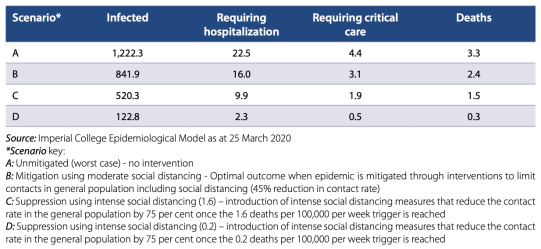
If you know of any country-level estimates please share in the comments.


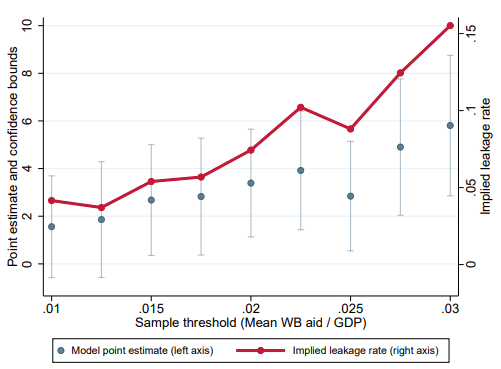
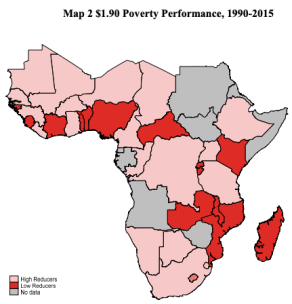 To explain variation within SSA in poverty reduction, we consider aspects of colonial experience associated with the emergence of differing potential for redistributive policies to emerge after independence. Following the approach of Myint (1976) and others, we classify SSA countries into two groups according to the economic strategies used by the colonial authorities, using pre-independence data on factors such as inequality, land ownership by Europeans and political participation by Africans (the process is detailed in Appendix A, with validation by cluster analysis). In smallholder production economies, African agricultural smallholders had economic and some political participation. In contrast, extractive production economies dominated by foreign-owned mines and large-scale farms fostered the emergence of an elite politics characterised by urban bias and capital-intensive production technologies. During the colonial period African economies became clustered around a bimodal structure, which provided better opportunities to the poor in countries whose production was based on the development of labour-intensive smallholder exports than in countries whose growth strategy was based more on capital-intensive mines and large farms. We then test if the growth elasticity of poverty differs between these two groups of countries, using available (PovcalNet) poverty data since 1985, noting that mean growth rates for the two groups were very similar. The analysis shows that the smallholder group significantly outperformed the extractive group, smallholder experience is a significant predictor of poverty reduction, and inclusion of other potential explanatory variables does not alter the conclusion.
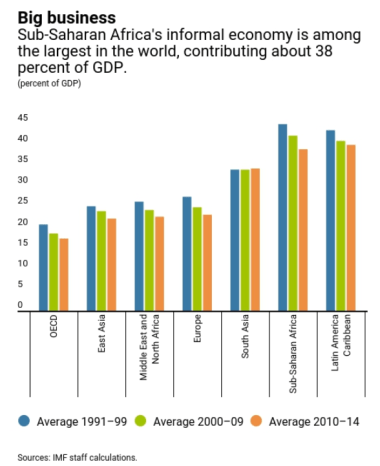 Inspired by Yuen Yuen Ang’s
 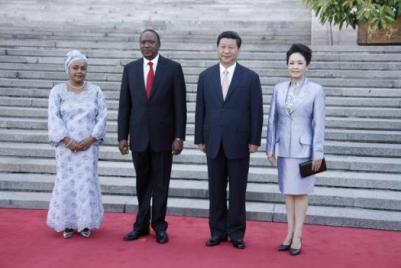 A key weakness that I see in the “Let China Fail in Africa” strategy is that it vastly underestimates the extent to which Africans will be willing to work hand in hand with China to make the Sino-African relationship work.
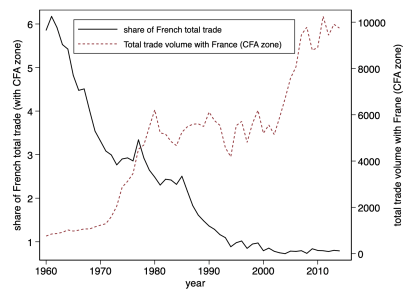 It is worth noting that, from the French perspective, the economic case for françafrique is not as strong as it used to be (see image). Trade with the CFA zone as a share of total French trade volume has been on a steady decline since the 1960s.
  Take the example of security assistance. If you want to reduce corruption in military procurement, I would suggest that you channel all assistance through the normal appropriation processes in African legislatures. More people will know how much money is going where, thereby increasing the likelihood of greater accountability. The same applies for budget support. Strengthen existing constitutional appropriation processes so that bigger constituencies get to own the aid dollars.
 kenopalo.com