China just finished a 150 million Yuan four-year project to build Burundi a new presidential palace in Bunjumbura. This is but one of many installments of China’s ongoing influences on civic architecture on the Continent. The Burundian presidential palace is grand, and sitting on an elevation appears to have been designed to project the occupant’s power. While likely not the best use of that much money in Burundi, it is an important investment in the physical manifestation of Burundian stateness.
Other major civic buildings on the continent funded and (to be) built by China include the African Union headquarters in Addis Ababa, Ethiopia, the ECOWAS headquarters in Abuja, Nigeria, and Senegal’s Museum of Black Civilizations in Dakar.
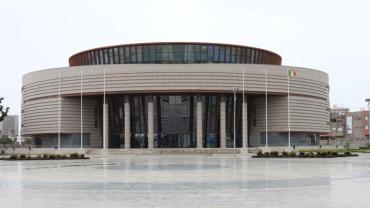
The Museum of Black Civilizations in Dakar, Senegal
Concerns over costs (and espionage) aside, one of the under-appreciated effects of Sino-Africa relations in China’s continuing influence on African architecture. From train stations, to hotels, to high-rise apartment blocks, to libraries, China’s influence is making an indelible mark on Africa’s landscape. At the moment much of this appears to be cut-and-paste jobs with little, if any, African influence. But it is ineluctable that over time many of these foreign designs will be infused with local sensibilities and tastes in the continuing process of architectural evolution on the Continent (no more fake marble and chandeliers please!).
It is fair to say that the state of civic architecture in many African states is wanting. Many civic structures exist as physical embodiments of the malaise afflicting the African state. The last golden age of public buildings died with the independence generation. The era’s designs focused on function, but also the implicit desire to project state power — Dar es Salaam’s austere public buildings with their long hallways and exposure to the elements (for ventilation) quickly come to mind. The economic crises of the long decade (1980-1995) virtually stalled much of the region’s architectural evolution as far as civic buildings were concerned.
The current iteration of Sino-African relations is changing this. More capitals (sub-national, national and regional) are seeing the construction of civic buildings befitting their stature. The influence of these developments will likely travel beyond their aesthetic impacts on Africa’s architectural landscape. Civic buildings are also monuments to the idea of the state.
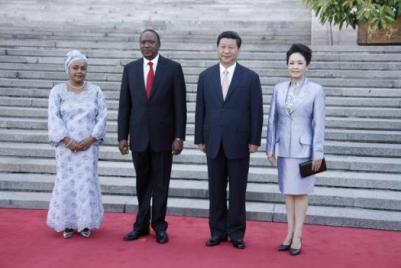 A key weakness that I see in the “Let China Fail in Africa” strategy is that it vastly underestimates the extent to which Africans will be willing to work hand in hand with China to make the Sino-African relationship work.
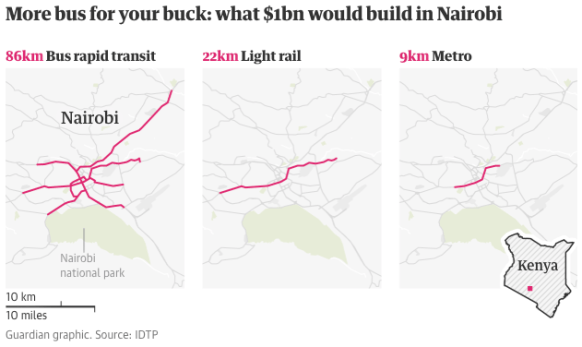 “With a metro, an international firm will often just parachute in its own system,” says Kost. “Bus rapid transit allows existing stakeholders to get involved. That’s what we did in Dar es Salaam and what we’re planning in Nairobi, where the bus bodies will be built in the city and local operators will look after tickets, fare collection and IT. It’s good for the development of the local economy.”
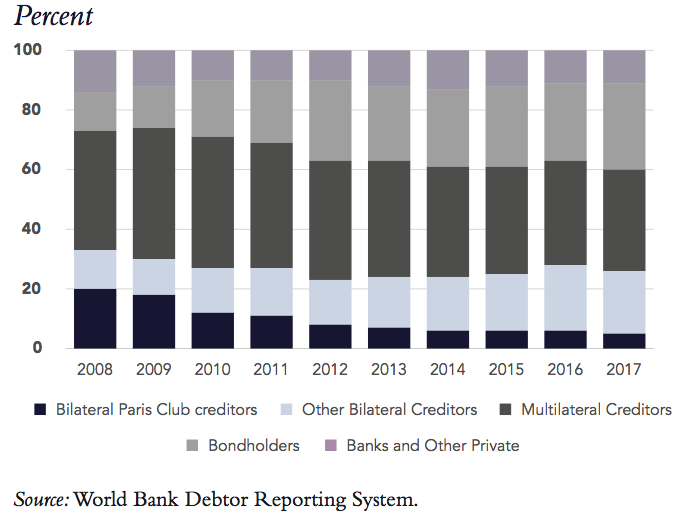 Countries in sub-Saharan Africa accumulated external debt at a faster pace than low- and middle- income countries in other regions in 2017: the combined external debt stock rose 15.5 percent from the previous year to $535 billion. Much of this increase was driven by a sharp rise in borrowing by two of the region’s largest economies, Nigeria and South Africa, where the external debt stock rose 29 percent and 21 percent respectively.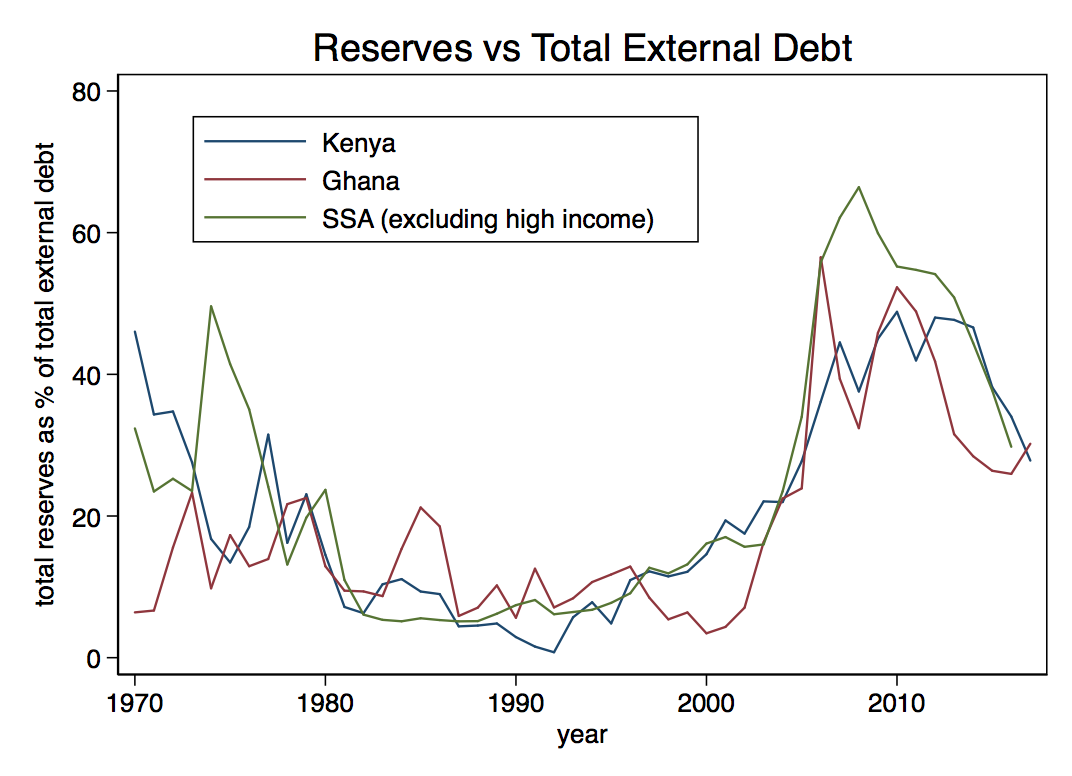


 THE surge in the number of African students in China is remarkable. In less than 15 years the African student body has grown 26-fold – from just under
  China’s investment in Africa is having a positive impact on research, citing China’s
  kenopalo.com