KENYAN PRIDE

[youtube.com/watch?v=r3XJQaMVzIo]

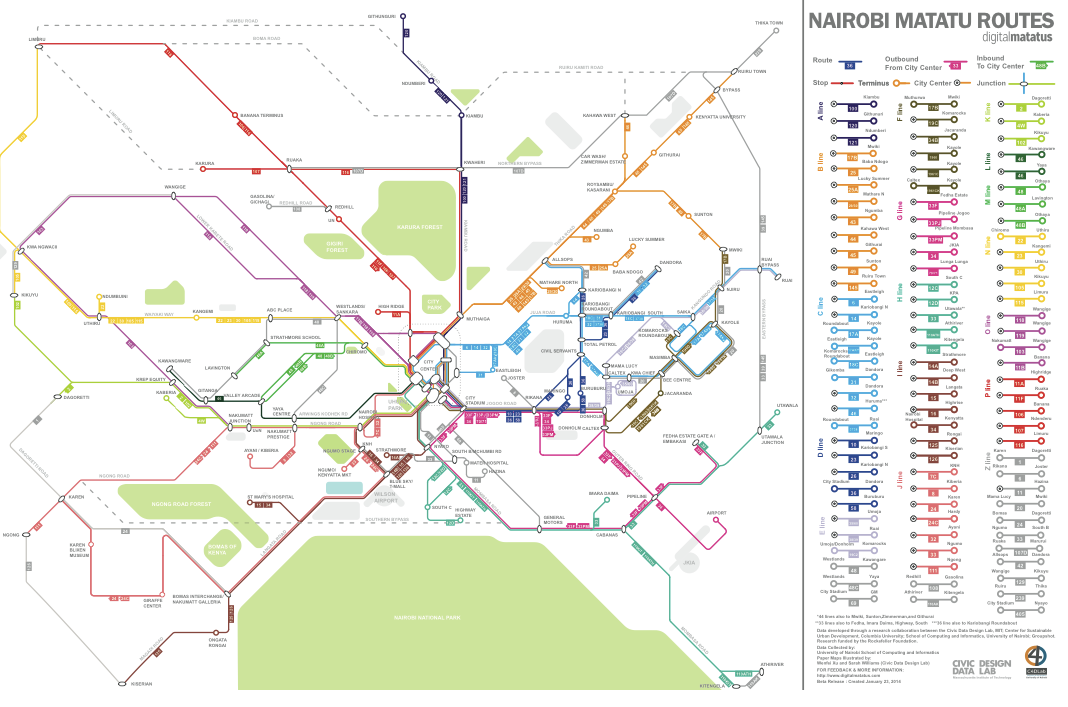
Mapping Nairobi’s Informal Transit System

Researchers and students at the University of Nairobi, the Center for Sustainable Urban Development at Columbia University, and the Civic Data Design Lab at MIT produced the map below – and the underlying data behind it – after carrying cell phones and GPS devices along every route in the network. Result? There is order to Nairobi’s seemingly chaotic matatu industry.

Pretty cool stuff. 

Image

 More here.

H/T Amanda R.

Understanding Uganda’s Military Adventurism Under Museveni

On January 15th 2014 President Yoweri Museveni finally admitted that Uganda People’s Defence Force troops are engaging in combat operations within South Sudan. Right after the political fallout in Juba and escalation of hostilities between forces loyal to President Salva Kiir and those behind his former deputy Riek Machar, Mr. Museveni threatened Machar with military action if he did not come to the table to negotiate with Kiir. Museveni’s military involvement in the conflict has caused concern in Nairobi and other capitals in the region. For one, Uganda’s military intervention in the conflict may yet jeopardize the ceasefire agreement that was signed on January 23, 2014 in Addis Ababa. The regional body IGAD (Intergovernmental Authority on Development) is supposed to be a neutral arbiter and monitor in the conflict. Museveni’s clear leanings towards the government in Juba may bring to question IGAD’s neutrality in the mediation effort.

For historical reasons (see below) Khartoum fears Kampala’s military involvement in South Sudan. But this time the situation is slightly different, and a little more complex. Bashir has already shown his hand in support of Juba against Machar, possibly for two reasons: (i) Khartoum needs Juba’s help in weakening the rebellion by the rump SPLA (SPLA-North) that is still active in Blue Nile and South Kordofan, regions that border South Sudan; and (ii) Bashir needs to keep the oil flowing in order to ward off internal turmoil within Sudan due to rapidly deteriorating economic conditions (see here). Kiir’s willingness to throw SPLA-N under the bus comes as no surprise since it is an offshoot of the “Garang Boys” (mostly PhDs) who occupied a special place, unlike Kiir and others, in John Garang’s SPLA. SPLM-N’s leader Malik Aggar, shared Garang’s vision of one united reformed Sudan, as opposed to secession by the South. At the same time, however, Khartoum does not want a super strong South Sudan free of rebels. Total cessation of conflict in South Sudan would rob Khartoum of proxies to keep Juba in check. Uganda’s involvement could tip the balance in Juba’s favor vis-à-vis potential Bashir allies.

Meanwhile in Nairobi and Addis Ababa concern is growing over Uganda’s claim that the IGAD should foot the bill of UPDF’s adventures in South Sudan. Both Ethiopia and Kenya prefer settling the conflict at the negotiating table, partly because both have their security forces stretched by domestic armed groups and bandits and the war in Somalia. Kenya has said categorically that it will not send troops to South Sudan, even under IGAD. The wariness in Nairobi and Addis to send troops or cash for a military cause in South Sudan contrasts sharply with Kampala’s choice of military action from the moment the current flare up started in Juba. This despite the fact that Uganda also has troops serving in Somalia.

Which raises the question: What explains Uganda’s international military adventurism under Museveni? The answer lies in the confluence of history, international geopolitics, and Uganda’s internal politics.

Uganda is one of the more militarized states in Africa, with the military having direct representation in parliament (10 seats). It is also interventionist, with a history of combat engagement and support for rebel groups in six neighboring states – Burundi, the Central African Republic (CAR), the Democratic Republic of Congo (DRC), Rwanda, Somalia, and South Sudan. More recently, the nation has been a key advocate for greater integration within the East African Community (EAC). Indeed, Ugandan President Yoweri Museveni fancies himself as a possible head of an EAC political federation should it ever materialize. Uganda is also a key player in the African Capacity for Immediate Response to Crises (ACIRC), a proposed standby force with capacity to rapidly deploy troops to trouble spots in Africa (other key supporters include South Africa, Chad, and Tanzania).

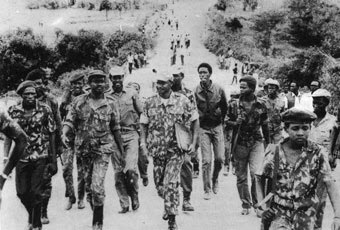
Museveni and his kagogo (little) soldiers

Museveni and his kadogo (little) soldiers

President Yoweri Museveni’s military adventurism and internationalist outlook have deep roots. As a young student in Tanzania, Museveni was involved in exile organizations opposed to Iddi Amin. Indeed, Museveni’s National Resistance Army (NRA), started off as the Popular Resistance Army (PRA) in Tanzania (As testament to its Tanzanian roots, NRA borrowed the idea of political commissars from the Tanzanian military to educate civilians in “liberated” Luweero Triangle). In Tanzania and even after returning to Uganda Museveni made regional connections that he maintained even after he ascended to power in 1986 – including Rwanda’s Paul Kagame, Sudan’s John Garang’, and leaders of Mozambique’s FRELIMO. Before rebelling against Kigali, Kagame was Museveni’s Chief of Military Intelligence. Museveni supported Garang’s Sudan People’s Liberation Army (SPLA).

Once in power, Museveni styled himself as the guarantor of peace and stability in Uganda. Many (both at home and abroad) evaluated his performance relative to the disastrous years under Amin and the ensuing civil war. The resulting peace dividend (albeit restricted to the south of the country) was marked by relative macro-economic stability, with growth averaging about 6% for much of the 1990s. This made Museveni a darling of Western donors and international financial institutions. However, Museveni’s record with regard to democracy and human rights remained dubious. This put him in awkward position vis-à-vis the West, especially since the 1990s was the zenith of Western promotion of liberal democracy.

To this Museveni reacted cleverly, and worked hard to position Uganda as a strategic player in the wider region’s geopolitics. In order to maintain his international stature and secure his position domestically, Museveni labored to bolster Uganda’s relevance to the West.

Museveni enters Kampala (Source)

Museveni enters Kampala (Source)

Beginning in the early 1990s, Uganda got militarily involved in a number of neighboring states. Support for Garang’s SPLA drew the ire of Khartoum, which in turn supported the Lord’s Resistance Army (LRA) in northern Uganda. Subsequently, the Ugandan military conducted raids against LRA bases in Sudan while also offering combat assistance to the SPLA. For instance, the 1997 battle at Yei featured Ugandan soldiers alongside the SPLA against the Sudan Armed Forces (SAF). It is around this time that the seed was planted for future military involvement abroad at the turn of the century (this time in Somalia under the Western-funded AU mission, AMISOM, to help stabilize the country). After US President Bill Clinton designated Sudan as a state sponsor of terror, Uganda positioned itself as an ally in the frontline of “Global War on Terror.” Kampala served as an intermediary for US aid to SPLA, thereby further strengthening US-Uganda military ties. It is telling that in 2003 Uganda was among only a handful of African states that supported the US-led Iraq War. About 20,000 Ugandans worked in US military bases in Iraq (this was also an excellent job creation tool; and a way of earning Forex).

So far Uganda’s most complex military adventure was in the Democratic Republic of Congo (DRC). A mix of strategic geopolitical positioning, the need to secure markets for Ugandan goods, private greed and domestic politics drove Uganda’s invasion of the DRC. The first Congo War (1996-97) was swift, aimed at helping Laurent Kabila oust Mobutu Seseseko (Rwanda and Angola also helped). Soon after Uganda and Rwanda fell out with Kabila, occasioning the Second Congo war (1998-2003), which involved four other African states. It is then that the façade of intervention for regional stability completely broke down. Ugandan and Rwandan commanders exploited existing and new cross-border smuggling and semi-legitimate trade networks to orchestrate massive pillaging of natural resources in eastern DRC (Competition between the two militaries later intensified, resulting in the “Kisangani Wars.”)

For instance, in the year 2000 despite only producing 0.00441 tonnes of gold, Uganda exported 11 tonnes. A UN report indicates that well-connected generals (including Museveni’s half-brother) created entities headquartered in Kampala to facilitate the illicit trade. It’s important to note that Museveni’s tolerance of the semi-autonomous activities by his generals was strategic (it generated revenue through Kampala-based entities and kept the generals happy) and did not lead to fracturing within the military. Indeed, many of those involved were later promoted.

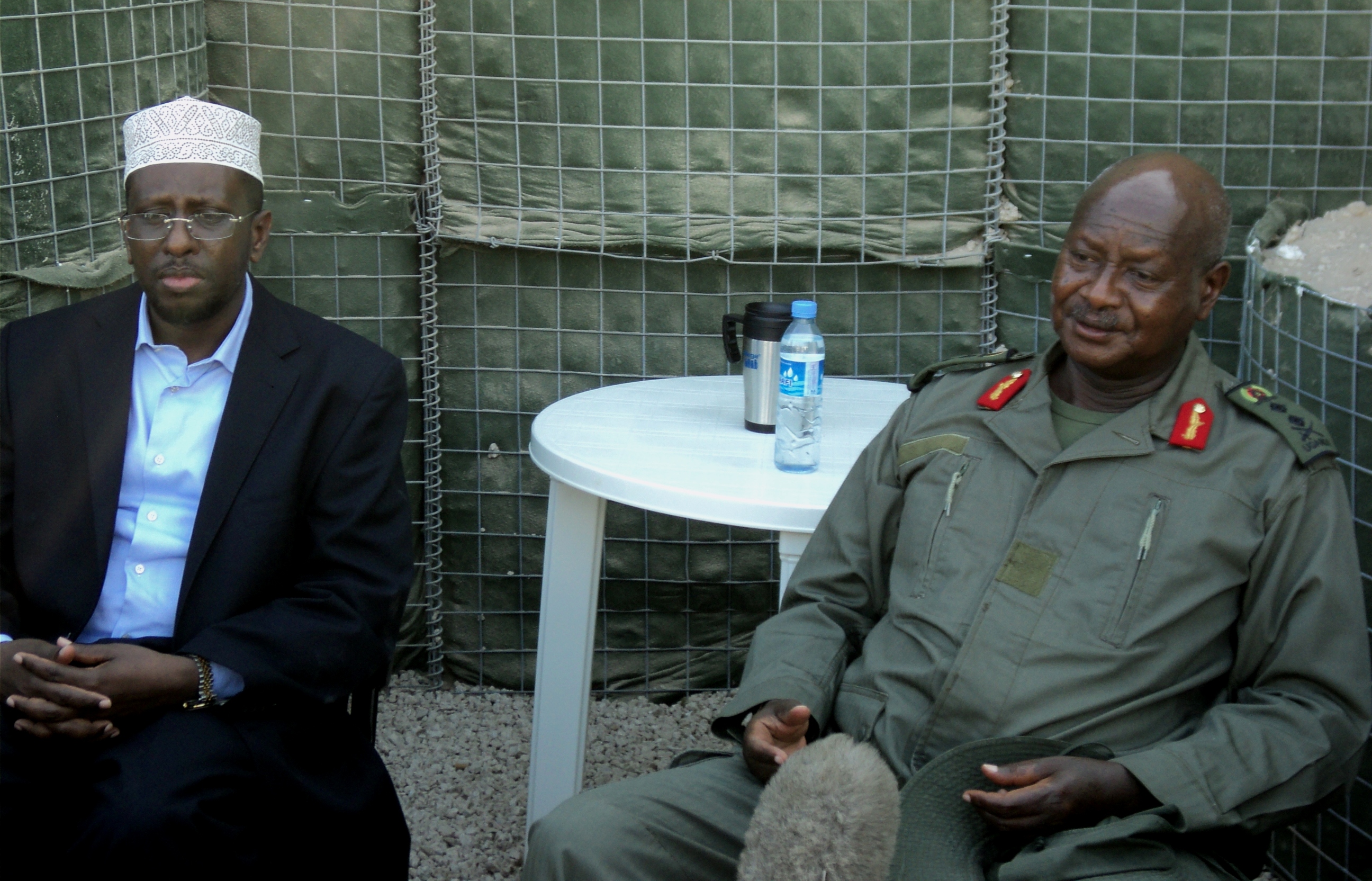
Museveni meets Somali President, Shayk Sharif Ahmed in Mogadishu in 2010


Incidentally, the present involvement in South Sudan also reflects the multifaceted logic of Ugandan international military adventurism. Historical alliances with the SPLA against the LRA and SAF make Kampala and Juba natural bedfellows. But the intervention is also about securing markets for Ugandan goods. According to figures from the Bank of Uganda, in 2012 the country’s exports to South Sudan totaled an estimated USD 1.3 billion. About 150,000 Ugandan traders operate across the border, not to mention countless more primary producers in agriculture who benefit from cross-border trade with their northern neighbor.

The above account explains Museveni’s efforts in the recent past to build an image as the regional powerbroker: heading peace talks between the DRC, Rwanda and eastern DRC rebels; intervening in Somalia to prop up the government in Mogadishu; and in the latest episode siding militarily with President Salva Kiir in South Sudan’s domestic political cum military conflict. Domestically, Museveni’s grip on power is as strong as ever. Recent reshuffles in the military removed powerful Historicals (the original “bush war heroes”) thereby leaving Museveni (and his son) firmly in control of Uganda’s armed forces. There is no end in sight for Uganda’s international military adventurism.

In many ways Uganda’s international adventurism has been a case of agency in tight corners. The country is a landlocked; has neighbors with sparsely governed borderlands that provide rear-bases for Ugandan armed groups; and Kampala needs Western aid to maintain the regime, a situation that necessitates acts of geopolitical positioning – especially with regard to the “Global War on Terror” and maintenance of regional peace and stability. Furthermore, oil discovery along the conflict-prone DRC border on Lake Albert and the need for pipelines to the sea to export Ugandan oil will necessitate even greater regional involvement. So while Uganda’s present outward adventurism is primarily because of Museveni’s peculiar personal history, it is correct to say that even after Museveni (still far into the future) the country will continue to be forced to look beyond its borders for economic opportunities, security, and regional stature.

We Must Free Our Imaginations — Binyavanga Wainaina

A great thinker. A great artist. A great Kenyan.

Part One (see also Parts Two, Three, Four, Five and Six)

[youtube.com/watch?v=8uMwppw5AgU]

Joyce Nyairo of the Daily Nation has written a stinging critique of Binyavanga’s short documentary. Nyairo takes umbrage at Binyavanga’s bashing of Pentecostals and giving a dumbed down, even simplistic, account of Kenyan history over the Moi years. 

The ultimate tragedy of Binyavanga’s documentary is the ease with which he slides into a diatribe against Pentecostals — as if homosexuality can only be popularised by bashing something or someone else’s conformity…..

Each one of the titles of this six part “documentary” is a quote from Binyavanga’s long and frighteningly convoluted tirade against the hypocrisies of Africa’s discourse on homosexuality.

The quotes are as clever as they are memorable. But they represent isolated flashes of brilliance in a text that is neither articulate nor lucid. Binyavanga struggles too hard to be profound, repetitively swinging from mimicry and lazy stereotyping to banal imagery that does nothing to enlighten. His style is unworthy, an injustice to his subject.

I think Nyairo has missed the point of this short “tirade” by miles. The style of delivery and everything about this documentary show that Binyavanga’s intended audience is not the class of Kenyans who go to Blankets & Wine. He is not trying to preach to the choir – most upper middle class Kenyans already have liberal views on homosexuality and those that don’t often have to hide them behind their middle class civility. Neither is he trying to engage in an enlightened rebuttal of the claim that homosexuality is “un-African.” No. What Binyavanga is trying to do is to take the conversation to the streets, and the homes of regular Kenyans. He is aiming at the middle middle class and lower. Binyavanga knows that this is the demographic that will matter the most in changing Kenya, whether it is economically or in the further expansion of human rights.

Yes, Binyavanga has hoisted up the Pentecostal movement as his ultimate straw man. But that’s just in reaction to the hijacking of the conversation on homosexuality in Africa by religious moralists. It is hard to see how one can have an open conversation about homosexuality in Kenya today without addressing the question of sin and hell and Sodom and Gomorrah. This precedes even the macho talk of “natural African” (read heterosexual male) and “un-African” sexual habits. The language of “rights” alone will simply not fly, and when attempted will most likely result in an ugly backlash. This is what Binyavanga is speaking to.

“Only four shooters at Kenya mall (Westgate) and they may have escaped alive, says NYPD”

On Tuesday morning the NYPD issued a damning statement [full report here] that pointed fingers at the Kenyan government for its handling of the terrorist attack at the Westgate Mall in September. Dozens of people were killed in the attack.

According to the statement:

  • Despite conflicting reports from the Kenyan government, “evidence suggests that there were only four attackers, who may have escaped alive.”
  • The commander of the police tactical team that went to quell the siege was most likely killed by the KDF. “The police department tactical team entered the mall at 3 p.m., without police markings or identifications, and were fired on by Kenyan soldiers, killing the commander of the unit.”
  • The security team “had no idea what the mall looked like internally, and didn’t know they could access the closed circuit television system.”
  • The NYDP “didn’t know what had caused the mall to collapse,” but it is likely that “the Kenyan military may have used rocket-propelled grenades and anti-tank missiles on the building, and that heat from fires caused by the explosions may have weakened the poorly built structure.”
  • And lastly, “the Kenyan military may not have killed any of the attackers, there was “significant” physical and video evidence that they had looted the mall.”

[UPDATE: A reader, @ZiadFazel, just reminded me of the KTN documentary in October that questioned the official line about the attack. Back then the government dismissed the documentary as inaccurate and alarmist and even threatened to arrest KTN journalists. This new statement from the NYPD adds credibility to the evidence previously dismissed by the government]

Westgate is not just an indictment of the KDF (a force that has and continues to sacrifice a lot for regular Kenyans in the north east and in Somalia) but of the entire security apparatus in Kenya. For the longest time Kenyan civilian administrations have obsessed with issues of coup-proofing, maintenance of public order and the suppression of dissent over actual provision of security.* Urban crime, banditry in the north and pockets of rural areas even in the more governed south and latterly the threat of terrorism have exposed the underbelly of the Kenyan security system.

President Uhuru Kenyatta praised the KDF and the police following the botched operation at Westgate. Was this an attempt to boost the morale of the boys or was he simply continuing the tradition of appeasement with the aim of keeping the army in the barracks and the paramilitary GSU and police ever ready to “restore order” whenever necessary?

Whatever the case, it may be that President Kenyatta and his administration have found themselves in an unfamiliar territory. Kenya’s much touted bureaucratic-executive state may have worked well against internal dissent, but can it effectively deal with current security threats? Civilian control over the security apparatus demands for accountability and performance; and whenever there is failure, an attempt at correction. Is the Kenyan system capable of sustaining a civilian-military relationship that is responsive to the public and based on performance and accountability?

Kenyans were told many tales following that tragic Saturday afternoon in September and the ensuing four day siege. But the more Secretary Ole Lenku spoke of “exploding mattresses” the more questions emerged. The NYPD report is yet another reminder that the security system failed Kenyans, and that the civilian administration was unable to stand up to those responsible and demand for accountability.

*Read E. S. Atieno-Odhiambo’s chapter on “Democracy and the Ideology of Order in Kenya” and Tamarkin’s “The Roots of Political Stability in Kenya.”

Ethiopia’s Gibe Dam Threatens Kenya’s Lake Turkana, and Why the Kenyan Government Doesn’t Care

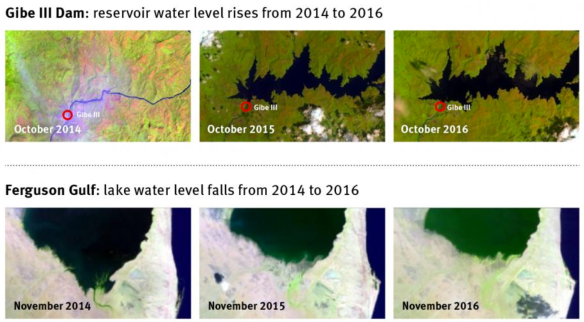
Six hundred miles upstream from the northern tip of Lake Turkana in Kenya, the Ethiopian Gibe III dam is nearing completion. According to Africa Confidential the dam will produce 1860 MW, making it the biggest hydro-electric power plant in Africa.

No doubt the developmental impact of the Gibe projects will be huge. Despite doubling Ethiopia’s 2007 installed power generation capacity, the project will bring more than 150,000 hectares (about 580 sq. miles) of land under irrigation (this will be more than the total acreage under irrigation in the whole of Kenya as of 2011). In addition, the boost in power generation capacity will feed into the East African Power Pool, thus helping alleviate power problems in Kenya and beyond.

But will the benefits of the Gibe projects outweigh the potential human cost, especially considering externalities that will spread beyond Ethiopia’s borders?

screen-shot-2017-02-14-at-11-04-21-pmAccording to Sean Avery, the Omo-Gibe project intends to divert as much as 32% of the Omo River’s waters for irrigation and other uses upstream. But the Omo River is the main inlet of Lake Turkana, Kenya’s largest by area (Kenya owns the smallest bit of Lake Victoria) and Africa’s fourth largest lake.

Lake Turkana gets as much as 90% of its inflow from the Omo River.

In a new Oxford study, Avery notes that one of the planned Ethiopian irrigations schemes alone, the Kuraz Sugar Scheme, will gobble as much as 28% of Omo inflows into Lake Turkana at 70% efficiency and a whopping 40% if the project inefficiently uses water! The same study notes that construction of Gibe III may lower the water volume in Lake Turkana by as much as 41-58% (or an average drop in lake level of 22 metres) over a period of time. This will have a significant impact on the Lake’s salinity (being the biggest desert lake in the world) and suitability of its water for human consumption and agriculture. To put this in perspective, the average depth in the lake is 30 metres. Without proper water management upstream Lake Turkana faces hydrological collapse akin to what happened to the Aral sea or what is happening to Lake Chad.

These findings have been echoed in this Human Rights Watch report.

Screen Shot 2017-02-14 at 11.06.32 PM.pngAt this juncture you may ask, why isn’t the Kenyan government up in arms over the Gibe projects?

Well, the simple answer is that a confluence of factors have made it such that Nairobi does not have an incentive to care about the 170,000 odd people that will be adversely affected by a decline in water volume and economic viability of Lake Turkana. Three of these factors stand out.

  1. Turkana, being largely rural, sparsely populated, poor, and with a low literacy rate, does not make a fertile ground for pressure groups to form. Complaints over the potential impact of Gibe III have mostly come from academics and international NGOs that, lacking political salience, are very easy to ignore. Historical low voter turnout in the region also does not help matters. This has made it easy for the government to pretty much ignore the region over the years. Residents of Turkana often talk of “going to Kenya” whenever they venture into the southern regions of the country.
  2. A more important reason than the one above is perhaps that Gibe III will provide power to the Kenyan grid. Kenya’s Vision 2030 development plan includes a raft of projects that will require increased generation capacity in the next couple of decades that the country will surely not meet. Gibe III will be a much needed plug in the expected energy capacity gap. Notice that most of the projects will benefit the more politically powerful pockets of the Kenyan electorate to the south of the country, most of whom have never and will probably never hear of the human impact of Gibe III in Turkana unless it leads to something catastrophic enough to attract national media attention.

    Image

    Source: Gado, Daily Nation

  3. Oil. Oil. Oil! As if things could not get worse for residents to the north of Turkana county, commercially viable deposits of oil have been discovered to the south of the county. It goes without saying that moving forward most of the economic focus will be in that part of the county, at the expense of most other economic activities (and Turkana residents’ most pressing needs, see image) – including fisheries on Lake Turkana.

Admittedly, the fault here lies not with Addis Ababa. Ethiopia had to do what it had to do to meet its development needs. The fault is Nairobi’s for not having the foresight to strike a workable “Coasian bargain” with Addis on an arrangement that would be less harmful to residents of Turkana. This post has attempted to sketch some of the reasons why this is the case.

In an ideal world Nairobi would have negotiated with Addis Ababa for a discount rate for power from Gibe III and pledged to invest the difference in compensating residents of the Lake Turkana basin who will be adversely affected by the planned projects on the other side of the border. Unfortunately, for the three reasons stated above and others, I doubt that this happened or will happen in the near future.

To paraphrase a famous quote from a couple of millennia ago, in the world we live in those with political power get what they want and those without suffer what they must.

Making sense of the Kenyan government’s reaction to UNSC vote on ICC deferral

The UN Security Council has rejected Kenya’s (and the African Union’s) request for a one year deferral of the case against President Uhuru Kenyatta and his deputy at the Hague. The two stand accused of crimes against humanity committed following the disputed elections in 2007. More than 1300 people died, and hundreds of thousands were displaced.

The US, UK, France, Australia, Guatemala, Luxembourg, South Korea and Argentina abstained to stop the deferral request. China, Russia, Togo, Morocco, Pakistan, Azerbaijan and Rwanda voted for a deferral. African leaders have in the last two years been on an ill-advised crusade against the ICC, terming it as a “race hunting” tool of “declining” Western powers.

Kenyatta and Ruto are innocent until proven otherwise, but their attempts to make their personal cases at the ICC a regional struggle of Africans against imagined neo-colonialists bent on usurping African sovereignty is a little misguided. The Kenyan case is different (Kenya is not Sudan or the DRC) and ought to have attracted special consideration from the court (see closing remarks below). However, despite its faults the ICC is all the continent has in the quest to hold its leaders accountable. I reiterate, murderous dictators in Africa and elsewhere should never be allowed to have internal affairs.

Here is the government’s total freak out response following the UNSC vote, with some comments from yours truly.

STATEMENT FROM THE FOREIGN AFFAIRS MINISTRY IN KENYA

Kenya takes note of the outcome of the United Nations Security Council meeting on peace and security in Africa, and specifically on the subject of the request for deferral of the Kenya ICC cases. Kenya wishes to thank China and Azerbaijan who, during their stewardship of the Security Council, have been professional and sensitive to the African Union agenda.

Wow, this is how bad things have become. That Kenya finds friends in states like Azerbaijan. Yes, this is the place in which the president recently announced the election results even before the polls opened. These are our new committed friends. We are going places. 

Kenya wishes to thank the seven members of the Security Council who voted for a deferral and is particularly grateful to Rwanda, Togo and Morocco – the three African members on the Security Council – for their exemplary leadership.

Again, the only country we should be associated with on this list is perhaps Rwanda. I wish we could do what they have done with their streets, and corruption, and ease of doing business. But by all means we should not borrow their human rights record. Oh, and please let’s stay away from their variety of democracy.

This result was not unexpected considering that consistently some of the members of the Security Council, who hold veto powers, had shown contempt for the African position. The same members and five others chose to abstain, showing clear cowardice in the face of a critical African matter, and a lack of appreciation of peace and security issues they purport to advocate.

Letting the trial go on does not threaten peace and stability in Kenya. This is an empty argument. There will not be any spontaneous violence. Furthermore, the president is not the operational commander of the KDF. He is the Commander in Chief. He gets to issue orders from some room somewhere. Orders can be issued from anywhere. And remind me again how this trial impacts security ALL OVER AFRICA, other than by raising the cost of genocidal activities by African presidents?

Oh, and did I mention that the African Union Mission in Somalia (AMISOM) is almost entirely paid for by the European Union?

Inevitably, it must be appreciated that the outcome of this vote demonstrates that the Security Council does not serve the interests of a majority of its members and is clearly in need of urgent reform. It cannot be that a few countries take decisions that go against reason and wisdom in a matter so important to nearly one billion Africans.

One billion Africans. Really? I had no idea our president was this important of a man. One billion Africans. Many of whom starve to death; or die of treatable illnesses; or never make it to their first or fifth birthday because their leaders steal all the money meant for medicine. These Africans? Why should their names be invoked to protect the same leaders that have confined them to degrading penury for the last half century? Why, I ask? 

Also, the claim that Africa is united against the ICC is false. We all know about the divisions that stalled the silly idea of a mass walkout from the ICC by African states.

The African Union, in one voice, took the unprecedented step of making a simple request to the Security Council, bearing in mind the security and stability it seeks to achieve on the continent. But the Security Council has failed to do this and humiliated the continent and its leadership.

Ahh. Now the truth comes out. It is not about the one billion Africans after all. This is about the humiliation of the African leadership. It is about protecting the sovereignty of a few inept rulers. Forget the one billion Africans. It is about their big men rulers who steal tax money and stash it away in bank accounts in the same Western countries they like to call names.

The Security Council has failed the African continent, which will have to make its own judgment in the coming days and weeks about how it wishes to engage with the Security Council, which obviously does not believe the voices of more than one quarter of its members is significant enough to warrant its serious and purposive attention.

The security council has failed African leaders. Not the African people en masse. Africans want to have elections without having to worry that voting one way or the other will result in their houses being torched or their mothers, sisters and brothers murdered or raped. They also want freedom from ignorance, disease and material want. Is that too much to ask?

The African Union’s request to the Security Council included its key resolutions at the Special Summit on the ICC. The important one for the Security Council to note was the one that categorically says that no sitting Heads of State or Government may appear before the ICC. Kenya regrets failure of important members of the UN Security Council to have due consideration of Kenya’s critical role in stabilizing the Horn of Africa and the Great Lakes regions, and their reckless abdication of global leadership.

Wait, are these important global leaders in the UNSC the same ones President Kenyatta termed as “declining powers”? What makes them important now? 

Just for the record, I am part of the 67% of Kenyans who in a recent poll were in favor of the president attending court at the Hague. Having both the president and his deputy on trial will serve a great symbolic task of demystifying the Kenyan political leadership. The demonstration effect to all politicians, voters and criminal gangs alike will be clear: You cannot kill innocent civilians and get away with it.

In my view, the best case scenario is having both men attend trial and then get a not guilty verdict.

Kenyans are nowhere near ready to discuss frankly what happened in 2007-08 or the deeper issues of ethnicity and economic disparities that often mirror ethnic lines and how to deal with these issues at the national level. A forced conversation, especially one that has a foreign touch in the form of a court verdict, may result in unpleasant consequences. This would be a less than ideal outcome, but one that would not necessarily be catastrophic for the country. The constitution is clear on succession should either one or both leaders be found guilty and jailed.

More on direct cash transfers

As Chris Blattman put it, the Cashonistas are rejoicing. And with very good reason.

There is mounting evidence that giving money directly to poor people does a much better job of improving their welfare than traditional channels of institutional(ized) aid-giving. On a related note, this evidence lends credence to claims by proponents of oil-to-cash programs. Oil to cash enthusiasts advocate for direct payments to citizens of revenues from extractive sectors (and especially oil) so as to avoid what is commonly known as the resource curse (more on oil-to-cash here). I am not one to argue against evidence, so I am intrigued by the success of Give Directly, and look forward to further impact assessments to ascertain the stickiness of the observed welfare gains.

However, I agree with Brett Keller that we shouldn’t allow the present evidence to distract us from thinking about things like schools, hospitals, business-promoting state institutions, etc.

Despite the within-community evidence of positive effects of direct cash transfers, we shouldn’t forget that these communities do not exist in a vacuum but within political economies of various states. For instance, given what we know about ethnicity and attendant barriers against collective action, what would be the effect of giving all the money to the people and then requiring them to comply with tax regimes and other collective action endeavors?

Furthermore, giving poor people money is often based on an implicit premise that the poor ought to become entrepreneurs and lift themselves out of poverty (People respond to incentives, and we know what would happen if say we guaranteed them direct cash transfers in perpetuity. So the scheme only works if poor people can use the money to start businesses). But entrepreneurship is hard. Even for people with trust funds and super-charged business incubation resources. So is it really fair to require that the objectively most risk averse among us lift themselves out of poverty by starting businesses? Isn’t this the role of the middle and upper middle classes who can tolerate the risk? I am not saying that entrepreneurship is limited to particular classes (lots of people from humble backgrounds have created wildly successful businesses the world over). What I am saying is that as a matter of policy we shouldn’t unnecessarily burden the most vulnerable among us.

Also, to borrow from Huntington, we are well advised to keep in mind that even though economic success leads to stabilization, the process of development can be destabilizing. With this in mind, for most development initiatives to succeed, they need political cover (broadly defined as the ability to shape or influence government policy). Interventions to accelerate growth must never lose sight of this fact. Those who make and/or can influence policy matter a great deal.

This might sound very 20th century, but I think that the best anti-poverty measure out there is still mass job creation by BIG business (and agree with Chris Blattman here). It beats all the pro-poverty pro-poor interventions I can think of. So may be instead of raining cash on the poor it might be better to think of smart ways of jumpstarting the growth of SMEs in the developing world into mass employers. This is not a trickle down economics argument. It is an argument for the continued emphasis on macro reforms in the political economy to provide an enabling environment for mass job creation.

We can’t continue to insist that institutions matter but then turn around and do our best to device anti-poverty interventions that skirt the very same institutions that we insist are the fundamental cause of long-run growth.

Direct cash transfers might prove to be a key part of the shortcut to Denmark (and I hope the successes stick). But like with most shortcuts, the potential for disappointment is a little higher than most of us would like to admit.

Will rampant corruption jeopardize Kenya’s ability to prevent future terror attacks?

There is an interesting debate on this question over at the Guardian. Following the terror attack at Westgate Giles Foden made the following claim:

In Kenya crime and terrorism are deeply linked, not least by the failure of successive Kenyan governments to control either……… These attacks are part of a spectrum of banditry, with corruption at one end, terrorism at the other, and regular robbery in the middle. Some Kenyans will feel that the conditions in which the attacks have happened have arisen because of economic growth in a vacuum of governance. Money that should have been spent on security and other aspects of national infrastructure has been disappearing for generations.

Two days ago the Kenyan Cabinet Secretary for Foreign Affairs, Amina Mohamed, responded to Mr. Foden with a denial of the charge that corruption in the country was in any way related to the failure of security forces to thwart the attack at Westgate. She reminded readers that:

The disasters of 9/11 or the more recent Boston marathon in the US and 7/7 in the UK – both highly developed countries – could hardly be blamed on corruption, so why Kenya? We do not recall Foden blaming corruption within the security agencies involved.

So what is the relationship between corruption and the likelihood of successful future terror attacks in Kenya?

There is no denying the fact that corruption is a huge soft underbelly in the Kenyan state’s fight against al-Shabaab. As I have pointed out before, the attack at Westgate  showed Kenyans that AK-47s are not a menace only in the hands of cattle rustlers or carjackers. They can also be weapons of mass murder. So reports of police reservists renting out their AKs to criminals or being paid by the same criminals to look the other way do not inspire confidence in the government’s ability to prevent future attacks. Indeed last Friday Reuters reported that:

security officers, diplomats and experts describe a security apparatus that may be squandering skills built with the help of U.S., British and other trainers because suspects can buy their way through police checks and poor inter-agency coordination means dots are not joined up.

Add to this the fact that the country has about 600,000 light weapons and small arms in civilian hands (pdf) – including 127,000 illicit guns in Turkana County alone – and you begin to get the picture of why lax law enforcement, partly fueled by lack of funds and poor training and pay of regular police, but also by higher-ups’ venal proclivities, does not bode well for the likelihood of future Westgate-style attacks.

That said, to put terrorism on the same scale as carjacking would be a mistake, especially with regard to how the Kenyan state is likely to react to future threats of terrorism in the wake of Westgate. Obviously, due to entrenched interests and the administrative power (pdf) of the Civil Service the president cannot simply wish away corruption with a stroke of a pen. But he will be under tremendous pressure from the business community (which, in my view, is his number one constituency) to make sure that things that are singularly bad for business – like Westgate-style terror attacks – do not happen in the future.

Regularized murderous banditry in the less governed spaces in Kenya or carjackings in Kileleshwa are different from terror attacks in that the former are often localized “micro-events” on the national stage (even when they are of Baragoi or Tana River or Bungoma proportions) that rarely ever have systemic effects. Westgate, on the other hand, did have a systemic effect. And in a big way. As such I expect that the government will follow the trail and start closing loopholes wherever they are that might be exploited by terrorists in the future. This includes reforming the Kenya Police Service, to the extent that is necessary. It is hard for me to imagine that the president would risk failing to secure reelection just to keep a few corrupt officials happy.

So on balance Westgate might actually lead to a major push to rid critical state institutions of the scourge of corruption and to strengthen them with a view of increasing state capacity.

I could also be totally wrong.

There is a scenario in which the response to Westgate is al-Shabaab-focused and purely driven by the military (which presently has a huge PR problem with the Kenyan public and would want to save face) and other security agencies with little input from the political class. Such an eventuality would be a double bad because of the risk of erosion of civilian control of the military in Kenya (at least at the policy level) as well as a failure to reform critical domestic institutions to reduce the likelihood of future attacks (or attempts to bring back the bad old days…)

All this to say that on the off chance that someone asks you the question in the title of this post, the simple answer would be probably.

Statement from the Supreme Council of Kenya Muslims following Westgate attack

We Muslim leaders gathered here today condemn in the strongest terms the attack on peace loving Kenyans and our international guests who have chosen to live and work in Kenya.

We send our deepest condolences to the families of the bereaved and those wounded in the ongoing siege at the Westgate Mall.

We reiterate that wanton and indiscriminate killing of innocent men, women and children is against Islamic teachings and tenets.

We re-affirm our support to the government of Kenya and its security organs in the ongoing operations to secure the mall from the attackers.

We call upon our Muslim brethren and all Kenyans of goodwill to heed the appeal and come out in large numbers to donate blood to relieve our healthcare institutions provided care and treatment to the wounded.

We call upon all Kenyans to remain calm and refrain from being divided on sectarian grounds by this unfortunate incident.

Read by Adan Wachu, Secretary-General, Supreme Council of Kenya Muslims (SUPKEM)on behalf of the leaders gathered at Jamia Mosque Nairobi on Sunday  22.9.2013

What next for Kenyan Policy on Somalia?

For two years it almost seemed too good to be true. Kenya had invaded Somalia and occupied Kismayo, a key Al-Shaabab-held city in southern Somalia without carnage visiting the capital Nairobi. The group instead opted for sporadic attacks against churches and police installations in the border regions of North Eastern and Coast. A few explosions rocked the capital, but these were never spectacular. Indeed, some of them appeared to have been motivated by local business rivalries and not some revenge mission by the Somali Islamist group Al-Shaabab. Within Somalia, the African Union Mission in Somalia (AMISOM) mission made quick gains that left Al-Shaabab backpedaling. With a few exceptions, the Al-Shaabab was reported to have been severely weakened and on the run. Before the recent uptick in bombings, Mogadishu was slowly becoming a reasonably peaceful boomtown.
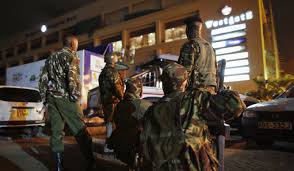
scenes from the Westgate Mall

A scene from the Westgate Mall siege

And then Westgate happened. At around noon on September 21st three groups of armed men (and allegedly at least one woman) stormed the upscale mall in Nairobi and started shooting indiscriminately. Several hours after the attack started Al-Shaabab claimed responsibility via twitter. A day later, the Islamist group gave an alleged list of the gunmen, all men between the ages of 20-27. Six were from the US, two from Somalia, and one each from Kenya, the UK, Finland and Syria. More than 36 hours after the attack began at least 69 people had been confirmed dead, including one gunman and two Kenyan officers. A visibly incensed President Uhuru Kenyatta condemned the attacks, and reassured Kenyans of a swift response to punish the perpetrators. Just a few minutes earlier Al-Shaabab had claimed responsibility for the attacks, terming them a retribution for Kenya’s invasion of Somalia in 2011. The Kenyan Defence Forces, under Operation Linda Nchi, invaded Somalia following sporadic kidnappings and attacks along the Kenya Somalia border. The forces still remain in Somalia under the command of AMISOM.

So how will Kenya respond? There will be both short-term and long-term responses to the daring terrorist attack. The likely short-term response holds more risk, and may even jeopardize the strategic objectives of the long-term response.

Understandably, in the short-term there is going to be considerable public pressure for a swift military response from the government. In the coming weeks the government’s response will likely involve both domestic crackdowns in suspected Al-Shaabab havens in Kenya (most likely in Nairobi, the Coast and North Eastern regions) and military operations against Al-Shabab targets within Somalia.
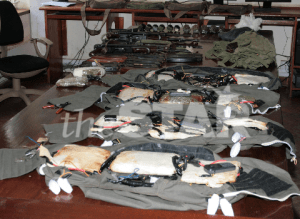
eastleigh

police recover suicide bombs in a past operation in Eastleigh (Courtesy of the Star Newspaper)

Crackdowns within Kenya will come with a lot of risk. Depending on how they are carried out, the government could end up walking right into Al-Shaabab’s trap by alienating Kenyan Muslims and ethnic Somalis who make up the majority of residents in Coast and North Eastern regions of the country that border Somalia.

Ethnic Somalis (both Kenyan and Somali nationals) also make up the majority of residents in Eastleigh, a district of Nairobi that has in the past witnessed government crackdowns targeting cells linked to the Al-Shaabab militant group.

Kenyan security forces must therefore proceed with extreme caution to ensure that as few innocent civilians as possible are arrested or roughed up by security forces in any operations within the country. A repeat of reported cases of police brutality in North Eastern following the murder of army officers by gunmen would be a terrible mistake. It is also vital that the government stresses the unity of all Kenyans of all ethnic extractions against terror attacks. Any victimization of ethnic Somalis must be met with swift punishment.

Military operations within Somalia will likely involve significant cooperation with Mogadishu, pro-AMISOM militia in Jubaland, AMISOM and the US and may not be completely under the control of Nairobi. I suspect that Nairobi might push for a more aggressive hunt for the leaders of Al-Shaabab, including Samantha Lewthwaite a.k.a. the “white widow,” a British national that is rumored to have been the mastermind of the Westgate Mall attack. Lewthwaite, the widow of London 7/7/2005 suicide bomber Jermaine Lindsay, is suspected to be on the run in Mombasa, Kenya with her four children. Crucially, any military operations in Somalia must be informed by analysts’ observation that it might be the case that Al-Shabaab is a group on the decline that is just lashing out to maintain relevance.
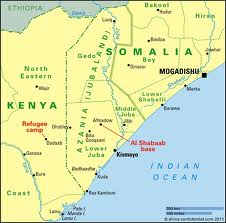
jubaland

An outline of the Jubaland region of Somalia

In the long-run, Nairobi will most likely push for a more robust Somali solution to the security crisis posed by the lack of a functional state in its backyard. Top on the agenda will be the strengthening of the security apparatus in the administration of Jubaland, the Somali state that is on the border with Kenya (For a detailed analysis of the situation in Jubaland see here). The creation of Jubaland has long been a goal of the Kenyan government as a buffer against the chaos that has been Somalia for the last two decades. Despite obvious objections from Mogadishu, Nairobi has never publicly denounced this policy goal. The brazen attack in the capital creates even more need for a strong buffer region that can help the Kenyan security forces to deal effectively with a terrorist group that appears desperate and willing to do just about anything to remain relevant. The success of this policy will depend on Mogadishu’s ability to veto it, and support from Ethiopia and AMISOM.

Ethiopia, Djibouti, Somaliland, Puntland and Kenya all have reasons to support the creation of Jubaland, or in general, a more decentralized state in Somalia. Kenya, Djibouti and Ethiopia remain wary of a potential rise in Somali nationalism and any irredentist attempts that might follow to unite all lands that make up the so called Greater Somalia – which would include the Ogaden in Ethiopia, North Eastern region of Kenya, and Djibouti. This is not a crazy fear. Mogadishu once attempted this in the late 1960s in a botched operation (in the Shifta and Ogaden wars) that ultimately led to a military coup and the rise of Siad Barre to power (See Laitin, 1976 [gated]). Ethiopia has the most to worry about regarding this potential risk. The Ogaden remains at the periphery of the Ethiopian state, giving the Somali population lots of reasons to rebel against Addis Ababa.

In the recent past Kenya has experienced an increasing level of integration of the Somali elite into the Kenyan state. Prominent Kenyans of Somali extraction include the leader of Majority in the National Assembly, the Foreign Minister, the Industrialization Minister, the head of the electoral management body (IEBC), among others.

Furthermore, many Somalis both Kenyan and from Somalia have in the recent past made significant investments in Kenya, most notably in the real estate sector. A lot of the investments have been means of laundering money got from illicit activities (some say including piracy). Indeed the governor of the Central Bank of Kenya is on record to have said that he could not account for billions of shillings in the economy. With an estimated total of only 20,000 mortgage accounts, most of the Kenya’s real estate boom has so far been financed by cash.

Yes, a lot more needs to be done for the average Kenyan of Somali extraction in North Eastern region, but the Somali elite in Kenya have every reason to not rock the boat and remain wedded to Nairobi. This same elite has so far tacitly supported Nairobi’s policy regarding the creation of an autonomous region in Jubaland.

The powerful imagery of a picture that went viral showing a Kenyan police officer, who also happens to be an ethnic Somali, carrying a baby while shielding three adults as they ran for safety at Westgate is hard to miss.

A domestic outcome of the Westgate attack will likely be greater scrutiny of the police and intelligence forces. The Kenyan police have been exposed in the past for having looked the other way in exchange for bribes to allow gun-runners to do their thing along the country’s highways. President Kenyatta will likely call for a cleaning of house both at Vigilance House and at the NSIS headquarters. All security agencies will likely see closer scrutiny from the political class and calls to pull up their socks. The minister in charge of internal security, Joseph Ole Lenku, probably has his days numbered on the job.

The quest for greater security will be completed by the proliferation of small arms and light weapons in the country on account of civil wars and general insecurity in the border regions with Uganda, South Sudan, Ethiopia and Somalia. According to a 2012 a study by the Small Arms Survey and the Kenya National Focus Point on Small Arms and Light Weapons, there are between  530,000 and 680,000 firearms in civilian arms across the country. The government must tighten its disarmament operations. Westgate has shown that AK-47s are not just the weapons of cattle rustlers, bank robbers and carjackers.

Will the reforms succeed? Very likely. The Kenya Revenue Authority is a testament to the fact that when it matters, the Kenyan government can reform key state institutions. The security sector is need of just such a reform drive. Insecurity is on the rise across the country, both from common criminals and organized gangs and terrorists. The Kenyan leadership appreciates that insecurity is not just bad in terms of risk to human lives. It is also bad for business.

If Mr. Kenyatta’s first term is to achieve even a modicum of success, the security sector must be reformed.

In all likelihood the president’s quest for a successful first term will outrank a few officers’ venal machinations within the administration. Police ineptitude in dealing with common petty and not-so petty crime creates loopholes for spectacular attacks like Westgate. Reform will therefore need to go beyond capacity building within the Special Forces and dedicated anti-terror units.

For regular Kenyans, life in Nairobi will never be the same again. It is almost impossible to imagine that things that most only read in the news could happen right at home; that a Saturday afternoon at the mall could turn into a ghastly massacre. It will take time before the capital, and the nation, finds its new normal, if at all it does.

blooddrive

Kenyans queue to donate blood at Uhuru Park on Monday Sept. 23rd (Source: The Standard)

So far Kenyans’ resiliency has been outstanding. People showed up in their thousands to donate blood. Buses in Nairobi lowered their fares to take people to blood donation points. More than 40 million Shillings has so far been raised through MPesa for affected victims. Never before in my life have I felt or seen this level of patriotism from fellow Kenyans.

I hope it sticks. Especially because the country will need it in the next few weeks and months as the government formulates and effects a response to the Westgate Mall attack.
President Uhuru Kenyatta’s statement following Westgate terror attack

Fellow Kenyans,

This morning, a group of armed terrorists forcefully entered the Westgate Mall in Nairobi’s Parklands area and unleashed senseless violence upon customers and workers. They have killed at least 39 innocent people and injured more than 150 others. With the entire nation, I stand with the families of those who have lost their lives and extend every Kenyan’s deepest condolences. (I know what you feel having personally lost very close family members)

I ask God to give all of you comfort as you confront this tragedy. My Government will provide the support you will need in the days to come. To those who were injured, I wish you a quick recovery from the physical and other shocks you underwent today. The Government will be at hand to ensure that your lives return to normal as quickly as possible. The people of Kenya have been wonderful, as always. With your support we safely evacuated hundreds of people from the Mall. I salute your conscientious and selfless acts of solidarity in response to the terrorist attack. 

Your courage and sympathy saved lives and reassured countless people.

I commend those who volunteered by giving first-aid, transporting the injured to hospital, donating blood, locating and contacting loved ones and making it easy for rescue, medical and security personnel to do their work. I appreciate those who have used media to rally help of all kinds, condole with and comfort the affected and thank all those responsible citizens who have desisted from spreading panic and despondency. Please continue helping, and continue praying.

The despicable perpetrators of this cowardly act hoped to intimidate, divide and cause despondency among Kenyans. They would like us to retreat into a closed, fearful and fractured society where trust, unity and enterprise are difficult to muster. An open and united country is a threat to evil doers everywhere. With our values of solidarity and love for our homeland, we fought proudly and bravely to secure the freedom to lead our lives as we choose. Our choice is codified in our Constitution. 

We have overcome terrorist attacks before. In fact, we have fought courageously and defeated them within and outside our borders. We will defeat them again. Terrorism in and of itself, is the philosophy of cowards. The way we lead our lives; in freedom, openness, unity and consideration for each other represents our victory over all those who wish us ill. We are as brave and invincible as the lions on our Coat of Arms.

My Government stands ready to defend the nation from internal as well as external aggression. I urge all Kenyans to stand together and see this dark moment through. Donate blood. Provide information to the authorities. Comfort and reassure the affected families. Let us ashame the Devil and his works by demonstrating our timeless values of love, compassion and solidarity. Our security forces are conducting a multi-agency response to this attack as we speak and are in the process of neutralizing the attackers and securing the Mall. 

It is a very delicate operation as our top priority remains to safe guard the lives of innocent people held up in this unfortunate incident. But let me make it clear. We shall hunt down the perpetrators wherever they run to. We shall get them. We shall punish them for this heinous crime. 

I have directed security agencies to be decisive in their response to this or any other threat. They must and will do this to demonstrate our constitution’s categorical guarantee of Kenyans’ indefeasible rights to life and property.

Across the country, we have tightened security but I urge all of you to remain calm and vigilant.

God bless you. God bless Kenya.

How does Chinese aid interact with level of democracy in poor countries?

It is a commonly accepted idea in IR theory that states have the habit of externalizing their domestic institutions [and accompanying economic and political systems] in their engagements within the international system (See Katzenstein, 1976 [pdf, gated]) – think democracy promotion, Reagan-Thatcherist free market evangelism, or Sino-Russian coziness with states that have an authoritarian bend. 

This phenomenon has non-trivial implications for development assistance. For instance, poor countries receiving capacity development assistance from say a Scandinavian liberal democracy often need to also adopt related practices beyond the narrow specific field (say tax reform) that is being addressed by the capacity development program. Many projects fail to produce the desired results because of this. Indeed past research has shown that “though aid [from wealthier, mostly Western democracies] does not affect quality of life in the aggregate, it is effective when combined with democracy, and ineffective (and possibly harmful) in autocracies.” [Kosack, 2003- pdf]

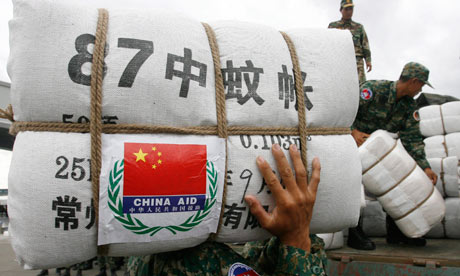
So does the effect of Chinese aid/finance to poorer countries follow this pattern? In other words, does the institutional incongruence effect also hold for autocratic donors? Image

The folks at Aid Data blog think it does: 

…… we estimate the relationship between Chinese development finance and human development in democratic and autocratic recipient countries. Our results show a negative relationship between Chinese development finance and human development in democratic countries. Interestingly, these results also suggest that Chinese development finance can successfully promote HDI growth for autocratic recipients. Kosack found the opposite pattern in his study of Western aid.

The findings are preliminary and may not withstand robustness checks, but all the same interesting.

More on this here.

Also, check out the Economist for a neat analysis of the potential impact of a Chinese economic slowdown on African economies.

On the quality of higher education (and human capital development) in Africa

This post first appeared on the African Development Bank’s Integrating Africa Blog where I am a regular contributor. 

UPDATE: I got an email from readers working with the Regional Initiative in Science and Education (RISE), exactly the kind of collaboration that I am saying is much needed in Africa. Check them out here.

According to The Times Higher Education World University Rankings 2012-2013, the highest ranked university in Africa, the University of Cape Town, is 113th in the world. The ranking system employs 13 performance indicators that take into account universities’ core functions, including “research, knowledge transfer and international outlook.” Among the leading 400 world academic institutions, there are only four from Africa, all in South Africa. As a region, Africa only has 35 scientists and engineers per million inhabitants, compared with 168 in Brazil, 2,457 in Europe and 4,103 in the United States. The region is clearly behind as far as knowledge production and dissemination is concerned, producing only 1.1 percent of the world’s scientific knowledge, despite comprising more than 13 percent of the global population.

At barely over 8 percent, Africa’s gross enrollment in tertiary institutions of learning is the lowest of any region in the world (UNESCO, 2011). The average enrollment rate for developing countries is 23 percent, and that for advanced countries is 74 percent. Africa’s poor showing in the higher education sweepstakes is both a cause and effect of the region’s poor economic environment. The massive cuts in higher education funding in the wake of the structural adjustment programs of the 1980s and 1990s, even as enrollment more than tripled between 1991 and 2005, have had an adverse impact on quality. And in turn, the lack of high quality tertiary level education has starved the region of high skills needed for efficient allocation of factors of production thereby stunting improvement in productivity, high value addition and research and development. Africa devotes less than 1 percent of its GDP to research and development.

Data from 33 countries for which it is available show that tertiary education financing in the region has declined from a high of US $6,800 per student per year in 1980 to just about $981 in 2005. Over the same period the World Bank decreased its education lending from 17 percent in 1985-89 to just 7.5 percent currently (this is despite the fact that the World Bank nearly doubled its education lending between 2008 and 2009). The decline in public funding in the face of increasing demand for higher education has led to the proliferation of private universities of dubious standards and a bias towards perceived “soft” fields. In 2004 a meager 28 percent of students were enrolled in perceived “hard” disciplines in the sciences and engineering.

A 2008 study of 12 countries showed an increase in public universities from 113 to 188 between 1995 and 2008. Over the same period private universities ballooned from 14 to 107. This rapid increase in the number of universities in the region has not been matched by an increase in the number of trained teaching staff or facilities such as laboratories, libraries, and the like. Indeed, most of the new universities have tended to specialize in vocational subjects that require very little capital and human resource investment. To put it mildly, there is a great mismatch between the region’s development needs and the type of graduates it produces each year.

Image

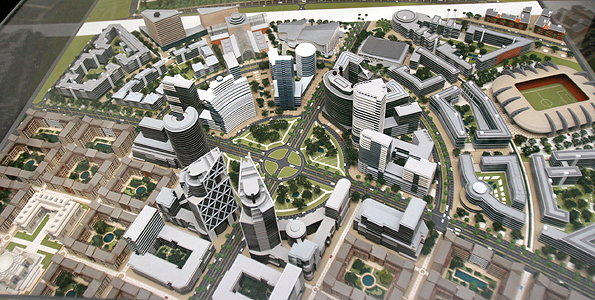
An impression of the proposed Konza City in Kenya

The shortage of skills permeates nearly all skill levels, and could get worse as the region’s economy continues to grow over the next two decades. The case of Kenya is illustrative. The country has an ambitious plan to be the information and communication technology (ICT) hub of Eastern Africa (dubbed the “Silicon Savannah”) complete with a proposed $10 billion techno-city (Konza City) situated about 60 kilometres southeast of Nairobi. Already ICT multinationals, including IBM, Microsoft, Google and Intel, have their regional headquarters in Kenya. All this sounds good, except the lack of local skills. IBM’s research lab in Kenya has had to source for top talent among graduates in computer science, electrical engineering, mathematics, and data scientists from American universities. There is still a shortage of required skills among graduates of Kenyan universities. Quality assurance is also lacking, as recent news reports of “theses for hire” have demonstrated.

As the Kenyan case suggests, the lack of sufficient investment in high quality tertiary education has adversely impacted Africa’s ability to realize its economic potential. A 2005 study showed that a one-year increase in the higher education stock of the region could boost growth rate by about 0.63 percentage points. This adds up to an overall increase in income by about 12 percent over five years. For the region to take off economically there is need for greater investment in quality higher education that will train workers for the 21st century economy. But improving the quality of higher education in the region will be a very costly affair. On their own, the region’s countries lack both the resources (on account of their small economies) and demand (on account of their population sizes) to justify the types of investments required. This is where regional cooperation comes in.

Cross-border educational exchanges are not new in Africa, and go back to the pre-independence era. For generations non-Senegalese francophone students have studied in Senegal, seen as a cheap way of getting quality education at par with diplomas from France. Uganda, with East Africa’s top university, Makerere, hosts legions of Kenyan students, eager to avoid congestion and high costs back home. South Africa, with its many quality institutions is also a preferred destination for students from across the continent. These historical cross-border exchanges have led to the formation of regional associations of higher education – the francophone Conseil Africain et Malgache pour l’Enseignement Superieur (CAMES); Inter-University Council of East Africa (IUCEA); Southern African Regional Universities Association (SARUA); and inter-university cooperation under the Arab Maghreb Union (AMU). Continent-wide, the 208-member Association of African Universities (representing 45 countries) is the umbrella organization of the region’s institutions of higher learning.

These associations need to be strengthened and empowered as drivers of regional harmonization of higher education both to facilitate cross-border inter-university mobility of both teachers and students and guarantee quality assurance. As a 2007 World Bank report aptly noted, “regional quality assurance networks are particularly relevant to Africa because of human resource constraints.” On this score the European Higher Education Area provides a possible model. The just over 10 years old Bologna process is working towards ensuring inter-university mobility (in terms of courses, qualifications, and periods of study) as well as a uniform quality assurance standard. In the African context, a continent-wide area of higher education is infeasible because of language and logistical constraints. However, sub-regional areas of higher education, based on the existing associations, provide a possible avenue to invest in a few good institutions of higher learning that can have a demonstrative effect on national institutions as well set high standards of learning. The associations themselves can also serve as certification bodies to ensure a uniform quality assurance standard (see here).

The announcement in late July 2013 of the creation of a new US $154.2 million multinational science, innovation and technology Pan African University (PAU) in the next five years is therefore welcome. (The African Development Bank (AfDB) has pledged a $45 million grant towards the effort.) PAU will be structured around existing institutions of higher learning across Africa’s five sub-regions. Basic sciences, technology and innovation will be based in East Africa; earth and life sciences including health and agriculture in West Africa; governance, humanities and social sciences in Central Africa; water and energy sciences including climate change in North Africa; and space sciences in Southern Africa.

Thus far, discussions over regional integration of systems of higher education have tended to view tertiary institutions as tools for regional economic and political integration – be it in East Africa, Europe or East Asia. However, the creation of stronger regional areas of higher education – especially in a region like Africa – can also be an economically efficient way of facilitating greater investment in higher education to match the demands of a 21st century economy. It is encouraging that current trends signal a move in this direction. University systems in Africa’s sub-regions would be a good place to start.

I conclude with a caution. The rapid increase in the number of public and private universities in Africa over the last two decades has come at the expense of other post-secondary institutions of learning such as polytechnics (this shift has occurred to a lesser extent in francophone Africa than anglophone Africa). In many countries governments have simply converted polytechnics and other constituent colleges into fully-fledged universities. This trend is worrying, especially given the fact that the vast majority of high school leavers on the continent do not make it to university. The low quality of high school education in the region (as demonstrated by the recent mass student failures in Liberia and Tanzania) is yet another reason why these “bridge” tertiary institutions are needed, both to prepare students for university and to impart valuable skills for those that do not eventually make it to university.

The rush to invest in university education should not distract from the fact that vocational post-secondary institutions, such as polytechnics, are an important component of human capital development, even in advanced countries as is the case in Germany (with its impressive “dual system” of training codified in the Vocational Training Act of 1969). As African economies move from dependence on primary commodities to manufacturing and technology, there will be need for skilled workers at all occupational levels. Doing away with vocational post-secondary institutions will only serve to further inhibit the development of adequate and relevant human capital to match the increased demand for skilled workers.

And now onwards with life after fieldwork…

Image

With findings and humility.

And now onwards with life after fieldwork...