A Ugandan journalist and a politician respond to Kony 2012

Angelo Izama, Ugandan journalist (and a good friend of yours truly) has a thoughtful op-ed piece in the Times. He makes the case that:

Campaigns like “Kony 2012” aspire to frame the debate about these criminals and inspire action to stop them. Instead, they simply conscript our outrage to advance a specific political agenda — in this case, increased military action.

African leaders, after all, are adept at pursuing their own agendas by using the resources that foreign players inject and the narratives that they prefer — whether the post-9/11 war on terror or the anti-Kony crusade. And these campaigns succeed by abducting our anger and holding it hostage. Often they replace the fanaticism of evil men with our own arrogance, and, worse, ignorance. Moreover, they blind us by focusing on the agents of evil and not their principals.

At the same time over at FP Nobert Mao, politician from northern Uganda and former presidential candidate, has the following to say:

It’s clear that the aim of the video [Kony 2012] was never intellectual stimulation. I don’t think the founders of Invisible Children are the foremost analysts of the complicated political, historical and security dynamics in our troubled part of Africa. They certainly wouldn’t earn high marks in African Studies. But I will go to my grave convinced that they have the most beautiful trait on earth — compassion.

Such sentiments matter, even today.  There are those who say the war is over in Northern Uganda. I say the guns are silent but the war is not over. The sky is overcast with an explosive mix of dubious oil deals, land grabs, arms proliferation, neglected ex-combatants, and a volatile neighborhood full of regimes determined to fish in troubled waters. What we have is a tentative peace. Our region is pregnant with the seeds of conflict. The military action in the jungles of Congo may capture Kony, but we need to do more to plant the seeds of peace founded on democracy, equitable development, and justice. Like peace, war too has its mothers, fathers, midwives, babysitters, and patrons. Perhaps Kony 2012 will help sort out the actors. The video has certainly shaken the fence, making fence-sitting very uncomfortable, indeed.

The two may disagree on the usefulness of tactics such as those that made the now famous video, but they certainly agree on the need to acknowledge agency of local actors in all these problems that require outside intervention.

My two cents on this is that there is definitely room for Africans to shape the narrative and tactics of advocacy in Western capitals (or elsewhere). Emotionally charged  mobilization tactics, like Kony 2012, are definitely a distraction from the real issues. But they also present an opportunity for African actors to leverage international attention and support against their own leaders who refuse to deal with problems that affect their daily lives. I am glad that in the case of Kony 2012 Ugandans have stepped in to provide perspective on the narrative and, hopefully, influence the eventual response by the relevant policymakers in DC.
On the unintended consequences of the Sachs-Kristoff syndrome

Badvocacy alert!

[youtube.com/watch?feature=player_embedded&v=Y4MnpzG5Sqc]

With due apologies to the eminent economist and journalist.

Invisible Children’s Kony 2012 publicity push is generating some backlash. Here is quoting Under the Banyan:

Critics of the Invisible Children campaign say that while it is well-intentioned and while Kony deserves international condemnation, there are questions about the organisation’s methods, money and support for military action that need to be answered. Others are revulsed (sic) by the idea of foreigners thinking they can solve an entrenched and complex problem with goodwill alone.

More on this here. And for those interested in the complexity of the issue click here.

I am still learning to block out all the misguided interventions by the members do-gooder industrial complex of our time. Sometimes I wish I could wave a magic wand and make the tenants of State Houses across the Continent to also ignore the prophets of this axis of distraction-from-the-real-problems.

Also, I only discovered Invisible Children after the latest brouhaha but it turns out that Blattman was already in their case three years ago.

H/T A View from the Cave.

A note from Mr. Development Man

Perhaps after experiencing a Bill Easterly moment, a friend of mine (grad student here at Stanford) had this on his facebook wall:

“Hello, my name is Mr. Development Man. I know Africa so much!! I went there one summer and stayed with an NGO. I talked to my servant cook who served me food, so I know African workers. I read a few books written by white Americans about Africa, and remembered their big words. So I know African ideology. African prostitutes talked to me at my hotel poolside, so I know about relationships in Africa. I took pictures of kids at the orphanage, so I know how Africans suffer.

My conclusions: Africans are corrupt. The place is poor because of poor policies. And my knowledge can help them. If they just listened to my smart American knowledge — obtained from the 2 months at the NGO, my white man books, my prostitutes, my few words with my servant cook — they would develop!! Why don’t they listen to me?? I can help them…Stubborn, corrupt African politicians…

Signed, Mr. Development Man. Remember, I am here to help you Africa!!”

I have a sense that Mr. Development Man’s note is directed at both development practitioners and academics alike. Let us all take heed.

Chad, who is into short stories and is also a late night radio DJ, wrote this Letter to Mr development man on the dynamics of the love-hate relationship between donors and aid recipients.

H/T Chad.

Guinea’s Alpha Conde attacked

President Alpha Conde, Guinea’s first elected president since independence, appears to have survived a coup attempt in the early hours of Tuesday. Mr. Conde’s residence was hit by rocket fire in what appears to have been a coup attempt.

The latest turn of events makes one wonder if Paul Collier’s rather crazy unorthodox proposals might be worth a shot. [Collier, among other recommendations, proposes an international guarantee of sorts that democratically-elected governments that remain true to proper governance will be protected from the army and other armed thugs that might want to overthrow them.]

I believe that local horse-trading should always be given a chance before the internationals fly in to impose agreements on feuding factions. But when local factions have fought each other to a stalemate – as is the case in Chad, Central African Republic, Guinea, Guinea-Bissau and Somalia – it might be time for the international community to provide a helping hand. Millions of civilians should not be left to suffer simply because a few men cannot strike a stable deal. The interventions will be nuanced and complicated and messy – so I can’t spell out the terms here – but simply sitting back and watching is not an option.

Simply stated, the men with guns in Guinea are irresponsible.

Guinea is also a budding narco-state. I would not be surprised if the latest attack on the president is linked to the emerging drug problem in west Africa. It is common knowledge that the son of the immediate former president of Guinea, Ousmane Conte, has/had ties with the drug trade. President Joao Vieira of Guinea-Bissau and the country’s top military officer were killed in 2009 in what was rumored to be a drug-related feud.

Mr. Conde was elected in a run off with 52% of the vote. Two years earlier in 2008 the army carried out a coup following the death of the country’s second president, the late Lansana Conte. Mr. Conte himself came to power in a coup following the death of Guinea’s firebrand founding president Sekou Toure. Many hailed the generals’ decision to return to the barracks in 2010 as a new turn in Guinean politics. They were wrong.

The BBC reports that a former army chief, Nouhou Thiam, has been arrested in relation to the Tuesday morning attack.

Rants and Raves / Thoughts on the African Union

The African Union (AU) has had a rough few months. The diplomatic failures in Zimbabwe, Cote d’Ivoire, and Madagascar exposed the organization’s incompetence. The misguided anti-ICC crusade continues to cement the image of the organization as nothing more than a club of out-of-date and tone deaf autocrats. To many observers, calls for “African  Solutions to African Problems” amid all this failure has been seen as a cover of impunity and mediocre leadership on the African continent.

It says a lot that the current chairman of AU is President Theodore Obiang’ of Equatorial Guinea; a man who leads an oil-rich country of under 0.7 million people, with a per capita income of more than 30,000; but with more than 70% of its population living on less than $2 a day.

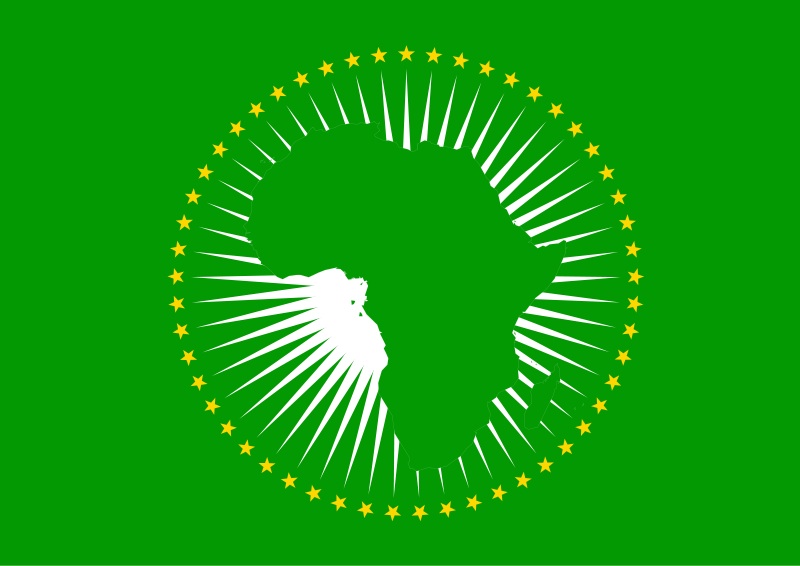
The epitome of the organization’s woes was the total snub it got from NATO before the military campaign against Libya’s Gaddafi, one of the AU’s main patrons. The AU was created by the Sirte Declaration, in Libya. Mr. Gaddafi’s influence ranged from his “African Kings” caucus (in which he was the King of Kings) to investments from Libya’s Sovereign wealth fund. I bet Gaddafi had a hand in the organization’s green flag.

So what ails the African Union?

The AU’s problems are legion. In my view, the following are some of the key ones.

  1. Lack of a regional hegemon(s): The AU faces massive collective action problems. With no regional hegemon(s) to act as the rudder of the organization, most of the organization’s resolutions are not worth the paper they get written on. The rotating chairmanship is a distraction from the real leadership needed in the organization. For instance, I had to google it to find out who’s currently in charge of the presidency of the EU (Poland). Everybody knows that France and Germany run the EU. Their word has gravitas in the Union. In the AU on the other hand, there is no leader. Could it be Navel-gaving South Africa or serially under-performing Nigeria?
  2. Too much political control: Most successful international organizations, despite having political principals, tend to have technical agents that are to some extent shielded from the principals. The AU is political through and through. The key decision-making body is the assembly of heads of state. The council of ministers does nothing. And the commission is all bark and no bite. Cronies of dictators staff most of the key positions in the organization.
  3. Disconnect from the masses: Most Africans have no idea what exactly the AU does. What is the point of the organization? Is it to preserve Africa’s borders? Is it to defend the likes of Gaddafi when the ICC’s Mr. Ocampo comes calling? Giving the people a voice in the Union might force the organization to do the people’s bidding, instead of being a protector of impunity in the name of African sovereignty.

What would reforming the AU entail?

  1. Radical restructuring: Like all inter-state organizations, the AU’s leadership should reflect regional power differences. The current assembly – in which Chad has the same power as Nigeria – makes no sense. There should be a smaller assembly of sub-regional representatives (West – Nigeria; East-Ethiopia; North – Egypt; and South-South Africa) with veto power and the mandate to implement the organization’s resolutions.
  2. Competent staffing: The practice of presidents appointing their sisters-in-law as AU representatives should go. An injection of competent expertise into the organization would go a long way in making it appear to be a more politically independent, competent and respectable organization.
  3. Direct elections to the AU parliament or no parliament at all: Instead of having the members’ parliaments elect representatives to the AU parliament, there should be direct elections. If that cannot happen then the parliament should be scrapped all together. A toothless and unrepresentative parliament is a waste of resources.
  4. Constructive and focused engagement with the rest of the world: Who is the AU chief foreign policy person? Are there permanent representatives in Beijing, Brussels, Brasilia, New Delhi and Washington? Why aren’t they trying to initiate a collective bargaining approach when dealing with these global powers (even if it is at the sub-regional level)? And what with the siege mentality? Not every condemnation of African leaders’ incompetence and mediocrity is a neo-colonial conspiracy, you know. For instance, instead of whining against the ICC’s Africa bias, the AU should clean up its own house. It doesn’t matter that George Bush is not being tried for crimes against Iraqis. The last time I checked none of the leaders of Switzerland was being tried for crimes committed in the German cantons.
  5. A more consistent commitment to progressive ideals: The AU is the only organization in the world that includes in its charter the provision to intervene in its member countries under the principle of responsibility to protect. If the AU were slightly more serious, the disasters in Zimbabwe, Cote Ivoire and Madagascar could have been nipped in the bud. As things stand it is only tiny Botswana that keeps shouting about the organization’s commitment to proper governance and responsibility to protect.

I am not a fan of the idea of the United States of Africa. That said, I believe that a regional organization like the AU can be a force for good. But in order for it to fulfill its purpose, it has to change. The change must reflect the regional power balance; it must increase the competence quotient in the AU and it must increase the voice of the average African within the organization.

Failed states index out, the usual suspects top the list

FP has the annual list of failed states. The Continent has a heavy presence on the list, with the usual suspects like Somalia, Sudan, Chad, Niger and Central African Republic, among the top failures. Also on the list are otherwise stable places like Uganda, Nigeria, Kenya, Ethiopia, among others.

The list is, in some sense, a reminder that several states out there are in dire straits. Insecurity and poverty continue to be a daily experience of far too many people. But it also raises methodological questions regarding the rankings. Some of the rankings certainly do not make any substantive sense and merely feed into alarmist stereotypes we already have of certain countries or regions of the world.

Methodological issues aside, the list is yet another reminder that despite the recent surge in Afro-optimism, a lot still needs to be done in order to improve the human condition in Africa, among other regions of the world.

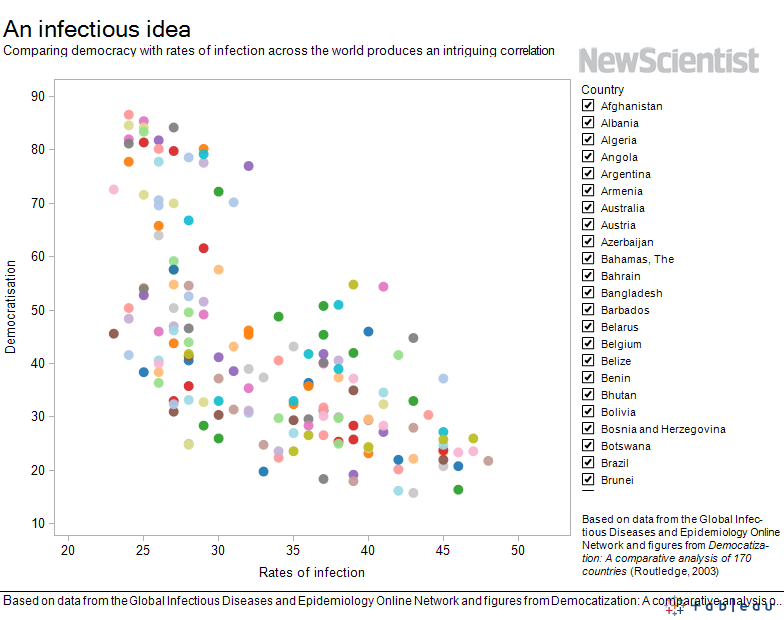
Dictatorship and Disease

Most Bad things go together.

Like Keating at FP, I am unwilling to make any causal claims linking dictatorship to disease or vice versa but suffice it to say that most people who live under dictatorships – in Chad, Zimbabwe, Myanmar, North Korea, etc – do live despite great odds occasioned by their respective governments’ incompetence and runaway lack of accountability.

It is not obvious that democracy necessarily leads to good outcomes. In this regard I agree with Huntington that it is not the type of government that matters but the degree of government. China and Rwanda, for instance, are competent autocracies with high degrees of government. They also register much better outcomes than many nominal democracies out there

(Just for the record, this is not to say that we should not promote democracy. Despite the sobering reality of this world, I believe that everyone should do all in their capacity to help disperse power whenever they see it being concentrated in one individual or institution — paraphrasing my officemate Tomer).

africa’s Middle class

Elizabeth Dickinson at FP reports:

Given all this, perhaps the only thing about Africa that isn’t changing quickly is our perceptions of it. There’s an image impressed in all of our minds of a starving child, symobilizing an impoverished continent. If that was ever true, this is an excellent reminder that today, it’s at most a snapshot. Yes, there’s great human suffering and it’s not hard to find. But Africa as a whole is becoming a middle class continent.

It is hard to completely buy Dickinson’s optimism given the fact that Somalia, the DRC, Chad, Central Africa Republic, Sudan, among others are still far from being stable polities. The precarious nature of the stability in the more stable African states such as Uganda, Kenya, Ethiopia, Rwanda e.t.c. are also cause for concern.

That said, the reality is that there are many Africas. Those who fail to internalize that fact continue to do so at their own peril. Just ask the Indians and the Chinese.

the political economy of violence

The Economist reports:

YESTERDAY it was Afghanistan and Congo. Today it is Côte d’Ivoire and Libya. Violence, it seems, is always with us, like poverty. And that might seem all there is to be said: violence is bad, it is worse in poor countries and it makes them poorer.

But this year’s World Development Report, the flagship publication of the World Bank, suggests there is a lot more to say. Violence, the authors argue, is not just one cause of poverty among many: it is becoming the primary cause. Countries that are prey to violence are often trapped in it. Those that are not are escaping poverty. This has profound implications both for poor countries trying to pull themselves together and for rich ones trying to help.

Many think that development is mainly hampered by what is known as a “poverty trap”. Farmers do not buy fertiliser even though they know it will produce a better harvest. If there is no road, they reason, their bumper crop will just rot in the field. The way out of such a trap is to build a road. And if poor countries cannot build it themselves, rich donors should step in.

Yet the World Development Report suggests that the main constraint on development these days may not be a poverty trap but a violence trap. Peaceful countries are managing to escape poverty—which is becoming concentrated in countries riven by civil war, ethnic conflict and organised crime. Violence and bad government prevent them from escaping the trap.

Interesting piece. It is particularly important to note that violence affects everyone’s investment decisions, whether rich or poor.

The thing about poor places is that everyone is poor, elite or not.

No matter that Theodore Obiang’s son is buying the second most expensive boat in the world. If he has to hop on a plane to LA to have fun – instead of say, creating Africa’s Dubai in oil-rich Equatorial Guinea – he and his father remain tin pot dictators. The same applies for Idris Deby of Chad, Biya of Cameroon and many others. These dictators may have property abroad but the fact that they cannot accumulate property at home because of structural insecurity of their property rights (a coup is always a crazy junior officer away) continues to confine their countries to penury.

What do you do when even the dictator does not have stable property rights? How can you develop when no one is secure enough to invest in factories?

institutions, culture and economic development

I am currently taking a class taught by Avner Greif, an economist/economic historian at Stanford in the tradition of New Institutional Economics. The class introduces ideas about economic development from a perspective that does not get much attention from economists, i.e. culture and its impact on long-run institutional development.

In one of the readings Tabellini argues that:

Well functioning legal institutions breed good values, since legal enforcement is particularly relevant between unrelated individuals. …… better informal enforcement sustained by ongoing relations in a closed network may be counterproductive for values.

Thus, the model predicts that clan based societies develop very different value systems compared to modern societies that rely on the abstract rule of law.

That’s in The Scope of Cooperation.

The paper provides a model of the recursive interaction between good institutions and culture. The scope of cooperation and interaction matters for institutional and economic outcomes. Clannishness, whether in Southern Italy or Mogadishu, is bad for economic development.

But you need a functional state system for people to be able to even contemplate abandoning the insurance scheme that is the clan. The model predicts two steady-state equilibria. Institutionally speaking, you are either Botswana or Chad.

child-bride index

African states dominate the Economist’s child-bride index, with the Sahelian states of Mali, Niger and Chad in the top three. They also have the lowest literacy rates among their female populations.

This is one of those problems associated with “culture” that most development experts shy away from. My take on this is that the cultural defenses of such practices is a lot of horse manure.

There is nothing African about marrying off a 12 year old girl.

Most child marriages have deep-rooted economic motivations. In most cases it boils down to the bride-price. Solving the problem will therefore require not just laws that throw “human rights” at young African girls, but a concerted effort that also includes development practitioners to provide alternative income to men who marry off their 12 year-olds in exchange for goats.

sustaining african (imp)unity

There is something to be said about the fact that the International Criminal Court (ICC) has mostly concentrated on atrocities committed on the African continent. Charges of a regional bias emerging from African State Houses definitely have some truth to them. For the court to appear serious about ending offenses that shock the human conscience like genocide and ethnic cleansing it must have a balanced, global reach.

That said, the current anti-ICC mood widespread across Africa is unfortunate. The African Union (AU) defended Sudan’s Omar al-Bashir against the ICC. Now it emerges that Kenya is lobbying other African states to garner support for an anti-ICC resolution in the upcoming AU summit later this month. Four prominent Kenyan politicians, a former police commissioner and a media personality have been named by the ICC as key suspects in the violence that rocked the East African nation in 2007-08.

In retrospect, the ICC might have shot itself in the foot by aggressively pursuing the Kenyan case. Mr. Ocampo’s actions betrayed the ill-informed view that Africa’s many diverse countries are all the same. Kenya is not Sierra Leone. The country receives less than 5% of GDP in overseas development assistance and has considerable regional influence. Many have been shell-shocked by Kenyan politician’s resolve to pull out of the ICC, even in the face of international pressure. Their threats are credible because they know they can without too high a cost.

The biggest losers from this anti-ICC drive within the AU will be citizens of poorer, less able African states. It is places like Chad, (North) Sudan, Central African Republic, Niger, Guinea, Zimbabwe, among others, where the collective interests of targeted communities are more or less not represented in the capital that most need the ICC. If Kenya succeeds the Deby’s and Mugabe’s of this world will get even more emboldened.

Impunity on the African continent is on the rise, again.

ushering in the new year

Happy new year to all readers.

2011 will be a crucial year for a few countries on the Continent. On January 9th Southern Sudan will vote for secession, creating the newest state in the world. The aftermath of that might be all out war with North Sudan (over borders and oil) and/or civil war in the south (ethnically motivated warfare over control of the new state). That is what most analysts predict. I think there is a glimmer of hope for peace due to heavy Kenyan investment in the south and the desire to build, link and orient the new nation towards the East African Community. Watch this space as it all unfolds.

Uganda will hold elections on February 18th. Yoweri Museveni will win big and dig in even more now that Uganda has oil in the west of the country. Also bolstering Mr. Museveni’s hold on power will be the LRA’s delusional insurgency in the north of the country and the continuing war on terror in the horn of Africa – Uganda’s troops form the core of the African Union (AU) forces in Somalia. Mr. Museveni has been in power since 1986.

The other major election will be in Nigeria, the continental behemoth in the west. President Goodluck Jonathan is favored to win, but his victory will most certainly be tainted with chaos and irregularities.

Other countries holding elections in the new year are Central African Republic, Benin, Madagascar, Cape Verde, Chad, Djibouti, Niger and Liberia.

Electoralism remains largely dysfunctional and inconsequential in Africa because of a myriad of structural impediments (poverty, weak institutions, monarchical presidentialism, etc). In the recent past events in Kenya, Zimbabwe and Cote d’Ivoire have shown how far the Continent is from being a liberal democratic paradise (may be democracy is not for everyone at all times?). 2011’s elections will no doubt fail to buck the trend.

africa in the news

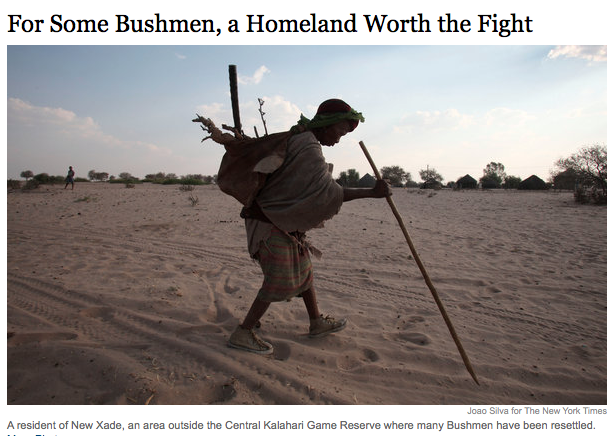
Forget about the elections in Tanzania or the Ivory Coast. What matters for the American audience as far as news from Africa go are human interest stories such as this one which made it to the front page of the New York Times.

I echo the point of the Times piece. It really sucks being a hunter-gatherer in Botswana. And by extension, it really sucks being a citizen of Chad, Niger, Uganda or any one of the 40 other countries that make up sub-Saharan Africa. Despite the “good news” (see earlier post below) things are really bad on the Continent.

Africa deserves all the bad press it gets. Period. The only problem is that Africans have not been able to participate effectively in the discourse on their continent or attempted to contextualize the bad press. The continent long lost the game of framing the narrative.

interesting links

The Economist has a nice chart showing a cross-section of states and their performance as far as human development goes. Kudos to Benin for doing a good job of improving its human resources. And shame to the tail-enders on the chart on the right hand side.

I just watched this interesting video from the MIT World video archives. Jump to about the 1hr mark to hear his take on African states and their development prospects.

Lastly, Aid Watch has a post on childhood development. For those (Kenyans) out there who think that having the primary school exams determine a kids future is wrong, think again. Everything might be determined at the kindergarten level.