Rants and Raves / Thoughts on the African Union

The African Union (AU) has had a rough few months. The diplomatic failures in Zimbabwe, Cote d’Ivoire, and Madagascar exposed the organization’s incompetence. The misguided anti-ICC crusade continues to cement the image of the organization as nothing more than a club of out-of-date and tone deaf autocrats. To many observers, calls for “African  Solutions to African Problems” amid all this failure has been seen as a cover of impunity and mediocre leadership on the African continent.

It says a lot that the current chairman of AU is President Theodore Obiang’ of Equatorial Guinea; a man who leads an oil-rich country of under 0.7 million people, with a per capita income of more than 30,000; but with more than 70% of its population living on less than $2 a day.
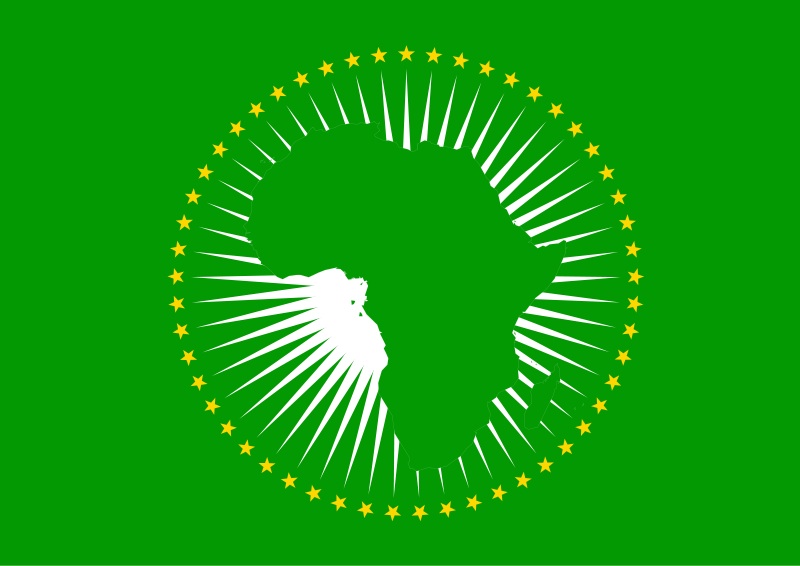
The epitome of the organization’s woes was the total snub it got from NATO before the military campaign against Libya’s Gaddafi, one of the AU’s main patrons. The AU was created by the Sirte Declaration, in Libya. Mr. Gaddafi’s influence ranged from his “African Kings” caucus (in which he was the King of Kings) to investments from Libya’s Sovereign wealth fund. I bet Gaddafi had a hand in the organization’s green flag.

So what ails the African Union?

The AU’s problems are legion. In my view, the following are some of the key ones.

  1. Lack of a regional hegemon(s): The AU faces massive collective action problems. With no regional hegemon(s) to act as the rudder of the organization, most of the organization’s resolutions are not worth the paper they get written on. The rotating chairmanship is a distraction from the real leadership needed in the organization. For instance, I had to google it to find out who’s currently in charge of the presidency of the EU (Poland). Everybody knows that France and Germany run the EU. Their word has gravitas in the Union. In the AU on the other hand, there is no leader. Could it be Navel-gaving South Africa or serially under-performing Nigeria?
  2. Too much political control: Most successful international organizations, despite having political principals, tend to have technical agents that are to some extent shielded from the principals. The AU is political through and through. The key decision-making body is the assembly of heads of state. The council of ministers does nothing. And the commission is all bark and no bite. Cronies of dictators staff most of the key positions in the organization.
  3. Disconnect from the masses: Most Africans have no idea what exactly the AU does. What is the point of the organization? Is it to preserve Africa’s borders? Is it to defend the likes of Gaddafi when the ICC’s Mr. Ocampo comes calling? Giving the people a voice in the Union might force the organization to do the people’s bidding, instead of being a protector of impunity in the name of African sovereignty.

What would reforming the AU entail?

  1. Radical restructuring: Like all inter-state organizations, the AU’s leadership should reflect regional power differences. The current assembly – in which Chad has the same power as Nigeria – makes no sense. There should be a smaller assembly of sub-regional representatives (West – Nigeria; East-Ethiopia; North – Egypt; and South-South Africa) with veto power and the mandate to implement the organization’s resolutions.
  2. Competent staffing: The practice of presidents appointing their sisters-in-law as AU representatives should go. An injection of competent expertise into the organization would go a long way in making it appear to be a more politically independent, competent and respectable organization.
  3. Direct elections to the AU parliament or no parliament at all: Instead of having the members’ parliaments elect representatives to the AU parliament, there should be direct elections. If that cannot happen then the parliament should be scrapped all together. A toothless and unrepresentative parliament is a waste of resources.
  4. Constructive and focused engagement with the rest of the world: Who is the AU chief foreign policy person? Are there permanent representatives in Beijing, Brussels, Brasilia, New Delhi and Washington? Why aren’t they trying to initiate a collective bargaining approach when dealing with these global powers (even if it is at the sub-regional level)? And what with the siege mentality? Not every condemnation of African leaders’ incompetence and mediocrity is a neo-colonial conspiracy, you know. For instance, instead of whining against the ICC’s Africa bias, the AU should clean up its own house. It doesn’t matter that George Bush is not being tried for crimes against Iraqis. The last time I checked none of the leaders of Switzerland was being tried for crimes committed in the German cantons.
  5. A more consistent commitment to progressive ideals: The AU is the only organization in the world that includes in its charter the provision to intervene in its member countries under the principle of responsibility to protect. If the AU were slightly more serious, the disasters in Zimbabwe, Cote Ivoire and Madagascar could have been nipped in the bud. As things stand it is only tiny Botswana that keeps shouting about the organization’s commitment to proper governance and responsibility to protect.

I am not a fan of the idea of the United States of Africa. That said, I believe that a regional organization like the AU can be a force for good. But in order for it to fulfill its purpose, it has to change. The change must reflect the regional power balance; it must increase the competence quotient in the AU and it must increase the voice of the average African within the organization.

Welcoming Southern Sudan to the EAC

UPDATE: A related article on Uganda’s influence in the soon to be independent South Sudan can be found in the New York Times.

In three days the East African Community will celebrate the independence of its next newest member. Because of SPLM connections in Kenya, among other East African nations, the Southern Sudanese economy will most likely orient itself southwards.

Kenya’s Vision 2030 development plan, for instance, will link Southern Sudan to the Indian Ocean coast via a pipeline and railway line. Oil from South Sudan is currently exported through Port Sudan, 3,000 kilometres away. The planned link to Lamu would reduce that distance to 1,700 kilometres.

For Southern Sudan, economic ties with its southern neighbors will not only grant it access to much needed capital and skilled labor but also implicitly guarantee it security against its menacing neighbor to the north.

I doubt that Kenya, Ethiopia and Uganda will sit on their hands if the north decides to bomb local offices of Equity Bank, Ethiopian Airlines or Ugandan retail outlets in Juba (Remember the “Kenyan” tanks fiasco?). It also helps that IGAD has suddenly woken up to the security challenges posed by proxy wars among its member states. Kenya’s president, and current head of IGAD, recently chastised Eritrea for its ties with militant groups in the region.

IGAD will provide yet another forum for the region to put pressure on Khartoum to honor the CPA and not resort to war.

Several Kenyan companies have already set up shop in Juba. About 70,000 Kenyans live and work in Southern Sudan. According to the Business Daily:

Although several major Kenyan companies like Equity Bank, KCB, UAP Insurance and many small enterprises operate in South Sudan, the independence declaration on July 9 is expected to trigger another wave of corporate movement there.

Bidco Refineries that has a dealership in South Sudan, for example, is expected to consider having a physical presence there, said the company’s CEO Vimal Shah in an earlier interview. Kenyan manufacturers are, however, discouraged by low consumption levels and shortage of power, water and sewerage systems.

Co-operative Bank of Kenya is also expected to start setting up its banking infrastructure with a new venture that will be 30 per cent owned by the Government of South Sudan.

The new bank is expected to benefit from government business as it will process salaries of government employees and enjoy business arising from the government’s shareholding in the venture. The peaceful aftermath of the January 9 referendum that voted for secession from the North has helped to improve the country’s risk profile.

Who will stop khartoum?

It appears that the war between north and south Sudan is inevitable. The north overran the disputed town of Abyei last week and now is angling to take over two border states. The Times reports:

Now, according to a letter from the Sudanese military’s high command, the northern army, in the next few days, plans to take over Blue Nile and Southern Kordofan states, two disputed areas with a long history of conflict that are still bristling with arms.

Analysts, local leaders and Western diplomats fear that if the northern army carries through on its threat to push out or forcibly disarm the thousands of fighters allied to the south in these two areas, it could set off a much bigger clash between the northern and southern armies, who have been building up their arsenals for years in anticipation of war.

Malik Agar, Blue Nile’s governor, said Sunday night that northern forces had recently moved “dangerously close” to the bases of southern-allied fighters and that he didn’t think the southern-allied forces would surrender.

A part of me still thinks that Bashir’s sabre-rattling is designed for the northern public. After all he will go down in history as the president who lost the south. In order to avoid immediate ouster he must, at least, pretend to put up a fight. My other side, however, thinks that Bashir (and his generals) might actually want war. Oil and water are on the line.

So how can a war be avoided?

Right now everyone appears to be looking in the direction of the UN for help. But the UN is busy putting out fires elsewhere, not least in Darfur where Khartoum’s forces keep firing at UN helicopters.

That Khartoum would let the south go peacefully was always a long shot. Many analysts had predicted that the north would either finance mini-rebellions in the south or go for a full blown war. It appears that Khartoum is going for both.

South Sudan does not need this war. The whole country has less than 200 Kilometres of paved road, among other mind-boggling underdevelopment records. Its human capital development is lagging behind the regional average by decades. A sustained war would take away vital resources from much needed development work.

Which brings me back to the title of this post. Many a time I have lamented at Africa’s lack of a regional hegemon. A hegemon that would take the mantle of regional conscience and policeman. A regional power that would put out fires even when the UN and the global powers that be were too busy (like they are now) or just plain indifferent (remember the mid-1990s?).

If it occurs the north-south war will be bloody and dirty (read land mines, more child soldiers, crimes-against-humanity tactics). As many as hundreds of thousands of people could die. Millions will be affected. It will also mean more light arms in an already volatile region, not to mention potential for spillovers into ongoing insurgencies in The DRC, Chad, Uganda and Ethiopia. Who will stop Omar al-Bashir and his generals?


Africa needs zuma (to have a coherent foreign policy)

This week the Economist rightly called out South African president Jacob Zuma on his country’s lack of a coherent foreign policy. South Africa was reborn in 1994 with the moral authority and international goodwill to be Africa’s shining light in the world. Instead, under Mbeki and now Zuma, the country has squandered all that away.

Mbeki did it with his intransigence against reason on the issue of HIV/AIDS and support of Robert Mugabe in Zimbabwe. Mr. Zuma is doing the same with his support for Mugabe and equivocal pronouncements against other murderous tyrants on the Continent. Since his election he has not spoken strongly against any injustices or electoral fraud on the Continent; this task has been left to Ian Khama, president of tiny but relatively prosperous Botswana.

Sub-Saharan Africa is desperately in need of a regional hegemon to help it chart a coherent path in global politics. Latin America has Brazil. South Asia has India. East Asia has China. Even Europe has Germany. In Africa, Nigeria (pop. 150+m), South Africa (~40m, biggest economy), Ethiopia (85m) and the Democratic Republic of Congo (~70m) – all potential regional leaders – have woefully underperformed.

Nigeria is Nigeria. Ethiopia is dirt poor and needs to clean its own mess, Somalia’s and Eritrea’s, before it can venture further afield. The DRC is struggling to keep itself afloat. South Africa, by far, has the capacity and the requisite soft power to take up the job of regional guiding light. The country is slated to become a BRIC country soon, making the BRICS (Brazil, Russia, India, China and South Africa).

It is a shame that Mr. Zuma has chosen to abdicate his role as the Continental leader. He alone, among the members of the Continent’s club of kleptocratic autocrats (a.k.a AU), has the clout to stand up to the evils we continue to see in Cote d’Ivoire, Darfur, Zimbabwe and elsewhere.

Afro-American relations and Justice

FP Magazine reports:

In short, all the carrots that U.S. diplomats are offering the Sudanese president seem to be working. Among the prizes for Khartoum are a U.S. promise to remove Sudan from its list of terrorism-supporting states and a possible visit by U.S. Secretary of State Hillary Clinton, according to the Sudan Tribune. Earlier this month, U.S. State Department officials also signaled that they would be ready to begin normalization following Sudan’s acceptance of the vote.

While the US approach has yielded good results in securing the secession referendum in the South, American policy in the wider region leaves a lot to be desired. Washington appears to be ready to cut a deal with any dictator, as long as they serve a short-term US need.

America needs to do more on Darfur. America needs to do more in Ethiopia, where Meles Zenawi continues to reign with an iron fist without any pretense of respecting human rights. America needs to do more in Uganda, where Museveni has emerged as an anti-terror crusader who does not care for any liberal (in the classical sense) ideals.

The choice between protecting American interests abroad and respecting the rights of other peoples of the world is a false choice. Liberty (the world over) is not incompatible with American security. The ideals embodied in the federalist papers, the American declaration of independence, and the first amendment of the US constitution should not be confined within the US borders as far as American policy goes.

the African Union and its problems

The just concluded AU summit in Addis Ababa, Ethiopia had two key problems to address: the political crisis in Ivory Coast and the legal battles involving six Kenyans who face charges at the ICC. So far the continental body appears to have failed on its attempts to address both problems.

In the Ivory Coast, Mr. Gbagbo’s camp has already declared that the five person panel formed by the AU is dead on arrival unless Burkinabe president, Compraore is dropped. The Daily Nation reports:

The president of Burkina Faso, named on a high-level African Union panel tasked with settling Cote d’Ivoire’s leadership crisis, is “not welcome” in this country, a top ally of strongman Laurent Gbagbo said here yesterday.

And in Kenya, the political football involving the setting up of a credibly clean local judicial system to try perpetrators of the 2007-8 post election violence diminished the prospects of a deferral from the UN Security Council. Kenya must guarantee that it will try the suspects for the ICC to consider a deferral. It does not help that the appointment of high members of its judiciary, including the chief justice, the attorney general and the director of public prosecutions has already been soiled by political grandstanding.

Will Bashir pay for “losing the south”?

Omar Bashir faces a tough few days ahead. More than 99% of Southern Sudanese voted for secession in the just concluded referendum, effectively guaranteeing the split of Africa’s biggest country in July of this year. Many in the North blame Bashir for losing the South. The waves of protests in the Middle East following the Jasmine Revolution in Tunisia is adding fuel to the flames. The Independent reports:

Violent clashes broke out at two Khartoum universities yesterday as heavily armed police surrounded stone throwing students. Social media groups similar to those used elsewhere in the Arab world to mobilise protesters have started to mushroom in northern cities.

One of them calling itself “Youth for Change” has attracted 15,000 members to its Facebook page. “The people of Sudan will not remain silent anymore,” it says. “It is about time we demand our rights and take what’s ours in a peaceful demonstration that will not involve any acts of sabotage.”

Security forces arrested Hussein Khogali, the editor of al-Watan newspaper, whom they accuse of orchestrating the online protests.

And in other news, the African Union summit opened on Sunday with the Ivory Coast top of the agenda. The Continental club of autocrats body agreed to set up a five member panel to continue negotiations with Laurent Gbagbo, the Ivorian president who lost an election but refuses to step down. Also on the AU’s agenda is Kenya’s misguided attempts at battling the ICC through threats of en masse pullouts from the Rome treaty by African countries.

The failure to force Gbagbo out of power and the ill-fated fights with the ICC are additions to the litany of failures that make most on the Continent question the relevance of the AU. In my opinion regional bodies are only as strong as their dominant members. With South Africa continuing to be disinterested in regional matters and Nigeria being Nigeria the AU is guaranteed to remain rudderless into the foreseeable future.

Wikileaks: interesting stuff on Kenyan-Somali relations

The most interesting thing to come out of the wikileaks stuff, at least as far as eastern Africa is concerned, is the story on Kenya’s proposed strategy of dealing with the state collapse in neighboring Somalia. According to the leak, Kenyan security chiefs are considering the creation of an autonomous buffer region in Jubaland – the area of Somalia that borders Kenya – kind of like the ones in Somaliland and Puntland. The capital of the autonomous buffer region would be in Kismayu.

Kenya has a sizeable Muslim Somali population and is afraid of fundamentalist Islamism on its doorstep in a lawless Somalia. A stable buffer region in Jubaland would guard against radicalisation of Kenya’s Somali youth in the northeast, on top of checking the proliferation of small arms in the country.

Kenya also might be thinking long term. A divided Somalia guarantees less chances of success for a greater Somalia irredentist movement if peace ever descends upon the entire country.

Ethiopia is not a fun of the idea. The last thing Addis Ababa wants is an autonomous region that can fund Somali separatists in the Ogaden. The region would also have a demonstration effect on Ogadeni Ethiopians who for decades now have fought for real political and economic autonomy from Addis Ababa.

I don’t think this is a bad idea. At this point anything that would bring order to any region of Somalia is acceptable. I have argued before that the Union of Islamic Courts should have been allowed to establish order and then bought off with aid in exchange for a more sober interpretation and application of Sharia law. The whole debate about how bad they were for women’s rights was horse manure. The Saudis aren’t any better.

Regarding Ethiopia’s concerns, Meles and his men should not export their Ogadeni conflict just as much as they do not want Somali warlords to export their own civil war. The rebellions against Addis in Oromoland and the Ogaden are partly due to Zenawi’s stranglehold on power and the faux-ethnic federalism that currently exists in Ethiopia. More on this soon.

debating africa’s growth prospects

The Economist has an interesting debate going on about Africa’s growth prospects. The consensus appears to be that structural factors – such as institutions, culture, colonial history and what not – are the main culprits in the tragic tale of African underdevelopment. I agree. Bad governance, the historical accident of colonialism which halted the natural processes of state formation, among other things such as historical low population densities and a culture that mystifies most things are what continue to deter African nations from realizing their full potential.

Gilles Saint-Paul argues that:

most African countries are trapped at a “low-trust” equilibrium where basic property rights are not enforced and corruption is rampant. Essentially if I do not expect others to fulfil their side of the contract, it is rational for me not to fulfill mine, and transactions eventually disappear

One of my favorite economists, Daron Acemoglu, adds that:

The economic problems of African nations are a consequence of their postcolonial institutions, which are themselves the continuation of the precolonial institutions.

But Lant Pritchett is quick to remind us of the folly of lumping all the sub-Saharan African countries together, pointing out the stark differences between places like Botswana and Somalia or Cote d’Ivoire and Mozambique.

More here.

au sending more troops to somalia, defends Sudan’s al-Bashir

The African Union Summit in Uganda resolved to send an additional 2000 troops to Somalia. 5000 Ugandan and Burundian troops are already stationed in Mogadishu to prop up the beleaguered transitional government. The same summit resolution also sought to change the rules of engagement to allow AU troops to preemptively attack suspected terrorist al-Shabab strongholds.

Nice and dandy, except so far we can’t make much of Museveni’s threat to take the fight to the Somali insurgents. There are no details as to where the additional 2000 troops will come from within the region. Ethiopia and Kenya share porous borders with Somalia and have large populations of ethnic Somalis and so are highly unlikely to send troops. Tanzania’s large Muslim population may not take well the idea of their troops in Somalia. My guess is that the additional troops will come from either Uganda, Rwanda and/or Burundi or some country from farther afield.

At the same summit current AU chairman President Bingu wa Mutharika of Malawi took fault with the ICC’s indictment of the genocidal Sudanese president Omar al-Bashir. This is yet another proof of what kind of club the AU is. I may not fully agree with the political wisdom behind the indictment of a sitting president (because sadly, justice is highly political) but the likes of Mr. Mutharika should visit Darfur and UN camps in eastern Chad before defending al-Bashir.

southern sudan

As the January 9th, 2011 referendum draws closer the international community is getting concerned about the consequences of Southern Sudanese independence. Many fear that the north, led by the strongman Omar al-Bashir, will not honor the CPA and let the Southerners go. Southern stability is also a concern. Once in the early 1990s the SPLA/M split along ethnic lines (Machar, the leader of the splinter SPLA-Nasir, eventually came back to the fold). Recent skirmishes in the South are testament to the fact that ethnicized civil war may yet visit an independent Southern Sudan.

Check out this post on FP.

In other news, the Continental club of ineffectual autocrats African Union is meeting in Uganda. More on this soon.

Paul Kagame: Rwanda’s “savior” turned despot

Rwandans go to the polls on August 9th. There are no prizes for guessing who the winner will be. President Paul Kagame, who is credited by most to have ended the Rwandan genocide in 1994, has recently had to resort to his darker tendencies to continue his stay in power, even as he walks the tight rope of political liberalization. Given the instability that the whole process has created in the country (grenade attacks in Kigali, murder of opposition leaders, attempted assassinations in foreign lands, ever rising ethnic tension etc etc) one wonders whether Mr. Kagame should stop trying to have his cake and eat it.

Political liberalization means being willing to give up power. But it is obvious that Mr. Kagame is not ready for this. Instead he wants it both ways – by holding sham elections to keep the liberal international community happy and singing his praises while he continues to muzzle the Rwandan domestic democratization movement. He may yet succeed at this, or in the more likely scenario go the way of the proverbial man who tried to ride two donkeys at the same time.

As Bratton and van de Walle have pointed out, “Liberalized authoritarianism…. is an unstable form of regime. Its political openings are easily and summarily shut as strongmen place ever heavier reliance on a shrinking circle of military loyalists. In the worst-case scenarios, blocked or precluded transitions lead to an intensification of political conflict, to anarchy (a regime without rules of any kind) and to the implosion of the authority of the state.”

President Kagame came to power in 1994 after leading the rebel Rwandan Patriotic Front in the conquest of Kigali. Since then he has had a largely positive role in an attempt to heal Rwandan wounds and spur economic development. But 15 years is a long time and it is increasingly becoming clear that Mr. Kagame has overstayed his welcome in State House, Kigali. Like Uganda’s Museveni, Ethiopia’s  Zenawi, and other Continental autocrats, he seems convinced that he is an irreplaceable God’s gift to Rwanda. Someone needs to disabuse him of this belief.

Links I liked

A nice piece by Moussa Blimpo on Aid Watch highlights the urgent need to improve general conditions at African universities. On a related note, I totally agree with Ugandan journalist Andrew Mwenda’s position that Aid should be more targeted – and perhaps at times even to the middle class – if it is to make much impact in Africa. African development in the 21st century will not come from subsistence farmers and vegetable kiosks in the informal settlements. The Continent needs big business. I am not downplaying the entrepreneural ability of those target by pro-poor development initiatives. Far from that, all I am suggesting is that the better educated African middle class have a higher chance of being able to scale up their enterprises and create the kind of firms that will create much needed jobs in most of Africa.

Also, check out Texas in Africa’s posts on the increasingly authoritarian Rwandan government and the goings on in Kivu on the eastern reaches of the DRC. The Ethiopian Strongman Meles Zenawi seems to have gotten away with sham elections (the Ethiopian economy is doing well enough, I guess, so enough Ethiopians still love him) but it is not clear if Kagame will this August or his next door neighbor Museveni next year. Given Rwanda’s recent history the Rwandans will most likely opt for stability at the expense of an open free and fair democratic process. Whatever happened to Kagame, Zenawi and Museveni being the new generation of “enlightened” African leaders….

happy africa day!

Who knew? May 25th marks Africa Day. Some countries like Ghana even celebrate the day as a public holiday. The African Union is 47 today. If you ask me, I think the organization has been as effective as a parachute that deploys on the second bounce. For the longest time conflicts and disastrous leadership have plagued the Continent without much intervention from the Union (which largely remains to be nothing but an autocrats’ club).

In the spirit of the day though here is a more sanguine view of things.

Happy Africa Day!

Pan-Africanism may still be infeasible but the dream lives on. Kudos to Nyerere, Kenyatta, Nkrumah and all the other members of the Continental Pantheon who dreamed of uniting all the peoples of the Continent into one political community.

after sudan, ethiopia

Sudan’s Omar al-Bashir is here to stay. Ethiopia’s Meles Zenawi is up next on a list of African autocrats who face elections this year. Ethiopia holds parliamentary elections on May 23rd in a vote that will determine who becomes Prime Minsiter. Africa’s second most populous country cremains under tight rule by the increasingly despotic Meles Zenawi. It is a foregone conclusion that Mr. Zenawi’s party will win. The only non-academic part of these elections will be how many seats the opposition is allowed to win. Mr. Zenawi has run the country since 1991 when he led a rebellion that overthrew the tinpot dictatorship of Mengistu Haile Mariam.

More on Mr. Zenawi’s rule here.

The other elections coming up in the next month include Mauritius (May 5th) and the Central African Republic (May 16th). Keep track of these elections here.