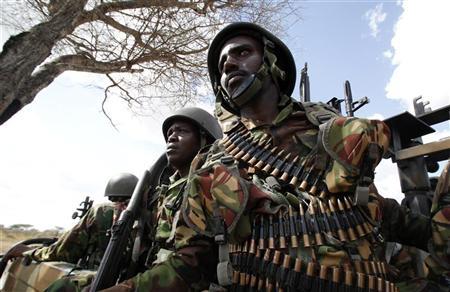
Mitigating violence in Kenya’s 2013 elections

Joel Barkan has a CFR contingency planning memorandum on the Kenyan elections in which he notes that:

The United States and others may have limited leverage over Kenya’s domestic politics, but they are not without options that would significantly improve the prospects for acceptable elections and help avert a major crisis. However, with little more than two months before the elections, Washington must intensify its engagement or forsake its opportunity to make a difference.

But the window might be closing fast on the international community to help Kenya avoid a repeat of 2007-08, when 1300 died and 300,000 were displaced after a bungled election. According to a report by the Global Commission on Elections, Democracy and Security (yours truly was a research assistant for the commission), evidence suggests that international interventions to encourage reasonably free and fair and peaceful elections are most effective when done well in advance to the polling day. In the Kenyan case, the structural causes of previous rounds of electoral violence were never addressed, and may yet lead to the loss of life this election cycle.

What can now be done to avoid large scale organized violence is to credibly convince the politicians and those who finance youth militia (chinkororo, taliban, mungiki, jeshi la mzee, baghdad boys, etc) that they will be held accountable. So far, as is evident in Tana River and the informal settlements within Nairobi, the lords of violence appear to be operating like it is business as usual.

Kenyan Elections 2013 Polling Trends (Presidential Race)

It is less than two months to the Kenyan general election on March 4th 2013. In the next ten days political parties will nominate candidates (either directly or through primaries) for various elective posts – Governor (for the 47 counties), MP (290 of them), Senator (one per county), Woman MP (representing each county), and several County Representatives per county. I suspect the next round of polls will come out after the nomination exercises, which will undoubtedly result in further realignment of the political landscape.

Kenyan political parties are not known for their democratic credentials and I expect quite a few candidates (and their supporters) to shift their support if they feel that they’ve lost unfairly in the party primaries.

As I noted in my last post on the Kenyan elections, the institutional incentives have made it such that the presidential race is one between two main contenders – Uhuru Kenyatta and Raila Odinga. (Mr. Musalia Mudavadi has since fallen out with Mr. Kenyatta and is also running for president, although his candidature is mainly a strategy designed to maintain his political relevance in Western Kenya moving forward.)

Mr. Odinga’s biggest strength is his national appeal and name recognition – having been co-president of some sort (at least on paper) over the last 5 years he is running like an incumbent. He is also widely viewed as a reformer who can be trusted to implement the new constitution. His weaknesses include his proclivity to radicalism, a tendency to surround himself with yes-men from his ethnic group, and the failure to foster democratic competition within his own party – the Orange Democratic Movement.

Mr. Kenyatta’s strengths include his youth, name recognition (he is the son of Kenya’s first president), and his massive wealth (he is perhaps the richest Kenyan). His base (central Kenya and surrounding areas) is the most populous in the country and registered the highest rates of turnout in the voter registration exercise. Added to all of this is the fact that in his running mate, William Ruto, he has one the best, if not the best, political campaigner this election cycle. Mr. Ruto knows how to get the masses excited with memorable talking points. His phrase “kusema na kutenda” (saying and doing) is the main rallying call of this election.

The duo’s biggest weakness is their impending case at the ICC. Mr. Kenyatta is also of the same ethnicity as the outgoing President Kibaki. Many in Kenya feel that the presidency should go to a different region this time round, central Kenya having had it twice. Mr. Ruto is from the same ethnic group as Kenya second president Daniel Moi. Both Ruto and Kenyatta are suspected to be lukewarm with regard to the new constitution. Mr. Kenyatta only reluctantly backed the document while Mr. Ruto campaigned against it.

As we await the next round of polls and the final picture of regional alignments, below is a snapshot of the polling trends over the last 18 months. Mr. Odinga (in my view the slight favorite to be Kenya’s 4th president) has consistently led in the polls since March of 2010. No one has so far cracked the 50% mark. The Kenyan constitution mandates that the winning presidential candidate garner 50%+1 of the votes cast.

Does this mean that there will be a runoff after March 4? The answer to this question depends on how well Mudavadi performs in his Western Province backyard. Having registered the second highest number of voters this cycle (behind Mr. Kenyatta’s Central Province (and its “diaspora”) base), Western Province (and its “diaspora”) is the biggest swing region. Mr. Odinga is banking on the Western vote and may win in the first round if Mudavadi doesn’t have a good showing on March 4th.

click on image to enlarge.

polls

Poll numbers from Infotrak Research.

State of the Presidential Race in Kenya’s 2013 Elections

UPDATE:

Since this post went up Musalia Mudavadi joined the UhuRuto coalition. This sets the stage for a real two horse race for the presidency between Raila Odinga and either Mudavadi or Uhuru Kenyatta. It is very likely that Mudavadi will run as a compromise candidate due to the charges Uhuru is facing at the ICC. This development, considering Kenya’s ethnic arithmetic, essentially gives the Uhuru camp a head start ahead of the March 2013 presidential elections. Whatever happens, this promises to be a very interesting and close presidential election.

***************************************

The presidential race in Kenya’s 2013 elections is beginning to take shape. Yesterday Uhuru Kenyatta and William Ruto unveiled a political pact that will see them run on a joint ticket, with Mr. Kenyatta at the top of the ticket. Messrs Uhuru and Kenyatta both have pending cases at the ICC on charges that they were behind the post-election violence that rocked Kenya in 2007; leaving 1300 death and more than 300,000 displaced. This has led some to dub their joint platform the “ICC ticket,”  since many see the union of the two as solely driven by their joint desire to earn immunity from prosecution by the ICC once they secure the presidency.

uhuru

Uhuru Kenyatta

The second big coalition will see former allies turned foes and then allies – Raila Odinga and Kalonzo Musyoka – come together. Mr. Musyoka is the sitting Vice President while Mr. Odinga is the Prime Minister. The latter is believed by many to have been the winner of the disputed 2007 presidential election. The electoral commission at the time said it did not know who won the election and declared President Kibaki reelected, sparking two months of violence across the country.

The third potential political grouping might gravitate around Odinga’s former deputy, Mr. Musalia Mudavadi. Mr. Mudavadi has been rumored to be in talks with several smaller parties, including those of Peter Kenneth, Raphael Tuju, among others.

Raila Odinga

Raila Odinga

The latest developments will make for an interesting race moving forward. The ethnic arithmetic involved – Kenyans vote largely along ethnic lines – will make for a very close race (More on this soon). Messrs Odinga and Kenyatta are the clear front-runners, with the former having a slight lead in the most recent opinion polls. The constitution requires the president elect to win 50 percent plus one votes, making it very likely that there will be a runoff between the top two contenders after the first round. The ethnic calculations makes Odinga, a Luo, the likely winner in case of a runoff (Uhuru, a Kikuyu, is the son of Kenya’s first president. The current president, Mwai Kibaki, is also a Kikuyu.) But Mr. Kenyatta might still win in the first round.

The biggest uncertainty moving forward will be the candidature of both Uhuru and Ruto. Following the opening of their cases at the ICC they had to resign as cabinet ministers. Already there is a petition in court seeking to bar them from running in the upcoming elections on grounds that their integrity is questionable. The constitution requires only individuals of the highest integrity to be eligible to run for office (It is hard to see how any Kenyan politician will avoid having at least one strike against their candidature).

The supreme court may eventually bar Uhuru and Kenyatta from running – the talk in the street is that if they are unfit to be mere cabinet ministers then they should also not occupy the two highest offices in the country. Their supporters obviously disagree. In their rallies “UhuRuto” have played the nationalist card, insisting that not foreigners (read the ICC) but Kenyans will decide who will be their next president. It is still unclear what course of action they and their supporters would take were they to be barred from running.

More on this soon.

Kismayu Falls, Potential for Consolidation of Gains Still Unclear

Kismayu, the southern Somalia town that was the last holdout of Al-Shabaab has fallen. Kenya Defense Forces (KDF) took control of the town early Friday. It is still unclear what happened to many of the fighters that had dug in to defend the town from KDF and AMISOM.

Somalia recently elected a new president and has shown signs of getting its act together after more than two decades of anarchy.

I hope that AMISOM will consolidate the recent gains and that Somali politicians will seize this opportunity to lay the groundwork for peace and stability moving forward.

I also hope that for KDF’s troubles Somali townspeople in Kismayu, Mogadishu and elsewhere will soon get to enjoy the services and products of Equity, KCB, Uchumi, Nakumatt, among other Kenyan companies. Economic integration of Somalia into the EAC, and similarly South Sudan and Eastern DRC, will be one of the key ways of guaranteeing a lasting peace in these trouble spots and in the wider Eastern Africa region.

More on the developing story here and here. You can also follow updates from the al-Shabaab’s twitter handle @HSMPress.

Photo credit.

The Material Value of the Kenyan Presidency

The following campaign message by Martha Karua, a presidential candidate in Kenya’s election in March of 2013, highlights the material value of the Kenyan presidency.

“Tufanye hesabu tena…Let’s count the cost and keep all of us accountable. A recent research suggested that some presidential candidates will spend as much as Ksh. 11 billion shillings ($130 million) each to try and capture the presidency. Now, at around Ksh. 3.2 million a month including allowances, the President of Kenya earns Ksh 38.4 million ($452,000) a year, much more than what President Obama, the German Chancellor and the PM of England earn, and which translates to Ksh. 192 million in a five year term. So in one five year term, the most a president can hope to earn is around Ksh. 192 million, quite a substantial sum by world standards.

My question; why would anyone spend Ksh. 11 billion to only earn Ksh. 192 million? Does this math add up to you dear Kenyans? How would that individual be hoping to recover the remaining Ksh. 10.78 billion to cover their campaign expenses including buying of votes and bribery? The answer is simple! Corruption and impunity! Inflated government tenders to well connected family and friends. These inflated tenders drive the cost of living for all Kenyans sky high, the very reason ordinary Kenyans can barely make ends meet last 49 years!
Do the Math!”

More on the politics of the ICC decision in Kenya

Here is an excerpt of a piece I have written over at African Arguments:

“While it might be too early to ascertain the full political impact of the ICC’s ruling, there is no doubt that it will provide a real test to Kenyan institutions – especially the judiciary. The courts will have to decide, amid intense political pressure, whether or not the accused are fit to hold public office and by extension whether those that want to can run for president.  Ultimately, however, a lot will turn on the decisions made by President Kibaki. Will he stand by his trusted lieutenants in Muthaura and Kenyatta or will he bow to public pressure and ditch them in an attempt to secure his legacy?”

More on this here.

Justice, the ICC and Kenyan Politics

A panel of judges at the ICC will issue their ruling tomorrow afternoon on whether or not six accused Kenyans will stand trial. The six include two declared presidential candidates. Either way the ruling will have a non-trivial impact on the pursuit of justice for the victims of the 2007-08 post-election violence (PEV). It will also significantly shape the politics of coalition building in this year’s general elections.

Because of the ICC process, the Kenyan justice system has put on ice its own process of holding the perpetrators of the PEV to account. A non-confirmation of the charges against at least some of the six co-accused will add the 2007-08 PEV to the long list of crimes against Kenyans, many of which have been committed by the high and mighty, that have gone unpunished.

Justice is political. Therefore, there is no doubt that if the process of prosecuting the crimes committed in the PEV returns to Kenya none of the big fish will be held accountable. That is the sad truth.

This is why despite the noisy political environment, a majority of the PEV victims (and other Kenyans) still back the ICC process. At the very minimum they want justice to appear to be served.

At the moment the problem of justice remains a worry largely monopolized by the 300,000 or so Kenyans in IDP camps and the relatives of the over 1,300 who were killed. [The media and the political class are squarely to blame for this shameful situation.] For the rest of the country, focus has shifted to the politics of the general elections due later this year. To this we now turn.

Two of the accused, William Ruto and Uhuru Kenyatta have declared their interest in the presidency. Mr. Kenyatta is currently the second most preferred presidential candidate after Prime Minister Raila Odinga. Mr. Ruto, while not as popular nationally, still commands a sizeable chunk of the votes in the country’s most populous province – the Rift Valley. The Rift Valley has also been the hotbed of political violence in country’s history, most of it over land.

A confirmation of the charges will seriously dent the presidential ambitions of Messrs Ruto and Kenyatta. It will make it harder for either of them to sell their candidacy outside of their immediate ethnic constituency. It will also give their opponents (and there are plenty) an opportunity to hold themselves as the clean candidates that ought to succeed Kibaki. Needless to say, a non-confirmation would bolster the duo’s campaigns. What will this mean for the general election?

It is common knowledge that the man to beat in the 2012 election will be Mr. Odinga. The two scenarios above will impact the outcome of the election mainly through their influence on the coalition building abilities of the anti-Odinga crowd.

More on this tomorrow in reaction to the ICC ruling.

Institutions and Political Change in Kenya

These are interesting times in Kenya. The Deputy Chief Justice and Vice President of the Supreme Court, Nancy Baraza, stands to lose her job for harassing a female security guard on New Year’s Eve.

Ms Baraza’s ordeal is interesting because it captures the momentous changes taking place in Kenya’s institutions of governance. The idea that a public official of such high stature could get in trouble for the “simple act” of threatening a security guard was laughable only a few years ago. Not long ago Kenya was divided between wananchi (loosely translates to citizens) and wenyenchi (owners of the country), the latter being virtually above the law. That has since changed. Even the president has in the recent past been forced to reconsider his actions whenever they were deemed to be in contravention of the supreme law of the land.

But the progression towards this state of affairs has not been straightforward – which is why I think that the Kenyan case is a good lesson in contemporary evolution of limited government.

Academic discussions of limited government revolve around the question of how to achieve credible commitment among the veto players within a polity. That is, how competing factions within the state can agree to a modus operandi that makes their interactions predictable and objectively justifiable based on a predefined idea of what actions are legitimate. The most common way to do this is usually to have institutions of state defined in constitutions and to regularly elect public officials.

But as Stasavage has argued, the mere existence of institutions and veto players is not a sufficient condition for credible commitment. There must be a guarantee that specific important veto players will have de facto veto power. In other words, it matters that various factions within society CAN balance each other.

How does this map onto the Kenyan case?

Contrary to the popular view, the story does not begin with the 2007-2008 post-election violence and the formation of the Grand Coalition Government. The story begins with the pro-capitalist policies of president Kenyatta that created room for the emergence of a wealthy upper class within Kenyan society. At the beginning, this class was totally dependent on the state for its reproduction. But over time, segments of the class acquired independence. Under Moi and now under Kibaki there is a sizeable chunk of the economic upper class that makes its money without a personalist connection to the state [You have to take my word on this, for now.]

The fact that both Odinga and Kibaki have had public fall-outs with wealthy co-ethnics who have then decamped to the other side is illustrative of this fact.

It is this emergence of “independent wealth” that provided the foundation of the strong opposition that emerged after Moi retired. Led by Raila Odinga and his allies, these politicians had the money and social capital to challenge the president and his men on equal terms. That is why when stuff hit the fan in 2007-08 Kibaki had no option but to agree to share some of his power with Odinga. The two men knew that neither of them could win the game of “my street against your street.”  It is also why the negotiated settlement that is Kenya’s new constitution was an exercise in give and take, with an absurd emphasis on procedure and self-executing clauses.

The implementation of the new constitution has not been any different. Which takes us back to Ms Nancy Baraza.

It is common knowledge that Ms Baraza was not an establishment appointment to the Supreme Court. She was part of the civil society coup in judicial appointments which also included the Chief Justice. Having “lost the court” the establishment ensured it had control by insisting on maintaining control over the Director of Public Prosecutions and the Attorney General. The establishment also controls the Police Force. Their challengers (who are no angels themselves) had the goodwill of civil society and big enough constituencies in key organs of the state – including the military. They also had a plurality in parliament.

So when Baraza got in trouble due to what appears to be a lapse in judgment, the establishment saw a chance to get her out. But they had to do it within the bounds of due process. And so they have been quick at it. The police (whose top brass will be fired soon by a panel laden with civil society types) conducted a quick investigation and concluded that the DCJ had a case to answer. The Judicial Service Commission has since arrived at the same conclusion, and recommended the Justice’s suspension to the president. The process has thus far been transparent, with very few questioning the legitimacy of the inquiry into the behavior of Ms Baraza.

Meanwhile the civil society has been dead quiet. Many fear that their hard fought gains of having two of their own (The Chief Justice and his deputy) in the Supreme Court will be eroded after Ms Baraza’s departure. I bet that when the dust settles and the debate over who should replace Baraza gets heated civil society (and the Odinga camp) will want to replace her with one of their own. It will be interesting to see if the establishment will move to alter the balance of power by challenging this implied consensus.

The long and short of it all is that it matters that competing forces in society credibly balance each other. In those countries (like in most of Sub-Saharan Africa) where presidents and their men have overwhelming power advantages over their opponents, it will be doubly hard for limited government to come about. If the Kenyan experiment succeeds it will be proof that you need not have an inter-ethnic love-fest or the lack of factions for limited government to emerge.

This is mostly a story about the Kenyan political and economic elites. What about the wananchi/masses? That will be the subject of a future post.

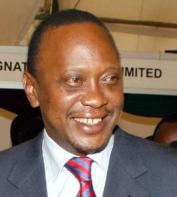
The new constitution and patronage politics in Kenya

Former president Moi infamously liked warning voters that siasa mbaya maisha mbaya (bad politics leads to a bad life). This was code for vote for the opposition and no roads, no schools and no hospitals for you.

The framers of the new Kenyan constitution must have particularly disliked the power of the presidency in doling out development money and other patronage largesse. According to the Daily Monitor (Ugandan Daily):

“From 2012, it is likely to have the most limited presidency in Africa. The president has only about 10 per cent of the budget to dole out his patronage and fund his pet projects. The bulk of the rest are fixed; both by a constitutional cap, and a negotiation process.”

It will be interesting to see how the Kenyan presidency evolves following this revolutionary clipping of its powers. Already the executive has seen its powers watered down by an increasingly powerful parliament. To reinforce this trend, the judiciary has just seen the appointment of a card carrying reformer as Chief Justice. A powerful judiciary will provide a check not only on the presidency but on the wider executive branch as well – especially the now independent and obscenely corrupt Kenyan ministries.

Credit for the relatively more limited presidency also goes to President Kibaki.

Many forget that for a long period of time Kibaki governed with Moi’s constitutional powers. It is a relief that the limited presidency will now be both de facto and de jure, especially because there are way more Mois than Kibakis vying for the presidency in 2012.

A word of caution, though. Institutions are not automatic fixes to problems of governance. They are like incomplete contracts that have to be reinforced by numerous conventions and “gentleman agreements.” The Kenyan political elite may yet find ways to circumvent the spirit of the new constitution.


The private sector is betting that Kenya will survive 2012

As I occasionally care to point out, Kenya is making meaningful progress towards institutionalization of government. According to Joel D. Barkan, the Kenyan parliament is the strongest in Africa. Its judiciary has just undergone radical reforms which saw outsiders from civil society appointed to the country’s newly created Supreme Court. The country’s provincial administration (with pith helmets and all), in the past the key tool of executive repression and control, is in its twilight and will be replaced by a devolved system of counties. The counties will elect their own assemblies, governors and will be funded directly from the consolidated fund.

But many fear that all these reforms could go up in flames in next year’s general election. President Kibaki is term limited and will be stepping down. The frontrunner is Raila Odinga. But new electoral rules – requiring a majority of 50% +1 – complicates matters a bit. Ethnic arithmetic point to an inevitable second round which will be closely fought between pro and anti-Raila factions. Raila is perhaps the most divisive figure in Kenyan politics. Most people tend to either love him or hate him, with a passion.

The prospect of another closely fought election has got many observers worried. 2007-08 is still fresh on many people’s minds.

That is why it is encouraging that the private sector is sending signals that they have confidence in the political system. Multibillion Shilling projects in construction, manufacturing and retail such as this and this are signs that businesspeople do not see that much political risk moving into next year.

These investments are also a vote of confidence in the nation’s property rights regime. The outcome of next year’s general election being unclear, it is significant that businesspeople have faith that their investments will be protected regardless of the outcome.

Kenyan supreme court takes shape

Judicial reform in Kenya made another big leap with the appointment of five individuals to the Supreme Court, the highest court in the land. Njoki Ndungu, Jackton Ojwang, Smokin Wanjala, Mohammed Ibrahim and Phillip Tunoi will join the Chief Justice, William Mutunga, and his assistant Nancy Baraza [Ms Baraza has since been replaced with Justice Kalpana Rawal] on the court.

Mutunga and Baraza will champion liberal views on the court – the Church and other conservative elements in Kenyan society unsuccessfully fought against their nomination to lead the Supreme Court. Messrs Tunoi and Ojuang will represent conservative views. Ndungu, Wanjala and Ibrahim are believed to be centrists.

The Supreme Court will provide the final word on constitutional matters as well as petitions involving presidential elections.

Although one can’t dismiss the possibility of political jockeying behind the scenes, the nomination of all seven justices was a coup for Kenya’s civil society. The Judicial Service Commission sought a clean break with Kenya’s muddy judicial history. None of the high-flying judges from the Moi and Kibaki eras got a nod to join the court.

Because this is Kenya, the JSC also made sure that the seven nominees reflected ethnic and regional balance. The ethnic balance in the nominations will ensure that parliament approves them.

Overall the court appears to have a progressive make up, albeit with a rightward tilt. This is good for Kenya.

In related news, the Kenyan parliament also approved the nomination of Keriako Tobiko to be the director of public prosecutions. Mr. Tobiko’s nomination was not without controversy, with civil society groups and a section of MPs accusing him of corruption and incompetence. In the end his nomination passed through.

The next big battle over judicial reforms will be over the appointment of the Attorney General.

Africa’s budding narco-states?

UPDATE:

The Kenyan Prime Minister just admitted to the presence of drug money in Kenyan politics. Huge. Also, check the UNODC’s drug trafficking patterns for East Africa.

Also, does anyone out there have a copy of the report on drug trafficking in Kenya? Care to share?

****************************************

I have written before about the growing problem of drug-trafficking that is creating new problems for already fragile African states.

Of note is the fact that the problem is not just limited to the usual suspects – weak or failing states – but also extends to countries that most would consider to have it together, like Ghana, South Africa and Kenya.

According to Reuters, “cocaine moves through West Africa” while “heroin transits through the eastern part of the continent.”

The most alarming thing about this new trend is that in most of these African countries drug-trafficking happens with the consent of those in government.

For instance, in Guinea the son of former president Conte was for a long time a leading drug kingpin. In Guinea-Bissau President Vieira’s and Gen. Na Waie’s deaths in March of last year were a result of drug-related feuds. In Ghana President Atta Mills has lamented that the drug lords are too powerful to rein in. In Kenya, a woman (rumored to be) close to the president and other elites have been linked to the drug trade. Indeed on June 1st President Obama listed a sitting Kenyan Member of Parliament (Harun Mwau) as a global drug kingpin.

In South Africa former Chief of Police, Jackie Selebi, was jailed for 10 years in 2010 on drug charges. More recently the wife of the South African Intelligence Minister (Sheryl Cwele) was found guilty of having connections to the illicit trade. In 2009 a Boeing 727 crashed and was later set ablaze by suspected drug traffickers in Mali. The plane is believed to have been a drug cargo plane from Latin America destined for Europe. Other African states whose drug connections have also come to light include The Gambia (where rumors abound that President Jammeh is himself involved in the trade in drugs and arms in collusion with the Bissauian army) and Mozambique (H/T kmmonroe). You can find related news stories here and here.

Clearly, this is a real problem that if not nipped in the bud has the potential of growing to Mexican proportions, especially considering the already low levels of state capacity in most of Africa.

The Global Commission on Drug Policy also addresses this issue in their newly released report:

In just a few years, West Africa has become a major transit and re-packaging hub for cocaine following a strategic shift of Latin American drug syndicates toward the European market. Profiting from weak governance, endemic poverty, instability and ill-equipped police and judicial institutions, and bolstered by the enormous value of the drug trade, criminal networks have infiltrated governments, state institutions and the military. Corruption and money laundering, driven by the drug trade, pervert local politics and skew local economies.

A dangerous scenario is emerging as narco-traffic threatens to metastasize into broader political and security challenges. Initial international responses to support regional and national action have not been able to reverse this trend. New evidence suggests that criminal networks are expanding operations and strengthening their positions through new alliances, notably with armed groups. Current responses need to be urgently scaled up and coordinated under West African leadership, with international financial and technical support. Responses should integrate
law enforcement and judicial approaches with social, development and conflict prevention policies – and they should involve governments and civil society alike.

Judges reject kenya’s bid to stop icc case

The government of Kenya has lost in its bid to convince the ICC that it has the political will and capacity to try key perpetrators of the 2007-08 post-election violence (PEV). Kenya had asked for six months to get its justice system in order and convince the ICC that it could bring to book those who planned and carried out the murder of over 1300 people and the displacement of hundreds of thousands in 2007-08. More on this here.

The Kenyan political elite find themselves in a pickle. Less than two years ago parliament thought that they could punt on addressing the PEV by deferring the cases to the ICC. It turns out Ocampo and the court were actually serious. Realizing this, they (the Kenyan gov.) attempted to hurriedly create a local process with the hope of persuading the court to stop the proceedings at the Hague.

But even a blind sheep could see through the government’s insincere attempts to clean up the judiciary or “investigate” the key suspects.

The Kenyan civil society remains adamant that the government has neither the capacity nor political will to prosecute the crimes committed in relation to the 2007 general elections.

Now the clock is ticking. With parliament and the Kenyan legal epistemic community largely in charge of naming the new judges that will staff the supreme court (and the wider judiciary) the accused and their political godfathers are in a panic. They must try and clean up shop under the current system or they will lose big, soon. Realizing the gravity of the situation, the same ethnic chiefs demigods politicians who were running around screaming “sovereignty” and “neo-colonialism” have since gone silent.

The Kenyan case has also generated a lot of heat with regard to the geopolitics of the ICC.

Many in Kenya and across Africa have (sometimes rightfully) criticized the ICC. But in my view it remains to be a necessary institution in the fight against impunity and murderous dictatorship on the Continent. (Pardon the phrase) We cannot throw out the baby with the bath water.

Let’s not kid ourselves. Without the ICC the families of those women and children that were burnt alive in a Church in Kiamba, Eldoret or those killed in retaliatory attacks in Naivasha will never get justice. That is the reality.

Remember, more Kenyans were killed in the months before the elections of 1992 and 1997 than in 2007-08 and yet the Kenyan political class merely pushed the unbearable truth under the rug. Also of note is the fact that the present anti-ICC crusade comprises those suspected to have financed opposite sides of the PEV.

The situation is a grim reminder of the Swahili proverb that says when the elephants fight it is the grass that suffers.

To those who talk of the ICC’s infringement on African nations’ sovereignty I’d like to pose a question: Who’s sovereignty is being violated? Is it al-Bashir’s or the Darfuris?; is it the Central Africans’ or Jean Pierre Bemba’s?; is it the Kenyans’ across the Rift Valley or the sovereignty of the Ocampo six?

khalwale re-elected

Bonny Khalwale has won back his Ikolomani parliamentary seat. Mr. Khalwale lost his seat after the courts nullified his election in 2007 on account of irregularities.

What does this mean for Kenyan national politics?

My answer is that it is hard to tell. The results will certainly dent Deputy Premier Mudavadi’s claim to be the voice of Western Province. The outcome also reflects badly on Premier Odinga who had staked his reputation in the election by campaigning repeatedly in the constituency for the ODM candidate – who came second. The biggest winner here is Eugene Wamalwa who has been angling for the title of ethnic chief spokesperson for Western Province. It just might serve to increase his chances of being nominated as a vice presidential candidate (by either Uhuru or Kalonzo) in next year’s election.

That said, all politics is local. Clan politics and Western-specific regional and sub-ethnic squabbles definitely played a role in this election. Plus, Mr. Khalwale can always be bought off into the Odinga bandwagon come next year. That is the nature of Kenyan politics.

As regards next year’s general election the field is still wide open. All bets are off until candidates hand in their presidential nomination papers. It is a good thing the constitution has a ban on post-submission negotiation of posts (and alliances).

what if ruto and uhuru were jailed by the icc?

Kenyan politics is currently in flux. Two key presidential candidates, Uhuru Kenyatta and William Ruto may be barred from running for public office next year on constitutional grounds. The key beneficiaries of such an eventuality will most probably be Raila Odinga and Kalonzo Musyoka, the Premier and Vice President respectively.

But what would such an eventuality mean for Kenya?

I’d say not much.

Over the last few weeks Uhuru and Ruto have been crisscrossing the country and holding chest-thumping rallies to prove to someone – either the ICC or the Kenyan political and economic elite – that they have the support of the grassroots. They have also issued thinly veiled threats that violence may erupt in the country if they are whisked to the Hague and barred from running for president in next year’s general election. Why does Uhuru and Ruto feel the need to do this?

In my view, and according to the rules of power politics, a tiger need not shout about its tigritude [I believe it is the great son of Nigeria, Wole Soyinka who coined this phrase].

That Ruto and Uhuru have felt compelled to shout about their support-base and issue threats tells me that they are feeling the heat. The fact of the matter is that the key backers of the duo are the ones who would lose the most in case of a resurgence of violence – think of Kenyan retail, banking, insurance, media and transport barons. These are the people that will lose the most when the Mombasa-Kampala Highway is impassable and Equity Bank closes everywhere. They know this and Uhuru and Ruto also know this. Furthermore, igniting further violence would most certainly attract sterner reaction from international watchdogs like the ICC and the UN Security Council.

There is also the [small] matter that now ordinary Kenyans will also know where exactly the violence is coming from.

Violence is therefore not an option. Not for Ruto and Uhuru. Not for their backers. And most certainly not for the rest of Kenya.

I suggest that the rest of Kenya call their (Uhuru and Ruto’s) bluff about violence next year.

Their battles with justice should not derail the much needed institutional reforms that will take the country out of the miasma of mediocrity that continues to engulf most of the Continent.

In the final analysis, the words of former VP George Saitoti will ring true: There comes a time when Kenya gets bigger than any single individual. Ruto, Uhuru and the wider political class are about to be schooled on this maxim the harsh way.