Kismayu Falls, Potential for Consolidation of Gains Still Unclear

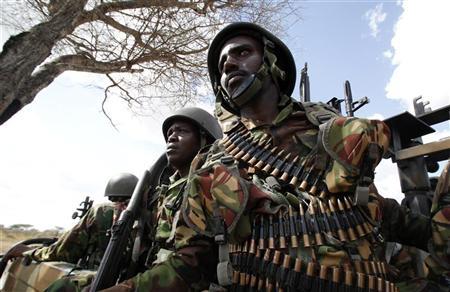
Kismayu, the southern Somalia town that was the last holdout of Al-Shabaab has fallen. Kenya Defense Forces (KDF) took control of the town early Friday. It is still unclear what happened to many of the fighters that had dug in to defend the town from KDF and AMISOM.

Somalia recently elected a new president and has shown signs of getting its act together after more than two decades of anarchy.

I hope that AMISOM will consolidate the recent gains and that Somali politicians will seize this opportunity to lay the groundwork for peace and stability moving forward.

I also hope that for KDF’s troubles Somali townspeople in Kismayu, Mogadishu and elsewhere will soon get to enjoy the services and products of Equity, KCB, Uchumi, Nakumatt, among other Kenyan companies. Economic integration of Somalia into the EAC, and similarly South Sudan and Eastern DRC, will be one of the key ways of guaranteeing a lasting peace in these trouble spots and in the wider Eastern Africa region.

More on the developing story here and here. You can also follow updates from the al-Shabaab’s twitter handle @HSMPress.

Photo credit.

Quick hits

UPDATE:

The Atlantic has a nice piece on the legacy of Meles Zenawi, the ailing Ethiopian Premier.

*************************

The African Union elected South African Nkosazana Dlamini-Zuma to head its executive arm, the AU Commission. Ms Dlamini-Zuma is a former wife of the polygamist South African President Jacob Zuma. I hope that with Pretoria’s success in having her elected to head the AU South Africa will take a more proactive role in leading the regional organization. As I have stated before, I think the organization needs “owners” in the form of diplomatically powerful custodians. Being the region’s biggest economy, South Africa is well placed to provide strong leadership to the African Union, if it wanted to.

Still on the AU Summit, Ethiopian Prime Minister Meles Zenawi has been conspicuously absent, fueling speculation that he is critically ill. Rumors abound that Mr. Zenawi has left the country for a Belgian hospital – the Saint-Luc University Hospital in Brussels (where he is believed to be receiving treatment for an acute case of hematologic cancer). Some opposition groups have suggested that Mr. Zenawi may have died in hospital. The last time he was seen in public was on the 19th of June. Mr. Zenawi has led Ethiopia since 1991. His record has been a mixed bag of aggressive and ambitious development projects (with results, growth has averaged over 8.4% over the last ten years) and militarism and authoritarian tendencies that have seen many opposition members detained, exiled or killed.

And in Somalia, BloombergBusinessweek reports on the massive corruption in the Transitional Federal Government.

The nearly 200-page report lists numerous examples of money intended for Somalia’s Transitional Federal Government (TFG) going missing, saying that for every $10 received, $7 never made it into state coffers.

The report, written by the U.N. Monitoring Group on Somalia and Eritrea and obtained by The Associated Press Monday, says government revenues aren’t even clear: The Ministry of Finance reported revenues of $72 million in fiscal year 2011, while the accountant general reported revenues of $55 million.

The Somali Government remains an unrepresentative shell, propped up by African Union forces and barely in control anywhere outside of Mogadishu. No elections are in sight (and rightly so. I have never been a fan of rushed post-conflict elections. See Liberia circa 1997 for details), instead the UN and the AU are presiding over a process in which Somali power brokers will put together a list of electors to appoint the next parliament. The current government’s mandate expires the 20th of August (next month).

Is regionalism helping the East African Community

Evidence seems to suggest it is:

Trade between the EAC countries almost doubled from $2.2 billion in 2005 to $4.1 billion in 2010, although regional trade with the rest of the world expanded faster, meaning that the relative share of intra-EAC trade has stayed around 21 per cent since 2005 [The African Average is 11 %]. “Europe enjoys 64 per cent internal trade; our 21 per cent is better than we thought, but we have to make efforts to do better,” said Betty Maina, chairperson of the Kenya Association of Manufacturers.

Kenya still remains the biggest economy in the region, although some convergence is definitely likely to happen in the next decade or so given the large hydrocarbon discoveries in Uganda and off the Tanzanian coast.

The region’s oil consumption rose from 96,000 barrels per day in 2003 to 144,000 barrels per day in 2010, with Kenya consuming more than all the other EAC countries put together. East Africa now accounts for 10 per cent of all mobile subscribers in Africa, with the number of mobile subscribers surging from just three million in 2002 to a staggering 64 million in 2010.

More on this here.

Kenyan Intervention in (al-Shabab dominated) Southern Somalia

The ICG has an excellent new report on the state of the the Kenyan military intervention in Somalia.

The pressing issues raised in the report include economic, political and social concerns:

The slow pace of the military operation and the high cost of keeping troops in the field are the main reasons behind Nairobi’s desire to operate under AMISOM command. The treasury would then not have to pay the full cost of the campaign. It is estimated that Linda Nchi is costing the government at least KSh 210 million ($2.8 million) per month in personnel costs alone in a year of a record KSh 236 billion ($3.1 billion) budget deficit. If the interven- tion’s cost is not contained, already high inflation will spiral, and local discontent could become more serious…..

The intervention in Somalia is likely to have a complex impact on Kenyan Somalis’ political positions, because their attitude toward it is not straightforward. The government’s desire to establish a buffer zone between the border and the rest of Somalia privileges the Ogaden, the majority Kenyan-Somali clan. The possibility of a semi-autonomous state in the south of Somalia politically dominated by Ogaden may not be favoured by the minority, marginalised clans of north-eastern Kenya, such as the Ajuran and Degodia…..

Views within the ethnic Somali and wider Muslim community regarding the war are mixed but predominantly critical. Even those now mildly supportive could easily become hostile, especially if things go badly wrong, and civilian deaths mount. The notion that the war is popular within the Muslim community is wishful thinking, and the potential to exacerbate already worrying radicalisation in the country is very real. The police and other security services have shown some restraint in bigger cities, but there have been numerous reports of abuses in North Eastern Province.

South Africa and the AU [Rant and rave alert!!]

As you may already know South African candidate for the AU Commission Chair Nkosazana Dlamini-Zuma (ex-wife of president Zuma) failed to get elected. Instead the AU extended Mr. Jean Ping’s term till June. Ms Dlamini-Zuma intends to vie for the seat again in June.

South Africa and its backyard (SADC member states) had lobbied hard for Ms Dlamini-Zuma.

The South African Business Day reports:

Mzukisi Qobo of the University of Pretoria says: “It is clear that this is an intensely divisive campaign, and plays into the hands of those who view SA as harbouring intentions of running roughshod over other countries. Unity in the AU is a facade reinforced by a poorly conceived notion of pan-Africanism.

“Africa’s political elites still think very much in terms of regional groupings — east Africa, north Africa, southern Africa and west Africa — as well as along the colonial lines of Francophone, Lusophone and Anglophone. These are realities that are there.”

SA’s foreign policy stance has been back and forth, which may have caused more divisions with countries like Nigeria and Egypt.

 But political analyst Steven Friedman does not think policy “flip-flopping” was the reason Ms Dlamini-Zuma did not get the post. With its economic infrastructure strength, other countries feared that SA would dominate Africa politically if given a chance, he says.

To which I say, why not?

What would be so wrong with a reasonably stable and important regional player taking charge of the rudderless dictators’ club institution that is the AU? The organization’s failures in the recent past – including in Libya, Sudan, Cote d’Ivoire, Somalia, Zimbabwe, DRC, Central African Republic, etc – have been partly because no single country has managed to emerge as its de facto leader and ultimate guarantor (forget the delusional late King of Kings, he was a clown on steroids).

Instead of having a strong leadership – whether by a single country or by a group of regional representatives – the AU has opted to have weak leadership in the form of a Commission headed by nondescript individuals political lightweights unable to rally the member countries to any respectable cause. The only time the club’s dictators are ever united is when they dump on the ICC and all other manner of foreign infringement on their “sovereignty” (which to them means the right to starve, jail or murder their citizens). The existing post of a rotating presidency has also been a complete sham.

Obiang was the latest one to occupy the post. Yes, Teodoro Obiang Nguema Mbasogo of Equatorial Guinea. This guy.

May be this episode will end Pretoria’s navel-gazing and encourage it to focus on having a coherent Africa policy that will provide strong leadership for the AU.

A leaderless organization of 54 states, new $200m headquarters or not, is a useless organization.

For more on this see here and here.

Also, check out this thought-provoking piece on the symbolism of the new AU headquarters.

Drought is an act of nature, famine is man-made

Check out this new campaign video by ONE.org

[youtube.com/watch?feature=player_embedded&v=dzcRSr6PW_o]

You can sign the petition here.

HT HuffPost

Hand Relief International

Something for the humanitarian and aid communites to think about, courtesy of Hand Relief International.

Among those in the know, another fact has not remained unnoticed: there is more money flowing in than used to and that, reader, is excellent news.

The shit continues to be real in Nairobi, the dignified hub of any meaningful Somalia project, with necessary field trips to Dadaab, where HRI has quickly  set up cutting-edge infrastructure to ferry high-flyers through, complete with up-to-the minute roster of the photogenic fresh arrivals that can be summoned in an instant with their families for that perfect picture, should the visitor require one for the cover of their all-important trip report or their obligatory article in newspaper of choice back home.

More on this here.

HT Blattman

Maintenance of infrastructure still a major challenge in Africa

A good measure of state effectiveness is how well stuff is maintained. In well run places repainting is always on schedule. Potholes are fixed. And the light bulbs are not loose. I was reminded of this fact while on transit in Addis last Friday.

In 2006, the last time I was there, Bole International Airport in Addis Ababa was a swanky new airport. It made me feel like JKIA in Nairobi was a joke. But only five years later the place is a shadow of its former self. The loos are poorly maintained, especially the one near gate 8: It only had one urinal and there was only one elderly lady cleaning both the gent’s and the ladies’ thus creating a lot of awkwardness.

The problem at the Addis airport ails the infrastructure of most of the developing world. Roads, buildings, gardens etc are all poorly maintained. It’s like no one sees the potholes, the peeling paint or the overgrown gardens. Or may be no one cares. Either way the lack of maintenance imposes very high costs since the once in a while maintenance drives oftentimes start when it is too late – which invariably means that the whole thing (especially with roads) has to be done again.

This is a void (infrastructure maintenance) that can be filled by the private sector. IFIs that finance these major infrastructure projects to begin with can, in conjunction with domestic governments, hire private companies to maintain the expensive roads, bridges, airports, etc. This will not only save money but also create jobs for millions of young men and women who have very little prospect of finding gainful employment

More on Eritrea and armed groups in eastern Africa

While Eritrea has in the past been repeatedly accused of supporting Somalia’s Islamist militia Al Shabaab, a charge it strenuously denies, the current report catalogues Afewerki’s growing notoriety in the world of terrorism finance, and in particular the global web through which these funds are routed, with Kenya serving as a global transaction distribution hub.

The report details the country’s activities in funding the terror group, following the money trail from its citizens in the diaspora in Europe and North America, through Dubai and the Eritrean embassy in Nairobi, and into the hands of Al Shabaab, all the while concealed in convoluted and opaque informal financial networks.

That is The East African reporting on Eritrea’s support for armed groups in the wider eastern African region. Mr. Afewerki’s actions are a threat to regional security for the following reasons:

1. Eritrea’s (opportunistic and cynically instrumental) use of Islam as a galvanizing force (against “Christian” Ethiopia) threatens to ignite a wider regional conflict that would probably include North Sudan and Egypt. The reason this is likely is because:

       (a) Remember that the use of the waters of the Nile continues to be a source of friction between Egypt and the riparian states of eastern Africa. Egypt itself has in the past been linked to armed groups in Somalia opposed to Ethiopian rule of the Ogaden region. Both countries have a history of funding rival clan militias in Somalia. In all of this the principle of my enemies’ enemies’ are my friends will most likely apply.

        (b) Because of its own problems with South Sudan, North Sudan might have an interest in using Eritrea’s networks to destabilize its southern neighbor. Recently the government of South Sudan banned all people of Somali origin from entering the country by land for security reasons. Juba clearly suspects either direct or indirect links between Khartoum and the myriad armed groups in war-torn Somalia

2. Given that the groups it supports (e.g. al-Shabaab) have other enemies besides Ethiopia, President Afewerki has effectively declared war on countries like Uganda, Burundi, South Sudan and Kenya that have also either been attacked or threatened by al-Shabaab. I wouldn’t be surprised if one or two of these EAC states decided to materially support the Ethiopian side the next time Addis and Asmara fight over their barren disputed border lands.

Quick hits

Guide to arguing on the internet (HT Lauren).

Speaking of arguing on the internet, I like the drama that is spats between economists and other academics on their respective blogs.

The Economist presents the faces of famine in the Horn. It is beyond sad that so many people should be condemned to suffer this man-made tragedy.

Brett Keller has posts here and here on Sam Childers (a.k.a. machine gun preacher), a gun-runner into the habit of doing morally and ethnically dubious things in the name of God. Keller says that Childers is “stockpiling arms at his orphanage and has admitted to selling weapons to unnamed armed factions in Sudan, Uganda, and Rwanda.”

In Zambia (where I shall be for the elections in Sept.) the politics of citizenship and belonging are yet to be settled 50 years after independence. We recently witnessed the dangers of de-legitimizing whole sections of countries as outsiders in Cote d’Ivoire. I hope that if Sata ever wins he will not do what incumbent Ivorians did to ignite a rebellion in the northern reaches of their country. For more on this check out this great book on the Ivorian collapse. I have read it and absolutely loved it.

A muddy few months ahead for the South African government. Infighting with the ANC top brass might mean an early exit for President Zuma. With over 60% of the votes in the last election, the ANC is essentially an oversize coalition prone to internal wrangles. It will be interesting to see how Zuma weathers the storm in the midst of challenges from both COSATU and Malema.

Lastly, the current issue of the Journal of African Economies looks at the impact of higher education in Africa. The main takeaway is that the low quality of education at lower levels (primary and secondary) has meant that the biggest bang for the buck on the Continent, as far as education is concerned, only comes with higher education. Too bad that many of those that get higher education are underpaid or out of the Continent all together.

Mediocre leadership is the biggest crime against humanity

The saying goes that when the tide runs out you get to know who has been skinny dipping. In the same vein, it is when disaster strikes that you get to know who has mediocre leadership.

The ongoing famine in the Horn of Africa, the worst in 60 years, has exposed eastern African leaders for who they are. The Ethiopian and Eritrean governments for a while even refused to acknowledge the humanitarian catastrophe in their hands. The Kenyan government spokesman would not admit that any Kenyan has died from the famine. Kenya, the region’s biggest economy, is a lesson in the dangers of mediocre leadership: Meteorological warnings from two years ago were ignored; Money for food aid ended up in private bank accounts; and The government lacks any coherent agricultural and food security policies.

And because of it all, this is happening [please pardon the famine porn, but we need to see how REALLY bad things are]. 3.5 million Kenyans face starvation. 11 million in the wider region are affected.

In the last two days I have followed news stories on the situation in northern Kenya. I can only imagine how things are in the epicenter of the famine in Somalia and the Ogaden region of Ethiopia.

A lot of blame has been flying around. According to Jeff Sachs:

“The warning is also clear. The Horn of Africa is the world’s most vulnerable region, beset by extreme poverty, hunger and global climate change, notably a drying and warming of the climate during the past quarter century.”

adding that

“The west has contributed to the region’s crisis through global climate change that victimises the lives and livelihoods of the people of the region.”

In my view, however, the blame squarely lies with the region’s leadership. It is the leaders who have consistently refused to plan ahead, opting instead for palliative measures like food relief with lots of opportunity for graft. Blaming western colonialism, neocolonialism, climate change, etc are nothing but distractions. This problem and many other African problems are for the most part just that, African problems.

That millions of shillings in aid money was stolen, thus endangering millions of lives in northern Kenya, is a moral travesty. To add insult to injury, no one has yet been arrested or charged with the crime. It is Kenyan officials who have sat by and in some instances (in the past and now) even contributed to the endangerment of the lives of 3.5 million citizens of Kenya.

The usual perpetrators of crimes against humanity – warlords and their militia – kill with guns. But corrupt and mediocre civilian leadership continues to decimate millions more through both inaction and well calculated mis-allocation of resources.

Because of the famine 800,000 children in the wider region could die from malnutrition.

Food aid is definitely not a long term solution. But here is how you can chip in to help those affected by the famine.

Securing Peace in South Sudan

UPDATE:

The ICG has a good report on the simmering conflicts in Sudan and South Sudan:

The loss of South Sudan has had a profound effect on the NCP, and senior generals led a soft-coup within the party. They have outflanked more pragmatic elements in the NCP who seek a negotiated strategy. Encouraging progress in the post-separation arrangements between North and South was blocked. More importantly, hardliners in Khartoum — including SAF generals — immediately rejected a 28 June framework agreement, which includes a political and a security agreement for Southern Kordofan and Blue Nile, facilitated by former South African President Thabo Mbeki and Prime Minister Meles Zenawi of Ethiopia, and signed by Dr. Nafie Ali Nafie, Co-deputy NCP chairman and a presidential adviser. A few days later, President Omar al-Bashir publicly disavowed the agreement.

Check out the rest of the report here.

******************************************

Texas in Africa makes a compelling argument against arming South Sudan (against potential aggression from Khartoum). She basically outlines three reasons against arming Juba:

  1. Such a move would implicitly side with the SPLM against other domestic armed/opposition groups. The point of concern here is that having just won independence South Susan needs to have a negotiated settlement among all interested groups. The Dinka-dominated SPLM, in particular, ought to credibly share power and resources with the other ethnic/interest groups.
  2. Arming South Sudan would spark an arms race against Khartoum and might lead to a war sooner rather than later.
  3. The West can’t be sure of Juba’s future geopolitical leanings. The same weapons might be used in the future against say America and its allies – AfPak style.

For the most part I agree with Laura. And like her, I am on record as having concerns over the alarmist celebrity diplomacy/mediation effort that has been orchestrated in South Sudan, Darfur and eastern DRC by Prendergast and his buddy Clooney.

In addition, I think that the debate over whether or not to arm Juba forecloses on other options that might also help secure South Sudan. Make no mistake, South Sudan has real domestic and international security challenges that occasionally will require the use of military force. Addressing these security challenges will necessarily require some form of military aid to South Sudan.

Here’s my take:

  1. If South Sudan is to avoid the fate of Zaire/DRC, the pacification of the whole country must happen ASAP. While negotiating with rebel leaders is the best approach, the truth is that in some cases military force might be needed. To that end providing SPLM with the necessary capacity to win the fight against fringe groups that do not want to sit at the negotiating table may be a necessary evil. Yes, we should be cognizant of the fact that there are legitimate internal differences within South Sudan. But we should not legitimize any groups that might want to air those differences using the force of arms. Real democratic competition can only take place in a peaceful environment. Armed challengers to SPLA (the legitimate army of South Sudan) must bear the burden of proving the legitimacy of their grievances. South Sudan’s Savimbis must be deterred. Also, the international community must not be under any illusion that democracy will come soon to South Sudan. It will take a long time.
  2. The arms race between Khartoum and Juba is already underway. The question is not if it will happen but what it will lead to. Furthermore, after “losing” the South and its oil Bashir will be hard pressed for distractions from his domestic woes, especially if the economy of Sudan experiences a sharp decline. Starting a border war with South Sudan would be a welcome distraction. Although arming the SPLA is not the best way to deal with this possibility, an alternative would be to bring in the EAC through a regional defense pact. Uganda, in particular, would be interested in such a deal since it would help reduce its own defense budget. The involvement of Eritrea in South Sudan’s internal conflicts makes the need for a regional security arrangement even more urgent. Most recently the UN accused Eritrea of plotting to bomb an AU meeting in Addis Ababa Ethiopia.
  3. Concerns over Juba’s future geopolitical leanings can be allayed through continued military aid and professionalization. This can be achieved by getting the generals out of politics following the Kenyan model – a combination of awesome perks and professional training – and through greater political and economic integration of South Sudan into the East African Community.

War is nasty and should be the last option. That said, there is a need for genuine debate over how to achieve the twin goals of state monopoly of violence within South Sudan and the deterrence of a trigger-happy Khartoum.

If it were left to me I would quickly move to decouple the SPLM and SPLA as a condition for any military assistance. The last thing the region needs is yet another regime with a fused political and military leadership as is the case in Rwanda and Uganda.

The EAC needs a defense pact

UPDATE: The Government of South Sudan has barred people of Somali origin from entering the country by road for “security reasons.” This wrongheaded move has created an awkward situation since not all people of Somali origin are from Somalia. In Kenya, for instance, a good chunk of the long haul transport sector is run by Kenyans of Somali origin.

********************************************************

The Ugandan government recently went on a $1 billion shopping spree for six fighter jets. The deal, which almost broke the bank, made a significant dent on Uganda’s forex reserves. Many, while acknowledging the risks that might have motivated the purchase, have questioned the wisdom of spending that much money on six jets.

For those not in the know, the key motivation for Museveni’s purchase was a desire to project military power in the region for two key reasons:

Firstly, in order to create a market for Ugandan light industries – cooking oil, soap, etc – Kampala has had to project military power to help in the pacification of pockets of eastern DRC and northern Uganda/South Sudan. These markets are crucial because they create jobs in Uganda, allowing Museveni some room as he continues to preside over Uganda’s decline into a dysfunctional police state.

The second reason was Museveni’s desire for military grandeur in the region. Kigali and Khartoum are not in the best of terms with Kampala. Museveni is probably suspicious of a potential Odinga presidency in Kenya. For these reasons, the Ugandan military establishment – the real rulers of Uganda – might have wanted to ensure that non of their neighbors are in a position to bully them in the near future.

While most of Museveni’s militarism is inspired by a mentality from a bygone era, I find Kampala’s fears against Khartoum as legitimate grounds for a regional defense pact. It is an open secret that Khartoum will try as much as it can to destabilize the new government of South Sudan (and by extension the wider region). And they have a few options:

  • They can foment civil war within South Sudan – there are a lot of disgruntled armed bands within South Sudan who might decide to take their chances with Khartoum; Remember that even Riek Machar, the current vice president of South Sudan, formed a Khartoum-backed splinter group (SPLA-Nasir) that fought Garang’ back in the early 1990s.
  • They can use armed groups in the wider central African region – including Kony’s LRA and the plethora of roving bandits in eastern DRC to engineer insecurity in South Sudan. Khartoum has used the LRA against SPLM in the past.
  • They can invade in an all out war. This option is the riskiest because of its potential to generate international opprobrium. But remember that Ethiopia and its secessionist former province Eritrea fought a bloody war that generated nothing but “stern” warnings from the UN and the wider international community. The US even armed Ethiopia because it needed Addis Ababa to fight its war in Somalia.
  • Lastly, they can use non-conventional tactics. Terrorism is slowly growing in the wider east African region. So far Eritrea has been the biggest state sponsor of terror in the region – mostly aimed at Ethiopia in the Ogaden, Oromo land and Somalia. The involvement of Ugandan and Burundian troops in Somalia has created even more enemies for these groups. There is no reason to believe that Khartoum would not use these same groups to destabilize South Sudan, if for nothing then as a survival tactic for a beleaguered Bashir administration that will forever be blamed for having lost the South’s oil.

Needless to say, an unstable South Sudan is bad for the region. Period.

The proliferation of small arms is already a major problem in the areas bordering the Ilemi triangle and eastern Uganda. That instead of sticks pastoralists have to roam around with AK-47’s says it all. More conflict in South Sudan will only make a really bad situation even worse. The potential for proxy wars within the region would also be an unnecessary drain on limited resources. Because of various interests in Juba, an aggression by Khartoum against South Sudan will definitely be met with reaction in one form or another from Kenya, Ethiopia and Uganda.The conflict will definitely be regionalized. Lastly, Eritrea’s bad habit of supporting terrorists should not be permitted to catch on. Khartoum must know that if it tries this dirty tactic it will be met by more than just resolutions from the AU, IGAD or the UN.

Which is why I think that the EAC should have a robust defense pact. War should have to be a last resort. But that does not mean that the East African Community should not prepare for such an eventuality, if it arise.

That way, no single country will be burdened with the task of buying all the necessary hardware needed to keep Khartoum deterred.

Such a plan would face significant challenges, of course – key among them the fact that the region’s armies are non-professionalized. A functional defense pact would require near total civilian control of the army. Only Kenya and Tanzania come close to this in the EAC. Rwanda, South Sudan and Uganda are dominated by their respective armies. Burundi can’t even win against rebels within its territory and remains a militarized tin pot dictatorship. And Ethiopia, if it were to join, is still dominated by the remnants of the rebellion that ousted Mengistu.

These challenges aside, it might be worth a try. Such a pact might even help professionalize and de-politicize the officer corp in the region’s armed forces.

And the biggest winner if this were to happen is MORE regional trade.
Rants and Raves / Thoughts on the African Union

The African Union (AU) has had a rough few months. The diplomatic failures in Zimbabwe, Cote d’Ivoire, and Madagascar exposed the organization’s incompetence. The misguided anti-ICC crusade continues to cement the image of the organization as nothing more than a club of out-of-date and tone deaf autocrats. To many observers, calls for “African  Solutions to African Problems” amid all this failure has been seen as a cover of impunity and mediocre leadership on the African continent.

It says a lot that the current chairman of AU is President Theodore Obiang’ of Equatorial Guinea; a man who leads an oil-rich country of under 0.7 million people, with a per capita income of more than 30,000; but with more than 70% of its population living on less than $2 a day.

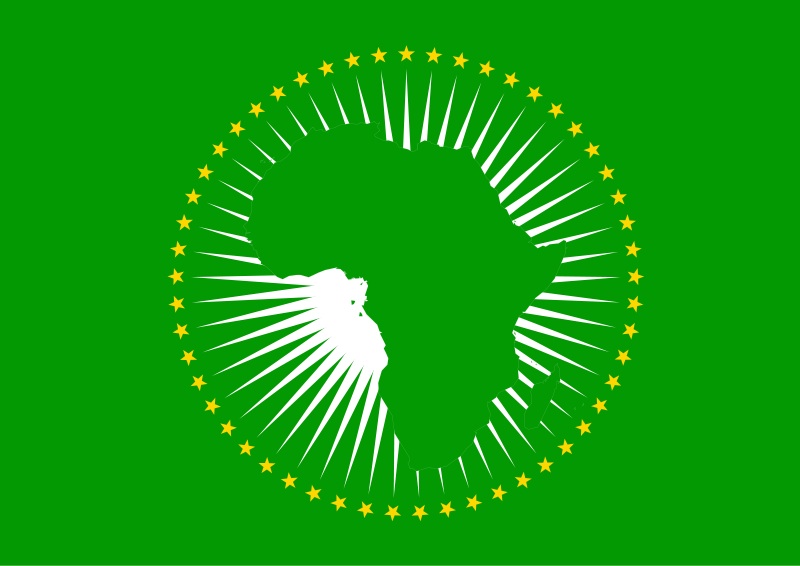
The epitome of the organization’s woes was the total snub it got from NATO before the military campaign against Libya’s Gaddafi, one of the AU’s main patrons. The AU was created by the Sirte Declaration, in Libya. Mr. Gaddafi’s influence ranged from his “African Kings” caucus (in which he was the King of Kings) to investments from Libya’s Sovereign wealth fund. I bet Gaddafi had a hand in the organization’s green flag.

So what ails the African Union?

The AU’s problems are legion. In my view, the following are some of the key ones.

  1. Lack of a regional hegemon(s): The AU faces massive collective action problems. With no regional hegemon(s) to act as the rudder of the organization, most of the organization’s resolutions are not worth the paper they get written on. The rotating chairmanship is a distraction from the real leadership needed in the organization. For instance, I had to google it to find out who’s currently in charge of the presidency of the EU (Poland). Everybody knows that France and Germany run the EU. Their word has gravitas in the Union. In the AU on the other hand, there is no leader. Could it be Navel-gaving South Africa or serially under-performing Nigeria?
  2. Too much political control: Most successful international organizations, despite having political principals, tend to have technical agents that are to some extent shielded from the principals. The AU is political through and through. The key decision-making body is the assembly of heads of state. The council of ministers does nothing. And the commission is all bark and no bite. Cronies of dictators staff most of the key positions in the organization.
  3. Disconnect from the masses: Most Africans have no idea what exactly the AU does. What is the point of the organization? Is it to preserve Africa’s borders? Is it to defend the likes of Gaddafi when the ICC’s Mr. Ocampo comes calling? Giving the people a voice in the Union might force the organization to do the people’s bidding, instead of being a protector of impunity in the name of African sovereignty.

What would reforming the AU entail?

  1. Radical restructuring: Like all inter-state organizations, the AU’s leadership should reflect regional power differences. The current assembly – in which Chad has the same power as Nigeria – makes no sense. There should be a smaller assembly of sub-regional representatives (West – Nigeria; East-Ethiopia; North – Egypt; and South-South Africa) with veto power and the mandate to implement the organization’s resolutions.
  2. Competent staffing: The practice of presidents appointing their sisters-in-law as AU representatives should go. An injection of competent expertise into the organization would go a long way in making it appear to be a more politically independent, competent and respectable organization.
  3. Direct elections to the AU parliament or no parliament at all: Instead of having the members’ parliaments elect representatives to the AU parliament, there should be direct elections. If that cannot happen then the parliament should be scrapped all together. A toothless and unrepresentative parliament is a waste of resources.
  4. Constructive and focused engagement with the rest of the world: Who is the AU chief foreign policy person? Are there permanent representatives in Beijing, Brussels, Brasilia, New Delhi and Washington? Why aren’t they trying to initiate a collective bargaining approach when dealing with these global powers (even if it is at the sub-regional level)? And what with the siege mentality? Not every condemnation of African leaders’ incompetence and mediocrity is a neo-colonial conspiracy, you know. For instance, instead of whining against the ICC’s Africa bias, the AU should clean up its own house. It doesn’t matter that George Bush is not being tried for crimes against Iraqis. The last time I checked none of the leaders of Switzerland was being tried for crimes committed in the German cantons.
  5. A more consistent commitment to progressive ideals: The AU is the only organization in the world that includes in its charter the provision to intervene in its member countries under the principle of responsibility to protect. If the AU were slightly more serious, the disasters in Zimbabwe, Cote Ivoire and Madagascar could have been nipped in the bud. As things stand it is only tiny Botswana that keeps shouting about the organization’s commitment to proper governance and responsibility to protect.

I am not a fan of the idea of the United States of Africa. That said, I believe that a regional organization like the AU can be a force for good. But in order for it to fulfill its purpose, it has to change. The change must reflect the regional power balance; it must increase the competence quotient in the AU and it must increase the voice of the average African within the organization.

Welcoming Southern Sudan to the EAC

UPDATE: A related article on Uganda’s influence in the soon to be independent South Sudan can be found in the New York Times.

In three days the East African Community will celebrate the independence of its next newest member. Because of SPLM connections in Kenya, among other East African nations, the Southern Sudanese economy will most likely orient itself southwards.

Kenya’s Vision 2030 development plan, for instance, will link Southern Sudan to the Indian Ocean coast via a pipeline and railway line. Oil from South Sudan is currently exported through Port Sudan, 3,000 kilometres away. The planned link to Lamu would reduce that distance to 1,700 kilometres.

For Southern Sudan, economic ties with its southern neighbors will not only grant it access to much needed capital and skilled labor but also implicitly guarantee it security against its menacing neighbor to the north.

I doubt that Kenya, Ethiopia and Uganda will sit on their hands if the north decides to bomb local offices of Equity Bank, Ethiopian Airlines or Ugandan retail outlets in Juba (Remember the “Kenyan” tanks fiasco?). It also helps that IGAD has suddenly woken up to the security challenges posed by proxy wars among its member states. Kenya’s president, and current head of IGAD, recently chastised Eritrea for its ties with militant groups in the region.

IGAD will provide yet another forum for the region to put pressure on Khartoum to honor the CPA and not resort to war.

Several Kenyan companies have already set up shop in Juba. About 70,000 Kenyans live and work in Southern Sudan. According to the Business Daily:

Although several major Kenyan companies like Equity Bank, KCB, UAP Insurance and many small enterprises operate in South Sudan, the independence declaration on July 9 is expected to trigger another wave of corporate movement there.

Bidco Refineries that has a dealership in South Sudan, for example, is expected to consider having a physical presence there, said the company’s CEO Vimal Shah in an earlier interview. Kenyan manufacturers are, however, discouraged by low consumption levels and shortage of power, water and sewerage systems.

Co-operative Bank of Kenya is also expected to start setting up its banking infrastructure with a new venture that will be 30 per cent owned by the Government of South Sudan.

The new bank is expected to benefit from government business as it will process salaries of government employees and enjoy business arising from the government’s shareholding in the venture. The peaceful aftermath of the January 9 referendum that voted for secession from the North has helped to improve the country’s risk profile.