Is evidence-based institutional analysis a possibility?

Chris Blattman writes:

But Acemoglu is right that institutional and political change are more important and the evidence-based crowd have done very little here. Most of that evidence is about anti-corruption or election monitoring or other things that I doubt change politics very much.

Meanwhile all the good political economy research (like Acemoglu’s) has no clear implication for social and political change in the world. There is a big disconnect. These scholars have mostly ignored this gap either because… I don’t know why. Maybe it’s too treacherous or hard, or they don’t find it interesting enough, or they are cynical about policy change. I don’t know. Someone explain it to me.

Blattman is spot on.

I think that students of institutions and institutional development have not joined the evidence-based crowd for two main reasons:

  • Politics I: Much of the evidence-based research out there eschews politics, instead focusing on the technical aspects of problems. Works that explicitly deal with political scenarios exist, but are rare. Part of the reason this is the case is that agencies that finance impact evaluations and other kinds of evidence-based policy research agendas have incentives to remain as apolitical as they can (you need host country government permission to do research in the first place …..)
  • Politics II: The other reason is that it is almost impossible to engage in politically relevant big-picture-development research while remaining apolitical. You see this in splits among macroeconomists in the United States (Macro questions make it really hard for researchers to shed off their normative priors). In the same vein, the best placed people to carry out evidence-based studies of institutions and how to change them are often professors in universities in the developing world — the problem is they do not do enough research due to a lack of resources and/or the relevant skill sets; and their own governments often neglect them. Regardless of their nationality, the most visible development economists in universities in the North Atlantic often lack the political connections or the bandwidth to engage in host-country politics; and are thus limited in the extent to which they can effectively study the most vexing policy questions out there.

These reasons are not due to anyone’s fault, just how research is currently financed and structured.

A possible way to get around these problems could be MBA-style case studies of reform programs from across the globe that can then be retooled by Comparativist country specialists — incoming Stanford CDDRL director Frank Fukuyama has very exciting ongoing work on this front.

On a tangentially-related point, I think that works that combine technical brilliance and deep local knowledge (think Bates’ lesser-read books on the Zambian Copperbelt) are about to come in vogue again. It used to be that only a few grad school programs (at least in political science) emphasized technical competence out of econ envy to match the economists. This is getting more commonplace, thereby establishing a new baseline (the data revolution is also helping a great deal by increasing the scope of country-specific studies of macro questions). And once a critical mass is achieved then the comparative advantage will favor those who are both technically competent and can also speak intelligently about how policy dovetails with local politics. The title “country-specialist” will soon no longer be synonymous with “qualitative research”; and more students will be primed to value good qualitative research.
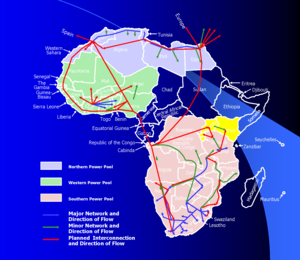
Are Power Pools the Answer to Chronic Power Shortages?

Auriol and Biancini have a nice theoretical take on the subject of regional power pools in the World Bank Economic Review:

Power market integration is analyzed in a two-country model with nationally regulated firms and costly public funds. If the generation costs between the two countries are too similar, negative business stealing outweighs efficiency gains so that, subsequent to integration, welfare decreases in both regions. Integration is welfare enhancing when the cost difference between two regions is large enough. The benefits from export profits increase the total welfare in the exporting country, whereas the importing country benefits from a lower price. In this case, market integration also improves incentives to invest compared to autarky. The investment levels remain inefficient, however, especially for transportation facilities. Free riding reduces incentives to invest in these public-good components of the network, whereas business stealing tends to decrease the capacity to finance new investment.

powerpool

Existing and Planned Power Pools in Africa

There is a lot of excitement in the power sector in Africa these days. Eastern Africa will probably be the most power-rich in the next few years: Ethiopia’s 1870MW Gibe III will likely come online later this year (oh, and there is the ongoing Grand Renaissance Dam project that will produce 6000MW [or 2800MW?]); Kenya has had a massive push for geothermal, solar and wind generation; and Kenya, Uganda, and Tanzania have commercially viable deposits of oil and gas that will also come online within the next six years. The region is also very well integrated, although there is need to upgrade power transmission infrastructure. The Bank has an ongoing project in this regard [that is way behind schedule].

For more on this subject see my commentary on energy sector integration in Africa over at the African Development Bank blog.

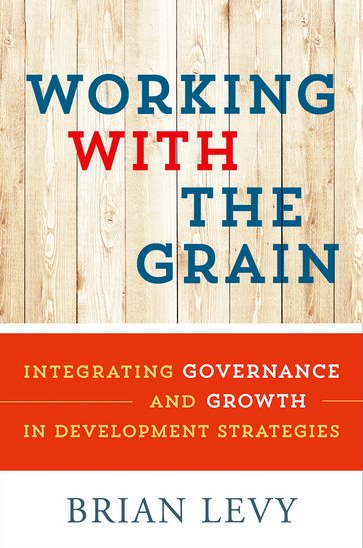
Working With the Grain in Development

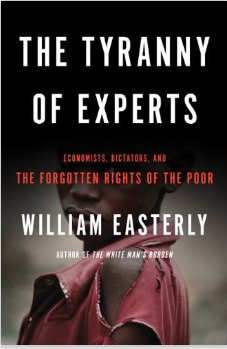
I finally got to reading Brian Levy’s Working With the Grain. It is easily the most underestimated development book of 2014, and should be read alongside William Easterly’s Tyranny of Experts (which it both complements and pushes back against). Like Easterly, Levy worked at the Bank and has insightful case studies and anecdotes from South Korea, to Ethiopia, to Bangladesh, among other countries. The book’s main thrust is that approaches to interventionist development policy ought to internalize the fact that:

… Successful reforms need to be aligned with a country’s political and institutional realities. For any specific reform, an incentive compatible approach begins by asking, who might be the critical mass of actors who both have standing and a stake in the proposed arrangements – and so are in a position to support and protect them in the face of opposition? [p. 142-3]

From a policy perspective, Levy tackles the relationship between governance, regime types, and development head on. How do you deal with the Biyas, Kagames or Zenawis of this world if you deeply care about [both] the material aspects of human welfare – roads, hospitals, schools, electricity, etc., [and] political freedoms and inclusive institutions?

Screen Shot 2014-12-17 at 12.32.06 PM

Levy’s answer is that development experts should work with the grain, focusing on incrementally solidifying past gains in specific agencies and issue areas, instead of engaging in epic battles against ill-defined and equally poorly understood “bad institutions” and evils like “corruption.” He aptly points out that you do not need the full set of the “good governance” bundle in order to continue chugging along on the path to economic prosperity.

In other words, we don’t have to put everything else on pause until we get the institutions right (or topple the bad guys). It is not an all or nothing game. His argument is persuasive (“good governance” has failed as a prescriptive remedy for underdevelopment), albeit at the cost of casting the immense toll of living under autocratic regimes as somewhat ineluctable on the road to economic prosperity. But at least he dares to challenge conventional approaches to governance reform that have at best failed, and at worst distracted governing elites from initiatives that could have worked to improve human welfare in developing countries.

As I read the book I wondered what Levy might think of the current state of development research. We are lucky to live in an age of increasing appreciation for evidence-based policy development, implementation, and evaluation. However, the resulting aura of “objectivity” in development research often leaves little room for politics, and its inefficiencies and contextual nuances. Sometimes the quest for generalizability makes us get too much into the weeds and forget that what is good for journal reviewers seldom passes the politicians’ (or other influential actors’) incentive compatibility test, rendering our findings useless from their perspective.

It is obvious, but worth reiterating, that the outcomes we can quantify, and therefore study, do not always overlap with the most pressing issues in development or policies that are politically feasible.

Perhaps this is a call for greater investment in public policy schools (not two-day capacity building workshops) in the developing world that will train experts to bridge the gap between academic development research and actual policy formulation and implementation (talking to policymakers makes your realize that this gap is wider than you think). Linking research findings to actual policy may sound easy, but you only need to see a “policy recommendations” section of a report written by those of us in the academy to know that it is not.

Who is the African child on the cover of William Easterly’s new book?

ImageUPDATE: A reader, C. Mwangi, just brought to my attention this quote from William Easterly’s 2009 review of Dambisa Moyo’s Dead Aid.

Moyo is onto something important but, as she says, seldom discussed openly. One of development’s dark secrets is its still-influential origins in the “poor people are children” view, a view with a deeply rooted and very long history. The “development” metaphor was itself is a biological one: poor people “develop” from childhood (poverty) into adulthood (prosperity). Some of the signs of this mindset are subtle but unmistakable. Just think of who was pictured in the last glossy “aid to Africa” brochure you saw? I am willing to bet it was African children. As David Rieff said in his classic book A Bed for the Night, “There are two groups of people who like to be photographed with children: dictators and aid officials.” And of course, you don’t let children manage their own affairs; the adults must do it for them.

The rest of the review, originally meant for publication in the LRB, is available here.

***********************************************

They say don’t judge a book by its cover, but if it wasn’t for Bill Easterly’s reputation for sound thinking on matters to do with Development, I would not have pre-ordered his upcoming book The Tyranny of Experts.

Seriously, as a new year resolution can we all promise never to fall into the temptation to include anonymous African children (invariably looking poor and shabby with flies on their faces or carrying guns, among other things) on the cover of books on poverty and development?

PLEASE? It is no longer good form (and never has been), especially coming from people who ought to know better. Were the boy’s parents or guardians consulted? Do they even know that their kid is on the cover of Easterly’s book?

The book title suggests that Easterly cares about the forgotten rights of the poor, yet the use of the cover image violates an important right of the poor: the right against unfair objectification. There is research out there suggesting that African states face an FDI inflow penalty simply because they are African. Images like these on the cover of books do not help the cause to reverse this reality.

To be fair (as a commenter pointed out to me on twitter) it is the publishers who decide these things to drive sales. But authors still have a right (and in my view, a duty) to ensure that this sort of stuff doesn’t happen.

I feel bad calling out Easterly on this because he is one of the more nuanced and very sane development economists/practitioners out there (and there are certainly far much worse instances of this phenomenon out there); but the habit of using a whole region and its peoples as shorthand for poverty, underdevelopment and dysfunction has to stop. And it starts with each and every one of us.

More on direct cash transfers

As Chris Blattman put it, the Cashonistas are rejoicing. And with very good reason.

There is mounting evidence that giving money directly to poor people does a much better job of improving their welfare than traditional channels of institutional(ized) aid-giving. On a related note, this evidence lends credence to claims by proponents of oil-to-cash programs. Oil to cash enthusiasts advocate for direct payments to citizens of revenues from extractive sectors (and especially oil) so as to avoid what is commonly known as the resource curse (more on oil-to-cash here). I am not one to argue against evidence, so I am intrigued by the success of Give Directly, and look forward to further impact assessments to ascertain the stickiness of the observed welfare gains.

However, I agree with Brett Keller that we shouldn’t allow the present evidence to distract us from thinking about things like schools, hospitals, business-promoting state institutions, etc.

Despite the within-community evidence of positive effects of direct cash transfers, we shouldn’t forget that these communities do not exist in a vacuum but within political economies of various states. For instance, given what we know about ethnicity and attendant barriers against collective action, what would be the effect of giving all the money to the people and then requiring them to comply with tax regimes and other collective action endeavors?

Furthermore, giving poor people money is often based on an implicit premise that the poor ought to become entrepreneurs and lift themselves out of poverty (People respond to incentives, and we know what would happen if say we guaranteed them direct cash transfers in perpetuity. So the scheme only works if poor people can use the money to start businesses). But entrepreneurship is hard. Even for people with trust funds and super-charged business incubation resources. So is it really fair to require that the objectively most risk averse among us lift themselves out of poverty by starting businesses? Isn’t this the role of the middle and upper middle classes who can tolerate the risk? I am not saying that entrepreneurship is limited to particular classes (lots of people from humble backgrounds have created wildly successful businesses the world over). What I am saying is that as a matter of policy we shouldn’t unnecessarily burden the most vulnerable among us.

Also, to borrow from Huntington, we are well advised to keep in mind that even though economic success leads to stabilization, the process of development can be destabilizing. With this in mind, for most development initiatives to succeed, they need political cover (broadly defined as the ability to shape or influence government policy). Interventions to accelerate growth must never lose sight of this fact. Those who make and/or can influence policy matter a great deal.

This might sound very 20th century, but I think that the best anti-poverty measure out there is still mass job creation by BIG business (and agree with Chris Blattman here). It beats all the pro-poverty pro-poor interventions I can think of. So may be instead of raining cash on the poor it might be better to think of smart ways of jumpstarting the growth of SMEs in the developing world into mass employers. This is not a trickle down economics argument. It is an argument for the continued emphasis on macro reforms in the political economy to provide an enabling environment for mass job creation.

We can’t continue to insist that institutions matter but then turn around and do our best to device anti-poverty interventions that skirt the very same institutions that we insist are the fundamental cause of long-run growth.

Direct cash transfers might prove to be a key part of the shortcut to Denmark (and I hope the successes stick). But like with most shortcuts, the potential for disappointment is a little higher than most of us would like to admit.

Pockets of California amid sub-Saharan Africa?

Rant and rave alert. 

As an undergrad at Yale I took several classes in which professors, TAs and fellow students would casually say things that insinuated that all of Africa (read sub-Saharan Africa) was a cross between a hospice, a giant slum and a war zone. Let’s just say that it all made me a little bit uncomfortable, and sometimes forced me to over-compensate in discussions and with papers and homework. I was particularly disappointed in my professors for not knowing any better. It probably also played a big role in my choice to pursue a career as an academic in the social sciences. 

The quote below reminded me of those episodes:

Despite considerable economic growth and increasing self-confidence as a major global player, modern India is a disaster zone in which millions of lives are wrecked by hunger and by pitiable investment in health and education services. Pockets of California amid sub-Saharan Africa, sum up Sen and Drèze.

It’s one thing when an ignoramus who imagines Kenya to be a town in South Africa that does a mean giraffe barbecue says something nasty about an entire region and its people. But it’s quite another when it comes from a college professor or from people that you expect to know better. 

For instance, when we say California, are we talking Palo Alto or East Palo Alto? I must add here that because it is Sen (my beloved author of The Idea of Justice), may be he meant the “median Californian experience” vs the “median African experience” as opposed to simply comparing Palo Alto with Kibera. May be.

I admire Prof. Sen. Very much.  But I would like to register my disappointment over this offending line. The full article in the Guardian is actually quite illuminating regarding inequality in India. 

If you ever teach a class or write a book or newspaper article or give a talk, please know that it is not kosher to use the word Africa as short hand for everything that you imagine to be wrong with this world. Always remember that part of your audience might include real flesh and blood Africans. Spare us the awkwardness. Please. 

The decline of Economic History at MIT

What is the cost of not having economic history at MIT? It can be seen in Acemoglu and Robinson, Why Nations Fail (2012). This is a deservedly successful popular book, making a simple and strong point that the authors made originally at the professional level over a decade before (Acemoglu, Johnson and Robinson, 2001). They assert that countries can be “ruled by a narrow elite that have [sic] organized society for their own benefit at the expense of the vast mass of people” or can have “a revolution that transformed the politics and thus the economics of the nation … to expand their economic opportunities (Acemoglu and Robinson, 2012, pp. 3-4).”

The book is not however good economic history. It is an example of Whig history in which good policies make for progress and bad policies preclude it. Only transitions from bad to good are considered in this colorful but still monotonic story. The clear implication is that if countries can copy the policies of English-speaking countries, they will prosper. No consideration is given to Britain’s economic problems over the past half-century or of Australia’s relative decline for a century.

That is Peter Temin writing about the story of Economic History at MIT in the 20th century. For more click here (H/T Greg Mankiw).

Also, to be honest, one of the reasons I am into development (and the politics around it) is because of my fascination with economic history. I wish more development practitioners and theorists alike cared a little bit more about economic history. At the very least, looking at how things really actually worked out in the past serves to temper the urge to completely fall for the latest fad within the development industry. 

Nominate the best blogs of 2012

A View From the Cave blogger Tom Murphy is holding the annual Aid Best Blogger Awards (ABBA). I don’t consider my blog to be an “aid blog” per se but I think I fit into the general category that Tom intended to include in his awards.

If I may toot my own horn a little, I even once got a shout out from one of the better know aid bloggers out there, Chris Blattman (Blogger of the Year last year).

So if you like what you read on this blog please go ahead and nominate the blog for this year’s awards here.

Some of my better posts in recent months have been on the topics of the upcoming elections in Kenya and the conflict in eastern DRC.

There is no way around the basics: Development will take time

I just read Chris Blattman’s response to the UK Prime Minister’s op-ed in the Journal. It reminded me of a lot of the things that I have been reading lately in preparation for my fieldwork (My dissertation will tackle the subject of legislative (under)development in Africa, with a focus on the Kenyan and Zambian legislatures).

Cameron’s sentiments in the op-ed are emblematic of the problems of development assistance. Like in all kinds of foreign intervention, developed states often try to externalize their institutions (and more generally, ways of doing things). These attempts often ignore the lived realities of the countries being assisted.

Forgetting the history of his own country (think autocratic monarchs, monopolies, limited suffrage), Cameron thinks that democracy, human rights and free markets (all great things) will magically create jobs in the developing states of the world. They don’t. In fact, they often lag the job creation process. For development assistance to be effective it must eschew these feel-good approaches to the problem of underdevelopment.

Blattman is spot on on a number of points:

  1. Unchecked leaders are bad for economic development (this is why I am so much into PARLIAMENTS!!!): Also, democracy is NOT synonymous with limited government. Heads of state like Queen Victoria or Hu Jintao or Bismarck or even Seretse Khama were in no measure democrats. However, they ruled under systems with strong (sometimes extra-constitutional) checks to their power. That made a difference.
  2. Institutions rule, yes, but the right kinds of institutions: 1688 moments do not drop out of the sky. They are often preceded by decades if not centuries of civil strife, economic change and plain old learning. Institutional development takes time. Plus each society requires its own unique and appropriate mix of institutional arrangements to meet unique economic and social needs. A procrustean approach to institutional development (embodied in global capacity building) will inevitably fail. Institutional development must never be allowed to be captured by those who think that we can transform Chad simply by having them adopt Swedish institutions.
  3. Growth will require creation of jobs, i.e. industrial development: The poor countries of the world need real jobs for high school-leavers and other less educated people. The present focus on the “sexy” entrepreneurial sectors – whether they are small businesses for the poor or tech hubs for the very highly educated – as the engines for growth in the developing world is misguided. I reiterate, starting a business is a very risky venture that should be left to the wealthy and the occasional dare devil. The poor in the global south need stable 9-5 jobs. Lots of them.

And lastly, where do strong institutions come from? There is no easy answer to this question. What we know is:

  1. History matters: Present countries with a long history of stateness have a better track record of building strong institutions for development. Yes, they may not always be democratic, but countries with a long history of centralized rule have strong states (and institutions) that deliver for their people (for more on this see Englebert and Gennaioli and Rainer).
  2. Democracy does not always create strong institutions: Since 1945 many have chosen to forget the fact that universal suffrage is a pretty recent phenomenon in the political history of the world. For the longest time world polities were ruled by power barons who held de facto power (as opposed to the procedural de jure power in democracies). When democracy came along after the Enlightenment the resulting structures of rule often reflected these de facto configurations of power. Over time institutions in these countries were cemented enough to allow for complete outsiders like say the current president of the United States to be elected without upsetting the balance of power (in another era he would have had to have mounted a coup). This is the challenge of the democratization in the new post-WWII states. How do you make democracy serve the interests of the people, rather that purely that of the elite? How do you use democracy to create strong institutions? Is this even possible? And if not, what other options do we have?

Rational Impatience and marshmallows (and development)

Back in 1972 Stanford psychologist Walter Mischel conducted experiments in which he claimed to show a correlation between patience and later success in life – in the experiment kids who could wait for 15 minutes before getting two marshmallows, instead of eating one immediately, were likely to be more successful and self-controlled later in life. Michel attributed patience and self-control to some of the kids’ innate capacities.

It turns out that that might not be the case after all. Researchers in Rochester revisited the experiment and show that kids’ choices over whether to wait or not are “moderated by beliefs about environmental reliability,” in other words, kids react rationally to the proposed deal based on prior experience.

According to Celeste Kidd (more on this here), a University of Rochester grad student and lead author on the study:

“Being able to delay gratification — in this case to wait 15 difficult minutes to earn a second marshmallow — not only reflects a child’s capacity for self-control, it also reflects their belief about the practicality of waiting,”

Adding that:

“Delaying gratification is only the rational choice if the child believes a second marshmallow is likely to be delivered after a reasonably short delay.”

This reminded me of the interesting works in economic history (gated, sorry) that try to tackle issues of culture and socialization and their role in economic development. The punchline from these works is that group-specific socio-cultural values have long-lasting effects on attitudes towards investment, saving, entrepreneurship and ultimately economic development (Think of the fabled frugality and self-discipline of Weber’s protestants). Putting some of the critiques of these works aside for a moment, they are a reminder of just how COMPLEX development is.

Because material conditions both shape and are a result of prevailing cultural norms and practices (both Marx and Weber were right!) it becomes difficult to change one thing while ignoring the other (And this is even before you open the pandora’s box, viz: POLITICS). To put it simply, you cannot increase the investment rate in a society simply by throwing money at people. They will spend it on a new shrine for their god or marry a third wife.

This is not to say that it is impossible to transform entire societies in a short while, just that it is not easy, and that we should be humble enough to accept this fact when thinking about how to promote economic development in the bottom billion societies of the world.

Re-assessing Africa’s Resource Wealth

Over at African Arguments Bright Simons tries to debunk the accepted paradox of African poverty in the middle of a natural resource glut. The post is definitely worth reading, and raises some salient questions regarding resource use and development policy in Africa – and by extension, the economic viability of some African states (thinking of Chad, Central African Republic and Niger….)

Of those few minerals that Africa is believed to hold globally significant or dominant reserves, nearly all of them are concentrated in 4 countries: South Africa, Angola, Democratic Republic of Congo and Guinea. When one computes the level of inequality of mineral distribution across different continental regions, Africa pulls up strongly, showing a far higher than average level of distribution ‘imbalance’ per capita or square mile. In very simple terms, it means that mineral wealth is more concentrated in a few countries in Africa compared to other continents. 

Adding that…..

with the exception of bauxite and petroleum, these minerals are not as widely used in industry (or in the same considerable volumes) as a number other minerals, such as tin, copper, nickel, zinc, iron, coal, and lead, that Africa does not produce in sufficient quantities. Indeed, of the top 5 metallic minerals which constitute 62 percent of the total value of global production, Africa is only a significant producer of one of them: gold. Africa has 8 percent of the world’s copper, 4 percent of aluminium, 3 percent of its iron ore, 2 percent of lead, less than 1 percent of zinc, and virtually no tin or nickel. To put these figures into perspective, recall that Africa has about 14.5 percent of the world’s population.

….. Africa’s low production of the ‘hard minerals’ minerals most intensely used in industry compared to the less widely used ‘soft minerals’ reduces its total take from the global mineral trade. But it also makes a nonsense of fashionable policy prescriptions that emphasise import-substitution strategies based on value addition to minerals, rather than export competitiveness through smart trade strategy and the deepening of the financial system to support entrepreneurs.

More on this here.

H/T Africa in Transition.

Persistence of Culture (and Institutions)

“How persistent are cultural traits? Using data on anti-Semitism in Germany, we find local continuity over 600 years. Jews were often blamed when the Black Death killed at least a third of Europe’s population during 1348–50. We use plague-era pogroms as an indicator for medieval anti-Semitism. They reliably predict violence against Jews in the 1920s, votes for the Nazi Party, deportations after 1933, attacks on synagogues, and letters to Der Sturmer. We also identify areas where persistence was lower: cities withhigh levels of trade or immigration. Finally, we show that our results are not driven by political extremism or by different attitudes toward violence.”

That is Voigtlander and Voth writing in the Quarterly Journal of Economics.

Their paper speaks to my previous post on the challenges of institutional engineering given the stickiness of institutions (and by extension the cultures that create and then reinforce them). Of course culture is a dicey subject that is often misused to explain economic and social outcomes. Instead of using the amorphous term “culture” I prefer to hear more about the reward systems that make it beneficial for individuals and communities to engage in certain cultural practices.

On a more positive note, the paper provides some evidence of the power of economic opportunities to dis-incentivize engagement in hateful cultural practices:

“Instead of reinforcing persistence, we argue that economic factors had the potential to undermine it…… Our results also lend qualified support to Montesquieu’s famous dictum that trade encourages ‘‘civility.’’

Where do the poor live, and how do we make them become middle class?

The Economist reports:

“WHERE do the world’s poor live? The obvious answer: in poor countries. But in a recent series of articles Andy Sumner of Britain’s Institute of Development Studies showed that the obvious answer is wrong. Four-fifths of those surviving on less than $2 a day, he found, live in middle-income countries with a gross national income per head of between $1,000 and $12,500, not poor ones. His finding reflects the fact that a long but inequitable period of economic growth has lifted many developing countries into middle-income status but left a minority of their populations mired in poverty. Since the countries involved include giants like China and India, even a minority amounts to a very large number of people. That matters because middle-income countries can afford to help their own poor.”

The article raises important issues that inform the debate on how to tackle problems of poverty and underdevelopment – is it all about politics & governance or all about economic expansion? The answer, of course is that it is a moderate mix of both.

But since political realities often force governments to concentrate on one or the other, a responsible answer is that it is all context-dependent; some places need strong economic expansion first, before political reforms can be anchored in society. In others, political change should be top of the checklist.

The Botswanas and Singapores of this world are lucky in that their leaders were smart enough to know what their countries needed and pursued it with singular ambition, despite the unavoidable mess that came with the choices they made.

This of course goes against the received wisdom among academics (me included) who believe in the strong power of the right types of (liberal, in the classical sense) institutions to put countries on the path to becoming Denmark. The problem with this approach is that it does not tell us how to compress the more than 600 years that transpired between the Magna Carta and the voting reform legislations in England in the latter part of the 19th century. Lest we forget, England (which is every scholar’s favorite source of empirical conceptualization of institutional development) has not always had good institutions.

Institutions take a lot of time to build. A lot more time than the average human life span.

So the question still stands: How do we get the most number of people out of poverty in the least amount of time with the least harm to their political and human rights?

More on this here.

On Rwanda’s brand of Developmental Authoritarianism

Many, including yours truly, have a love-hate relationship with Paul Kagame and his RPF regime in Rwanda.

On the one hand, his adventures in eastern DRC; alleged involvements in the assassination of opposition figures both at home and abroad; and overall restriction of political space in Rwanda are cause for concern. But on the other hand, he seems to be doing a marvelous job on the economic front (see here and here, for instance).

Source: Kigali City Official Website

In the latest issue of African Affairs, Booth and Golooba-Mutebi explore the nature of state-led development in Rwanda, with particular attention to how state-run companies are “ice breakers” for private sector firms in different sectors of the economy. The paper also observes Kagame’s strict separation of state and private accumulation of wealth, a fact that is demonstrated by Rwanda’s comparatively good performance on corruption indices. It is definitely worth reading.

Here is part of the abstract:

This article addresses one thematic gap – the distinctive approach of the RPF-led regime to political involvement in the private sector of the economy. It does so using the framework of a cross-national study which aims to distinguish between more and less developmental forms of neo- patrimonial politics. The article analyses the RPF’s private business operations centred on the holding company known successively as Tri- Star Investments and Crystal Ventures Ltd. These operations are shown to involve the kind of centralized generation and management of economic rents that has distinguished the more developmental regimes of Asia and Africa. The operations of the military investment company Horizon and of the public–private consortium Rwanda Investment Group may be seen in a similar light. With some qualifications, we conclude that Rwanda should be seen as a developmental patrimonial state.

I often tell my friends that at the end of the day, really, all that matters is that we bring down infant mortality to under 10/1000 live births [this is a good proxy for quality of life] and improve the standards of living for the average person, everywhere.

With that in mind, the favored retort among anti-democracy crowds in Sub-Saharan Africa – that “you can’t eat democracy” – has some truth in it. I bet most people would rather live in authoritarian Singapore than democratic Malawi (feel free to disagree).

The point here is that good governance (and for that matter, democracy) are means to an end, and we should never forget what the end is – that is, the improvement of the human condition for all. And yes, I agree that democracy, i.e. political freedom, could also be an end in itself, with the qualifier that those most likely to enjoy freedom are those that are already fed, clothed and housed, with a little more time to spare to blog and read Chinua Achebe, Ngugi wa Thiong’o or Okot P’Bitek.

China and Vietnam in Asia, and now Rwanda and Ethiopia in Africa, are cases that will continue to invigorate the debate over how to improve living standards for the largest number of people in the least amount of time.

For now my love-hate relationship with Paul Kagame and Meles Zenawi [of Ethiopia] continues….

On Industrial Policy (In which I concur with Blattman 1001%)

I have made the case before here, here and here.

For more here’s Blattman, commenting on Industrial policy:

“You can’t pick winners” is the knee-jerk retort to the mention of anything that even rhymes with industrial policy. I would call it the triumph of ideology over evidence, except that even “ideology” feels like a generous term. Lazy thinking might be a more accurate description. Some have given the question a great deal of thought, but most have not.

I’m not suggesting that the paper above has the right answer (odds are, like most papers, it does not). I’m also not suggesting that governments can pick winners (probably they can’t). Nor am I forgetting that industrial policy is easily politicized and distorted (as surely it is). So what am I talking about?

More on this here.