That is the question that Michael Woldemariam and Alden Young ask over at Foreign Affairs. Here’s an excerpt:
Faced with expanding Iranian influence, the destabilizing precedent of the Arab Spring, and a shrinking American security umbrella, Crown Princes Mohammed Bin Zayed and Mohammed Bin Salman have sought to radically transform their countries’ relationships with their neighbors across the Red Sea. In 2015, the UAE established a military base in Eritrea, from which the Saudi-Emirati alliance has waged war in Yemen—often relying on Sudanese troops and paramilitaries for ground operations. The UAE is now building a second military base in Somaliland’s port of Berbera while the Saudis are planning their own military facility in neighboring Djibouti. Both countries have also expanded their commercial ties to the Horn, and provided large cash infusions to Sudan and Ethiopia. A major goal of these efforts is to align the Horn states with the Saudi-Emirati axis against Iran, Qatar, and Turkey. To that end, Riyadh and Abu Dhabi find it useful to protect the region’s autocratic regimes, because the Gulf states’ interests don’t always align with popular opinion in the Horn. In Sudan, for example, the government has supported the Saudi-Emirati intervention in Yemen despite vocal criticism from across the Sudanese political spectrum.
The Horn’s two most important African-led bodies have quietly but persistently set themselves against the region’s emerging Gulf-led order. The African Union and an East African regional bloc known as the Intergovernmental Authority on Development, or IGAD, seek to craft a regional order that rests on the sovereignty and collective security of African states. The commitment to democracy within these institutions remains weak, as evidenced by the many authoritarian leaders in their ranks, but the organizations do embrace norms of constitutional governance and civilian supremacy in politics far more than the leaders of the Gulf states.
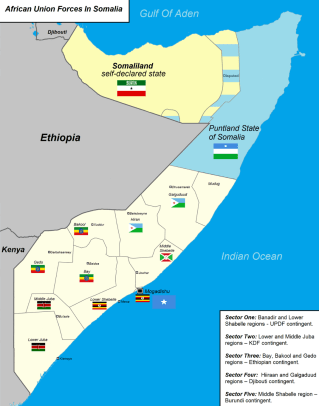 Kenya may have suffered these attacks since it is considered a key ally of the West. But why is Al-Shabaab (an Al-Qaeda affiliate) targeting Kenya more than it is other countries in the region, such as Ethiopia and Uganda, which also have close ties with the West and have fought Al-Shabaab in Somalia? To what extent does Al-Shabaab attack Kenya for the reasons it publicly gives? Will Al-Shabaab, for example, stop targeting Kenya if the Kenya Defence Forces pulled out of Somalia?
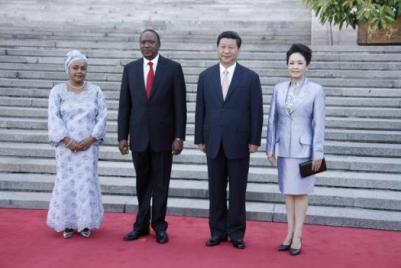 A key weakness that I see in the “Let China Fail in Africa” strategy is that it vastly underestimates the extent to which Africans will be willing to work hand in hand with China to make the Sino-African relationship work.
 …. In a display of unexpected warmth, Abiy Ahmed, Ethiopia’s new prime minister, embraced Issaias Afwerki, the ageing Eritrean dictator. In the Eritrean capital, Asmara, which no Ethiopian leader had visited since the war, the two pledged to normalise relations, putting an end to one of Africa’s most bitter conflicts. “There is no border between Ethiopia and Eritrea,” Mr Abiy declared in a televised address. “Instead we have built a bridge of love.”
 kenopalo.com