Talk of unintended consequences…

Judging from the NY Times coverage of the 1917 episode, legislators paid little attention to the implications of mandating a ceiling.  They focused instead on Treasury Secretary McAdoo’s request for a higher borrowing limit so as to fund an expensive war effort.  The ceiling was created to empower, not rein in, Treasury (prompting a failed effort to create a congressional  committee to oversee Treasury’s actions).  Similarly, the creation of the aggregate ceiling in 1939 reflected congressional deference to Treasury, granting the department flexibility in refinancing short term notes with longer term bonds.  As the Senate floor debate makes clear, senators viewed the move as removing a partition in the law that hampered Treasury’s ability to manage the debt.

……. This seems to be a case of the often unintended consequences of institutional design.   That is, we can’t always understand why we have a particular institution or practice by looking only at its contemporary usage.  Moreover, institutions crafted in a specific context to solve a particular problem often prove sticky, taking on new significance once politicians discover new ways to exploit them.  The often unintended consequences of institutional design will likely be central to any broader explanation of the evolving politics of the debt limit.

That is Sarah writing on the Monkey Cage blog.

I was struck by this post because I picked up Pierson’s Book – Politics in Time – today and couldn’t put it down. I highly recommend it for those of you out there interested in the temporal dynamics of institutional design and development.

Also, I just discovered this (in Pierson, 2004 p. 41): Stockman Reagan adviser in 1981 said of Social Security refrom that he didn’t want to waste “a lot of political capital on some other guys problem in the year 2010.” He was only one year off.

Links I liked

I just discovered Chri’s Blog on Madagascar and other Africa-related issues.

For those with a flavor of finance and capital markets and the political economy of development be sure to read Frontier Markets.

Germany is on the hunt for the UN security council seat in Africa.

And lastly, Justice – Uganda style:

Vice president upsets the president during tenure, president fires vice after election. Former vice gets accused of corruption. President declares former vice innocent, but leaves the matter up to the “independent” Inspectorate of Government. Here’s a quote from the president:

“What I know is that there was a power struggle between Bukenya and some businessmen but I found no merit in the case. But since the Inspectorate of Government is an independent body, let them investigate thoroughly.”

Yeah right.

Rants and Raves / Thoughts on the African Union

The African Union (AU) has had a rough few months. The diplomatic failures in Zimbabwe, Cote d’Ivoire, and Madagascar exposed the organization’s incompetence. The misguided anti-ICC crusade continues to cement the image of the organization as nothing more than a club of out-of-date and tone deaf autocrats. To many observers, calls for “African  Solutions to African Problems” amid all this failure has been seen as a cover of impunity and mediocre leadership on the African continent.

It says a lot that the current chairman of AU is President Theodore Obiang’ of Equatorial Guinea; a man who leads an oil-rich country of under 0.7 million people, with a per capita income of more than 30,000; but with more than 70% of its population living on less than $2 a day.

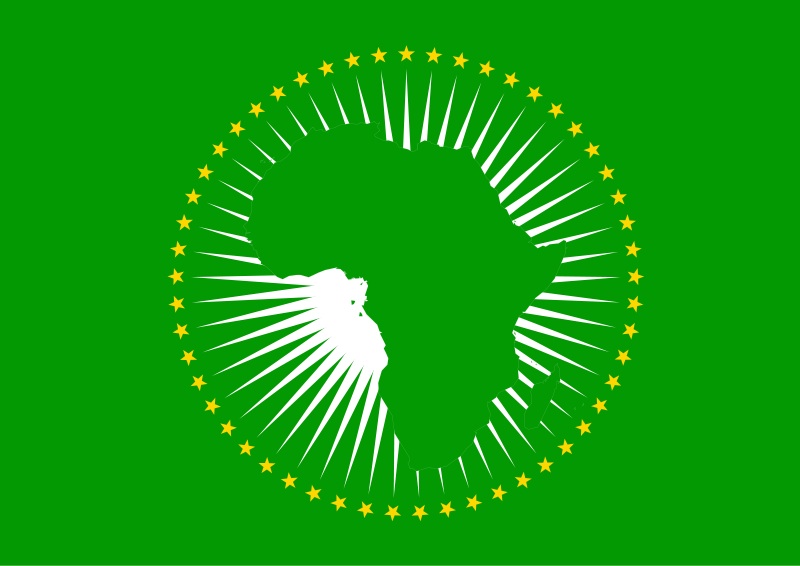
The epitome of the organization’s woes was the total snub it got from NATO before the military campaign against Libya’s Gaddafi, one of the AU’s main patrons. The AU was created by the Sirte Declaration, in Libya. Mr. Gaddafi’s influence ranged from his “African Kings” caucus (in which he was the King of Kings) to investments from Libya’s Sovereign wealth fund. I bet Gaddafi had a hand in the organization’s green flag.

So what ails the African Union?

The AU’s problems are legion. In my view, the following are some of the key ones.

  1. Lack of a regional hegemon(s): The AU faces massive collective action problems. With no regional hegemon(s) to act as the rudder of the organization, most of the organization’s resolutions are not worth the paper they get written on. The rotating chairmanship is a distraction from the real leadership needed in the organization. For instance, I had to google it to find out who’s currently in charge of the presidency of the EU (Poland). Everybody knows that France and Germany run the EU. Their word has gravitas in the Union. In the AU on the other hand, there is no leader. Could it be Navel-gaving South Africa or serially under-performing Nigeria?
  2. Too much political control: Most successful international organizations, despite having political principals, tend to have technical agents that are to some extent shielded from the principals. The AU is political through and through. The key decision-making body is the assembly of heads of state. The council of ministers does nothing. And the commission is all bark and no bite. Cronies of dictators staff most of the key positions in the organization.
  3. Disconnect from the masses: Most Africans have no idea what exactly the AU does. What is the point of the organization? Is it to preserve Africa’s borders? Is it to defend the likes of Gaddafi when the ICC’s Mr. Ocampo comes calling? Giving the people a voice in the Union might force the organization to do the people’s bidding, instead of being a protector of impunity in the name of African sovereignty.

What would reforming the AU entail?

  1. Radical restructuring: Like all inter-state organizations, the AU’s leadership should reflect regional power differences. The current assembly – in which Chad has the same power as Nigeria – makes no sense. There should be a smaller assembly of sub-regional representatives (West – Nigeria; East-Ethiopia; North – Egypt; and South-South Africa) with veto power and the mandate to implement the organization’s resolutions.
  2. Competent staffing: The practice of presidents appointing their sisters-in-law as AU representatives should go. An injection of competent expertise into the organization would go a long way in making it appear to be a more politically independent, competent and respectable organization.
  3. Direct elections to the AU parliament or no parliament at all: Instead of having the members’ parliaments elect representatives to the AU parliament, there should be direct elections. If that cannot happen then the parliament should be scrapped all together. A toothless and unrepresentative parliament is a waste of resources.
  4. Constructive and focused engagement with the rest of the world: Who is the AU chief foreign policy person? Are there permanent representatives in Beijing, Brussels, Brasilia, New Delhi and Washington? Why aren’t they trying to initiate a collective bargaining approach when dealing with these global powers (even if it is at the sub-regional level)? And what with the siege mentality? Not every condemnation of African leaders’ incompetence and mediocrity is a neo-colonial conspiracy, you know. For instance, instead of whining against the ICC’s Africa bias, the AU should clean up its own house. It doesn’t matter that George Bush is not being tried for crimes against Iraqis. The last time I checked none of the leaders of Switzerland was being tried for crimes committed in the German cantons.
  5. A more consistent commitment to progressive ideals: The AU is the only organization in the world that includes in its charter the provision to intervene in its member countries under the principle of responsibility to protect. If the AU were slightly more serious, the disasters in Zimbabwe, Cote Ivoire and Madagascar could have been nipped in the bud. As things stand it is only tiny Botswana that keeps shouting about the organization’s commitment to proper governance and responsibility to protect.

I am not a fan of the idea of the United States of Africa. That said, I believe that a regional organization like the AU can be a force for good. But in order for it to fulfill its purpose, it has to change. The change must reflect the regional power balance; it must increase the competence quotient in the AU and it must increase the voice of the average African within the organization.

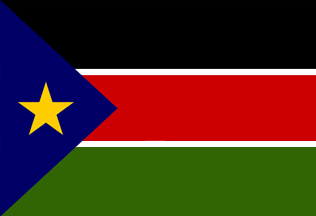
Republic of South Sudan: The Birth of a Nation

CONGRATULATIONS!!!

Let’s never forget the many great heroes and heroines who sacrificed to make it all possible.

And here is the new map of Africa

Another African country strikes black gold, in massive amounts

UPDATE: The office of the president in Uganda is saying that the oil around Lake Albert may be double what was initially thought. According to Bloomberg:

” Uganda may hold deposits of as many as 6 billion barrels of oil, more than double the current estimate, according to the office of the nation’s presidency.

“Some analysts estimate that Uganda’s Albertine Graben may hold more than 6 billion barrels of oil,” the presidential office said in an e-mail statement yesterday. The estimate is well above the discovered deposits with a potential of 2.5 billion barrels, it said.”

*************************************

Namibia has joined Ghana and Uganda as the latest winners of the oil lottery in Africa.

According to the Independent Online:

An estimated 11 billion barrels in oil reserves have been found off Namibia’s coast, with the first production planned within four years, mines and energy minister Isak Katali announced Wednesday.

The finding could put Namibia on par with neighbouring Angola, whose reserves are estimated at around 13 billion barrels and whose production rivals Africa’s top producer Nigeria.

With just over 2.1 million people and already rich in Uranium, Namibia stands to gain immensely from the new discovery – if it is managed sanely, that is.

Between the other new African petro-states, Ghana (with its fledgling democracy) hopes to rival Botswana as the poster child of exemplary mineral management on the continent. Uganda, however, appears poised to be yet another data point in support of the oil curse theory (see earlier post below).

Is Uganda experiencing its 1991 moment?

UPDATE II: Angelo over at TIA offers an analysis of the ongoing situation in the development of Uganda’s oil sector. After months of under-the-table maneuvers by the executive it appears that the Ugandan legislature has finally found its voice. Angelo credits this both on the rise of independents and internal divisions within the ruling party, NRM.

Perhaps in an attempt to deflect from its recent woes the government has also been trying to prosecute those involved in the mega-corruption surrounding procurement for construction projects in the run-up to the commonwealth summit in 2007. Senior officials, including a cabinet minister, have since resigned over this saga.

Many of us thought that the oil money would buy Museveni more time in State House, Entebbe. But the other thing the discovery of oil has done is increase the stakes. It remains to be seen how far Ugandan politicians and their coalitions within and without NRM are willing to go in order to get their fair share of the cake. I would not want to be M7 right now.

*******************************************************

UPDATE: Joel D. Barkan has a nice piece outlining Uganda’s and Museveni’s many challenges are potential scenarios of the continuing struggle for accountable government in Uganda.

********************************************************

The early 1990s were a heady time on the African continent. Student riots, mass strikes, opposition rallies and international pressure were causing many a one party African dictator sleepless nights.

By dint of history, Yoweri Museveni of Uganda escaped the winds of change that were sweeping through the continent. Having brought stability to Kampala and most of southern Uganda following the 1981-86 bush war, he had gone ahead to preside over the longest stretch of sustained economic growth in Uganda’s history. Many loved him. He was able to sell his weird idea of no party democracy to the masses. As a result Uganda’s first multiparty elections took place in 2006, a full 20 years after Museveni came to power.

But the long honeymoon for Museveni – the champion of Ugandan security and growth since 1986 – appears to be in its twilight. Since the last elections early this year, protests have rocked Kampala and other major urban centres across the country. Earlier today on twitter Ugandan journalist Andrew Mwenda argued that Museveni’s success will be the source of his downfall. Economic growth has created a lot of powerful forces with a lot to lose as Museveni continues to restrict political space in his bid to cling to power.

In a new article in the Journal of Democracy, Angelo Izama, another Ugandan journalist, echoes the same claims. The Ugandan masses can no longer tolerate the regime’s sins of misgovernance. High level sleaze in government, economic mismanagement (recent walk to work riots were in reaction to high inflation, partly related to runaway campaign spending by Museveni) and general fatigue with the overbearing Ugandan securocracy have ignited protests by the masses, beyond those called for by the main opposition party.

By all accounts Museveni is in a tight corner, despite his 68% win in the February 2011 polls.

But as many Uganda experts would quickly add, do not count M7 out just yet. The recent discovery of oil in the Lake Albert region is expected to provide a steady supply of cash to prop up the regime into the immediate future. Furthermore, the Ugandan opposition remains divided and unable to come up with a singular message against the regime’s many failures in the recent past.

That said, the cat appears to have been let out of the bag. Like many of his regional counterparts back in 1991, Museveni will have to make significant concessions if he is to survive the latest street protests.

But just how much time does Museveni have?

In my view, a lot of time. This is partly because Museveni has successfully convinced Ugandans – including many in the opposition and media that are opposed to his rule – that he is indispensable. Many, in the same breath, decry the sleaze and economic mismanagement in his administration but admire his regional military adventurism and opportunistic “independent mindedness.”

There is simply no compelling (and credible) replacement for Museveni in the public psyche (yet). The opposition leader Kizza Besigye, Museveni’s personal physician turned foe, is a pale shadow of his former self.

The other reason is Uganda’s weak civil society – a direct product of the country’s tumultuous history since the mid-1960s. Not enough indigenous independent wealth has been created to support a nascent opposition and civil society movement as was the case in Kenya, among other early experimenters with electoral pluralism, in the early 1990s.

Being the adroit politician that he is, Museveni will definitely play this reality to his advantage into the foreseeable future.

For the sake of Ugandans and the hope of a freer East African Community, I hope I am wrong.
Welcoming Southern Sudan to the EAC

UPDATE: A related article on Uganda’s influence in the soon to be independent South Sudan can be found in the New York Times.

In three days the East African Community will celebrate the independence of its next newest member. Because of SPLM connections in Kenya, among other East African nations, the Southern Sudanese economy will most likely orient itself southwards.

Kenya’s Vision 2030 development plan, for instance, will link Southern Sudan to the Indian Ocean coast via a pipeline and railway line. Oil from South Sudan is currently exported through Port Sudan, 3,000 kilometres away. The planned link to Lamu would reduce that distance to 1,700 kilometres.

For Southern Sudan, economic ties with its southern neighbors will not only grant it access to much needed capital and skilled labor but also implicitly guarantee it security against its menacing neighbor to the north.

I doubt that Kenya, Ethiopia and Uganda will sit on their hands if the north decides to bomb local offices of Equity Bank, Ethiopian Airlines or Ugandan retail outlets in Juba (Remember the “Kenyan” tanks fiasco?). It also helps that IGAD has suddenly woken up to the security challenges posed by proxy wars among its member states. Kenya’s president, and current head of IGAD, recently chastised Eritrea for its ties with militant groups in the region.

IGAD will provide yet another forum for the region to put pressure on Khartoum to honor the CPA and not resort to war.

Several Kenyan companies have already set up shop in Juba. About 70,000 Kenyans live and work in Southern Sudan. According to the Business Daily:

Although several major Kenyan companies like Equity Bank, KCB, UAP Insurance and many small enterprises operate in South Sudan, the independence declaration on July 9 is expected to trigger another wave of corporate movement there.

Bidco Refineries that has a dealership in South Sudan, for example, is expected to consider having a physical presence there, said the company’s CEO Vimal Shah in an earlier interview. Kenyan manufacturers are, however, discouraged by low consumption levels and shortage of power, water and sewerage systems.

Co-operative Bank of Kenya is also expected to start setting up its banking infrastructure with a new venture that will be 30 per cent owned by the Government of South Sudan.

The new bank is expected to benefit from government business as it will process salaries of government employees and enjoy business arising from the government’s shareholding in the venture. The peaceful aftermath of the January 9 referendum that voted for secession from the North has helped to improve the country’s risk profile.

Birthday politics in Uganda

President Museveni’s plans to succeed himself in 2016 have come under fresh attack. Activists in Uganda staged a mock birthday party, complete with gifts, to celebrate Museveni’s 73rd birthday. Police dispersed participants at the mock party and even seized the birthday cake.

The politics behind Museveni’s date of birth stem from the fact that the Ugandan constitution bars those over 75 to run for president. Museveni insists that he is 68, which means that he will be 73 in 2016 and still eligible to run for president. The opposition maintains that based on its own research the president is 73.

It appears that the latest strategy of the Ugandan opposition is to de-legitimize Museveni using his own rules.

So why should Museveni care if a bunch of activists stage a mock birthday party for him?

The beginning of the downfall of authoritarian systems is when the opposition goes legal on the regime. By highlighting the inconsistencies in the legal structure and challenging the regime using its own rules, the opposition forces the regime to continue tinkering with the very same rules.

But tinkering with the rules creates winners and losers within the regime. Ultimately it is those that find themselves with the short end of the stick that jump ship and join the opposition in an effort to oust the ancien regime.

President Museveni should consult with Kenya’s former President Moi on how events unfolded after the fiasco that was the 1988 mlolongo (queuing) election. It will take time, but kila mwizi ako na siku arubaini (every thief has forty days).

You can find the BBC story on the Uganda protests here.

To the Swahili speakers out there

Jaguar’s latest hit Kigeugeu is currently quite popular in the Swahili world. The song highlights the breakdown of trust and probity in Kenyan society – according to jaguar, everyone (his wife, his pastor, doctors, politicians, bureaucrats, etc) is janus-faced (kigeugeu).

Here is the official video of kigeugeu.

Briefing from Malabo

The club of African autocrats African Union has its biannual summit in Malabo, Equatorial Guinea this week (This guy is the current AU Chairman, no joke).

The struggling AU has a lot on its plate at the moment (subject of an upcoming blog post). It is in the middle of trying to put out new fires in Sudan and Libya, while ignoring/recovering from the humiliation of its failures in Somalia, Cote d’Ivoire, and Zimbabwe – not to mention the region’s other problems.

All this while insisting on “African Solutions to African Problems,” despite the organization’s infamous reputation for incompetence.

Top on the agenda at the summit has been the ongoing hostilities (Obama might disagree) in Libya. According to the Oman Daily Observer, the AU has come up with a plan that

“envisages a ceasefire, humanitarian aid, a transition period, reforms towards democracy and elections, but the position on the future of Gaddafi has not been made clear.”

In other words the heads of state in Malabo, led by their Chairman Obiang, are hoping to do a Zimbabwe: Have Gaddafi in charge of the same reform process that is supposed to phase out his 42-year rule. I need not elaborate how this story ends.

No ICC hearings in Kenya

The ICC Pre-Trial Chamber Judge Ekaterina Trendafilova on Wednesday decided that the trial of suspects of the 2007-08 election violence in Kenya will not be held in the country.

Great move.

I am of the view that holding the hearings in Kenya would have created an unnecessary distraction from the important task of implementing Kenya’s new constitution. Already, the bigwigs accused of masterminding the violence that killed 1300 and displaced over 300,000 Kenyans have ethnicized their predicament. Holding the hearings in Kenya would have handed them an opportunity for a circus of ethnicity-charged rallies and demonstrations in Nairobi.

The ICC continues to be a source of debate in Kenya and across Africa. Many have faulted the court’s apparent bias against African leaders. Some have even called it a form of neocolonialism. While admitting that the court could use a little bit more tact [principally by acknowledging that it cannot be apolitical BECAUSE it is an international court SANS a world government] I still think that it is the best hope of ending impunity on the African continent – at least until African leaders internalize the fact that it is not cool to kill your own people.

Among the cases that should have been handled with a sensitivity to political realities include Sudan and Libya [and may be the LRA in Uganda]. Kenya’s Ocampo Six, the DRC’s Jean-Pierre Bemba and Cote d’Ivoire’s Laurent Gbagbo, on the other hand, should not raise questions of national sovereignty. Murderous dictators and their henchmen do not have internal affairs. In any case sovereignty for many an African country means nothing more than sovereignty for the president and his cronies.

Related posts here and here.

Is Peer Review in Decline?

One more reason for academics to keep blogging….

Glenn Ellison in this paper notes the general decline in the need for academics from top institutions to publish in top journals because they can get citations [hopefully confirming that they were right] by other means – through sites like SSRN [and perhaps even by sharing their works in the blogosphere]

Over the past decade, there has been a decline in the fraction of papers in top economics journals written by economists from the highest-ranked economics departments. This paper documents this fact and uses additional data on publications and citations to assess various potential explanations. Several observations are consistent with the hypothesis that the Internet improves the ability of high-profile authors to disseminate their research without going through the traditional peer-review process.

The author further notes that:

I started this paper by pointing out two trends: economists in several highly regarded departments are publishing fewer papers in the top field journals; and Harvard’s economics department is also publishing fewer papers in the top general interest journals.

Several pieces of evidence bolster the view that one factor contributing to these trends is that the role of journals in disseminating research has been reduced. One is that the citation benefit to publishing in a top general interest journal now appears to be fairly small for top-department authors. Another is that Harvard authors appear to be quite successful in garnering citations to papers that are not published in top journals. The fact that the publication declines appear to be a top-department phenomenon (as opposed to a prolific-author phenomenon) suggests that a top-department affiliation may be an important determinant of an author’s ability to sidestep the traditional journal system.

Inequality, Terrorism and Governance in Nigeria

On June 17th Nigeria experienced its first ever suicide bomb attack. Boko Haram, a militant Islamic group that seeks the imposition of Sharia Law in all of northern Nigeria, claimed responsibility for the attack.

Although the group’s principal aim – at least according to its press releases – is the imposition of Sharia Law, its motivating factors include economic, social and governance issues that the Nigeria’s infamously kleptocratic elite have so far chosen to ignore. According to the Christian Science Monitor:

The “nationalization” of the Boko Haram problem will intensify pressure on elected leaders and security forces to deal decisively with the group and prevent further attacks. Nigerian officials have proposed solutions ranging from crackdowns to outreach programs to amnesty offers. The government has to some extent pursued all of these options. Yesterday former Kano State GovernorIbrahim Shekarauproposed a hybrid approach of sorts, which would rely on intelligence gathering to defeat the group while advancing employment programs to deal with social and political grievances in Northern society.

Whatever course the government pursues, the Boko Haram problem has already led several Northern leaders, including the newly elected Governor Kashim Shettima of Borno State, to speak quite bluntly about the North’s serious problems of economic stagnation and political isolation. Northerners have been voicing such concerns for some time, but perhaps now these concerns will reach a broader audience and stimulate a debate that goes beyond just the issue of Boko Haram.

Since the unification of Nigeria in 1914, the north has continued to lag the south in a number of socio-economic indicators. Years of military rule by northern generals did not make things any better. Most of the country’s oil revenue wound up in Swiss bank accounts and as investments in properties in European cities – even as regular folk in Kano, Katsina and Maiduguri, and in the wider northern region, continued to wallow in poverty.

In a sense Boko Haram and its ghastly attacks on civilians and government installations is as much a rejection of Western/Christian education (its name loosely translates to non-Islamic education is a sin) as it is an indictment of northern Nigeria’s leadership. Even by Nigerian standards, the north is doing very badly.

Recently, the governor of Nigeria’s Central Bank, Professor Chukwuma Soludo, chastised the northern elite by noting that the “high and persisting level of poverty in the country is a northern phenomenon.” Nearly all northern states in Nigeria have poverty rates higher than 60%, with some at 90%. Prof. Soludo further added that “if you look at all the indications of development, what constitutes today the North seems to be lagging far behind that the gaps seem to have even widened.

It is hard to ignore the fact that regular southerners are inching ahead of their northern counterparts despite the generous revenue sharing arrangements among Nigeria’s 36 states.

What does this mean for national politics and governance in Nigeria?

Well, for one we know that the apparent north-south political divide in the last election was merely an artifact of presidential politics. Gubernatorial elections revealed that northern elites are also aboard Goodluck Jonathan’s gravy train.

Northern Nigerian elites are as much a problem in the north’s underdevelopment as the historical north-south divide.

In light of this, groups like Boko Haram show that the northern elite in Nigeria can no longer play the north-south card while keeping all the money from the national treasury to themselves. The men and women on the streets and in northern rural areas also want their cut.

I hope Abuja will not bury its head in the sand and pretend that Boko Haram is purely a security problem.

Kenya tried doing the same with the Mungiki group (with extra-judicial executions and all) without much success.

To Abuja I say: you must try to solve the problem you have, not the one you wish you had.

army recruitment ad done very badly

This has got to be one of the worst recruitment ads I have ever seen.

HT @laurenist

Accountable leadership 1 Abdoulaye Wade 0

Abdoulaye Wade is a study in delegative democracy gone crazy (In the words of Paul Collier, democrazy). Delegative democracy  is the phenomenon of elected leaders going rogue and essentially performing auto-coups (mostly through constitutional gymnastics) in order to entrench themselves in power (see O’Donnell). Leading lights in this regard include Hugo Chavez of Venezuela, the late Frederick Chiluba of Zambia, Vladimir Putin of Russia and Thaksin Shinawatra of Thailand.

Mr. Wade’s latest assault on Senegalese democracy has been his attempts to lower the threshold for the election of a president to a mere 25% down from 50%. He’d much rather win cheap against a fractured opposition in the first round than risk a runoff against a single opposition candidate. After 11 years in power without much to sing about the risk is just too high for the Wade regime. President Wade also wanted to create the position of an elected vice president before the 2012 elections. Many believe that Wade had his son Karim in mind for this new post.

In the end determined opposition protest outside the Senegalese parliament forced the president to withdraw the draft legislation.

If the opposition unites [and that is a big IF], they could beat Mr. Wade in 2012. Frequent power cuts, a flagging economy, rampant inflation and Wade’s brand of crass and tone deaf nepotism (he wants to be succeeded by his own son despite the revolutions the Islamic near-abroad) have served to alienate the aging leader from many voters, particularly in urban areas.

Mr. Wade is expected to run for a third 7-year presidential term next year. He is 85.