On Kenya’s diplomatic delusion

So far the ICC question has been the singular preoccupation of the Kenyatta administration. It appears that the Kenyan government is willing to pull out all the stops to halt the cases against the president and his deputy. Sadly, instead of a sober approach to the process of doing so, Nairobi has chosen to antagonize both the Hague Court and the West.

As I have argued before, Kenya has leverage vis-a-vis the West (security in the Horn and Somalia in particular; its status as host to regional diplomatic and aid efforts; and role as the biggest economy and potential gateway to the region) that it can use in a smart way to get concessions from Washington, London and Paris on key issues. Rather than wish for a restructured P5 (see post below), Nairobi should think of how to get its way with the current one.

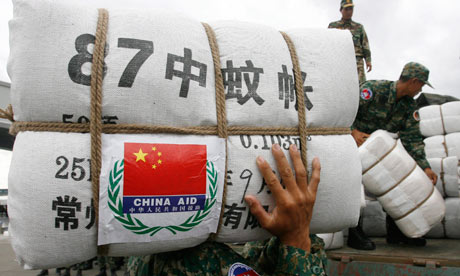
Instead of the misguided chest-thumping about hollow sovereignty in a Chinese built conference hall in Addis under the banner of an organization partly funded by the EU, Nairobi could have chosen a different path.

Writing in the Daily Nation, Paul Mwangi, in a nutshell describes what is wrong with Kenya’s current approach to international diplomacy (Must read, more here):

The reality is that gone are the days when we were the “island of peace” in an unpredictable and violent part of the world. Over time, the world around us has changed, but we are yet to wake up and smell the coffee. Ethiopia is no longer in civil war and is quickly becoming a better investment opportunity for manufacturers both due to the low price of its electricity and the size of its population, about 90 million people. It is one of the fastest-growing economies in the world.

Tanzania is no longer socialist and is now the darling of America. Apart from its own vast mineral, oil and gas deposits, Tanzania is the new gateway to the DRC and is receiving mammoth investment from both China and America. China is building what is being called a “mega port” for Tanzania at Bagamoyo, which is more than 30 times the size of Mombasa, as part of a $10 billion investment package for Tanzania. When completed, it is bound to take away all central Africa business from Mombasa port, which will be left to serve only Kenya and Uganda.

……. Let us stop comparing ourselves with other countries. The painful truth is that Kenya is not Syria. In the Middle East, Syria is the only foothold for China and Russia. The rest of the countries are either fundamentalist or pro-Western. In Africa, China and Russia are spoilt for even better choices.

They will only go so far to help us out [Indeed some have started asking of the Afro-Chinese engagement has peaked].

The complete madness lack of tact that Mr. Mwangi points out will no doubt be on display this afternoon as the National Assembly debates Kenya-UK relations (Recently Kenyan MPs allied to the president have chosen to prove their loyalty by taking extreme positions on the ICC issue). This comes in the wake of the UK’s support of an amendment of the ICC statutes to allow President Kenyatta and his deputy to attend their trials via video-link; and stated opposition to granting sitting presidents full immunity from any prosecution under international law while in office as has been demanded by Kenya. The hurdle remains high for the Kenyan (AU) amendment proposals to the Assembly of Member States, especially after it emerged that 9 African states may not be illegible to vote on account of not having paid their dues.

According to a recent poll, 67% of Kenyans are of the opinion that President Kenyatta should attend trial at the Hague in person to clear his name.

Making sense of the Kenyan government’s reaction to UNSC vote on ICC deferral

The UN Security Council has rejected Kenya’s (and the African Union’s) request for a one year deferral of the case against President Uhuru Kenyatta and his deputy at the Hague. The two stand accused of crimes against humanity committed following the disputed elections in 2007. More than 1300 people died, and hundreds of thousands were displaced.

The US, UK, France, Australia, Guatemala, Luxembourg, South Korea and Argentina abstained to stop the deferral request. China, Russia, Togo, Morocco, Pakistan, Azerbaijan and Rwanda voted for a deferral. African leaders have in the last two years been on an ill-advised crusade against the ICC, terming it as a “race hunting” tool of “declining” Western powers.

Kenyatta and Ruto are innocent until proven otherwise, but their attempts to make their personal cases at the ICC a regional struggle of Africans against imagined neo-colonialists bent on usurping African sovereignty is a little misguided. The Kenyan case is different (Kenya is not Sudan or the DRC) and ought to have attracted special consideration from the court (see closing remarks below). However, despite its faults the ICC is all the continent has in the quest to hold its leaders accountable. I reiterate, murderous dictators in Africa and elsewhere should never be allowed to have internal affairs.

Here is the government’s total freak out response following the UNSC vote, with some comments from yours truly.

STATEMENT FROM THE FOREIGN AFFAIRS MINISTRY IN KENYA

Kenya takes note of the outcome of the United Nations Security Council meeting on peace and security in Africa, and specifically on the subject of the request for deferral of the Kenya ICC cases. Kenya wishes to thank China and Azerbaijan who, during their stewardship of the Security Council, have been professional and sensitive to the African Union agenda.

Wow, this is how bad things have become. That Kenya finds friends in states like Azerbaijan. Yes, this is the place in which the president recently announced the election results even before the polls opened. These are our new committed friends. We are going places. 

Kenya wishes to thank the seven members of the Security Council who voted for a deferral and is particularly grateful to Rwanda, Togo and Morocco – the three African members on the Security Council – for their exemplary leadership.

Again, the only country we should be associated with on this list is perhaps Rwanda. I wish we could do what they have done with their streets, and corruption, and ease of doing business. But by all means we should not borrow their human rights record. Oh, and please let’s stay away from their variety of democracy.

This result was not unexpected considering that consistently some of the members of the Security Council, who hold veto powers, had shown contempt for the African position. The same members and five others chose to abstain, showing clear cowardice in the face of a critical African matter, and a lack of appreciation of peace and security issues they purport to advocate.

Letting the trial go on does not threaten peace and stability in Kenya. This is an empty argument. There will not be any spontaneous violence. Furthermore, the president is not the operational commander of the KDF. He is the Commander in Chief. He gets to issue orders from some room somewhere. Orders can be issued from anywhere. And remind me again how this trial impacts security ALL OVER AFRICA, other than by raising the cost of genocidal activities by African presidents?

Oh, and did I mention that the African Union Mission in Somalia (AMISOM) is almost entirely paid for by the European Union?

Inevitably, it must be appreciated that the outcome of this vote demonstrates that the Security Council does not serve the interests of a majority of its members and is clearly in need of urgent reform. It cannot be that a few countries take decisions that go against reason and wisdom in a matter so important to nearly one billion Africans.

One billion Africans. Really? I had no idea our president was this important of a man. One billion Africans. Many of whom starve to death; or die of treatable illnesses; or never make it to their first or fifth birthday because their leaders steal all the money meant for medicine. These Africans? Why should their names be invoked to protect the same leaders that have confined them to degrading penury for the last half century? Why, I ask? 

Also, the claim that Africa is united against the ICC is false. We all know about the divisions that stalled the silly idea of a mass walkout from the ICC by African states.

The African Union, in one voice, took the unprecedented step of making a simple request to the Security Council, bearing in mind the security and stability it seeks to achieve on the continent. But the Security Council has failed to do this and humiliated the continent and its leadership.

Ahh. Now the truth comes out. It is not about the one billion Africans after all. This is about the humiliation of the African leadership. It is about protecting the sovereignty of a few inept rulers. Forget the one billion Africans. It is about their big men rulers who steal tax money and stash it away in bank accounts in the same Western countries they like to call names.

The Security Council has failed the African continent, which will have to make its own judgment in the coming days and weeks about how it wishes to engage with the Security Council, which obviously does not believe the voices of more than one quarter of its members is significant enough to warrant its serious and purposive attention.

The security council has failed African leaders. Not the African people en masse. Africans want to have elections without having to worry that voting one way or the other will result in their houses being torched or their mothers, sisters and brothers murdered or raped. They also want freedom from ignorance, disease and material want. Is that too much to ask?

The African Union’s request to the Security Council included its key resolutions at the Special Summit on the ICC. The important one for the Security Council to note was the one that categorically says that no sitting Heads of State or Government may appear before the ICC. Kenya regrets failure of important members of the UN Security Council to have due consideration of Kenya’s critical role in stabilizing the Horn of Africa and the Great Lakes regions, and their reckless abdication of global leadership.

Wait, are these important global leaders in the UNSC the same ones President Kenyatta termed as “declining powers”? What makes them important now? 

Just for the record, I am part of the 67% of Kenyans who in a recent poll were in favor of the president attending court at the Hague. Having both the president and his deputy on trial will serve a great symbolic task of demystifying the Kenyan political leadership. The demonstration effect to all politicians, voters and criminal gangs alike will be clear: You cannot kill innocent civilians and get away with it.

In my view, the best case scenario is having both men attend trial and then get a not guilty verdict.

Kenyans are nowhere near ready to discuss frankly what happened in 2007-08 or the deeper issues of ethnicity and economic disparities that often mirror ethnic lines and how to deal with these issues at the national level. A forced conversation, especially one that has a foreign touch in the form of a court verdict, may result in unpleasant consequences. This would be a less than ideal outcome, but one that would not necessarily be catastrophic for the country. The constitution is clear on succession should either one or both leaders be found guilty and jailed.

More on direct cash transfers

As Chris Blattman put it, the Cashonistas are rejoicing. And with very good reason.

There is mounting evidence that giving money directly to poor people does a much better job of improving their welfare than traditional channels of institutional(ized) aid-giving. On a related note, this evidence lends credence to claims by proponents of oil-to-cash programs. Oil to cash enthusiasts advocate for direct payments to citizens of revenues from extractive sectors (and especially oil) so as to avoid what is commonly known as the resource curse (more on oil-to-cash here). I am not one to argue against evidence, so I am intrigued by the success of Give Directly, and look forward to further impact assessments to ascertain the stickiness of the observed welfare gains.

However, I agree with Brett Keller that we shouldn’t allow the present evidence to distract us from thinking about things like schools, hospitals, business-promoting state institutions, etc.

Despite the within-community evidence of positive effects of direct cash transfers, we shouldn’t forget that these communities do not exist in a vacuum but within political economies of various states. For instance, given what we know about ethnicity and attendant barriers against collective action, what would be the effect of giving all the money to the people and then requiring them to comply with tax regimes and other collective action endeavors?

Furthermore, giving poor people money is often based on an implicit premise that the poor ought to become entrepreneurs and lift themselves out of poverty (People respond to incentives, and we know what would happen if say we guaranteed them direct cash transfers in perpetuity. So the scheme only works if poor people can use the money to start businesses). But entrepreneurship is hard. Even for people with trust funds and super-charged business incubation resources. So is it really fair to require that the objectively most risk averse among us lift themselves out of poverty by starting businesses? Isn’t this the role of the middle and upper middle classes who can tolerate the risk? I am not saying that entrepreneurship is limited to particular classes (lots of people from humble backgrounds have created wildly successful businesses the world over). What I am saying is that as a matter of policy we shouldn’t unnecessarily burden the most vulnerable among us.

Also, to borrow from Huntington, we are well advised to keep in mind that even though economic success leads to stabilization, the process of development can be destabilizing. With this in mind, for most development initiatives to succeed, they need political cover (broadly defined as the ability to shape or influence government policy). Interventions to accelerate growth must never lose sight of this fact. Those who make and/or can influence policy matter a great deal.

This might sound very 20th century, but I think that the best anti-poverty measure out there is still mass job creation by BIG business (and agree with Chris Blattman here). It beats all the pro-poverty pro-poor interventions I can think of. So may be instead of raining cash on the poor it might be better to think of smart ways of jumpstarting the growth of SMEs in the developing world into mass employers. This is not a trickle down economics argument. It is an argument for the continued emphasis on macro reforms in the political economy to provide an enabling environment for mass job creation.

We can’t continue to insist that institutions matter but then turn around and do our best to device anti-poverty interventions that skirt the very same institutions that we insist are the fundamental cause of long-run growth.

Direct cash transfers might prove to be a key part of the shortcut to Denmark (and I hope the successes stick). But like with most shortcuts, the potential for disappointment is a little higher than most of us would like to admit.

On direct cash transfers: a look at US domestic politics of aid-giving

This is a guest post by my colleague at Stanford, Lauren Prather, who works on the determinants of individual attitudes towards inequality, poverty, and redistribution, in both domestic and international contexts.

Does the American public oppose giving cash to poor people in developing countries? Giving cash instead of in-kind aid like food is a hotly debated subject in development circles and has recently received increased attention from the media. The apparent success of GiveDirectly, a charity that gives unconditional cash transfers to poor people in Kenya, has added fresh fodder to the discussion. Even the Obama administration entered the fray earlier this year by proposing changes to the way U.S. food aid is distributed.

Traditionally, much of the food aid provided by the U.S. government is procured in the U.S. and shipped abroad. The reforms would relax these requirements and include more flexible approaches to food aid provision including possibly giving cash or vouchers to people in poor countries to help them buy food locally.

Proponents of cash transfers argue that the poor know their needs best and therefore giving cash is a more efficient way of providing aid. With food aid in particular, providing aid in kind can be more expensive and can damage local economies by driving out local farmers. Giving people cash on the other hand can allow them to buy food locally, which can be more cost-effective for donors and can actually support local agriculture.

What are the political constraints to reforming aid to include cash transfers to the poor? While most of the opposition to the food aid reforms has come from the farm lobby, public opinion may be another constraint. Indeed, research on American political attitudes suggests that Americans oppose giving cash to the poor, at least to poor Americans. But do Americans exhibit the same level of opposition to cash transfers targeting the foreign poor?

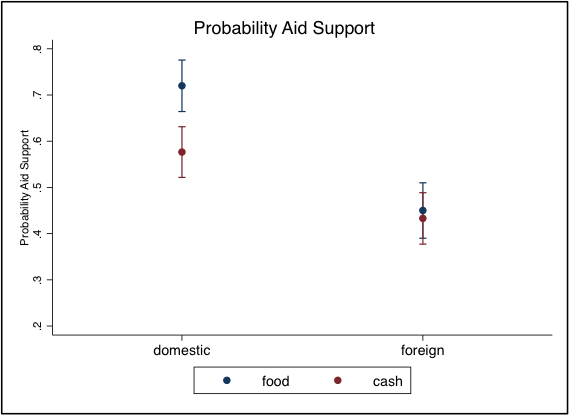
To shed light on this question, I used a randomized experiment embedded in a survey fielded in July of 2013 to a representative sample of 1,000 Americans. In the survey, I gave individuals a fictional news article that described a government hunger relief program. The news article contained two experimental treatments. In the first treatment, I randomly told half of the survey respondents that the program gave the poor cash, while the other half read that the poor were given food. The second treatment was randomized independently of the first treatment: half the respondents were told that the program helped Americans and the other half read that it helped people living in other countries. After reading the article, survey respondents were asked whether or not they thought the government should cut the program. 

ImageThe results were surprising. Among those who read about the foreign hunger relief program, the cash treatment had little effect: 45% of respondents thought officials should not cut the program giving food, while a similar 43% thought officials should not cut the cash program. For those that read about the domestic program, however, the results were more expected: 72% of respondents wanted to keep the food program, whereas only 58% wanted to keep the program that gave the poor cash.

Two important conclusions can be drawn from these results. First, policymakers shouldn’t necessarily look to how the public thinks about domestic welfare programs to predict how they would respond to similar foreign aid programs. Instead, it appears that support for foreign aid remains relatively low regardless of whether the aid is distributed in kind or in cash.

Second, advocates of giving cash to the poor in developing countries need not fear the public; at least not any more than is usual for foreign aid. In the eyes of the public, the real issue seems to be whether to give any foreign aid at all.

Happy Independence Day to all the Zambians out there!

Happy Independence Day to all the Zambians out there!.

Looking East: The fetishization of “oriental” despots is an old Western habit

This choice of an alien heroism was the result of a heightened interest, characteristic for Xenophon’s time, in the Orient – Eastern culture, ideology and sociopolitical forms. A light was expected from the East. Cultural interanimation, interaction of ideologies and languages had already begun. Also characteristic was the idealization of the oriental despot, and here one senses Xenophon’s own contemporary reality with its idea (shared widely by his contemporaries) of renovating Greek political forms in a spirit close to oriental autocracy. 

That is Russian philosopher Mikhail Bakhtin, writing in the Dialogic Imagination (p. 54). Next time you read Tom Friedman in the Times and feel a little envy over supposed autocratic efficiency in Beijing remember that the world has seen this before. May be that will help you relax a bit, and put things in perspective. 

Will rampant corruption jeopardize Kenya’s ability to prevent future terror attacks?

There is an interesting debate on this question over at the Guardian. Following the terror attack at Westgate Giles Foden made the following claim:

In Kenya crime and terrorism are deeply linked, not least by the failure of successive Kenyan governments to control either……… These attacks are part of a spectrum of banditry, with corruption at one end, terrorism at the other, and regular robbery in the middle. Some Kenyans will feel that the conditions in which the attacks have happened have arisen because of economic growth in a vacuum of governance. Money that should have been spent on security and other aspects of national infrastructure has been disappearing for generations.

Two days ago the Kenyan Cabinet Secretary for Foreign Affairs, Amina Mohamed, responded to Mr. Foden with a denial of the charge that corruption in the country was in any way related to the failure of security forces to thwart the attack at Westgate. She reminded readers that:

The disasters of 9/11 or the more recent Boston marathon in the US and 7/7 in the UK – both highly developed countries – could hardly be blamed on corruption, so why Kenya? We do not recall Foden blaming corruption within the security agencies involved.

So what is the relationship between corruption and the likelihood of successful future terror attacks in Kenya?

There is no denying the fact that corruption is a huge soft underbelly in the Kenyan state’s fight against al-Shabaab. As I have pointed out before, the attack at Westgate  showed Kenyans that AK-47s are not a menace only in the hands of cattle rustlers or carjackers. They can also be weapons of mass murder. So reports of police reservists renting out their AKs to criminals or being paid by the same criminals to look the other way do not inspire confidence in the government’s ability to prevent future attacks. Indeed last Friday Reuters reported that:

security officers, diplomats and experts describe a security apparatus that may be squandering skills built with the help of U.S., British and other trainers because suspects can buy their way through police checks and poor inter-agency coordination means dots are not joined up.

Add to this the fact that the country has about 600,000 light weapons and small arms in civilian hands (pdf) – including 127,000 illicit guns in Turkana County alone – and you begin to get the picture of why lax law enforcement, partly fueled by lack of funds and poor training and pay of regular police, but also by higher-ups’ venal proclivities, does not bode well for the likelihood of future Westgate-style attacks.

That said, to put terrorism on the same scale as carjacking would be a mistake, especially with regard to how the Kenyan state is likely to react to future threats of terrorism in the wake of Westgate. Obviously, due to entrenched interests and the administrative power (pdf) of the Civil Service the president cannot simply wish away corruption with a stroke of a pen. But he will be under tremendous pressure from the business community (which, in my view, is his number one constituency) to make sure that things that are singularly bad for business – like Westgate-style terror attacks – do not happen in the future.

Regularized murderous banditry in the less governed spaces in Kenya or carjackings in Kileleshwa are different from terror attacks in that the former are often localized “micro-events” on the national stage (even when they are of Baragoi or Tana River or Bungoma proportions) that rarely ever have systemic effects. Westgate, on the other hand, did have a systemic effect. And in a big way. As such I expect that the government will follow the trail and start closing loopholes wherever they are that might be exploited by terrorists in the future. This includes reforming the Kenya Police Service, to the extent that is necessary. It is hard for me to imagine that the president would risk failing to secure reelection just to keep a few corrupt officials happy.

So on balance Westgate might actually lead to a major push to rid critical state institutions of the scourge of corruption and to strengthen them with a view of increasing state capacity.

I could also be totally wrong.

There is a scenario in which the response to Westgate is al-Shabaab-focused and purely driven by the military (which presently has a huge PR problem with the Kenyan public and would want to save face) and other security agencies with little input from the political class. Such an eventuality would be a double bad because of the risk of erosion of civilian control of the military in Kenya (at least at the policy level) as well as a failure to reform critical domestic institutions to reduce the likelihood of future attacks (or attempts to bring back the bad old days…)

All this to say that on the off chance that someone asks you the question in the title of this post, the simple answer would be probably.

Reporting the US government shutdown…

WASHINGTON, United States—The typical signs of state failure aren’t evident on the streets of this sleepy capital city. Beret-wearing colonels have not yet taken to the airwaves to declare martial law. Money-changers are not yet buying stacks of useless greenbacks on the street.

But the pleasant autumn weather disguises a government teetering on the brink. Because, at midnight Monday night, the government of this intensely proud and nationalistic people will shut down, a drastic sign of political dysfunction in this moribund republic. 

The capital’s rival clans find themselves at an impasse, unable to agree on a measure that will allow the American state to carry out its most basic functions. While the factions have come close to such a shutdown before, opponents of President Barack Obama’s embattled regime now appear prepared to allow the government to be shuttered over opposition to a controversial plan intended to bring the nation’s health care system in line with international standards.

……..As this correspondent’s cab driver put it, while driving down the poorly maintained roads that lead from the airport, “Do these guys have any idea what they’re doing to the country?”

That is Joshua Keating in an entertaining piece over at Slate on how the ongoing government shutdown in the United States might have been reported from an American perspective had it happened in another country. 

KILA SIKU TUWE NA SHUKRANI

Thank God the siege at Westgate has ended. Thank God for our brave men and women in uniform and all those who volunteered or helped out in their own little ways throughout this nightmarish ordeal. We mourn the dead and commiserate with their loved ones. We wish survivors a speedy recovery. Kenyans’ resiliency will shine through.

“We are as fearless and invincible as the lions on our coat of arms” (President Uhuru Kenyatta)

[youtube.com/watch?v=lIljogSlZwc]

Statement from the Supreme Council of Kenya Muslims following Westgate attack

We Muslim leaders gathered here today condemn in the strongest terms the attack on peace loving Kenyans and our international guests who have chosen to live and work in Kenya.

We send our deepest condolences to the families of the bereaved and those wounded in the ongoing siege at the Westgate Mall.

We reiterate that wanton and indiscriminate killing of innocent men, women and children is against Islamic teachings and tenets.

We re-affirm our support to the government of Kenya and its security organs in the ongoing operations to secure the mall from the attackers.

We call upon our Muslim brethren and all Kenyans of goodwill to heed the appeal and come out in large numbers to donate blood to relieve our healthcare institutions provided care and treatment to the wounded.

We call upon all Kenyans to remain calm and refrain from being divided on sectarian grounds by this unfortunate incident.

Read by Adan Wachu, Secretary-General, Supreme Council of Kenya Muslims (SUPKEM)on behalf of the leaders gathered at Jamia Mosque Nairobi on Sunday  22.9.2013

What next for Kenyan Policy on Somalia?

For two years it almost seemed too good to be true. Kenya had invaded Somalia and occupied Kismayo, a key Al-Shaabab-held city in southern Somalia without carnage visiting the capital Nairobi. The group instead opted for sporadic attacks against churches and police installations in the border regions of North Eastern and Coast. A few explosions rocked the capital, but these were never spectacular. Indeed, some of them appeared to have been motivated by local business rivalries and not some revenge mission by the Somali Islamist group Al-Shaabab. Within Somalia, the African Union Mission in Somalia (AMISOM) mission made quick gains that left Al-Shaabab backpedaling. With a few exceptions, the Al-Shaabab was reported to have been severely weakened and on the run. Before the recent uptick in bombings, Mogadishu was slowly becoming a reasonably peaceful boomtown.
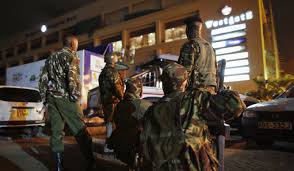
scenes from the Westgate Mall

A scene from the Westgate Mall siege

And then Westgate happened. At around noon on September 21st three groups of armed men (and allegedly at least one woman) stormed the upscale mall in Nairobi and started shooting indiscriminately. Several hours after the attack started Al-Shaabab claimed responsibility via twitter. A day later, the Islamist group gave an alleged list of the gunmen, all men between the ages of 20-27. Six were from the US, two from Somalia, and one each from Kenya, the UK, Finland and Syria. More than 36 hours after the attack began at least 69 people had been confirmed dead, including one gunman and two Kenyan officers. A visibly incensed President Uhuru Kenyatta condemned the attacks, and reassured Kenyans of a swift response to punish the perpetrators. Just a few minutes earlier Al-Shaabab had claimed responsibility for the attacks, terming them a retribution for Kenya’s invasion of Somalia in 2011. The Kenyan Defence Forces, under Operation Linda Nchi, invaded Somalia following sporadic kidnappings and attacks along the Kenya Somalia border. The forces still remain in Somalia under the command of AMISOM.

So how will Kenya respond? There will be both short-term and long-term responses to the daring terrorist attack. The likely short-term response holds more risk, and may even jeopardize the strategic objectives of the long-term response.

Understandably, in the short-term there is going to be considerable public pressure for a swift military response from the government. In the coming weeks the government’s response will likely involve both domestic crackdowns in suspected Al-Shaabab havens in Kenya (most likely in Nairobi, the Coast and North Eastern regions) and military operations against Al-Shabab targets within Somalia.
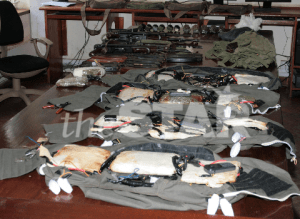
eastleigh

police recover suicide bombs in a past operation in Eastleigh (Courtesy of the Star Newspaper)

Crackdowns within Kenya will come with a lot of risk. Depending on how they are carried out, the government could end up walking right into Al-Shaabab’s trap by alienating Kenyan Muslims and ethnic Somalis who make up the majority of residents in Coast and North Eastern regions of the country that border Somalia.

Ethnic Somalis (both Kenyan and Somali nationals) also make up the majority of residents in Eastleigh, a district of Nairobi that has in the past witnessed government crackdowns targeting cells linked to the Al-Shaabab militant group.

Kenyan security forces must therefore proceed with extreme caution to ensure that as few innocent civilians as possible are arrested or roughed up by security forces in any operations within the country. A repeat of reported cases of police brutality in North Eastern following the murder of army officers by gunmen would be a terrible mistake. It is also vital that the government stresses the unity of all Kenyans of all ethnic extractions against terror attacks. Any victimization of ethnic Somalis must be met with swift punishment.

Military operations within Somalia will likely involve significant cooperation with Mogadishu, pro-AMISOM militia in Jubaland, AMISOM and the US and may not be completely under the control of Nairobi. I suspect that Nairobi might push for a more aggressive hunt for the leaders of Al-Shaabab, including Samantha Lewthwaite a.k.a. the “white widow,” a British national that is rumored to have been the mastermind of the Westgate Mall attack. Lewthwaite, the widow of London 7/7/2005 suicide bomber Jermaine Lindsay, is suspected to be on the run in Mombasa, Kenya with her four children. Crucially, any military operations in Somalia must be informed by analysts’ observation that it might be the case that Al-Shabaab is a group on the decline that is just lashing out to maintain relevance.
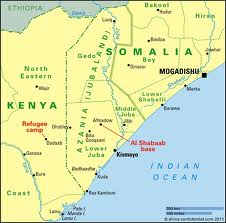
jubaland

An outline of the Jubaland region of Somalia

In the long-run, Nairobi will most likely push for a more robust Somali solution to the security crisis posed by the lack of a functional state in its backyard. Top on the agenda will be the strengthening of the security apparatus in the administration of Jubaland, the Somali state that is on the border with Kenya (For a detailed analysis of the situation in Jubaland see here). The creation of Jubaland has long been a goal of the Kenyan government as a buffer against the chaos that has been Somalia for the last two decades. Despite obvious objections from Mogadishu, Nairobi has never publicly denounced this policy goal. The brazen attack in the capital creates even more need for a strong buffer region that can help the Kenyan security forces to deal effectively with a terrorist group that appears desperate and willing to do just about anything to remain relevant. The success of this policy will depend on Mogadishu’s ability to veto it, and support from Ethiopia and AMISOM.

Ethiopia, Djibouti, Somaliland, Puntland and Kenya all have reasons to support the creation of Jubaland, or in general, a more decentralized state in Somalia. Kenya, Djibouti and Ethiopia remain wary of a potential rise in Somali nationalism and any irredentist attempts that might follow to unite all lands that make up the so called Greater Somalia – which would include the Ogaden in Ethiopia, North Eastern region of Kenya, and Djibouti. This is not a crazy fear. Mogadishu once attempted this in the late 1960s in a botched operation (in the Shifta and Ogaden wars) that ultimately led to a military coup and the rise of Siad Barre to power (See Laitin, 1976 [gated]). Ethiopia has the most to worry about regarding this potential risk. The Ogaden remains at the periphery of the Ethiopian state, giving the Somali population lots of reasons to rebel against Addis Ababa.

In the recent past Kenya has experienced an increasing level of integration of the Somali elite into the Kenyan state. Prominent Kenyans of Somali extraction include the leader of Majority in the National Assembly, the Foreign Minister, the Industrialization Minister, the head of the electoral management body (IEBC), among others.

Furthermore, many Somalis both Kenyan and from Somalia have in the recent past made significant investments in Kenya, most notably in the real estate sector. A lot of the investments have been means of laundering money got from illicit activities (some say including piracy). Indeed the governor of the Central Bank of Kenya is on record to have said that he could not account for billions of shillings in the economy. With an estimated total of only 20,000 mortgage accounts, most of the Kenya’s real estate boom has so far been financed by cash.

Yes, a lot more needs to be done for the average Kenyan of Somali extraction in North Eastern region, but the Somali elite in Kenya have every reason to not rock the boat and remain wedded to Nairobi. This same elite has so far tacitly supported Nairobi’s policy regarding the creation of an autonomous region in Jubaland.

The powerful imagery of a picture that went viral showing a Kenyan police officer, who also happens to be an ethnic Somali, carrying a baby while shielding three adults as they ran for safety at Westgate is hard to miss.

A domestic outcome of the Westgate attack will likely be greater scrutiny of the police and intelligence forces. The Kenyan police have been exposed in the past for having looked the other way in exchange for bribes to allow gun-runners to do their thing along the country’s highways. President Kenyatta will likely call for a cleaning of house both at Vigilance House and at the NSIS headquarters. All security agencies will likely see closer scrutiny from the political class and calls to pull up their socks. The minister in charge of internal security, Joseph Ole Lenku, probably has his days numbered on the job.

The quest for greater security will be completed by the proliferation of small arms and light weapons in the country on account of civil wars and general insecurity in the border regions with Uganda, South Sudan, Ethiopia and Somalia. According to a 2012 a study by the Small Arms Survey and the Kenya National Focus Point on Small Arms and Light Weapons, there are between  530,000 and 680,000 firearms in civilian arms across the country. The government must tighten its disarmament operations. Westgate has shown that AK-47s are not just the weapons of cattle rustlers, bank robbers and carjackers.

Will the reforms succeed? Very likely. The Kenya Revenue Authority is a testament to the fact that when it matters, the Kenyan government can reform key state institutions. The security sector is need of just such a reform drive. Insecurity is on the rise across the country, both from common criminals and organized gangs and terrorists. The Kenyan leadership appreciates that insecurity is not just bad in terms of risk to human lives. It is also bad for business.

If Mr. Kenyatta’s first term is to achieve even a modicum of success, the security sector must be reformed.

In all likelihood the president’s quest for a successful first term will outrank a few officers’ venal machinations within the administration. Police ineptitude in dealing with common petty and not-so petty crime creates loopholes for spectacular attacks like Westgate. Reform will therefore need to go beyond capacity building within the Special Forces and dedicated anti-terror units.

For regular Kenyans, life in Nairobi will never be the same again. It is almost impossible to imagine that things that most only read in the news could happen right at home; that a Saturday afternoon at the mall could turn into a ghastly massacre. It will take time before the capital, and the nation, finds its new normal, if at all it does.

blooddrive

Kenyans queue to donate blood at Uhuru Park on Monday Sept. 23rd (Source: The Standard)

So far Kenyans’ resiliency has been outstanding. People showed up in their thousands to donate blood. Buses in Nairobi lowered their fares to take people to blood donation points. More than 40 million Shillings has so far been raised through MPesa for affected victims. Never before in my life have I felt or seen this level of patriotism from fellow Kenyans.

I hope it sticks. Especially because the country will need it in the next few weeks and months as the government formulates and effects a response to the Westgate Mall attack.
Tuko pamoja, haswa wakati huu wa msiba

Image

flag

President Uhuru Kenyatta’s statement following Westgate terror attack

Fellow Kenyans,

This morning, a group of armed terrorists forcefully entered the Westgate Mall in Nairobi’s Parklands area and unleashed senseless violence upon customers and workers. They have killed at least 39 innocent people and injured more than 150 others. With the entire nation, I stand with the families of those who have lost their lives and extend every Kenyan’s deepest condolences. (I know what you feel having personally lost very close family members)

I ask God to give all of you comfort as you confront this tragedy. My Government will provide the support you will need in the days to come. To those who were injured, I wish you a quick recovery from the physical and other shocks you underwent today. The Government will be at hand to ensure that your lives return to normal as quickly as possible. The people of Kenya have been wonderful, as always. With your support we safely evacuated hundreds of people from the Mall. I salute your conscientious and selfless acts of solidarity in response to the terrorist attack. 

Your courage and sympathy saved lives and reassured countless people.

I commend those who volunteered by giving first-aid, transporting the injured to hospital, donating blood, locating and contacting loved ones and making it easy for rescue, medical and security personnel to do their work. I appreciate those who have used media to rally help of all kinds, condole with and comfort the affected and thank all those responsible citizens who have desisted from spreading panic and despondency. Please continue helping, and continue praying.

The despicable perpetrators of this cowardly act hoped to intimidate, divide and cause despondency among Kenyans. They would like us to retreat into a closed, fearful and fractured society where trust, unity and enterprise are difficult to muster. An open and united country is a threat to evil doers everywhere. With our values of solidarity and love for our homeland, we fought proudly and bravely to secure the freedom to lead our lives as we choose. Our choice is codified in our Constitution. 

We have overcome terrorist attacks before. In fact, we have fought courageously and defeated them within and outside our borders. We will defeat them again. Terrorism in and of itself, is the philosophy of cowards. The way we lead our lives; in freedom, openness, unity and consideration for each other represents our victory over all those who wish us ill. We are as brave and invincible as the lions on our Coat of Arms.

My Government stands ready to defend the nation from internal as well as external aggression. I urge all Kenyans to stand together and see this dark moment through. Donate blood. Provide information to the authorities. Comfort and reassure the affected families. Let us ashame the Devil and his works by demonstrating our timeless values of love, compassion and solidarity. Our security forces are conducting a multi-agency response to this attack as we speak and are in the process of neutralizing the attackers and securing the Mall. 

It is a very delicate operation as our top priority remains to safe guard the lives of innocent people held up in this unfortunate incident. But let me make it clear. We shall hunt down the perpetrators wherever they run to. We shall get them. We shall punish them for this heinous crime. 

I have directed security agencies to be decisive in their response to this or any other threat. They must and will do this to demonstrate our constitution’s categorical guarantee of Kenyans’ indefeasible rights to life and property.

Across the country, we have tightened security but I urge all of you to remain calm and vigilant.

God bless you. God bless Kenya.

How does Chinese aid interact with level of democracy in poor countries?

It is a commonly accepted idea in IR theory that states have the habit of externalizing their domestic institutions [and accompanying economic and political systems] in their engagements within the international system (See Katzenstein, 1976 [pdf, gated]) – think democracy promotion, Reagan-Thatcherist free market evangelism, or Sino-Russian coziness with states that have an authoritarian bend. 

This phenomenon has non-trivial implications for development assistance. For instance, poor countries receiving capacity development assistance from say a Scandinavian liberal democracy often need to also adopt related practices beyond the narrow specific field (say tax reform) that is being addressed by the capacity development program. Many projects fail to produce the desired results because of this. Indeed past research has shown that “though aid [from wealthier, mostly Western democracies] does not affect quality of life in the aggregate, it is effective when combined with democracy, and ineffective (and possibly harmful) in autocracies.” [Kosack, 2003- pdf]

So does the effect of Chinese aid/finance to poorer countries follow this pattern? In other words, does the institutional incongruence effect also hold for autocratic donors? Image

The folks at Aid Data blog think it does: 

…… we estimate the relationship between Chinese development finance and human development in democratic and autocratic recipient countries. Our results show a negative relationship between Chinese development finance and human development in democratic countries. Interestingly, these results also suggest that Chinese development finance can successfully promote HDI growth for autocratic recipients. Kosack found the opposite pattern in his study of Western aid.

The findings are preliminary and may not withstand robustness checks, but all the same interesting.

More on this here.

Also, check out the Economist for a neat analysis of the potential impact of a Chinese economic slowdown on African economies.

The World Bank Group Africa Fellowship Program

The Bank has an exciting fellowship for PhD students from the Continent.

[youtube.com/watch?feature=player_detailpage&v=enZmGIMgOno#t=172]

According to the Bank’s website:

Fellows will spend a minimum of six months at the World Bank in Washington, D.C. getting hands-on experience in development work. This includes knowledge generation and dissemination, design of global and country policies and the building of institutions to achieve inclusive growth in developing countries. While benefitting from research and innovation in multiple sectors, Fellows will also work on economic policy, technical assistance, and lending for eliminating poverty and increasing shared prosperity. Special attention will be given to work with Fragile and Conflict-Affected States.

More on this here.