KILA SIKU TUWE NA SHUKRANI

Thank God the siege at Westgate has ended. Thank God for our brave men and women in uniform and all those who volunteered or helped out in their own little ways throughout this nightmarish ordeal. We mourn the dead and commiserate with their loved ones. We wish survivors a speedy recovery. Kenyans’ resiliency will shine through.

“We are as fearless and invincible as the lions on our coat of arms” (President Uhuru Kenyatta)

[youtube.com/watch?v=lIljogSlZwc]

Statement from the Supreme Council of Kenya Muslims following Westgate attack

We Muslim leaders gathered here today condemn in the strongest terms the attack on peace loving Kenyans and our international guests who have chosen to live and work in Kenya.

We send our deepest condolences to the families of the bereaved and those wounded in the ongoing siege at the Westgate Mall.

We reiterate that wanton and indiscriminate killing of innocent men, women and children is against Islamic teachings and tenets.

We re-affirm our support to the government of Kenya and its security organs in the ongoing operations to secure the mall from the attackers.

We call upon our Muslim brethren and all Kenyans of goodwill to heed the appeal and come out in large numbers to donate blood to relieve our healthcare institutions provided care and treatment to the wounded.

We call upon all Kenyans to remain calm and refrain from being divided on sectarian grounds by this unfortunate incident.

Read by Adan Wachu, Secretary-General, Supreme Council of Kenya Muslims (SUPKEM)on behalf of the leaders gathered at Jamia Mosque Nairobi on Sunday  22.9.2013

What next for Kenyan Policy on Somalia?

For two years it almost seemed too good to be true. Kenya had invaded Somalia and occupied Kismayo, a key Al-Shaabab-held city in southern Somalia without carnage visiting the capital Nairobi. The group instead opted for sporadic attacks against churches and police installations in the border regions of North Eastern and Coast. A few explosions rocked the capital, but these were never spectacular. Indeed, some of them appeared to have been motivated by local business rivalries and not some revenge mission by the Somali Islamist group Al-Shaabab. Within Somalia, the African Union Mission in Somalia (AMISOM) mission made quick gains that left Al-Shaabab backpedaling. With a few exceptions, the Al-Shaabab was reported to have been severely weakened and on the run. Before the recent uptick in bombings, Mogadishu was slowly becoming a reasonably peaceful boomtown.
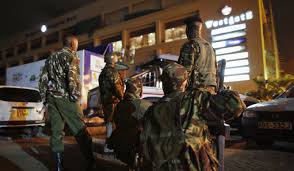
scenes from the Westgate Mall

A scene from the Westgate Mall siege

And then Westgate happened. At around noon on September 21st three groups of armed men (and allegedly at least one woman) stormed the upscale mall in Nairobi and started shooting indiscriminately. Several hours after the attack started Al-Shaabab claimed responsibility via twitter. A day later, the Islamist group gave an alleged list of the gunmen, all men between the ages of 20-27. Six were from the US, two from Somalia, and one each from Kenya, the UK, Finland and Syria. More than 36 hours after the attack began at least 69 people had been confirmed dead, including one gunman and two Kenyan officers. A visibly incensed President Uhuru Kenyatta condemned the attacks, and reassured Kenyans of a swift response to punish the perpetrators. Just a few minutes earlier Al-Shaabab had claimed responsibility for the attacks, terming them a retribution for Kenya’s invasion of Somalia in 2011. The Kenyan Defence Forces, under Operation Linda Nchi, invaded Somalia following sporadic kidnappings and attacks along the Kenya Somalia border. The forces still remain in Somalia under the command of AMISOM.

So how will Kenya respond? There will be both short-term and long-term responses to the daring terrorist attack. The likely short-term response holds more risk, and may even jeopardize the strategic objectives of the long-term response.

Understandably, in the short-term there is going to be considerable public pressure for a swift military response from the government. In the coming weeks the government’s response will likely involve both domestic crackdowns in suspected Al-Shaabab havens in Kenya (most likely in Nairobi, the Coast and North Eastern regions) and military operations against Al-Shabab targets within Somalia.
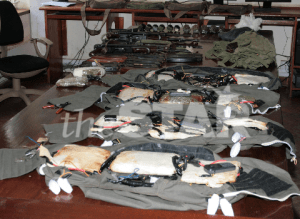
eastleigh

police recover suicide bombs in a past operation in Eastleigh (Courtesy of the Star Newspaper)

Crackdowns within Kenya will come with a lot of risk. Depending on how they are carried out, the government could end up walking right into Al-Shaabab’s trap by alienating Kenyan Muslims and ethnic Somalis who make up the majority of residents in Coast and North Eastern regions of the country that border Somalia.

Ethnic Somalis (both Kenyan and Somali nationals) also make up the majority of residents in Eastleigh, a district of Nairobi that has in the past witnessed government crackdowns targeting cells linked to the Al-Shaabab militant group.

Kenyan security forces must therefore proceed with extreme caution to ensure that as few innocent civilians as possible are arrested or roughed up by security forces in any operations within the country. A repeat of reported cases of police brutality in North Eastern following the murder of army officers by gunmen would be a terrible mistake. It is also vital that the government stresses the unity of all Kenyans of all ethnic extractions against terror attacks. Any victimization of ethnic Somalis must be met with swift punishment.

Military operations within Somalia will likely involve significant cooperation with Mogadishu, pro-AMISOM militia in Jubaland, AMISOM and the US and may not be completely under the control of Nairobi. I suspect that Nairobi might push for a more aggressive hunt for the leaders of Al-Shaabab, including Samantha Lewthwaite a.k.a. the “white widow,” a British national that is rumored to have been the mastermind of the Westgate Mall attack. Lewthwaite, the widow of London 7/7/2005 suicide bomber Jermaine Lindsay, is suspected to be on the run in Mombasa, Kenya with her four children. Crucially, any military operations in Somalia must be informed by analysts’ observation that it might be the case that Al-Shabaab is a group on the decline that is just lashing out to maintain relevance.
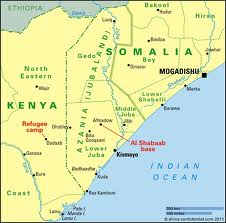
jubaland

An outline of the Jubaland region of Somalia

In the long-run, Nairobi will most likely push for a more robust Somali solution to the security crisis posed by the lack of a functional state in its backyard. Top on the agenda will be the strengthening of the security apparatus in the administration of Jubaland, the Somali state that is on the border with Kenya (For a detailed analysis of the situation in Jubaland see here). The creation of Jubaland has long been a goal of the Kenyan government as a buffer against the chaos that has been Somalia for the last two decades. Despite obvious objections from Mogadishu, Nairobi has never publicly denounced this policy goal. The brazen attack in the capital creates even more need for a strong buffer region that can help the Kenyan security forces to deal effectively with a terrorist group that appears desperate and willing to do just about anything to remain relevant. The success of this policy will depend on Mogadishu’s ability to veto it, and support from Ethiopia and AMISOM.

Ethiopia, Djibouti, Somaliland, Puntland and Kenya all have reasons to support the creation of Jubaland, or in general, a more decentralized state in Somalia. Kenya, Djibouti and Ethiopia remain wary of a potential rise in Somali nationalism and any irredentist attempts that might follow to unite all lands that make up the so called Greater Somalia – which would include the Ogaden in Ethiopia, North Eastern region of Kenya, and Djibouti. This is not a crazy fear. Mogadishu once attempted this in the late 1960s in a botched operation (in the Shifta and Ogaden wars) that ultimately led to a military coup and the rise of Siad Barre to power (See Laitin, 1976 [gated]). Ethiopia has the most to worry about regarding this potential risk. The Ogaden remains at the periphery of the Ethiopian state, giving the Somali population lots of reasons to rebel against Addis Ababa.

In the recent past Kenya has experienced an increasing level of integration of the Somali elite into the Kenyan state. Prominent Kenyans of Somali extraction include the leader of Majority in the National Assembly, the Foreign Minister, the Industrialization Minister, the head of the electoral management body (IEBC), among others.

Furthermore, many Somalis both Kenyan and from Somalia have in the recent past made significant investments in Kenya, most notably in the real estate sector. A lot of the investments have been means of laundering money got from illicit activities (some say including piracy). Indeed the governor of the Central Bank of Kenya is on record to have said that he could not account for billions of shillings in the economy. With an estimated total of only 20,000 mortgage accounts, most of the Kenya’s real estate boom has so far been financed by cash.

Yes, a lot more needs to be done for the average Kenyan of Somali extraction in North Eastern region, but the Somali elite in Kenya have every reason to not rock the boat and remain wedded to Nairobi. This same elite has so far tacitly supported Nairobi’s policy regarding the creation of an autonomous region in Jubaland.

The powerful imagery of a picture that went viral showing a Kenyan police officer, who also happens to be an ethnic Somali, carrying a baby while shielding three adults as they ran for safety at Westgate is hard to miss.

A domestic outcome of the Westgate attack will likely be greater scrutiny of the police and intelligence forces. The Kenyan police have been exposed in the past for having looked the other way in exchange for bribes to allow gun-runners to do their thing along the country’s highways. President Kenyatta will likely call for a cleaning of house both at Vigilance House and at the NSIS headquarters. All security agencies will likely see closer scrutiny from the political class and calls to pull up their socks. The minister in charge of internal security, Joseph Ole Lenku, probably has his days numbered on the job.

The quest for greater security will be completed by the proliferation of small arms and light weapons in the country on account of civil wars and general insecurity in the border regions with Uganda, South Sudan, Ethiopia and Somalia. According to a 2012 a study by the Small Arms Survey and the Kenya National Focus Point on Small Arms and Light Weapons, there are between  530,000 and 680,000 firearms in civilian arms across the country. The government must tighten its disarmament operations. Westgate has shown that AK-47s are not just the weapons of cattle rustlers, bank robbers and carjackers.

Will the reforms succeed? Very likely. The Kenya Revenue Authority is a testament to the fact that when it matters, the Kenyan government can reform key state institutions. The security sector is need of just such a reform drive. Insecurity is on the rise across the country, both from common criminals and organized gangs and terrorists. The Kenyan leadership appreciates that insecurity is not just bad in terms of risk to human lives. It is also bad for business.

If Mr. Kenyatta’s first term is to achieve even a modicum of success, the security sector must be reformed.

In all likelihood the president’s quest for a successful first term will outrank a few officers’ venal machinations within the administration. Police ineptitude in dealing with common petty and not-so petty crime creates loopholes for spectacular attacks like Westgate. Reform will therefore need to go beyond capacity building within the Special Forces and dedicated anti-terror units.

For regular Kenyans, life in Nairobi will never be the same again. It is almost impossible to imagine that things that most only read in the news could happen right at home; that a Saturday afternoon at the mall could turn into a ghastly massacre. It will take time before the capital, and the nation, finds its new normal, if at all it does.

blooddrive

Kenyans queue to donate blood at Uhuru Park on Monday Sept. 23rd (Source: The Standard)

So far Kenyans’ resiliency has been outstanding. People showed up in their thousands to donate blood. Buses in Nairobi lowered their fares to take people to blood donation points. More than 40 million Shillings has so far been raised through MPesa for affected victims. Never before in my life have I felt or seen this level of patriotism from fellow Kenyans.

I hope it sticks. Especially because the country will need it in the next few weeks and months as the government formulates and effects a response to the Westgate Mall attack.
Tuko pamoja, haswa wakati huu wa msiba

Image

flag

President Uhuru Kenyatta’s statement following Westgate terror attack

Fellow Kenyans,

This morning, a group of armed terrorists forcefully entered the Westgate Mall in Nairobi’s Parklands area and unleashed senseless violence upon customers and workers. They have killed at least 39 innocent people and injured more than 150 others. With the entire nation, I stand with the families of those who have lost their lives and extend every Kenyan’s deepest condolences. (I know what you feel having personally lost very close family members)

I ask God to give all of you comfort as you confront this tragedy. My Government will provide the support you will need in the days to come. To those who were injured, I wish you a quick recovery from the physical and other shocks you underwent today. The Government will be at hand to ensure that your lives return to normal as quickly as possible. The people of Kenya have been wonderful, as always. With your support we safely evacuated hundreds of people from the Mall. I salute your conscientious and selfless acts of solidarity in response to the terrorist attack. 

Your courage and sympathy saved lives and reassured countless people.

I commend those who volunteered by giving first-aid, transporting the injured to hospital, donating blood, locating and contacting loved ones and making it easy for rescue, medical and security personnel to do their work. I appreciate those who have used media to rally help of all kinds, condole with and comfort the affected and thank all those responsible citizens who have desisted from spreading panic and despondency. Please continue helping, and continue praying.

The despicable perpetrators of this cowardly act hoped to intimidate, divide and cause despondency among Kenyans. They would like us to retreat into a closed, fearful and fractured society where trust, unity and enterprise are difficult to muster. An open and united country is a threat to evil doers everywhere. With our values of solidarity and love for our homeland, we fought proudly and bravely to secure the freedom to lead our lives as we choose. Our choice is codified in our Constitution. 

We have overcome terrorist attacks before. In fact, we have fought courageously and defeated them within and outside our borders. We will defeat them again. Terrorism in and of itself, is the philosophy of cowards. The way we lead our lives; in freedom, openness, unity and consideration for each other represents our victory over all those who wish us ill. We are as brave and invincible as the lions on our Coat of Arms.

My Government stands ready to defend the nation from internal as well as external aggression. I urge all Kenyans to stand together and see this dark moment through. Donate blood. Provide information to the authorities. Comfort and reassure the affected families. Let us ashame the Devil and his works by demonstrating our timeless values of love, compassion and solidarity. Our security forces are conducting a multi-agency response to this attack as we speak and are in the process of neutralizing the attackers and securing the Mall. 

It is a very delicate operation as our top priority remains to safe guard the lives of innocent people held up in this unfortunate incident. But let me make it clear. We shall hunt down the perpetrators wherever they run to. We shall get them. We shall punish them for this heinous crime. 

I have directed security agencies to be decisive in their response to this or any other threat. They must and will do this to demonstrate our constitution’s categorical guarantee of Kenyans’ indefeasible rights to life and property.

Across the country, we have tightened security but I urge all of you to remain calm and vigilant.

God bless you. God bless Kenya.

How does Chinese aid interact with level of democracy in poor countries?

It is a commonly accepted idea in IR theory that states have the habit of externalizing their domestic institutions [and accompanying economic and political systems] in their engagements within the international system (See Katzenstein, 1976 [pdf, gated]) – think democracy promotion, Reagan-Thatcherist free market evangelism, or Sino-Russian coziness with states that have an authoritarian bend. 

This phenomenon has non-trivial implications for development assistance. For instance, poor countries receiving capacity development assistance from say a Scandinavian liberal democracy often need to also adopt related practices beyond the narrow specific field (say tax reform) that is being addressed by the capacity development program. Many projects fail to produce the desired results because of this. Indeed past research has shown that “though aid [from wealthier, mostly Western democracies] does not affect quality of life in the aggregate, it is effective when combined with democracy, and ineffective (and possibly harmful) in autocracies.” [Kosack, 2003- pdf]

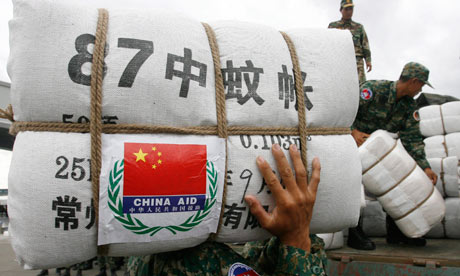
So does the effect of Chinese aid/finance to poorer countries follow this pattern? In other words, does the institutional incongruence effect also hold for autocratic donors? Image

The folks at Aid Data blog think it does: 

…… we estimate the relationship between Chinese development finance and human development in democratic and autocratic recipient countries. Our results show a negative relationship between Chinese development finance and human development in democratic countries. Interestingly, these results also suggest that Chinese development finance can successfully promote HDI growth for autocratic recipients. Kosack found the opposite pattern in his study of Western aid.

The findings are preliminary and may not withstand robustness checks, but all the same interesting.

More on this here.

Also, check out the Economist for a neat analysis of the potential impact of a Chinese economic slowdown on African economies.

The World Bank Group Africa Fellowship Program

The Bank has an exciting fellowship for PhD students from the Continent.

[youtube.com/watch?feature=player_detailpage&v=enZmGIMgOno#t=172]

According to the Bank’s website:

Fellows will spend a minimum of six months at the World Bank in Washington, D.C. getting hands-on experience in development work. This includes knowledge generation and dissemination, design of global and country policies and the building of institutions to achieve inclusive growth in developing countries. While benefitting from research and innovation in multiple sectors, Fellows will also work on economic policy, technical assistance, and lending for eliminating poverty and increasing shared prosperity. Special attention will be given to work with Fragile and Conflict-Affected States.

More on this here.

On the quality of higher education (and human capital development) in Africa

This post first appeared on the African Development Bank’s Integrating Africa Blog where I am a regular contributor. 

UPDATE: I got an email from readers working with the Regional Initiative in Science and Education (RISE), exactly the kind of collaboration that I am saying is much needed in Africa. Check them out here.

According to The Times Higher Education World University Rankings 2012-2013, the highest ranked university in Africa, the University of Cape Town, is 113th in the world. The ranking system employs 13 performance indicators that take into account universities’ core functions, including “research, knowledge transfer and international outlook.” Among the leading 400 world academic institutions, there are only four from Africa, all in South Africa. As a region, Africa only has 35 scientists and engineers per million inhabitants, compared with 168 in Brazil, 2,457 in Europe and 4,103 in the United States. The region is clearly behind as far as knowledge production and dissemination is concerned, producing only 1.1 percent of the world’s scientific knowledge, despite comprising more than 13 percent of the global population.

At barely over 8 percent, Africa’s gross enrollment in tertiary institutions of learning is the lowest of any region in the world (UNESCO, 2011). The average enrollment rate for developing countries is 23 percent, and that for advanced countries is 74 percent. Africa’s poor showing in the higher education sweepstakes is both a cause and effect of the region’s poor economic environment. The massive cuts in higher education funding in the wake of the structural adjustment programs of the 1980s and 1990s, even as enrollment more than tripled between 1991 and 2005, have had an adverse impact on quality. And in turn, the lack of high quality tertiary level education has starved the region of high skills needed for efficient allocation of factors of production thereby stunting improvement in productivity, high value addition and research and development. Africa devotes less than 1 percent of its GDP to research and development.

Data from 33 countries for which it is available show that tertiary education financing in the region has declined from a high of US $6,800 per student per year in 1980 to just about $981 in 2005. Over the same period the World Bank decreased its education lending from 17 percent in 1985-89 to just 7.5 percent currently (this is despite the fact that the World Bank nearly doubled its education lending between 2008 and 2009). The decline in public funding in the face of increasing demand for higher education has led to the proliferation of private universities of dubious standards and a bias towards perceived “soft” fields. In 2004 a meager 28 percent of students were enrolled in perceived “hard” disciplines in the sciences and engineering.

A 2008 study of 12 countries showed an increase in public universities from 113 to 188 between 1995 and 2008. Over the same period private universities ballooned from 14 to 107. This rapid increase in the number of universities in the region has not been matched by an increase in the number of trained teaching staff or facilities such as laboratories, libraries, and the like. Indeed, most of the new universities have tended to specialize in vocational subjects that require very little capital and human resource investment. To put it mildly, there is a great mismatch between the region’s development needs and the type of graduates it produces each year.

Image

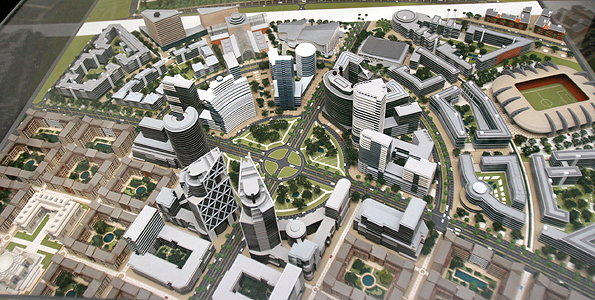
An impression of the proposed Konza City in Kenya

The shortage of skills permeates nearly all skill levels, and could get worse as the region’s economy continues to grow over the next two decades. The case of Kenya is illustrative. The country has an ambitious plan to be the information and communication technology (ICT) hub of Eastern Africa (dubbed the “Silicon Savannah”) complete with a proposed $10 billion techno-city (Konza City) situated about 60 kilometres southeast of Nairobi. Already ICT multinationals, including IBM, Microsoft, Google and Intel, have their regional headquarters in Kenya. All this sounds good, except the lack of local skills. IBM’s research lab in Kenya has had to source for top talent among graduates in computer science, electrical engineering, mathematics, and data scientists from American universities. There is still a shortage of required skills among graduates of Kenyan universities. Quality assurance is also lacking, as recent news reports of “theses for hire” have demonstrated.

As the Kenyan case suggests, the lack of sufficient investment in high quality tertiary education has adversely impacted Africa’s ability to realize its economic potential. A 2005 study showed that a one-year increase in the higher education stock of the region could boost growth rate by about 0.63 percentage points. This adds up to an overall increase in income by about 12 percent over five years. For the region to take off economically there is need for greater investment in quality higher education that will train workers for the 21st century economy. But improving the quality of higher education in the region will be a very costly affair. On their own, the region’s countries lack both the resources (on account of their small economies) and demand (on account of their population sizes) to justify the types of investments required. This is where regional cooperation comes in.

Cross-border educational exchanges are not new in Africa, and go back to the pre-independence era. For generations non-Senegalese francophone students have studied in Senegal, seen as a cheap way of getting quality education at par with diplomas from France. Uganda, with East Africa’s top university, Makerere, hosts legions of Kenyan students, eager to avoid congestion and high costs back home. South Africa, with its many quality institutions is also a preferred destination for students from across the continent. These historical cross-border exchanges have led to the formation of regional associations of higher education – the francophone Conseil Africain et Malgache pour l’Enseignement Superieur (CAMES); Inter-University Council of East Africa (IUCEA); Southern African Regional Universities Association (SARUA); and inter-university cooperation under the Arab Maghreb Union (AMU). Continent-wide, the 208-member Association of African Universities (representing 45 countries) is the umbrella organization of the region’s institutions of higher learning.

These associations need to be strengthened and empowered as drivers of regional harmonization of higher education both to facilitate cross-border inter-university mobility of both teachers and students and guarantee quality assurance. As a 2007 World Bank report aptly noted, “regional quality assurance networks are particularly relevant to Africa because of human resource constraints.” On this score the European Higher Education Area provides a possible model. The just over 10 years old Bologna process is working towards ensuring inter-university mobility (in terms of courses, qualifications, and periods of study) as well as a uniform quality assurance standard. In the African context, a continent-wide area of higher education is infeasible because of language and logistical constraints. However, sub-regional areas of higher education, based on the existing associations, provide a possible avenue to invest in a few good institutions of higher learning that can have a demonstrative effect on national institutions as well set high standards of learning. The associations themselves can also serve as certification bodies to ensure a uniform quality assurance standard (see here).

The announcement in late July 2013 of the creation of a new US $154.2 million multinational science, innovation and technology Pan African University (PAU) in the next five years is therefore welcome. (The African Development Bank (AfDB) has pledged a $45 million grant towards the effort.) PAU will be structured around existing institutions of higher learning across Africa’s five sub-regions. Basic sciences, technology and innovation will be based in East Africa; earth and life sciences including health and agriculture in West Africa; governance, humanities and social sciences in Central Africa; water and energy sciences including climate change in North Africa; and space sciences in Southern Africa.

Thus far, discussions over regional integration of systems of higher education have tended to view tertiary institutions as tools for regional economic and political integration – be it in East Africa, Europe or East Asia. However, the creation of stronger regional areas of higher education – especially in a region like Africa – can also be an economically efficient way of facilitating greater investment in higher education to match the demands of a 21st century economy. It is encouraging that current trends signal a move in this direction. University systems in Africa’s sub-regions would be a good place to start.

I conclude with a caution. The rapid increase in the number of public and private universities in Africa over the last two decades has come at the expense of other post-secondary institutions of learning such as polytechnics (this shift has occurred to a lesser extent in francophone Africa than anglophone Africa). In many countries governments have simply converted polytechnics and other constituent colleges into fully-fledged universities. This trend is worrying, especially given the fact that the vast majority of high school leavers on the continent do not make it to university. The low quality of high school education in the region (as demonstrated by the recent mass student failures in Liberia and Tanzania) is yet another reason why these “bridge” tertiary institutions are needed, both to prepare students for university and to impart valuable skills for those that do not eventually make it to university.

The rush to invest in university education should not distract from the fact that vocational post-secondary institutions, such as polytechnics, are an important component of human capital development, even in advanced countries as is the case in Germany (with its impressive “dual system” of training codified in the Vocational Training Act of 1969). As African economies move from dependence on primary commodities to manufacturing and technology, there will be need for skilled workers at all occupational levels. Doing away with vocational post-secondary institutions will only serve to further inhibit the development of adequate and relevant human capital to match the increased demand for skilled workers.

And now onwards with life after fieldwork…

Image

With findings and humility.

And now onwards with life after fieldwork...