Georgetown MSFS Launches New Africa Scholarship

The application deadline is January 15, 2014. Spread the word.

Starting in fall 2014, the Master of Science in Foreign Service (MSFS) at Georgetown University is offering a full- tuition scholarship for a talented graduate student from sub-Saharan Africa.

Image

MSFS is a two-year, full-time graduate degree program in international affairs. Students will take courses in international relations, international trade, international finance, statistics and analytical tools and history. In addition, students choose an area of concentration such as International Relations and Security, International Development or International Business.

Quick Hits

Haiti wants to join the African Union 

Partisan stats: Of red-state moochers and blue state makers 

Romney’s elusive tax plan (funny)

Zuma’s failed presidency and South Africa’s labor unrest

Mo Ibrahim Prize goes unclaimed, again

Kenya might be seeing the origins of insurgency (More details on this soon)

Happy 95th Madiba!


Quick hits

UPDATE:

The Atlantic has a nice piece on the legacy of Meles Zenawi, the ailing Ethiopian Premier.

*************************

The African Union elected South African Nkosazana Dlamini-Zuma to head its executive arm, the AU Commission. Ms Dlamini-Zuma is a former wife of the polygamist South African President Jacob Zuma. I hope that with Pretoria’s success in having her elected to head the AU South Africa will take a more proactive role in leading the regional organization. As I have stated before, I think the organization needs “owners” in the form of diplomatically powerful custodians. Being the region’s biggest economy, South Africa is well placed to provide strong leadership to the African Union, if it wanted to.

Still on the AU Summit, Ethiopian Prime Minister Meles Zenawi has been conspicuously absent, fueling speculation that he is critically ill. Rumors abound that Mr. Zenawi has left the country for a Belgian hospital – the Saint-Luc University Hospital in Brussels (where he is believed to be receiving treatment for an acute case of hematologic cancer). Some opposition groups have suggested that Mr. Zenawi may have died in hospital. The last time he was seen in public was on the 19th of June. Mr. Zenawi has led Ethiopia since 1991. His record has been a mixed bag of aggressive and ambitious development projects (with results, growth has averaged over 8.4% over the last ten years) and militarism and authoritarian tendencies that have seen many opposition members detained, exiled or killed.

And in Somalia, BloombergBusinessweek reports on the massive corruption in the Transitional Federal Government.

The nearly 200-page report lists numerous examples of money intended for Somalia’s Transitional Federal Government (TFG) going missing, saying that for every $10 received, $7 never made it into state coffers.

The report, written by the U.N. Monitoring Group on Somalia and Eritrea and obtained by The Associated Press Monday, says government revenues aren’t even clear: The Ministry of Finance reported revenues of $72 million in fiscal year 2011, while the accountant general reported revenues of $55 million.

The Somali Government remains an unrepresentative shell, propped up by African Union forces and barely in control anywhere outside of Mogadishu. No elections are in sight (and rightly so. I have never been a fan of rushed post-conflict elections. See Liberia circa 1997 for details), instead the UN and the AU are presiding over a process in which Somali power brokers will put together a list of electors to appoint the next parliament. The current government’s mandate expires the 20th of August (next month).

Quick hits

Follow the goings on in the DRC (especially this election season) over at Alex Engwete’s blog.

Living under the shadow of Kony and his men in Eastern CAR.

On a related note, the Ugandan army’s dirty war in the Congo and CAR.

Shame on the ANC. But there is still hope for cleaner politics in South Africa. The ANC is an over-size coalition with a high chance of internal breakup in the not so distant future. It might even occur sooner, over the Zuma succession. And this time it might not be a rather benign COPE affair. You can read more on the controversial bill over at the Economist.

Trying God? Churches claim to have cured HIV positive congregants. This goes beyond faith, it is naked exploitation. And a call for government involvement.

And lastly, a very dictator Christmas (via Blattman)

[youtube.com/watch?feature=player_embedded&v=38YWB8iX7OY]

Zuma may be a one-term president

Back when he dislodged Thabo Mbeki South African President Jacob Zuma promised that he would only serve one term. But having tasted the power of the presidency, he now wants a second term. His bid, however, has not been well accepted within the ANC.

Although it is common knowledge that the much-married Zuma wants a second term he has remained equivocal on the issue, at one point saying “I never said I would serve one term and I have never said that I would want two terms”  (The New Age reported on Wednesday, June 8th).

The Africa Confidential reports:

Zuma’s main rivals, Tokyo Sexwale and Deputy President Kgalema Motlanthe, are trying to fix it so that Motlanthe would be a one-term president, Sexwale would be his deputy and Paul Mashatile, Gauteng’s provincial leader and Premier, would be ANC national chairman. They may offer a deputy presidency to Lindiwe Nonceba Sisulu, the Defence Minister and Zuma’s ally. Sisulu and Sexwale, however, do not get along.

An anti-Zuma tirade erupted from the General Secretary of the Congress of SA Trade Unions, Zwelinzima Vavi, who said there is leadership paralysis in the ANC and warned that the country is in danger of ‘imploding’. He criticised Zuma’s ‘doublespeak’ on economic issues.

More on this here.

Saturday afternoon procrastination

This is some scary stuff (don’t worry, no one gets hurt):

[youtube.com/watch?v=Wso13n4kHZ4]

Quick hits

Guide to arguing on the internet (HT Lauren).

Speaking of arguing on the internet, I like the drama that is spats between economists and other academics on their respective blogs.

The Economist presents the faces of famine in the Horn. It is beyond sad that so many people should be condemned to suffer this man-made tragedy.

Brett Keller has posts here and here on Sam Childers (a.k.a. machine gun preacher), a gun-runner into the habit of doing morally and ethnically dubious things in the name of God. Keller says that Childers is “stockpiling arms at his orphanage and has admitted to selling weapons to unnamed armed factions in Sudan, Uganda, and Rwanda.”

In Zambia (where I shall be for the elections in Sept.) the politics of citizenship and belonging are yet to be settled 50 years after independence. We recently witnessed the dangers of de-legitimizing whole sections of countries as outsiders in Cote d’Ivoire. I hope that if Sata ever wins he will not do what incumbent Ivorians did to ignite a rebellion in the northern reaches of their country. For more on this check out this great book on the Ivorian collapse. I have read it and absolutely loved it.

A muddy few months ahead for the South African government. Infighting with the ANC top brass might mean an early exit for President Zuma. With over 60% of the votes in the last election, the ANC is essentially an oversize coalition prone to internal wrangles. It will be interesting to see how Zuma weathers the storm in the midst of challenges from both COSATU and Malema.

Lastly, the current issue of the Journal of African Economies looks at the impact of higher education in Africa. The main takeaway is that the low quality of education at lower levels (primary and secondary) has meant that the biggest bang for the buck on the Continent, as far as education is concerned, only comes with higher education. Too bad that many of those that get higher education are underpaid or out of the Continent all together.

Rants and Raves / Thoughts on the African Union

The African Union (AU) has had a rough few months. The diplomatic failures in Zimbabwe, Cote d’Ivoire, and Madagascar exposed the organization’s incompetence. The misguided anti-ICC crusade continues to cement the image of the organization as nothing more than a club of out-of-date and tone deaf autocrats. To many observers, calls for “African  Solutions to African Problems” amid all this failure has been seen as a cover of impunity and mediocre leadership on the African continent.

It says a lot that the current chairman of AU is President Theodore Obiang’ of Equatorial Guinea; a man who leads an oil-rich country of under 0.7 million people, with a per capita income of more than 30,000; but with more than 70% of its population living on less than $2 a day.

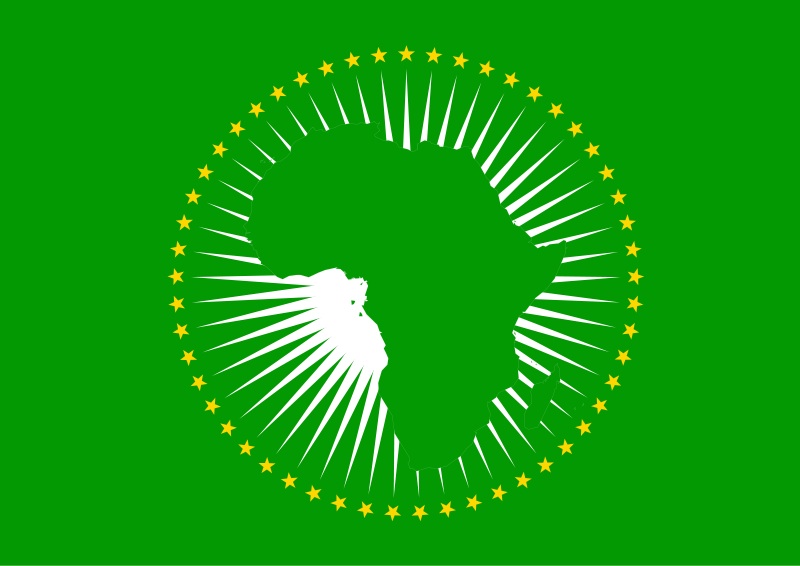
The epitome of the organization’s woes was the total snub it got from NATO before the military campaign against Libya’s Gaddafi, one of the AU’s main patrons. The AU was created by the Sirte Declaration, in Libya. Mr. Gaddafi’s influence ranged from his “African Kings” caucus (in which he was the King of Kings) to investments from Libya’s Sovereign wealth fund. I bet Gaddafi had a hand in the organization’s green flag.

So what ails the African Union?

The AU’s problems are legion. In my view, the following are some of the key ones.

  1. Lack of a regional hegemon(s): The AU faces massive collective action problems. With no regional hegemon(s) to act as the rudder of the organization, most of the organization’s resolutions are not worth the paper they get written on. The rotating chairmanship is a distraction from the real leadership needed in the organization. For instance, I had to google it to find out who’s currently in charge of the presidency of the EU (Poland). Everybody knows that France and Germany run the EU. Their word has gravitas in the Union. In the AU on the other hand, there is no leader. Could it be Navel-gaving South Africa or serially under-performing Nigeria?
  2. Too much political control: Most successful international organizations, despite having political principals, tend to have technical agents that are to some extent shielded from the principals. The AU is political through and through. The key decision-making body is the assembly of heads of state. The council of ministers does nothing. And the commission is all bark and no bite. Cronies of dictators staff most of the key positions in the organization.
  3. Disconnect from the masses: Most Africans have no idea what exactly the AU does. What is the point of the organization? Is it to preserve Africa’s borders? Is it to defend the likes of Gaddafi when the ICC’s Mr. Ocampo comes calling? Giving the people a voice in the Union might force the organization to do the people’s bidding, instead of being a protector of impunity in the name of African sovereignty.

What would reforming the AU entail?

  1. Radical restructuring: Like all inter-state organizations, the AU’s leadership should reflect regional power differences. The current assembly – in which Chad has the same power as Nigeria – makes no sense. There should be a smaller assembly of sub-regional representatives (West – Nigeria; East-Ethiopia; North – Egypt; and South-South Africa) with veto power and the mandate to implement the organization’s resolutions.
  2. Competent staffing: The practice of presidents appointing their sisters-in-law as AU representatives should go. An injection of competent expertise into the organization would go a long way in making it appear to be a more politically independent, competent and respectable organization.
  3. Direct elections to the AU parliament or no parliament at all: Instead of having the members’ parliaments elect representatives to the AU parliament, there should be direct elections. If that cannot happen then the parliament should be scrapped all together. A toothless and unrepresentative parliament is a waste of resources.
  4. Constructive and focused engagement with the rest of the world: Who is the AU chief foreign policy person? Are there permanent representatives in Beijing, Brussels, Brasilia, New Delhi and Washington? Why aren’t they trying to initiate a collective bargaining approach when dealing with these global powers (even if it is at the sub-regional level)? And what with the siege mentality? Not every condemnation of African leaders’ incompetence and mediocrity is a neo-colonial conspiracy, you know. For instance, instead of whining against the ICC’s Africa bias, the AU should clean up its own house. It doesn’t matter that George Bush is not being tried for crimes against Iraqis. The last time I checked none of the leaders of Switzerland was being tried for crimes committed in the German cantons.
  5. A more consistent commitment to progressive ideals: The AU is the only organization in the world that includes in its charter the provision to intervene in its member countries under the principle of responsibility to protect. If the AU were slightly more serious, the disasters in Zimbabwe, Cote Ivoire and Madagascar could have been nipped in the bud. As things stand it is only tiny Botswana that keeps shouting about the organization’s commitment to proper governance and responsibility to protect.

I am not a fan of the idea of the United States of Africa. That said, I believe that a regional organization like the AU can be a force for good. But in order for it to fulfill its purpose, it has to change. The change must reflect the regional power balance; it must increase the competence quotient in the AU and it must increase the voice of the average African within the organization.

perspective: land issues in Kenya and zimbabwe

This quote made me pause for a moment:

“As seen in this work, the naked exploitation of land rights has a far longer and more illustrious history in Kenyan than in Zimbabwe. Further, the human cost of such exploitation of land rights in Zimbabwe pales in comparison to Kenya. Human Rights Watch, which is not known to underestimate rights abuses, reports that, by the year 2000 seven white farmers and several tens of black farmers had been killed in Zimbabwe in such violent exploitation of land rights. By the year 2000, these activities in Kenya had resulted in the deaths of thousands and displaced hundreds of thousands”

That is Onoma in his book on the Politics of Property Rights Institutions in Africa.

Notice that the figures quoted do not include the victims of Kenya’s 2007-08 post election violence. 1300 died, and just over 300,000 were displaced.

In 1980 6000 (white) Zimbabweans owned 42% of the land in the country. How anyone, including the white farmers, thought this was sustainable in the long run beats me.

In some sense Zimbabwe was inevitable. South Africa is next.

drug trafficking and african politics

UPDATE: Obama names Harun Mwau as a drug kingpin.

President Obama, in a letter to the US Congress, named a prominent Kenyan member of parliament and one of the wealthiest Kenyans, Harun Mwau, as a drug kingpin. Mr. Mwau is a renowned Kenyan businessman with links to container depots, retail and banking interests, among other investments.

I am still waiting for official reaction from the Kenyan government on the Obama letter to the US Congress.

Kenya, Gambia, Ghana, South Africa, Guinea-Bissau, Guinea. All these countries have experienced allegations that people high up in government – sometimes individuals very close to the heads of state – are involved in drug trafficking. Africa is a major transit point for drugs from Latin America and Asia into Europe.

The latest news on this subject is the jailing of Sheryl Cwele, the wife of South Africa’s intelligence minister. Ms Cwele was found guilty of recruiting women to smuggle drugs in and out of the country. It is hard to imagine that the intelligence minister was not aware of the fact that his wife was a drug trafficker.  Cwele refuses to resign.

In the recent past a woman close to President Mwai Kibaki of Kenya was allegedly linked to a ring of East European drug traffickers. The murder of President Joao Vieira of Guinea-Bissau was also thought to be connected to a dispute involving Latin American drug lords. Ghana’s President Atta Mills has publicly admitted that it is hard to deal with the problem of drug trafficking because powerful people in the country’s security apparatus are involved.

The South African, Kenyan and Ghanaian cases are particularly alarming. Most people would imagine that only incorrigibly inept kleptocracies such as Jammeh’s Gambia or Vieira’s Guinea-Bissau would engage in drug trafficking. If better run places with stronger states cannot tackle drug trafficking who will?

Malema on trial

The video is worth watching. The lawyer cross-examining Malema actually makes the buffoon leader of the ANC youth league seem sane.

The South African land issue is a Zimbabwe waiting to happen. The sooner everyone accepts the truth the better.

Malema’s buffoonery is founded on real grievances about the distribution of productive land in South Africa. The more responsible elements in the ANC and those that benefited from decades of Apartheid disenfranchisement should wake up and smell the rooibos.

ht Eric Mibuari

The Mail & Guardian is reporting that the trial of ANC Youth League leader Julius Malema for hate speech is entering its second week. Malema is charged with hate speech for singing the South African struggle song “Dubul’ibhunu,” which translates to “Shoot the Boer.” Malema maintains that he has the right to sing the song, chanting the controversial lyrics at the courthouse.

This case is interesting because struggle music is a major part of South African culture, particularly black South Africans. The Boers participated in the oppression of black South Africans, even though they maintain that they are ethnically and culturally different from Afrikaners.

more on this here.

mbeki’s take on the ivorian crisis

Ouattara’s victory over Gbagbo in Cote D’Ivoire is quickly generating winner’s remorse. The coalition of disparate rebel forces that united to oust Gbagbo is already breaking apart. Just this past week Ibrahim Coulibaly, a rebel commander, was killed after he refused to obey Ouattara’s order to disarm his units. Mr. Ouattara himself is facing the sisyphean challenge of cleaning up the mess from the decade long civil war and the recent onslaught on Abidjan amid economic decline and divisions within his own coalition. Supporters of Mr. Gbagbo are also not yet into the idea of having the northerner running the show. Over 40% of Ivorians, most of them southerners, voted for Gbagbo.

In the wider region, many see the heavy French involvement in the whole situation as suspect. Thabo Mbeki, the former president of South Africa, had this to say in a piece posted on the FP website:

France used its privileged place in the Security Council to position itself to play an important role in determining the future of Côte d’Ivoire, its former colony in which, inter alia, it has significant economic interests. It joined the United Nations to ensure that Ouattara emerged as the victor in the Ivorian conflict.

This addressed the national interests of France, consistent with its Françafrique policies, which aim to perpetuate a particular relationship with its former African colonies. This is in keeping with remarks made by former French President François Mitterand when he said, “Without Africa, France will have no history in the 21st century,” which former French foreign minister Jacques Godfrain confirmed when he said: “A little country [France], with a small amount of strength, we can move a planet because [of our]…relations with 15 or 20 African countries…”

Mbeki has a point.

That said, I don’t totally buy into the idea that the West, or any other outsider for that matter, should keep out of Africa’s affairs. Isolationism (caused by the great sand wall that is the Sahara) has not served Africa well in the past. Africa needs more trade and involvement  in international politics. Both acts necessarily require international involvement in Africa.

So to the likes of Mbeki I say, the trick is not to require the West or East or even the Emerging South to benevolently stay out of Africa’s business. Rather, African states should develop their own capacities to deal with the reality of world politics: Strong states will always prey on weak ones. If you do not want to be preyed upon, you have to get your act together. Stephen Waltz in his seminal work titled Theory of International Relations writes:

Weakness invites control; strength tempts one to exercise it, even if only for the “good” of other people.

The problem of exploitative international involvement in Africa is sustained primarily by the persistence of inept kleptocratic leadership in the region.

To go ahead and grant these dictators immunity from international pressure would be a most undesirable outcome. People like Idriss Deby, Paul Biya, Theodore Obiang, among others, should not be given space. Dictators do not have internal affairs.

It is a pipe dream to continue nurturing and protecting mediocre leadership all over Africa while expecting the strong nations of the world to benevolently keep off. It is the mismanagement of Africa by its leaders that creates fertile grounds for self-interested international preying involvement by the likes of France – with disastrous consequences for the local populations.


Africa needs zuma (to have a coherent foreign policy)

This week the Economist rightly called out South African president Jacob Zuma on his country’s lack of a coherent foreign policy. South Africa was reborn in 1994 with the moral authority and international goodwill to be Africa’s shining light in the world. Instead, under Mbeki and now Zuma, the country has squandered all that away.

Mbeki did it with his intransigence against reason on the issue of HIV/AIDS and support of Robert Mugabe in Zimbabwe. Mr. Zuma is doing the same with his support for Mugabe and equivocal pronouncements against other murderous tyrants on the Continent. Since his election he has not spoken strongly against any injustices or electoral fraud on the Continent; this task has been left to Ian Khama, president of tiny but relatively prosperous Botswana.

Sub-Saharan Africa is desperately in need of a regional hegemon to help it chart a coherent path in global politics. Latin America has Brazil. South Asia has India. East Asia has China. Even Europe has Germany. In Africa, Nigeria (pop. 150+m), South Africa (~40m, biggest economy), Ethiopia (85m) and the Democratic Republic of Congo (~70m) – all potential regional leaders – have woefully underperformed.

Nigeria is Nigeria. Ethiopia is dirt poor and needs to clean its own mess, Somalia’s and Eritrea’s, before it can venture further afield. The DRC is struggling to keep itself afloat. South Africa, by far, has the capacity and the requisite soft power to take up the job of regional guiding light. The country is slated to become a BRIC country soon, making the BRICS (Brazil, Russia, India, China and South Africa).

It is a shame that Mr. Zuma has chosen to abdicate his role as the Continental leader. He alone, among the members of the Continent’s club of kleptocratic autocrats (a.k.a AU), has the clout to stand up to the evils we continue to see in Cote d’Ivoire, Darfur, Zimbabwe and elsewhere.

jacob zuma: why crash so soon?

Update: President Jacob Zuma agrees that he fathered a child out of wedlock with the 39 year-old daughter of one of his friends. Mr. Zuma is 67. In his statement the President said that he had done the “cultural imperative” of admitting to having fathered the child. A few suggestions for Mr. Zuma and those around him:

– having three wives is bad enough. Concentrate on the job. South Africans are looking up to you

– please fire your communications director. You are really bad with PR

– you are embarrassing the entire Continent. Not just yourself and your immediate family but the entire Continent. The whole 700 million of us.

The BBC reports that Jacob Zuma may have fathered a love child last year. The South African president just recently got married for the fifth time (he has three wives). He is estimated to have about 20 children. Recently when confronted about his rather colorful matrimonial situation Mr. Zuma shot back with the claim that anybody who was against polygamy was a cultural bigot.This is total horse manure. Mr. Zuma should know that culture is not static and that an attack on his wayward habits is not an attack on Zulu culture.

Until recently Mr. Zuma had exceeded expectations. His cabinet appointments (i thought) signaled his pragmatism. He stayed clear of the incendiary demagoguery that characterizes the ANC’s youth wing leader, Julius Malema. Even the media had warmed up a bit to the man who had to wiggle out of corruption and rape charges to become president. For a moment I thought that Mr. Zuma was going to be the nice blend of populism and realistic politicking that had so much eluded the intellectually aloof Thabo Mbeki. South African land reform, a fairer redistribution and creation of wealth (through a more transparent BEE and faster job creation), a reduced crime rate, etc etc seemed somewhat doable because the core of his base was the working class. But as is fast becoming apparent, it appears that the man has decided to let his personal life interfere with his job. I hope this latest incident will embarrass the ANC enough for the party to ask Mr. Zuma to go easy on the distractions and concentrate on his job.

Update: This is the last thing that SA and its ailing economy needs. The tabloid-like headings are soiling the SA presidency.