Italian woman faces jail for not doing “enough” housework according to husband

This is not an Onion story. And no, you did not travel back in time. It is 2016.

The Guardian reports:

An Italian woman faces six years in jail after her husband accused her of not doing enough cooking and cleaning at home.

Her husband made a formal complaint to the paramilitary Carabinieri police, saying that his wife was slovenly, failed to put meals on the table and left their home in a dreadful mess.

….. The crime, article 572 in the Italian penal code, “punishes whoever mistreats a person in their family or a person entrusted to them for reasons of education, care or custody.”

Her husband, 47, accused her of “bad management of domestic affairs”, in a case that reinforces the image of the harassed Italian wife stirring a steaming pot of pasta sauce while small children run round her feet and the man of the house puts his feet up with a newspaper.

Also this:

It is the second time in a week that the Italian judicial system has shown itself to be less than enlightened when it comes to relations between the sexes.

On Wednesday, a court in Sicily ruled that a male boss who was accused of groping three female colleagues was not guilty of sexual harassment because his behaviour was playful, not “lascivious”.

The court in Palermo said that 65-year-old Domenico Lipari had been driven by an immature sense of humour, rather than a desire for sexual gratification.


Nigeria’s Africa Internet Group posts the Continent’s first “unicorn” startup

This is from the FT:

Africa Internet Group is set to become the continent’s first “unicorn” after securing an investment valuing the ecommerce group at more than $1bn.

… African Internet Group’s valuation could be matched by Interswitch, the Nigerian fintech group that processes payments for banks, if the company decides to float later this year.

Over the next couple of decades the mobile and tech market in Africa will only grow bigger — watch out for Nigeria, Kenya, Ghana, Cote d’Ivoire ….. and Ethiopia when they finally liberalize (which I hope will happen sooner rather than later). According to the same FT piece:

Smartphones have begun to transform the way Africans live and work. The continent is projected to have 360m smartphones by 2025, when internet penetration on the continent will hit 50 per cent, according to McKinsey Consultants.

H/T Tyler Cowen.

Median vs Per Capita Income in Africa

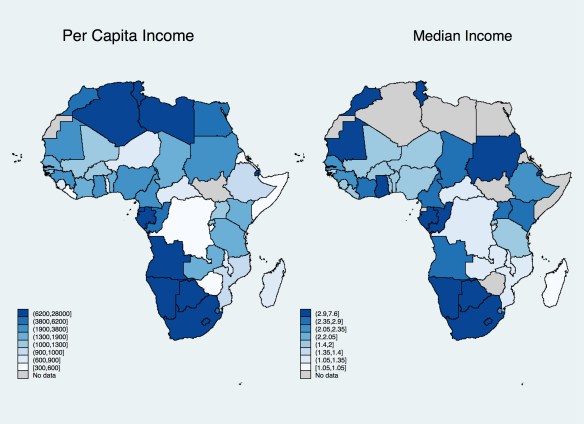
CGD’s Anna Diofasi and Nancy Birdsall compiled median income (2011 PPP) data for 144 countries. In the data they find interesting cases of a mismatch between median and per capita incomes:

the median reflects how much the person at the 50th percentile of the income distribution earns (or spends), giving us a better picture of the well-being of a “typical” individual in a given country. Take Nigeria and Tanzania: in 2010, Nigeria’s GDP per capita (at PPP) was $5,123; Tanzania’s stood at only $2,111. This suggests that Nigerians were more than twice as well off as Tanzanians. Yet, if we compare consumption medians, a different picture emerges: a Nigerian at the middle of the income distribution lived on $1.80 a day, while his or her Tanzanian counterpart had 20 cents more to spend, at $2 a day.

I got curious and made maps of median (2011 $$) and per capita (2010 $$) incomes on the Continent.

income differences

What is going on with median incomes in Central Africa from CAR through to Mozambique? Also, what’s up with Zambia?

The political phenomenon that is South Africa’s Julius Malema

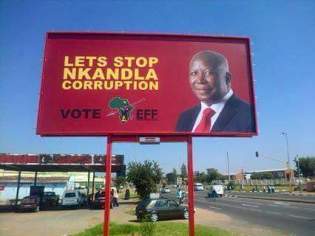
nkandlaYoung South Africans are presently debating the merits of their country’s post-apartheid settlement. Many feel that in a rush to secure a stable political and economy transition the ANC leadership did not bargain hard enough for structural changes in South Africa’s political economy (here’s Mbembe on the subject). No leader encapsulates this sense of post-apartheid disappointment better than Julius Malema, this week’s guest on Lunch With the FT. Here is an excerpt:
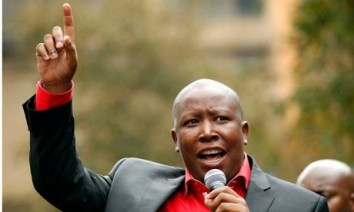
Within a year of setting up the Economic Freedom Fighters, Malema’s party had become a force in South African politics. “They used to say, it’s cold outside the ANC, but we have made it very warm,” he grins, vowing to topple the ruling party within a decade. “If Zuma can be a president of this country, anyone can,” he scoffs, referring to a leader enveloped in sexual and political scandal.

When I challenge his assertion that the end of apartheid has changed nothing, he shifts seamlessly into crowd-pleasing rhetoric. “We are voting, but we can’t eat that cross,” he starts out quietly, referring to the right to vote that black South Africans won in 1994. “That cross has not taken our kids to school. That cross has not given our people the better life that was promised,” he says, his voice rising. “That cross has not returned our land. That cross did not return the minerals. So, when you say to me we have ended apartheid, when there is a huge economic apartheid in this country, I don’t know what you mean.”

His own party, which draws inspiration from Marx and Frantz Fanon, a Caribbean-born revolutionary who advocated the violent overthrow of colonialism, promises to rectify the situation. It proposes seizing white-owned land, with minimum compensation, and nationalising mining companies and banks.

Malema deftly combines incendiary revolutionary rhetoric, street politics, and a mastery of the institutional game within the South African Parliament. For example, partially due to unrelenting pressure from the EFF and Malema in Parliament, President Jacob Zuma was recently forced to return state funds that were used to renovate his private home in Nkandla.

Not long ago Malema was a boorish rubble rouser with a dim political future after being expelled from the ANC. Political commentators argued that:

Malema without the ANC is nothing… The tradition and the history of the ANC, he needs that in order to be able to make his point. Without that he’s very much isolated

But his image is slowly being rehabilitated. The ANC’s failures and economic stagnation add fuel to the fire that is EFF’s message of economic nationalism. malemaAppearances at Chatham House, meetings with business leaders at home and abroad, and modest successes in Parliament further add to the emerging image of an insurgent party that knows the rules and can play by them (even if with a view of eventually changing the same rules).

Just today, Malema was in court in a bid to secure a ruling that President Zuma violated the constitution in his initial refusal to refund the Treasury over Nkandla, thereby opening a window for impeachment.

The most potent revolutionaries are those that have the added advantage of knowing how to play the institutional game. Watch this space.

On the high cost of corruption in Nigeria

This is from the Economist:

In 2014 a respected former central-bank governor lost his job after claiming that $20 billion had been stolen. But this captures only a small share of the damage done by corruption. The much bigger question is where Nigeria could be if its politicians and officials were a little more honest.

One answer comes from economists at PricewaterhouseCoopers (PwC). They compared Nigeria to three other resource-producing countries that are somewhat less corrupt than it, though by no means squeaky clean: Ghana, Malaysia and Colombia. PwC concluded that Nigeria’s’s economy, which was worth $513 billion in 2014, might have been 22% bigger if its level of corruption was closer to Ghana’s, a nearby west African country.

By 2030, the size of Africa’s biggest economy should triple in real terms come what may. Yet if Nigeria manages to reduce corruption to levels comparable to Malaysia (itself hardly above suspicion: its prime minister recently had to explain how almost $700 million had made it into his bank account), its economy could be some 37% bigger still. The additional gain would be worth some $534 billion (adjusted for inflation), or about as much as the economy is currently worth. If it does nothing to change then the cost of corruption in Nigeria would amount to almost $2,000 per person a year by 2030, PwC reckons.

Corruption in Nigeria has inspired interesting strategies of combating the vice:naijacorruption

The full PwC report is available here.

Also, a gentle reminder that not all government money gets stolen through corruption (most estimates I have seen from leading African economies cap the figure at around 30% of budgets being lost). That means that there is still upwards of 70% of government budgets that never get spent well, or in some cases, never get spent at all.

Improving state agencies’ capacity to absorb budgetary allocations and to effectively carry out their duties is therefore just as important as fighting corruption.

Btw, Nigeria only collects about 8% of its GDP in taxes. Which is absolutely nuts.

This graph doesn’t tell us what you think it does (Because stateness matters)

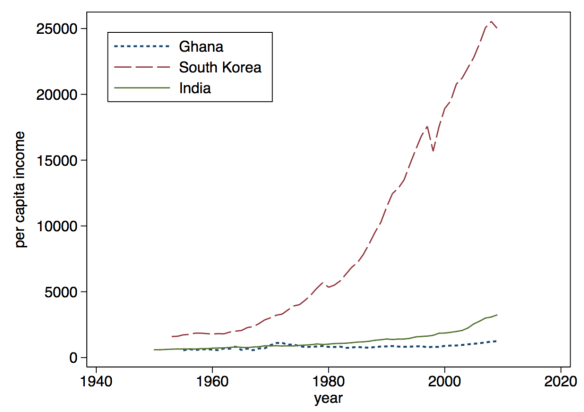
You probably saw this graph in your undergraduate development class — almost invariably as a demonstration of South Korea’s massive growth relative to countries that were allegedly at similar levels of “development” in the early 1960s.

Screen Shot 2016-01-28 at 3.39.29 AM

But were these countries really at the same level of development as South Korea?

The simple answer is no.

And to know why you need to read States and Markets: The Advantage of an Early Start:

A longer history of statehood might prove favorable to economic development under the circumstances of recent decades for several reasons. There may be learning by doing in the ways of public administration, in which case long-standing states, with larger pools of experienced personnel, may do what they do better than newly formed states. The operation of a state may support the development of attitudes consistent with bureaucratic discipline and hierarchical control, making for greater state (and perhaps more broadly, organizational) effectiveness. An experienced state like China seems to have been capable of fostering basic industrialization and the upgrading of its human capital stock even under institutions of government planning and state property in the 1960s and 1970s, whereas an inexperienced state like Mozambique sowed economic disaster when attempting to pursue similar policies a few years later. Such differences may carry over to a market setting — contrast, for instance, the late 20th century economic development of Japan and South Korea, modern countries with ancient national histories, with that of the Philippines, a nation that lacked a state before its 16th century colonization by Spain.

Development is not just about income. It also involves a lot of intangible socio-political variables. Going back to the graph, a key difference in 1960 between Ghana, India, and South Korea was the degree of coherent stateness. On this measure South Korea was way ahead of its developing country peers.

For more on this Dani Rodrik has a delightfully concise take on how South Korea and Taiwan grew rich.

Even within Africa, historical stateness makes a difference in development outcomes. A neat recent example can be found in Ethiopia’s ability to build a light rail in Addis in record time as Nigeria floundered.

David Cameron on Fighting Poverty

Definitely worth a listen.

Astonishing statistic of the day

This is from the Washington Post:

Remarkably, 96 percent of black tenured faculty are at HBCUs* (even though HBCUs comprise only 3 percent of the nation’s 3000 colleges and universities). If HBCUs disappeared, so would most of the nation’s black academics.

I don’t have any rejoinder. Just found the stat rather surprising. Is this really true?

*Historically Black Colleges and Universities

Some thoughts on the Okoa Kenya campaign to amend Kenya’s Constitution

I just posted a piece over at ConstitutionNet on the politics of popular constitutional amendment provisions, with Kenya as an illustrative case.

The Kenyan Constitution allows for popular (extra-legislative) amendment initiatives, as long as the petitioner can collect at least one million signatures. The Okoa Kenya campaign is one such initiative, but driven primarily by the main opposition alliance, CORD. In the piece I seek to answer two key questions:

…….. (i) how do constitutional popular amendment provisions impact institutional stability?; And (ii) can such provisions maintain their legitimacy when captured by mainstream political parties already represented in key state institutions?

The answers to the first question speak to the dangers of populism. Democratic stability necessarily requires institutional barriers to regular changes of the basic rules of the game (i.e. constitutions), as well as checks on populism. Therefore, by exposing constitutional changes to “every-day politics”, extra-legislative origination of constitutional amendments (under ordinary circumstances) may pose a risk to the very foundations of democratic stability.

The answers to the second question speak to the original intent of popular amendment provisions. Given their extra-legislative character and the notion that they are supposed to preserve popular sovereignty, it is unclear whether popular amendment provisions maintain their integrity when captured by mainstream political parties that are supposed to operate within the legislature. In other words, the potential exploitation of such provisions to circumvent the outcomes of legislative elections may derogate the electoral process itself. Elections should have consequences for both the ruling and opposition parties.

More on this here.

Why Did Nation Media Group Fire Galava?

Mr Galava, who was suspended on January 6th, 2016, was fired today for “not following due process and endangering the group’s business.”

A significant portion of NMG’s “business” includes ad revenue from the Government of Kenya.

On January 2nd the Daily Nation’s main editorial page ran an uncharacteristically hard-hitting piece highlighting various shortcomings of President Kenyatta and his Administration. It later emerged that Mr. Denis Galava had solely penned the piece. This tells us a lot about the state of newsroom management at NMG. Who else saw the editorial before it ran? Does NMG want us to believe that they never collectively agree on what runs in their main editorial pages? When they say “we” in these pages, who are the “we”?

Of course, a more plausible explanation is that the editorial team at NMG is actually independent, and on January 2nd sought to channel middle class dissatisfaction with the Kenyatta Administration. It’s potentially minuscule political impact notwithstanding, the editorial got significant airplay precisely because its contents resonated with a significant proportion of the Kenyan middle class.

The NMG management then panicked, and in an attempt to protect NMG’s “business” dealt a serious blow to hard-earned media freedom in Kenya.

I can’t rule out the involvement of busybodies at State House in the firing of Mr. Galava. But I also don’t think that this is a decision that came from super high up in government. It was most likely an internal (NMG) foolish reaction to the massive airplay the editorial got (they wanted to protect their “business” and the close relationship between the Aga Khan and the Administration). To this end they may have been nudged by some overeager underlings at State House desperate to show the boss that they’ve got his back.

But was this really necessary?

Uhuru Kenyatta is the President of the Republic of Kenya. He and his Administration should not need to be protected from journalists who are simply doing their job. As the Galava case will soon demonstrate, such acts will only reinforce the perception that Mr. Kenyatta and his Administration are bent on taking Kenya back to the KANU days (I don’t think this is true, see here).

This is a step backwards for media freedom in Kenya. Shame on the NMG management.

Powering Africa Into the Next Decade

The African Development Bank has made power generation its top priority (see list of power projects here). The US-led initiative, Power Africa, is focusing capital on some very big and interesting projects. I’m not sure if the AfDB was the instigator of the new trend (even before President Adesina), but several serious African governments have recently prioritized power generation (looking at you, Pretoria). Here’s a sample:

A 450MW gas-fired power plant near Nigeria’s Benin City. In 2014 Nigeria flared more than 290b standard cubic feet of gas.

Twenty international banks and equity funders have committed $900m to the Azura-Edo Independent Power Project, a 450MW gas-fired open-cycle power plant to be built in the country’s Edo State.

A joint venture of Siemens and Julius Berger Nigeria will start building the plant, which is expected to start generating in 2018.

Considered a model for future plants in terms of its private financing, the plant will also burn Nigeria’s natural gas, of which many billions of cubic feet are now routinely flared off as waste.

Zambia and Zimbabwe are in an advanced stage of making the 2400MW Batoka Gorge dam and power station a reality.

Construction of the Batoka Gorge hydroelectric power station to be located on the Zambezi River approximately 54km downstream of Victoria Falls is projected to commence early next year.

….That is why I am saying that we are closer to the fulfillment of the dream for the construction of the dam. Once construction starts it will take five years and we expect it to be completed by 2023.

Nambia set to build its biggest gas-fired power plant since independence.

The $450m plant to be located in Walvis Bay, is set to generate about 250 megawatts, 50 per cent of what the country currently generates internally (500 megawatts)

And lastly, Ethiopia’s mega dam and power plant will generate about 6,000MW:

When Ethiopia completes construction of the [Grand Renaissance] dam in 2017, it will stand 170 metres tall (550 feet) and 1.8km (1.1 miles) wide. Its reservoir will be able to hold more than the volume of the entire Blue Nile, the tributary on which it sits (see map). And it will produce 6,000 megawatts of electricity, more than double Ethiopia’s current measly output, which leaves three out of four people in the dark.


Ignore the hype: Kenya’s home solar users have not leapfrogged the grid

A recent article in the New York Times describes how a solar home provider will, “help some of the 1.2 billion people in the world who don’t have electricity to leapfrog the coal-dependent grid straight to renewable energy sources.” Does that mean someone didn’t read my previous attempt to stamp out the phrase “leapfrogging” in the context of distributed solar energy for households in the developing world?!? Alas!

One of the reasons I object to the phrase leapfrogging is that, at least given current technologies, home solar systems do not provide anywhere close to the same level of service as electricity from the grid. By contrast, a mobile phone, the oft-cited analogy in the leapfrogging discussions, has at least one notable advantage over a landline – it’s mobile.

Together with my co-authors Ken Lee and Ted Miguel, I just released a working paper that provides direct evidence that home solar users have not leapfrogged the grid

That’s Catherine Wolfram of Haas at Berkeley. Read the paper.

Regular readers of the blog know of my deep skepticism over the “leapfrogging the grid” talk.

And it’s not just in Kenya. Wolfram reminds readers in the post that:

The Center for Global Development describes recent research that makes a similar point. They found that nearly 90% of households in Tanzania who already had “access to electricity outside of the national grid, such as solar power” still wanted a connection to the national grid. They also link to an article that describes villagers with a solar microgrid in India who still want “real” electricity, by which they mean grid.

On a side note, these findings should inform the marketing strategies of solar power companies that may want to go big on the Continent. The last thing you want to do is “NGO-ize” your product by making it seem like it is exclusively meant for those who cannot afford to be on the “real” grid.

Also, Africa’s grids are actually a lot greener than you might think:

Over 60 percent of the existing generation in Kenya and other parts of sub-Saharan Africa comes from hydro, geothermal and other non-fossil-fuel sources.

So, pushing households to home solar in Sub-Saharan Africa may not save nearly as much fossil fuel as some proponents would have you believe.

Gender and Widowhood in Africa

Here is a rather startling statistic for you: “Across the region [Africa], 3% of all women aged 15-49 are widows at any point in time. Including the many young widows who remarry, more than 5% of ever-widowed women are under the age of 49.”

Screen Shot 2016-01-18 at 10.06.59 PM.pngThis reflects several factors: the far higher remarriage rates among men following widowhood or divorce, the greater average life expectancy of women, and, in places, the ravages of HIV and conflict. As a result, one in 10 African women 15 and older are widows. And these women are much more likely to head their own households; 72% are heads of the family.
Anyone know what the comparative stats are for South Asia, Russia, and Central America?

Potential policy interventions here would probably include public health campaigns to increase the life expectancy of men (Mututho, anyone?), as well as economic incentives to reduce the inter-spousal age gap at first marriage for women (probability of widowhood increases with the age of one’s husband).

An inappropriate policy intervention would be to treat this as a “single motherhood epidemic” because of differences in childrearing practices across the globe (Also notice the pretty flat rate of singlehood among women in the graph on the right).

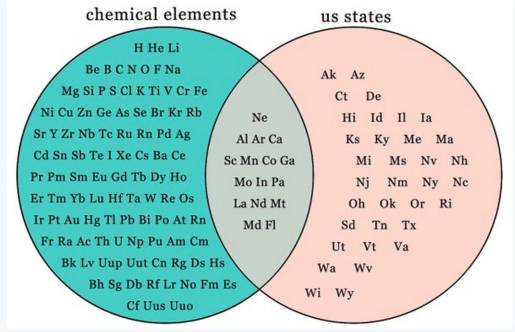
Chemistry Meets Civics, U.S. Edition

Screen Shot 2016-01-17 at 12.24.13 PM

H/T Reid Wilson of Morning Consult 

Also, what characteristics does President Obama want for a theoretical element named after him?

I would want it to be stable ….. I would want it to be a catalyst but one that didn’t get too hot or too cold… Hopefully it would be one that was useful to humanity… [and] wasn’t just some shiny object.

President Barack Obama majored in Political Science.


The Seductive Appeal of Other People’s Problems

This is from The Development Set:

Let’s pretend, for a moment, that you are a 22-year-old college student in Kampala, Uganda. You’re sitting in class and discreetly scrolling through Facebook on your phone. You see that there has been another mass shooting in America, this time in a place called San Bernardino. You’ve never heard of it. You’ve never been to America. But you’ve certainly heard a lot about gun violence in the U.S. It seems like a new mass shooting happens every week.

You wonder if you could go there and get stricter gun legislation passed. You’d be a hero to the American people, a problem-solver, a lifesaver. How hard could it be? Maybe there’s a fellowship for high-minded people like you to go to America after college and train as social entrepreneurs. You could start the nonprofit organization that ends mass shootings, maybe even win a humanitarian award by the time you are 30.

If you asked a 22-year-old American about gun control in this country, she would probably tell you that it’s a lot more complicated than taking some workshops on social entrepreneurship and starting a non-profit. She might tell her counterpart from Kampala about the intractable nature of our legislative branch, the long history of gun culture in this country and its passionate defenders, the complexity of mental illness and its treatment. She would perhaps mention the added complication of agitating for change as an outsider.

But if you ask that same 22-year-old American about some of the most pressing problems in a place like Uganda — rural hunger or girl’s secondary education or homophobia — she might see them as solvable. Maybe even easily solvable….

Part of what drives this belief in the easy solvability of other people’s problems is a tendency to view systemic political failures in developing countries as arising from the moral failures of leaders, or a general lack of knowledge. It is for this reason that otherwise intelligent and reasonable people are able to understand, for example, the political basis of legislative homophobia (or racism) in Alabama but not in Uganda. In the former case politicians are then allowed to “evolve” with the views of their electorates, while in the latter case they must be dragged to the moral high ground kicking and screaming (at the threat of foreign aid withdrawal).

This is not to suggest that “local politics” variables explain everything. Or that we should subordinate everything to local politics, especially in the face of despicable human rights abuses (as was the case with the offensive and dangerous Ugandan anti-gay law). Rather, it is a call for a balanced understanding of complex political actors (and their incentives) in the developing world.

The whole thing is worth reading, especially the bits about America’s own “unexotic underclass”:

…….. I think there is tremendous need and opportunity in the U.S. that goes unaddressed. There’s a social dimension to this: the “likes” one gets for being an international do-gooder might be greater than for, say, working on homelessness in Indianapolis. One seems glamorous, while the other reminds people of what they neglect while walking to work.

There is also a response here which argues against the false choice of helping the poor in America vs in the developing world.

And by the way, despite having grown up in Nairobi, I only got interested in development after volunteering with Unite for Sight in Ghana.