In which I talk development with Bill Easterly and others on Al Jazeera

This afternoon I joined NYU’s William Easterly, Ingrid Kvangraven of the New School and Daniel Kaufmann of Revenue Watch to talk about Easterly’s new book, The Tyranny of Experts. You will notice that I am a huge fan of STATE CAPACITY.

(Apparently, graduate school prepares you not for TV appearances…)

[youtube.com/watch?v=CmcL4R_PZRE]

Note: If you are in the US you have to VPN it since al jazeera doesn’t stream content in the US.

In preparation for the show I finally finished reading Easterly’s book. A review is coming soon (grad school permitting). 


Foreign Aid for Institutional Development?

In a speech at the Clinton Global Initiative, U.S. Republican presidential candidate Mitt Romney urged that more of U.S. foreign assistance should have strings attached. Mr. Romney said that:

“Working with the private sector, the program will identify the barriers to investment and trade and entrepreneurialism in developing nations…………. In exchange for removing those barriers and opening their markets to U.S. investment and trade, developing nations will receive U.S. assistance packages focused on developing the institutions of liberty, the rule of law, and property rights.”

Romney also added that:

“The aim of a much larger share of our aid must be the promotion of work and the fostering of free enterprise. Nothing we can do as a nation will change lives and nations more effectively and permanently than sharing the insight that lies at the foundation of America’s own economy — and that is that free people pursuing happiness in their own ways build a strong and prosperous nation.”

I am of the opinion that an approach to foreign assistance embodying the spirit of the latter quote is more likely to succeed than the former.

The thing with institutions is that they often reflect already existing social equilibria. The courts, the police, the military, the legislature, the stock exchange, etc, all reflect established norms and moral claims that individual stakeholders have on the system and on each other. When Westerners foreigners come in (many of whom often have very little understanding of the social basis of the existing equilibria) they often tend to work at cross-purposes with the existing social compacts (a good example here is the phenomenon of mono-issue activism – think of Human Rights Watch fighting the World Bank at the expense of locals).

Granted in some parts of the world these very social compacts need to be changed (e.g. misogynous social systems). But even in such cases the changes have to be grounded in local political arrangements that are self-enforcing. Media pronouncements from Western ambassadors are not enough.

Many development academics and practitioners alike often neglect the fact that in European history (contemporary Western experience informs a lot of institutional proselytizing) political development (i.e. the creation of responsive and impartial bureaucratic institutions to manage the affairs of the state) was preceded by modernization and general economic development. In most of the developing world this relationship is reversed. Political development has become the independent variable charged with driving the process of modernization and economic growth and development.

As a result, the mantra seems to be that if only everyone could get governance right then everything would fall in place and we’d all be on the road to becoming Denmark.

May be this can be achieved. I remain skeptical.

World Bank President Doubles as a Rapping Spaceman

Just in case you haven not seen this yet:

[youtube.com/watch?v=-DIMT-auQIA&feature=related]

H/T Erin.

Big vs. Small Development

The Economist raises an interesting question regarding approaches to “development,” claiming that the recent race for the World Bank presidency represented a contest between two broad approaches:

Michael Woolcock, a World Bank staffer, suggests that two rather different models of development have been pitted against one another in the contest for president. On the one hand is what he calls Big Development, whose aim is the transformation of entire countries through investments in national education, justice and public health. Governments are essential to Big Development because they are responsible for the overall policy. And the World Bank is pre-eminently a Big Development institution.

On the other hand is Small Development. “Inspired less by transformational visions of entire countries,” Mr Woolcock argues, “and more by the immediate plight of particular demographic groups (AIDS orphans, child soldiers, ‘the poor’) living in particular geographic places (disaster zones, refugee camps, urban slums), Small Development advocates focus not on building systems in the medium run but on compensating for the failure of systems in the short run. ‘Development’ thus becomes an exercise in advocacy, in accurate targeting, in identifying particular ‘tools’ that ‘work’”.

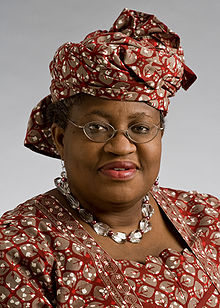
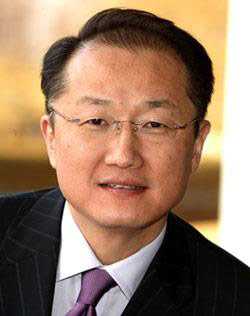
In this scheme of things Mrs Okonjo-Iweala, the former finance minister, represented Big Development; Dr Kim, a public-health advocate, Small. Dr Kim was almost certainly picked because of his passport. But if his background is any guide, his tenure as chief is likely to shift the bank more towards Small Development. Whether that is a good thing on balance remains to be seen.

I take the side of Big Development (if such a dichotomy actually exists) because of my beef with “pro-poor development” as it is currently practiced  (more on this here).

Development is a giant coordination game with a million moving parts. This makes it much harder to coordinate on “scalable” “tools that work” at the micro-level. Indeed, no one has any idea what these tools really do. In addition, focus on “tools” casts the problem of underdevelopment as a technical one that can be fixed by “experts.”

This approach misses the point by miles.

This and this (highly recommended, a cogent critique of Big Development) and this are some of the reasons wby.

More on Obama’s WB President Nomination

Source: Wikipedia

Nigerian Ngozi Okonjo-Iweala is definitely the dream candidate for the Bank. But the realities of U.S. domestic politics and foreign policy concerns are stacked against her nomination to the presidency of the Bank. It will be hard for the U.S. to selflessly relinquish an important tool of foreign policy and influence in the Bank’s presidency.

If Obama backs down, he will be criticized for being soft in the face of international pressure. If he nominates a non-American, he will still be criticized as an apologist for those who hate America (real or imagined) and a believer in American decline.

Obama’s incentive is to get his nominee become World Bank President. Full stop.

Source: Wikipedia

So far those rooting for Ngozi (including yours truly) have questioned Jim Yong Kim’s credibility (he is/was not a fan of neo-liberalism) and competence (he is not an Economics PhD; but a mere MD, PhD) as World Bank president.

You can get Kim’s co-authored book here (or your local library; $97 is a bit pricey), it is on my to-read list (A review of the book is available here).

Here is quoting a post over at the Duck of Minerva for a more balanced take:

If Dr. Kim criticized the growth agenda of the structural adjustment era, so what? This has all become mainstreamed into the Bank’s own philosophy of pro-poor growth.Does it take a PhD in Economics to run the World Bank successfully? If selected, Dr. Kim would be the leader with the most hands-on development experience that the Bank has ever possessed. He would be as or more experienced in the field as serious contenders that were mooted in advance like Susan Rice, Hillary Clinton, or Pepsico CEO Indra Nooyi (ok, maybe Larry Summers knows more but Summers always know more than anybody). As Daron Acemoglu and Jim Robinson pointed out on their blog [Why Nations Fail]: “Perhaps all of Mr. Kim’s critics prefer the status quo where the World Bank is run by ex-warmongers (Robert McNamara), bankers (James Wolfensohn) or career civil servants (Robert Zoelick). Wait wasn’t that the World Bank that they loved to criticize?”

Adding that:

You don’t have to denigrate Dr. Kim to praise the other candidates. The strongest case is that while Dr. Kim is a good candidate, Dr. Okonjo-Iweala is the dream candidate. She’s from a large developing country, knows the issue well, understands the complex world of global finance, and is intimately familiar with the culture and organization of the Bank. And, for her supporters, the changing nature of the international system has made this practice of the U.S. having the automatic right to appoint the Bank’s president an anachronism.

Beating the drum for Ngozi

The Economist has joined a string of internet commentators in endorsing Nigerian Minister of Finance to become the next president of the World Bank. Contrasted against the resume of Obama’s choice for the Bank, Ngozi wins. By miles.

According to the Economist:

The World Bank is the world’s premier development institution. Its boss needs experience in government, in economics and in finance (it is a bank, after all). He or she should have a broad record in development, too. Ms Okonjo-Iweala has all these attributes, and Colombia’s José Antonio Ocampo has a couple. By contrast Jim Yong Kim, the American public-health professor whom Barack Obama wants to impose on the bank, has at most one.

However, it is interesting that in all the debate no one has talked about HOW Ngozi will change the Bank’s operations, besides insinuations that she has hands on experience in transforming Nigeria’s public finances, coupled with her previous experience at the Bank.

More importantly, what would be the cost to Nigeria if they lose Ngozi? Is this important at all?

Ngozi leading the bank will probably make a difference. However, I think that support for her candidacy has thus far been too one-sided. Nigeria, like much of the developing world, does not have much influence on the Bank’s board. Nigeria also stands to lose one of its ablest technocrats just when it is striving to reform its public finances. These considerations should matter too, I think.

Just for the record, I am one of those who think that it would be really cool to have Ngozi lead the Bank (despite the fact that she probably will not).

**********************************************

Update: I just came across some interesting thoughts on Ngozi’s nomination over at Africa is A Country (H/T Chad).

How I would not lead the World Bank – Bill Easterly

For those, like me, who still miss Aid Watch, here is Easterly over at FP:

I would not appoint U.S.-educated elites vetted by their autocratic home governments to represent the underrepresented peoples of the world. I would not negotiate the contents of World Bank reports with governments in either the West or the Rest, except possibly for correcting typos.

I would not lead the World Bank by perpetuating the technocratic illusion that development is something “we” do to “them.” I would not ignore the rights of “them.” If the New York Times should happen to report on the front page that a World Bank-financed project torched the homes and crops of Ugandan farmers, I would not stonewall the investigation for the next 165 days, 4 hours, 37 minutes, and 20 seconds up to now.

More on this here.

And for more on leadership selection at IFIs see CGD’s policy brief here.

Resource flows in Africa

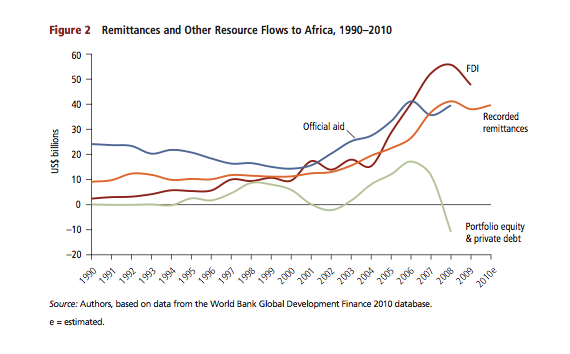
According to this figure FDI and recorded remittances appear to be trending in the right direction. Official aid and portfolio equity and private debt are not.

For more on this check out the World Bank’s new book (digital copy) on how Africa can leverage immigration to boost its growth prospects.

It’s important to remember that while overall these numbers may look encouraging, the problem of illicit capital outflows still plagues Sub-Saharan Africa (and other developing regions); and serves as an impediment to growth. Between 1970-2008 the region hemorrhaged an average of over $22b annually. Various studies (including this one) estimate that the private wealth held by Africans in tax havens and other shady depositories abroad may be upwards of $270b.

Effects of Conditional Vs. Unconditional Cash Transfer

Baird, McIntosh and Ozler have an upcoming paper in the QJE investigating the differential impacts of conditional and unconditional cash transfer in Malawi:

Starting with schooling outcomes, we find that although dropout rates declined in both treatment arms, the effect in the UCT arm is 43% as large as that in the CCT arm. Evidence from school ledgers for students enrolled in school also suggests that the fraction of days attended in the CCT arm is higher than the UCT arm. Using independently administered tests of cognitive ability, mathematics, and English reading comprehension, we find that although achievement is significantly improved in all three tests in the CCT arm compared with the control group, no such gains are detectable in the UCT arm. The difference in program impacts between the two treatment arms is significant at the 90% confidence level for English reading comprehension. In summary, the CCT arm had a significant edge in terms of schooling outcomes over the UCT arm: a large gain in enrollment and a modest yet significant advantage in learning.

The paper then gets nuanced:

When we turn to examine marriage and pregnancy rates, however, unconditional transfers dominate. The likelihood of be- ing ever pregnant and ever married were 27% and 44% lower in the UCT arm than in the control group at the end of the 2-year intervention, respectively, whereas program impacts on these two outcomes were small and statistically insignificant in the CCT arm.

……….. Our findings show that UCTs can improve im- portant outcomes among such households even though they might be much less effective than CCTs in achieving the desired behav- ior change.

Check it out here.

Quick hits

If I were the president of the DRC, I would be seriously researching how Charlemagne did it (the medieval King ruled over a land mass the size of the DRC), how Brazil did it (their green revolution was a success) and how Vietnam is doing it (some people call it little China). I can bet my grad school stipend for next quarter that the younger Kabila has no local brain trust (who needs one if the Brussels boys can jet in and out of Kinshasa with copious amounts of “advice” on development??). The lets-just-stay-afloat-with-foreign-aid paradigm that informs governance in Africa is a guarantee that 50 years from now Africa will still be the poster child for bad governance and socio-economic underdevelopment.

Also, I just discovered a blog by The Bank’s chief economist for Africa region. Check it out (via Blattman).

Lastly, Wronging Rights has a post on the series of post by Texas in Africa on how social science works.

quick hits

Below are some links that I liked:

Sudan: It was never going to be easy to go separate ways.

Understanding the Mozambican riots.

Jammeh, the delusional Gambian president, is completely out of his mind.

Easterly on Zoellick and being kicked out of the BANK.

Bureaucracy gone mad, why does the UN have some of these agencies?

Documenting America’s non-existent class system.

Because of qualifying exams this weekend, I shall be away till some time after Monday.

shame on the world bank

From Aid Watch, William Easterly’s very informative (and sometimes controversial) blog, is a story that serves to highlight the dysfunction that is endemic in the aid industry. And unsurprisingly, the World Bank is right in the thick of things here as well.

summer reads

I just finished reading two excellent books: In defense of elitism by William Henry III and Dead Aid by Ndabisa Moyo.

The former book deals with how society (American but it can apply anywhere) may, over time, be dragged down by its less savvy members in the name of egalitarianism. I do not agree with Henry on all the issues addressed in his book. I particularly think that he is misguided on his views on education and the feminist movement. But overall I think he has a point about the ever increasing vulgarization of the mainstream – in an ever increasing tide of anti-intellectualism – in order to accommodate the common man.

Moyo’s book is one of the best I have read on development in a long time. It kind of reminded me of Collier’s the Bottom Billion. And the book is a fast read, with the chapters seamlessly connecting with one another. I am a terrible book critic so I am just gonna say: go read it.

And speaking of Paul Collier, check out this fascinating debate. I like this, I only wish there were one or two heavy hitters from the continent weighing in on this. Where are you Prof. Wantchekon?

some good news for Zimbabwe

The BBC reports that the World Bank has decided to resume aid to Zimbabwe – the Bank has not lent the cash-strapped African country any money since 2000. Sad though is the fact that most of the money will probably go to clearance of Zim’s arrears to the WB and the African Development Bank (Zimbabwe owes $1 b). But the WB director, Toga Gayewea McIntosh, who is in charge of the group of African countries that include Zimbabwe promised that more grants will follow soon.

According to the Finance Ministry, Zimbabwe needs $8.3 billion for full recovery to be achieved any time soon after years of ruinous economic policies under the strongman Robert Mugabe.

the african problem

Sub-Saharan Africa is in dire straights. It is the most sick, hungry, poor and ignorant region of the world. It is a region infested with despots and illiberal democrats who for decades have led their nations to economy ruin and pre-modern tribal divisions and ways of living.

As the world watches one of this region’s promising nations descend into chaos, it is important for us to ask each other hard questions about the African Problem. I say the African Problem problem because it is not by chance that from Senegal to Somalia, Chad to South Africa, there is not much success to talk about. Poverty, disease and ignorance rule supreme.

We need to ask each other hard questions because racially sensitive Westerners (or Easterners for that matter) on whom we depend for most of “our” solutions will not ask us these questions; Is it our culture? Why haven’t we managed to shed the tribe in almost a decade into the 21st century? Why do we tolerate such appalling levels of mediocrity among us? Why don’t we demand more from our leaders? Why don’t we produce real leaders.

Our dictators compare woefully to those from other regions. Pinochet murdered Chileans, enriched himself, but also modernised the economy. Lenin had a weird ideology and some intellect behind his murderous leadership but he modernised Russia. Suharto did not run Indonesia into the ground. And now we turn to Africa: Samuel Doe, “Emperor” Bokasa, Iddi Amin, Obiang, Abacha and all the other Nigerian generals, Mobutu, Mugabe, Charles Taylor…. etc. This is a list of common criminals. Nearly all of them lack (ed) an iota of ideology behind their leadership, nearly all impoverished their people more than they were before, and all are a shame to all Africans. None of them knew what it means to be leader of a people or peoples.

These leaders got obscene amounts of wealth while their country men and women walked around naked, sick, hungry and ignorant.

How hard can it be? Why haven’t we succeeded in having successful socio-cultural and economic institutions that work for us? Does anyone care? Of what use is a million dollars to any African anywhere if Reuters is showing pictures of naked flood victims from Mozambique??? Why are we stuck in pre-modernity?

The many questions aside, the one thing that is clear is that Africa needs to change fast or it will never catch up with the rest of the world. We should not confuse pre-modern subsistence existence with culture. People live in mud houses and roam around with emaciated goats not because they love it but because they can’t afford or do not know any better.