Day 3 after the Kenyan election

Counting is still going on following Monday’s general election in Kenya. Following the close of polls the electronic tallying system for the presidential election crashed, forcing the IEBC to resort to a manual tallying system.

Just under half of the 290 constituencies have so far reported. Mr. Kenyatta still holds the lead, by about 350,000. The projected national turnout stands at 82%.

The IEBC has promised to release the final results tomorrow (Friday).

A couple inexplicable things have happened since my last post.

Firstly, the 300,000+ “rejected votes” that consistently made up 6% of votes in the initial tally have dwindled down to 40,000 – less than 1% of the total votes counted so far.

The IEBC’s explanation was that there was a software malfunction in the electronic tallying that increased the rejected votes by a factor of eight.

Secondly, both CORD and Jubilee coalitions have issued statements regarding the tallying process. CORD claimed that some results were “doctored.” Jubilee claimed that the UK government had sent troops to Kenya and that the high commissioner was trying to influence the tallying process.

None of these claims have been substantiated. Kenyan media houses have agreed to deny live coverage to such political pronouncements.

Life is slowly getting back to normal – I was glad to see traffic on Nairobi roads today!

With regard to the final result, it is clear that Mr. Uhuru Kenyatta has an unassailable lead over Mr. Raila Odinga. What is not clear is whether or not he will win by a wide enough margin to avoid a runoff.

The wait continues…

Uhuru takes commanding lead

Yesterday Kenyans voted in a peaceful general election. Despite a few logistical and technical glitches that delayed the opening of some poll centres, in most of the country polling started on time and without incident.

Even a night time raid by a separatist group in Mombasa that left police officers dead did not significantly alter the process in the region.

The IEBC estimated turnout at upwards of 70%. Many polling stations had to close late since the snaking lines remained long well past the official closing time of 5 PM.

Results started trickling in late in the night and Mr. Uhuru Kenyatta quickly shot to the lead. As at 4PM om Tuesday Mr. Kenyatta leads Mr. Raila Odinga 53%-41% with 40% of the polling centres reporting.

With Mr. Kenyatta’s commanding lead many are wondering whether Mr. Odinga can get enough votes to force a runoff.

So far the situation looks bleak for Mr. Odinga. While he outperformed in Western region, in the backyard of third candidate Musalia Mudavadi, so far results show that he underperformed in most parts of North Eastern and northern Kenya. He also did not meet the minimum votes he required in the Rift Valley.

Regional turnout numbers are not yet out but I doubt they bear any good news for Mr. Odinga.

It is still too early to call the race yet but I think that, contrary to my own predictions, a first round win for Mr. Kenyatta is now on the table.

I put the upper mark on Kenyatta’s lead at 650,000. Beyond this I don’t see how Mr. Odinga will be able to force a runoff. By all estimates both Mr. Kenyatta and Mr. Odinga will meet the constitutional requirement of getting 25% of votes cast in at least half (24) of the 47 counties.

My model predicted an advantage to Kenyatta in the first round followed by a runoff. But Mr. Kenyatta significantly outperformed the national polls leading to the election. I estimated that the national polls over-estimated Odinga’s support by about 3 percentage points. It appears that I may have underestimated their overestimation. I am also beginning to think that their regional weighting was worse than I thought.

One curious thing in the poll results is the number of spoilt votes – about 6%. This high number raises (or doesn’t) an interesting legal question. The constitution says that the winning candidate must garner 50%+1 of votes cast. Whether this means only valid votes or not is at this moment unclear to me.

The 300,000+ spoilt votes make a difference in that if they are included Kenyatta gets less than 50% of the votes cast. My eye balling the results doesn’t seem to suggest significant biases of spoilt votes in favor of either candidate. If these votes are audited Kenyatta might still win in first round. If they are simply included with no audit then we may have a runoff in our hands.

Most spoilt votes are likely to have been a case of people putting ballot papers in the wrong boxes and so a simple audit can sort this out.

All this to say that Kenyatta has a commanding lead; Odinga is on the ropes big time; and that the technicalities are such that it might be a while before we get the final tally, depending on the spoilts votes question.

Kenyans are holding their breath, peacefully waiting for it all to play out.

The State of the 2013 Presidential Race in Kenya

 (1) The Presidential Debate:

On Monday Kenyans witnessed, for the first time ever, a live presidential debate. I must say I was surprised by how well this went. The moderators, at least in the first half of the debate, had very pointed hard-hitting questions – especially on ethnicity and the ICC question.

The top two candidates, Mr. Raila Odinga and Mr. Uhuru Kenyatta, were taken to task about the apparent ethnic arithmetic behind their campaign strategies and the perceived animosity between their respective ethnic groups, the Luo and Kikuyu. Both flatly denied the charges. But it nonetheless provided a moment of open discussion of negative ethnicity, which remains as the key organizing principle of Kenyan politics – with disastrous security and economic consequences.

Mr. Kenyatta was grilled on how he planned to govern from The Hague while on trial at the ICC; or whether it was legally or ethically tenable for him to be running in the first place. Mr. Odinga did not miss the moment and chimed in by stating that it would be logistically challenging to run a government via skype from The Hague. Many of those on stage – with the exception of Martha Karua and Abduba Dida – concurred that the trials should be held in Kenya and that Uhuru should be allowed to run (Today Kenya’s high court ruled that Uhuru and Ruto can run for office despite the charges at the ICC).

So who won the debate?

The simple answer is Mr. Kenyatta.

On negative ethnicity he shared the blame with Mr. Odinga. Mr. Odinga, as the Prime Minister, was often questioned, and himself answered questions like he was the only one on stage currently in government – Kenyatta and Mudavadi are his deputies, and Kenyatta was at one time Finance Minister. As a result he took a lot of flak for the failures of the current government.

Ironically, Mr. Kenyatta’s best moment in the debate was on the topic of the ICC charges against him and his running mate Mr. William Ruto. Because of the sovereignty overtones (Kenyans can “tribal”, but are also nationalist) in admitting that Kenya could not handle the cases, many on stage, including Odinga, said that Mr. Kenyatta should run – adding that the trials should be brought back to Nairobi.

One of the biggest obstacles to Kenyatta’s candidacy has been the ICC question – indeed he almost quit the race over the issue. Donors have given veiled threats of sanctions. Many Kenyans thought (or hoped) that the courts would bar him. But the way the ICC issue played out in the debate reduced its significance as a wedge issue, and may influence a few undecideds. I get the sense that many left the debate with an excuse to vote for Kenyatta despite the ICC charges.

(2) The Numbers:

The numbers have not changed much since my last analysis, save for the fact that Kenyatta’s and Odinga’s numbers have begun to converge.

race

In the presidential debate Mr. Odinga complained that it smirked of ethnic dog whistling to try and predict the outcome of the election based on ethnic blocs (The combined ethnic blocs of Kenyatta and Ruto make up about 43% of Kenyans). His complaint exposed his biggest fear. His party did a poor job of mobilizing voters to register.

While I disagree with the quality of punditry around this issue so far (the talking heads on TV often merely use raw voter registration numbers to predict outcomes) I don’t see anything wrong with trying to predict the outcome based on polling data.

In essence the outcome of this election will not only hinge on how many people registered where but also on how many of them actually turn up to vote. As I have argued before, this will mainly be a turnout election. Mr. Kenyatta leads by between 650,000 – 740,000 votes based on my turnout models. But Mr. Odinga can seriously dent this lead by simply matching Mr. Kenyatta’s stronghold turnout rates. If he does that and has a good day in Western region on March 4th he will win in round one. Otherwise we are most likely headed for a runoff, after Kenyatta wins the first round.

Either someone in Mr. Odinga’s campaign reads my blog (wishful thought of the day!) or they are sober with the numbers and have realized that they need a high turnout on voting day. Mr. Odinga this week launched a countrywide get out the vote drive.

The latest opinion poll (Friday 15th Feb) show a dead heat between Odinga and Kenyatta at 46% and 43% respectively. Such close numbers, coupled with Mr. Kenyatta’s head-start in voter registration and historically relatively higher turnout rates in his strongholds, do not bode well for Mr. Odinga’s chances.

 (3) On the Consequences of a Uhuru Victory:

In the last two weeks the diplomatic community in Nairobi have had a mini freak-out after coming to the realization that Mr. Kenyatta has a good chance to be Kenya’s 4th president. Many embassies insisted that they are neutral, but some also warned that the outcome would have consequences.  Barack Obama, the US President, even made a youtube video urging Kenyans to vote peacefully. France bluntly stated that they would only have essential contact with a Uhuru government if he wins.

Their freak-out betrays the knowledge that there is little they can do either before or after the election. Kenya gets about 5% of its development budget from donors; the rest comes from domestic taxes.  Nairobi can tell them to take a hike. Plus there’s China. And Somalia and South Sudan to be taken care of by a big international community based in Nairobi. The country is the diplomatic hub of the region, and indeed the continent. Nairobi houses the biggest US embassy in Africa and UNEP headquarters, the only UN office of its kind in the global south. In short Western leverage is limited both before and after the election.

In any case, the ICC case against Uhuru and Ruto appears to be crumbling. The prosecution significantly altered the charges, leading to a request yesterday for more time from the defense teams. The cases may start well after the elections in Kenya are over and done. Or they may be taken back to the pre-trial chamber and dismissed.

All things considered, I would not wish to be in Mr. Odinga’s or his strategists’ shoes right now.

Who will win the Kenyan presidential election? A look at the numbers

With elections less than a month away many in Kenya are reading the tea leaves and making predictions as to who they think will win the March 4th presidential election. Unfortunately, many of these self-styled political analysts – including the most celebrated one Mutahi Ngunyi – are merely using the raw IEBC voter registration numbers and assumptions about ethnic bloc voting.

The reality, however, is that there will be differential voter turnout in the many ethnic zones regions of the country in a manner that will have a non-trivial impact on the outcome of the election. As I highlighted in a previous post, this will be a turnout election. Everyone knows who their voters are. The swing voters will be few. And the two major contenders don’t appear to have any intention or strategy to eat into each other’s perceived strongholds.uhuru

And so just as I did last time, I ran the numbers from the latest opinion poll from Ipsos Synovate with regional breakdowns to estimate the winner of the presidential election. This time round my turnout model also includes variables on income, voter registration, and whether a region has a top presidential contender or not.

So what do the numbers say?

Well, if the polls are right Uhuru Kenyatta still leads Raila Odinga by about 740,000 votes.  I estimate that Mr. Kenyatta will get 48.87% of the votes cast to Mr. Odinga’s 41.72%, which means that a run-off is almost inevitable. I don’t expect Mr. Kenyatta to hit the 50% mark since my model is slightly biased in his favor (especially coming from the Rift Valley turnout figures from 2007 that I use as a basis of estimating turnout in 2013).  Below I show the regional tallies according to my turnout model.

A few caveats to go with my estimates: 

  • Of course the polls could be all wrong, in which case none of what I say here matters. 
  • The result of the election will hinge on the turnout in the respective candidates’ strongholds. As it is my model estimates a turnout rate in Mr. Kenyatta’s strongholds at 77.33 to Mr. Odinga’s 66.68. Mr. Odinga can easily erase Mr. Kenyatta’s lead by matching his stronghold turnout rate and having a respectable showing in Western region (by eating into Mr. Mudavadi’s vote share) on March 4th.
  • In the event of a run-off, all bets are off. Most likely the election will then centre on Mr. Kenyatta’s ethnicity (which is the same as that of the outgoing president) and his tribulations at the ICC thereby handing Mr. Odinga a lead straight off the gates.
REGION Uhuru Kenyatta Raila Odinga
Coast 64,064 410,012
North Eastern 103,978 115,531
Eastern 865,432 732,612
Central 1,623,483 113,266
Rift Valley 1,655,262 695,972
Western 58,040 444,974
Nyanza 282,626 1,299,053
Nairobi 406,099 507,624
TOTAL 5,058,984 4,319,044

For those interested in looking under the hood of Ipsos Synovate’s polls go here.

Will turnout disappoint Odinga tomorrow?

Travel, conference and more travel have kept me from blogging in the last few days. I am back online. Kenyans go to the polls tomorrow. This is a post from a few days ago.

I am in New Haven (great to be back!) for a conference and visiting with friends before going back to Nairobi for Monday’s election and wanted to make a quick post on the latest in the upcoming Kenyan elections.

1. The Second Presidential Debate:

The second presidential debate was rather dull, to be honest.

The entire first half was supposed to be dedicated on the economy but mostly dwelt on the specific subject of corruption at the expense of other more pressing concerns like jobs and the modernization and formalization of the Kenyan economy (Not to trivialize Kenya’s obscene levels of corruption, but apparently the moderators do not read Blattman’s blog. The problem is huge, but there were other pressing economic issues that could have been addressed.)

The candidates were, as expected evasive over the matter – mostly giving vague answers to pointed questions on scandals they were rumored to have been involved in; from Goldenberg to Anglo Leasing to Maize to typos at the treasury.

The jester Candidate Dida provided a light moment when he asked the moderator if she expected thieves to admit that they had stolen.

The second half was better. It dealt with the issue of land. Again, no real answers emerged but it put Mr. Kenyatta – who’s family owns large tracts of land – on the hot seat. Land is an issue that has been the cause of ethnic clashes in every Kenyan election since 1992. Voters may just have got one more thing to think about before casting their votes on Monday.

Overall, I cannot say that any one candidate won the debate. However, Mr. Kenyatta lost a few points due to the amount of time spent on the land question. His main opponent Mr. Odinga even came to his rescue at one point, reminding viewers to cut Mr. Kenyatta some slack since he only inherited land that may have been dubiously appropriated by his father while he was president.

2. Election Day’s Big Unknown: TURNOUT

As I have pointed out before, the outcome of the presidential election in Kenya next Monday will hinge on turnout. Whether we shall wake up on March 5th with a president-elect or have to go for a runoff will depend on regional turnout rates.

As it is most public opinion polls point to a runoff.

However, the polls do not give us a sense of what proportion of registered voters are likely to vote.

One private poll that I have seen suggests that 98.3% of those polled said they would show up to vote. Such turnout numbers belong in Belarus. I expect average turnout to be between 75-85%.

Below is a table with the turnout rates in the last three presidential elections. (The 2007 figures should taken with a pinch of salt, for obvious reasons). As you can see history seems to be on Mr. Kenyatta’s side. Central Kenya and the Rift Valley, the two most populous regions of the country both support him overwhelmingly (according to the latest Ipsos Synovate poll) and have the highest average historical turnout rates.

Region/Turnout 1997 2002 2007 Kenyatta Support Odinga Support
Central 74.1 66.1 82.1 88.1 6.4
Rift Valley 75.9 60.8 72.8 69 23.3
Eastern 72.6 60.9 65.9 41.8 52.7
Nyanza 67.2 55.6 76.2 9.8 83.8
Western 68.1 57.1 62 3.4 53.6
North Eastern 55.9 57.8 61.3 37.9 44.1
Coast 50.6 42.1 57 18.3 73
Nairobi 50.2 42 51.5 39.6 51.9

Could turnout rates be different this time?

The answer is maybe, due to the following new variables:

  • New positions created in the constitution – governor, senator, and women rep – might attract new voters in addition to those who have in the past voted for the three other posts – president, MP and councillor (now county rep). This might increase turnout across the board, but since Mr. Kenyatta is already “maxing” his turnout rates Odinga might benefit from an overall increase in turnout rates.
  • The dropping of calls for “six piece” vote. Earlier in the cycle both candidates had insisted that voters should vote one straight ticket for the party for all six posts. However, since the nominations for both leading parties/coalitions were a total mess many popular candidates did not get nominated on the “right parties.” Insisting on a six piece vote would have lowered turnout. However, without it everyone has a candidate to vote for in their preferred presidential candidate’s stronghold. This may increase turnout since it gives incentive for say someone running in an Odinga stronghold, who supports Odinga, but is not in Odinga’s party to still mobilize his supporters to the polls in competition with the candidate in Odinga’s party. Again, a higher average turnout rate will benefit Mr. Odinga.

3. The Numbers:

The last polls before the election (about five of them) show a slim national lead for Mr. Odinga over Mr. Kenyatta, 45% to 43% on average. But since we do not know the make up of likely voters I would be reluctant to declare Mr. Odinga a favorite going into Monday. Mr. Kenyatta’s strongholds have historically had better turnout rates than Mr. Odinga’s.

And on the matter of polls, the following factors may lead to surprises on Monday night:

  • Desirability biases in the survey: We do not know to what extent those interviewed lied about who they support. And on this count Mr. Kenyatta runs the highest risk. Because of the ICC cases he and his running mate face, many higher income and educated Kenyans have had concerns about their ability to run the country “via Skype.” If such people residing in the Rift Valley and Central regions lied to pollsters because they were expected to like Kenyatta then we may be in for a surprise on Monday night. If Mr. Odinga gets more than 35% of the votes in Rift Valley and about 15% in Central Kenya he will win the presidential election in the first round. 
  • Strategic voting: One of Mr. Odinga’s many challenges has been the Western Kenya region where Musalia Mudavadi comes from. Mr. Mudavadi is the third candidate, getting 6% on most polls nationally and about 34% in Western region. Mr. Odinga gets 53% in the region and Kenyatta 3%. In the event of a runoff, most of Mudavadi’s voters will break for Odinga. Mr. Mudavadi’s candidature centres on becoming a King maker and elevating his stature as a serious contender in the next elections (2017). But if Western voters who would support Odinga in the second round decide to do so in the first round Odinga will have an outright victory in the first round.

Barring any surprises on Monday (esp with regard to turnout) the state of play is that the first round will be a close contest between Kenyatta and Odinga, with one or two percentage points separating them.

Mr. Kenyatta is a slight favorite to win the first round, but will be short of the 50% required for an outright win. In the second round, however, I expect Mr. Odinga to be a clear frontrunner since most of Mudavadi’s voters in Western Kenya will break for him. I also expect a little bit of anti-Ruto (Kenyatta’s running mate) votes in the Rift Valley going to Mr. Odinga. I am very curious as to what President Moi’s promised major announcement on March 5th will be…. perhaps an endorsement?

All in all I would put my money on Mr. Odinga becoming Kenya’s fourth president.

Uhuru Kenyatta Emerges as 1st Round Favorite in Kenya’s March 4th Poll

OK, so as promised, here is my first attempt at looking at the numbers and what they are telling us about the outcome of the March 4th general election in Kenya.

14.3 million Kenyans registered to vote this year. Out of this (based on historical turnout rates) about 11 million will actually show up to vote. If the opinion polls are right, neither Uhuru Kenyatta nor Raila Odinga (the top two frontrunners) will get the requisite 50% plus one vote required to win the election. It is likely that there will be a runoff. About 4% of voters remain undecided. The polling trend (see below) suggests that the race will tighten over the next six weeks before the election.

Image

The first opinion polls after the party nominations show Deputy Prime Minister Uhuru Kenyatta ahead of Prime Minister Raila Odinga in the raw vote, at least according to my analysis. The overall national head to head match up in the two polls released Monday show Mr. Odinga leading Mr. Kenyatta by (48-40, Infotrak) and (40-36, Ipsos).

The regional poll tallies, on the other hand, show a different story. In these Mr. Kenyatta emerges with a lead of between 490,000 and 630,000 of the accounted for votes depending on the turnout models used. The average of the tallies show that if elections were held over last weekend Mr. Kenyatta would garner 4.5 million votes to Mr. Odinga’s 3.9. This leaves about 24% of the (potential) votes cast either spread out among the other presidential contenders or undecided.

Here is how I arrived at the numbers:

The surveys by Infotrak and Ipsos (the two firms correctly predicted the outcome of the 2010 referendum) gave regional tallies of how the top two coalitions did among those surveyed. With a few modifications (like assigning the GEMA counties in Eastern region the Central region poll results), I assigned these tallies to the different counties within the regions. I then estimated voter turnout using the numbers from the three most recent national voting exercises – 2002 and 2007 elections and the 2010 referendum. Because of the anomalies in the presidential election in 2007, I used the constituency turnout figures (In these figures, for instance, Juja and Nithi did not have turnouts exceeding 100% as was the case in the presidential election in 2007). Of course there are counties in which the popularity of either Kenyatta or Odinga vary by constituency but this is the best we can do for now. I then used the estimated county turnout rate and the regional polling results to estimate the expected vote count for either candidate in each county using IEBC’s figures of registered voters.

It is important to note that among the two polls, Infotrak asked respondents about their preferred ticket (Kenyatta and Ruto vs. Odinga and Musyoka) while Ipsos asked about individual presidential candidates. The discrepancy in the national polling average and the raw numbers I show here might be because of incorrect weighting of the different regions by the polling companies. The fact that Kenyans vote along ethnic lines and voters are geographically concentrated means that the regional polling numbers might provide a better picture than the national numbers. National polls appear to be over-estimating Odinga’s support by about 3 percentage points on average.

Uhuru Kenyatta is ahead in the raw figures for the following reasons:

  1. The first reason is that Mr. Kenyatta has the numbers. The combined GEMA registered voters number 3.9 million. That is 27.3% of the registered voters. Mr. Kenyatta obviously won’t bag 100% of these votes but it doesn’t hurt to have a vote rich base.
  2. His stronghold of the wider Mt. Kenya region had the highest voter registration rate in the country. This, combined with the fact that his running mate brings in the populous Rift Valley region, gives Kenyatta a slight edge off the gates.
  3. Kenyatta’s strongholds (Mt. Kenya) and Rift Valley have historically had higher turnout rates than the regions that Odinga will need to win on March 4th. In 2002 Kenyatta’s strongholds had a higher turnout rate by 5 percentage points. In 2007 it was 10%.
  4. The combined high population, higher registration rates and expected higher turnout means that Mr. Kenyatta is presently the favorite to win the first round of the March 4th presidential poll.

How can Odinga win?

  1. A lot of voters (24%) remain spread out among the smaller candidates or are undecided. Come election day these voters may break for Mr. Odinga for the reasons I gave in an earlier post.
  2. Mr. Odinga’s other path to victory is by ensuring high turnout in his strongholds of Nyanza, Western and Coast regions. Just by matching the expected turnout in Mr. Kenyatta’s strongholds he would reduce the deficit to about 250,000 votes.
  3. He must also eat into some of Mr. Kenyatta’s support in the Rift Valley and Central regions. If the election is a mere census then Mr. Kenyatta will win the first round (the second round is another story all together). For Mr. Odinga to win he must convince voters in Mr. Kenyatta’s strongholds that he is the better candidate.

Facing reality:

For a while it seemed like this election was Mr. Odinga’s to lose. I have since softened on this a little bit. Despite his many problems, Mr. Kenyatta can still win this election, at least the first round. In the second round everything will be contingent on who between Messrs Kenyatta and Odinga can bag the roughly 20% of votes that will go to various smaller candidates in the first round. As things stand Mr. Odinga is the likely beneficiary of these votes.

A lot will happen between now and March 4th. But key things to consider include:

  1. If turnout is low on March 4th Mr. Kenyatta will emerge the winner. His (national) base is relatively wealthier and more urban (or more accurately, more politically engaged – if you doubt this see the voter registration numbers for Kiambu county alone) than Mr. Odinga’s and thus will have a higher turnout. Having failed to match Mr. Kenyatta’s voter registration rates, Mr. Odinga needs upwards of 80% of those registered in his strongholds to show up to vote, or else he will lose.
  2. Mr. Kenyatta appeared to be the better organized candidate in getting his base to register to vote. And given the way in which his party handled the nominations exercise, it is likely that he will out-organize Mr. Odinga in getting his supporters to the polls. This spells more trouble for Mr. Odinga.
  3. The nominations exercise gave Mr. Odinga’s coalition bad press for four consecutive days. His home base of Nyanza was the worst affected. Seemingly undemocratic nomination exercises – in which Odinga’s allies controversially won party primaries – in the region may depress turnout, something that Odinga should be worrying about A LOT. Watch out for how Mr. Odinga’s party handles the nominations fallout in his Nyanza backyard.
  4. Musalia Mudavadi appears to have made gains in Western province – he is polling there at 26%. His gain is Odinga’s loss. If Mr. Mudavadi continues to gain in the next 40 days then we shall almost be assured of a run off, after Mr. Kenyatta wins the first round.

Mitigating violence in Kenya’s 2013 elections

Joel Barkan has a CFR contingency planning memorandum on the Kenyan elections in which he notes that:

The United States and others may have limited leverage over Kenya’s domestic politics, but they are not without options that would significantly improve the prospects for acceptable elections and help avert a major crisis. However, with little more than two months before the elections, Washington must intensify its engagement or forsake its opportunity to make a difference.

But the window might be closing fast on the international community to help Kenya avoid a repeat of 2007-08, when 1300 died and 300,000 were displaced after a bungled election. According to a report by the Global Commission on Elections, Democracy and Security (yours truly was a research assistant for the commission), evidence suggests that international interventions to encourage reasonably free and fair and peaceful elections are most effective when done well in advance to the polling day. In the Kenyan case, the structural causes of previous rounds of electoral violence were never addressed, and may yet lead to the loss of life this election cycle.

What can now be done to avoid large scale organized violence is to credibly convince the politicians and those who finance youth militia (chinkororo, taliban, mungiki, jeshi la mzee, baghdad boys, etc) that they will be held accountable. So far, as is evident in Tana River and the informal settlements within Nairobi, the lords of violence appear to be operating like it is business as usual.

Kenyan Elections 2013 Polling Trends (Presidential Race)

It is less than two months to the Kenyan general election on March 4th 2013. In the next ten days political parties will nominate candidates (either directly or through primaries) for various elective posts – Governor (for the 47 counties), MP (290 of them), Senator (one per county), Woman MP (representing each county), and several County Representatives per county. I suspect the next round of polls will come out after the nomination exercises, which will undoubtedly result in further realignment of the political landscape.

Kenyan political parties are not known for their democratic credentials and I expect quite a few candidates (and their supporters) to shift their support if they feel that they’ve lost unfairly in the party primaries.

As I noted in my last post on the Kenyan elections, the institutional incentives have made it such that the presidential race is one between two main contenders – Uhuru Kenyatta and Raila Odinga. (Mr. Musalia Mudavadi has since fallen out with Mr. Kenyatta and is also running for president, although his candidature is mainly a strategy designed to maintain his political relevance in Western Kenya moving forward.)

Mr. Odinga’s biggest strength is his national appeal and name recognition – having been co-president of some sort (at least on paper) over the last 5 years he is running like an incumbent. He is also widely viewed as a reformer who can be trusted to implement the new constitution. His weaknesses include his proclivity to radicalism, a tendency to surround himself with yes-men from his ethnic group, and the failure to foster democratic competition within his own party – the Orange Democratic Movement.

Mr. Kenyatta’s strengths include his youth, name recognition (he is the son of Kenya’s first president), and his massive wealth (he is perhaps the richest Kenyan). His base (central Kenya and surrounding areas) is the most populous in the country and registered the highest rates of turnout in the voter registration exercise. Added to all of this is the fact that in his running mate, William Ruto, he has one the best, if not the best, political campaigner this election cycle. Mr. Ruto knows how to get the masses excited with memorable talking points. His phrase “kusema na kutenda” (saying and doing) is the main rallying call of this election.

The duo’s biggest weakness is their impending case at the ICC. Mr. Kenyatta is also of the same ethnicity as the outgoing President Kibaki. Many in Kenya feel that the presidency should go to a different region this time round, central Kenya having had it twice. Mr. Ruto is from the same ethnic group as Kenya second president Daniel Moi. Both Ruto and Kenyatta are suspected to be lukewarm with regard to the new constitution. Mr. Kenyatta only reluctantly backed the document while Mr. Ruto campaigned against it.

As we await the next round of polls and the final picture of regional alignments, below is a snapshot of the polling trends over the last 18 months. Mr. Odinga (in my view the slight favorite to be Kenya’s 4th president) has consistently led in the polls since March of 2010. No one has so far cracked the 50% mark. The Kenyan constitution mandates that the winning presidential candidate garner 50%+1 of the votes cast.

Does this mean that there will be a runoff after March 4? The answer to this question depends on how well Mudavadi performs in his Western Province backyard. Having registered the second highest number of voters this cycle (behind Mr. Kenyatta’s Central Province (and its “diaspora”) base), Western Province (and its “diaspora”) is the biggest swing region. Mr. Odinga is banking on the Western vote and may win in the first round if Mudavadi doesn’t have a good showing on March 4th.

click on image to enlarge.

polls

Poll numbers from Infotrak Research.

State of the Presidential Race in Kenya’s 2013 Elections

UPDATE:

Since this post went up Musalia Mudavadi joined the UhuRuto coalition. This sets the stage for a real two horse race for the presidency between Raila Odinga and either Mudavadi or Uhuru Kenyatta. It is very likely that Mudavadi will run as a compromise candidate due to the charges Uhuru is facing at the ICC. This development, considering Kenya’s ethnic arithmetic, essentially gives the Uhuru camp a head start ahead of the March 2013 presidential elections. Whatever happens, this promises to be a very interesting and close presidential election.

***************************************

The presidential race in Kenya’s 2013 elections is beginning to take shape. Yesterday Uhuru Kenyatta and William Ruto unveiled a political pact that will see them run on a joint ticket, with Mr. Kenyatta at the top of the ticket. Messrs Uhuru and Kenyatta both have pending cases at the ICC on charges that they were behind the post-election violence that rocked Kenya in 2007; leaving 1300 death and more than 300,000 displaced. This has led some to dub their joint platform the “ICC ticket,”  since many see the union of the two as solely driven by their joint desire to earn immunity from prosecution by the ICC once they secure the presidency.

uhuru

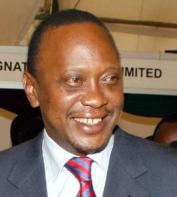
Uhuru Kenyatta

The second big coalition will see former allies turned foes and then allies – Raila Odinga and Kalonzo Musyoka – come together. Mr. Musyoka is the sitting Vice President while Mr. Odinga is the Prime Minister. The latter is believed by many to have been the winner of the disputed 2007 presidential election. The electoral commission at the time said it did not know who won the election and declared President Kibaki reelected, sparking two months of violence across the country.

The third potential political grouping might gravitate around Odinga’s former deputy, Mr. Musalia Mudavadi. Mr. Mudavadi has been rumored to be in talks with several smaller parties, including those of Peter Kenneth, Raphael Tuju, among others.

Raila Odinga

Raila Odinga

The latest developments will make for an interesting race moving forward. The ethnic arithmetic involved – Kenyans vote largely along ethnic lines – will make for a very close race (More on this soon). Messrs Odinga and Kenyatta are the clear front-runners, with the former having a slight lead in the most recent opinion polls. The constitution requires the president elect to win 50 percent plus one votes, making it very likely that there will be a runoff between the top two contenders after the first round. The ethnic calculations makes Odinga, a Luo, the likely winner in case of a runoff (Uhuru, a Kikuyu, is the son of Kenya’s first president. The current president, Mwai Kibaki, is also a Kikuyu.) But Mr. Kenyatta might still win in the first round.

The biggest uncertainty moving forward will be the candidature of both Uhuru and Ruto. Following the opening of their cases at the ICC they had to resign as cabinet ministers. Already there is a petition in court seeking to bar them from running in the upcoming elections on grounds that their integrity is questionable. The constitution requires only individuals of the highest integrity to be eligible to run for office (It is hard to see how any Kenyan politician will avoid having at least one strike against their candidature).

The supreme court may eventually bar Uhuru and Kenyatta from running – the talk in the street is that if they are unfit to be mere cabinet ministers then they should also not occupy the two highest offices in the country. Their supporters obviously disagree. In their rallies “UhuRuto” have played the nationalist card, insisting that not foreigners (read the ICC) but Kenyans will decide who will be their next president. It is still unclear what course of action they and their supporters would take were they to be barred from running.

More on this soon.

Insecurity in Kenya and the upcoming March 2013 elections

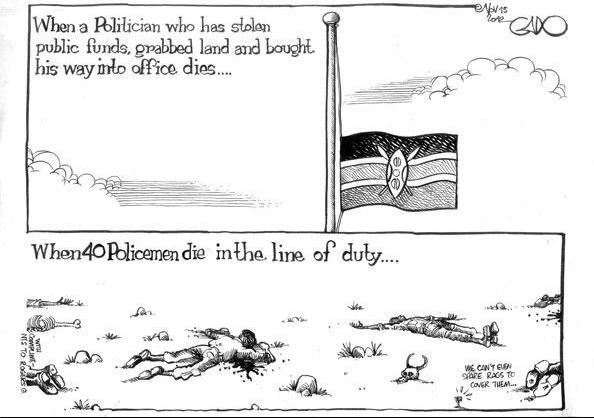
It is a mere three and a half months before the March 4th elections in Kenya and compounding the problems facing the electoral commission (which is riddled with corruption allegations and is yet to register voters) is the fact that insecurity in the country appears to be on the rise. The recent killing of at least 40 police officers in Baragoi (in northwestern Kenya) says it all. This comes just a couple of months after the Tana River massacre that left over 100 villagers and police officers dead in mid-September.

(credit: Gado)

The Tana Delta and Baragoi massacres exposed the failures of the intelligence and policing operations in the less-governed parts of Kenya (roughly the northern half and most of the east and southeast of the country). In both cases the government was caught flat-footed and unable to respond rapidly to emergent security threats.

A lot of finger pointing followed both incidents, with the police claiming that their hands were tied by strict laws on the use of force (thanks in part to the justifiably hyperactive human rights crowd in Nairobi) and the politicians blaming one another for incitement of the perpetrators of the crimes.

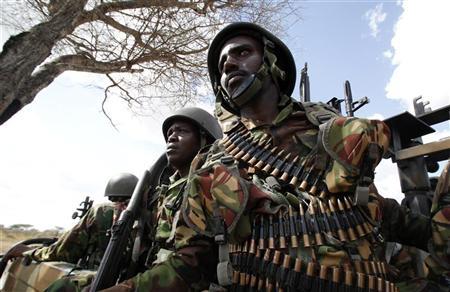
The latest incident in Baragoi has forced the president to order the deployment of the Kenya Defense Forces to assist in bringing to book the bandits behind the murder of dozens of policemen.

But the deployment of the security forces alone will not bring an end to the cycle of killings that have plagued Kenya in the last several months. In order to clean up the toxic mix of archaic cultural practices, local politics and economic interests, the government will have to be a little bit more broad and nuanced in its approach. What ought to be done about the cultural practices behind cattle rustling? How, if at all, are local leaders ever involved in these operations? What is the local political impact of these raids?

Which brings me back to the 2013 elections. The electoral commission has only one month beginning on Monday Nov 19 to register 18 million voters. Serious lapses in security that seem to be commonplace in large parts of the country do not inspire confidence in the agents of the commission who are supposed to traverse the whole country to build a new voter roll.

A failure to register enough voters for the election due to insecurity will de-legitimize the whole process, with dire consequences.

I hope that the electoral commission is following the investigations of these incidents of violence closely (especially since it has the power to punish those in contravention of election laws). Many Kenyans trust that the commission will be fair on election day. It is therefore not inconceivable that knowing that they won’t change the results after people have voted, crooked politicians have resorted to gerrymandering by other means – by dislocating certain pockets of voters or instigating violence to suppress voter registration and eventual turnout.

Kismayu Falls, Potential for Consolidation of Gains Still Unclear

Kismayu, the southern Somalia town that was the last holdout of Al-Shabaab has fallen. Kenya Defense Forces (KDF) took control of the town early Friday. It is still unclear what happened to many of the fighters that had dug in to defend the town from KDF and AMISOM.

Somalia recently elected a new president and has shown signs of getting its act together after more than two decades of anarchy.

I hope that AMISOM will consolidate the recent gains and that Somali politicians will seize this opportunity to lay the groundwork for peace and stability moving forward.

I also hope that for KDF’s troubles Somali townspeople in Kismayu, Mogadishu and elsewhere will soon get to enjoy the services and products of Equity, KCB, Uchumi, Nakumatt, among other Kenyan companies. Economic integration of Somalia into the EAC, and similarly South Sudan and Eastern DRC, will be one of the key ways of guaranteeing a lasting peace in these trouble spots and in the wider Eastern Africa region.

More on the developing story here and here. You can also follow updates from the al-Shabaab’s twitter handle @HSMPress.

Photo credit.

More on Drug Trafficking in Kenya (Complete Edition)

The scary part of all of this is that President Kibaki’s alleged mistress and daughter are implicated to have been at the center of a drug trafficking ring. The elite presidential escort group was involved in the protection of Armenian drug traffickers.

The only good thing in all of this is that KTN has been able to air the truth, despite earlier attempts by the police to intimidate the two investigative journalists.

[youtube.com/watch?feature=player_embedded&v=q4RAAwz9jko#!]

Expose on the Criminalization of the Kenyan State

Here is some background. The highest office in the land was very much involved.

Kenya’s Obscene Politician’s Salaries: Still a Problem

President Kibaki will probably not win the Mo Ibrahim Prize because of his questionable reelection but he sure will leave office a happy man.

According to the Star:

“When President Kibaki walks out of State House after the next elections, he will go home with a hefty gratuity—Sh50 million. The gratuity, the highest to be paid in the history of the country, has already been factored into the 2012/2013 budget by newly appointed Finance minister Njeru Githae.

Apart from the one-off payment of the gratuity, Githae also proposes to increase the annual allocation for retired presidents from the current Sh17.7 million to Sh30.2 million. The increase is meant to cater for the monthly pension which is due to Kibaki plus what taxpayers have been paying Moi since he left office in early 2003. The two will continue to draw the pension for the rest of their lives.”

“……Kibaki will also be entitled to get a monthly pension equal to eighty per cent of his current monthly salary. Kibaki is currently paid a basic monthly salary of Sh2 million (about $26,000) and earns an average of Sh24million ($200,000) a year under the current exchange rate.”

The figures are actually a bit off. Under current exchange ranges 2 million Shillings a month amounts to about US$300,000 annually. Not a bad deal at all.

These figures, however, raise questions about compensation packages for politicians in Kenya. Recently the treasury bribed MPs to pass the new budget and to be nice to the banks with a “gratuity” amounting to almost US$50,000. This on top of their already obscene annual salaries which stand at US$ 161,000, excluding other shady allowances that are never included under official pay. The last time I checked, all things considered, these MPigs (as they are derisively called locally) make upwards of US$174,000.

Per capita income in Kenya (in current dollars) stands at around US$800, with about 40% living below the poverty line.

I have argued before that paying MPs a decent salary may make them less amenable to executive manipulation (For supporting evidence see Barkan and Co. on legislative strength in Africa). But this just takes it too far.

Njenga Karume dead at 83

Former Defense Minister and GEMA leader Njenga Karume is dead at 83. Mr. Karume succumbed after a long battle with cancer.

The late Karume, who made most of his money from the beer distribution business, was one of the most influential and richest politicians among the “independence generation.” Njenga Karume was mostly a self-made man (His autobiography is titled “Beyond Expectations – From Charcoal to Gold”). With little formal education (many Kenyans know of his “wananinji” pronouncements), he managed to create a business empire that catapulted him to the boards of many a Kenyan company. Being the leader of the powerful GEMA cultural bloc and a close ally of President Kenyatta certainly also helped.

May he rest in peace.

The passing of Njenga Karume comes just four days after another veteran politician and also close friend to President Kibaki, John Michuki, passed away. It is hard not to think that time is beginning to catch up with the political elites who led Kenya’s independence generation. Indeed this year’s general election will be the first without a leading independence leader in contention for the presidency (Theirs sons and political scions will duke it out).

The natural generational change is certainly a cause for excitement; peaceful elite rotation mostly leads to positive outcomes. But at the same time I have the nagging feeling that the 50 and 60 year old “young turks” who are about to take over may lack the encompassing interest that the “wazees” shared (Notice how nice Kibaki has been to former President Moi). Yes, they were not always good people –  the deaths J. M. Kariuki and Tom Mboya forever remains a blotch on their record – but you have to give it to them for holding it together even when things were falling apart all around the neighborhood.