textual presence

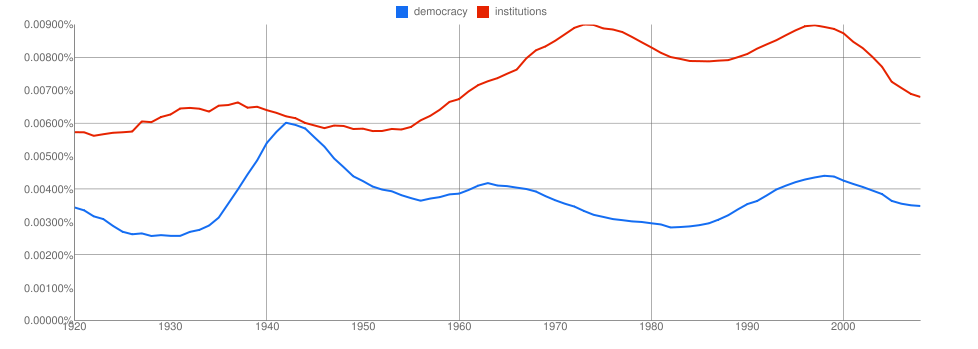
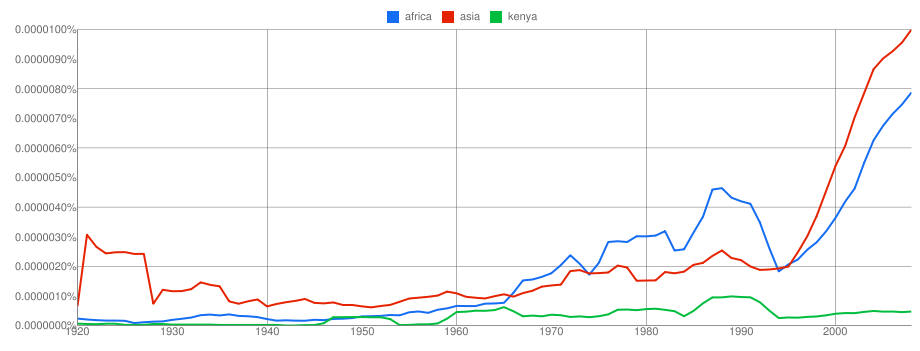
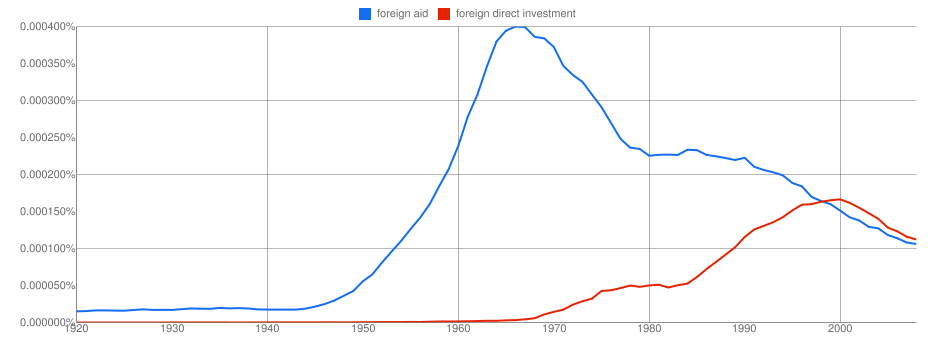
Google has digitized more than 5 million books in a project that also enables users to track changes in scholarly attention to particular topics. I did a few searches and came up with these results. They obviously do not mean much and are only useful in knowing what scholars paid more attention to at any given time.

There was a time when Africa was cooler than Asia


Positive trends: investment outbids aid


institutions beat democracy?


the ICC and kenyan politics ahead of 2012

Finance Minister Uhuru Kenyatta and former Agriculture Minister William Ruto are arguably the biggest casualties of the ICC process. Mr. Kenyatta has been angling for the title of de facto leader of central Kenya while Mr. Ruto is the de facto leader of the Rift Valley Province.

Already within central Kenya cracks abound in the political mold. Ms Martha Karua and Mr. Peter Kenneth are rival contenders, with Mr. Kenyatta, in the Kibaki-succession game. Also in contention are the acephalous “Kikuyu underclass” which has felt sidelined and maligned by the wealthy ruling class from the region since independence. The Mungiki movement is a potential channel for this group to articulate their demands. The election of the likes of “Sonko” and Waititu in Nairobi may be a signal of things to come in 2012. The fight between the country club elite and the matatu generation appears almost inevitable. Should Mr. Kenyatta go down with the ICC process there will certainly be someone on the wings to take his position.

The situation in the Rift Valley is different. Mr. Ruto, like Mr. Odinga in Nyanza, hogs all the political power without any clear contenders on the wings. Should the Eldoret North MP go down with the ICC process, the Rift Valley caucus may end up divided and politically weakened, just like happened in Western Kenya after the death of Kijana Wamalwa. Possible unifiers in a post-Ruto era include Dr. Sally Kosgey and Mr. Samuel Poghisio.

What does all this mean for Kenyan politics?

Nobody knows.

Firstly, Kenya’s emboldened parliament will have to make the right calls as it continues in its march to become the sovereign in the land. If MPs choose to settle their differences over the ICC’s indictment of their men in the august house it will become a lose-lose situation. The new constitution will not be implemented as intended. Kenya may have to go through a snap election. And in the worst case scenario ethnic tension may explode into full out violence, again.

Secondly, president Kibaki must take charge. Even as he allows his lieutenants room to craft their means of political survival he must make sure that the impression that someone is in charge remains unshaken. The last thing the country needs is a feeling of a free for all situation.

And lastly, Mr. Odinga must not play petty politics with the ICC process. It is obvious that if everything works for Ocampo Mr. Odinga will be the biggest winner. But he must show restraint and calmness. The ICC process must not be made to appear to be a political witch hunt. In any case 2012 is still eons away in political terms. Plus he must consider the impression he will create if he is seen as completely throwing Ruto and Kosgey under the bus, two men who worked hard and delivered him the Rift Valley vote in the 2007 general election.

My take on the latest developments is mixed. On the one hand I like the move to end impunity. 1333 Kenyans died. Those who planned their murder should face justice. On the other hand I know that justice is political. And politics is messy. Perhaps the two principals (Kibaki and Odinga) could cut a deal with Ocampo to rescue their lieutenants in exchange for the latter staying out of politics (and perhaps serving a suspended sentence in Kenya) and contributing some of their wealth to the resettlement of displaced persons from the PEV chaos.

How I wish the whole nation wasn’t so fixated on this but on what Prof. Ndung’u of the CBK has to say about the state of the Kenyan economy or the latest projections on the state of the country’s financial, agricultural and manufacturing sectors.

I hope that Kenya’s captains of industry will not play politics but instead fund the right guys: guys who want macroeconomic and political stability so that more and more equities, access Kenyas and safaricoms can bloom in Kenya.
 

Just hours from Ocampo’s big moment

Statement by ICC Prosecutor Luis Moreno-Ocampo on Kenya

ICC-CPI-20101214-PR614

As you know, tomorrow I will file two applications for summonses to appear for six individuals we believe are the most responsible for the post-election violence.

I believe summonses are sufficient to ensure the appearance of all six suspects. But as ICC Prosecutor, I am requesting that clear conditions be imposed on them, namely:

  • To frequently update the Court on all their personal contact details and whereabouts;
  • Not to make any personal contact with any of the other suspects, unless through their legal counsel to prepare their defence;
  • Not to approach any perceived victims or witnesses of crimes;
  • Not to attempt to influence or interfere with witness testimony;
  • Not to tamper with evidence or hinder the investigation;
  • Not to commit new crimes.

In addition, they must respond to all requests by ICC judges; they must attend all hearings when required, and post bond if the judges so instruct them.

These conditions are strict. They are in accordance with the Rome Statute and ICC rules.

Let me be clear.

If the suspects do not comply with the conditions set by the Chamber, I will request arrest warrants.

If there is any indication of bribes, intimidation or threats, I will request arrest warrants.

I expect the suspects to indicate to the Chamber shortly their intention to surrender voluntarily.

Source: Office of the Prosecutor

happy independence day to all kenyans

This blog takes this chance to wish all the Kenyan readers out there a happy 47th independence day. Special shout outs go to all the Kenyan independence heroes.

Hongera!!

Long live Kenya.

more from wikileaks

The Guardian reports:

The oil giant Shell claimed it had inserted staff into all the main ministries of the Nigerian government, giving it access to politicians’ every move in the oil-rich Niger Delta, according to a leaked US diplomatic cable.

Nice. Friedman was right. Firm’s only social responsibility should be to make profits. Forget about the population and the destroyed lives.

Also,

US diplomats fear that Kenya could erupt in violence worse than that experienced after the election in 2008 unless rampant government corruption is tackled.

America asked Uganda to let it know if its army intended to commit war crimes based on US intelligence – but did not try to prevent war crimes taking place.

Washington’s ambassador to the troubled African state of Eritrea described its president, Isaias Afwerki, as a cruel “unhinged dictator” whose regime was “one bullet away from implosion”.

Still (im)patiently waiting for the stuff on the Kenyan elections in 2007.

And lastly,

Apparently based on a conversation with Johnnie Carson, the US assistant secretary of state for African affairs, it said: “China is a very aggressive and pernicious economic competitor with no morals. China is not in Africa for altruistic reasons. China is in Africa for China primarily.”

Yeah right. Because the US involvement in Africa since the 1960s has been any different. At least the Chinese do not bother to be janus-faced about it [ok, that is a little too harsh, but you get my point].

Wikileaks: interesting stuff on Kenyan-Somali relations

The most interesting thing to come out of the wikileaks stuff, at least as far as eastern Africa is concerned, is the story on Kenya’s proposed strategy of dealing with the state collapse in neighboring Somalia. According to the leak, Kenyan security chiefs are considering the creation of an autonomous buffer region in Jubaland – the area of Somalia that borders Kenya – kind of like the ones in Somaliland and Puntland. The capital of the autonomous buffer region would be in Kismayu.

Kenya has a sizeable Muslim Somali population and is afraid of fundamentalist Islamism on its doorstep in a lawless Somalia. A stable buffer region in Jubaland would guard against radicalisation of Kenya’s Somali youth in the northeast, on top of checking the proliferation of small arms in the country.

Kenya also might be thinking long term. A divided Somalia guarantees less chances of success for a greater Somalia irredentist movement if peace ever descends upon the entire country.

Ethiopia is not a fun of the idea. The last thing Addis Ababa wants is an autonomous region that can fund Somali separatists in the Ogaden. The region would also have a demonstration effect on Ogadeni Ethiopians who for decades now have fought for real political and economic autonomy from Addis Ababa.

I don’t think this is a bad idea. At this point anything that would bring order to any region of Somalia is acceptable. I have argued before that the Union of Islamic Courts should have been allowed to establish order and then bought off with aid in exchange for a more sober interpretation and application of Sharia law. The whole debate about how bad they were for women’s rights was horse manure. The Saudis aren’t any better.

Regarding Ethiopia’s concerns, Meles and his men should not export their Ogadeni conflict just as much as they do not want Somali warlords to export their own civil war. The rebellions against Addis in Oromoland and the Ogaden are partly due to Zenawi’s stranglehold on power and the faux-ethnic federalism that currently exists in Ethiopia. More on this soon.

suspected grenade explosion kills AP officer in eastleigh

An Administration Police officer “attached to a senior government official” had died after someone apparently threw a grenade into the driver’s cabin of his vehicle.

More on this at the Daily Nation.

kenyan banks (and financial sector) not as big as i thought

Bankelele has a ranking of the biggest banks in Kenya (2009 rankings). Barclays, KCB and Standard Chartered are the top dogs. Equity is the biggest upstart (the top three banks were around in 1968).

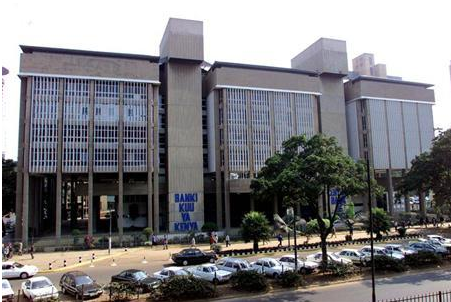
Banki Kuu (Central Bank of Kenya)

Certainly, more innovation and public regulation (by which I mean property rights protection and incentives for growth of contract intensive money) needs to be instituted in order to promote growth and diversification of financial services.

The prevailing interest spread in Kenya is ridiculous; the Central Bank rate is 6% while the commercial banks lending rate is 13.85%. (Njuguna Ndung’u, the governor of Central Bank of Kenya (CBK) should do something about this). The mortgage market needs a shot in the arm (the demand is high but financing is maddeningly expensive). And the country could do with a more robust household credit system. Even the middle class does not earn enough to buy all they need in cash. Borrowing against future prosperity (under a regulated system, of course) is not such a bad idea. More substantively, it is an implicit investment in the future.

kenya is not in a constitutional crisis

Kenya’s newly emboldened imperial parliament is up to some mischief. MPs rejected nominees to two crucial commissions created by the country’s new constitution: the Revenues Allocation Commission and the Commission for the Implementation of the New Constitution. The MPs rejected the nominees to the two commissions in response to a court decision that ordered the boundaries commission not to gazette newly created parliamentary constituencies. Their mischievous excuse was that the commissions lacked regional balance.

Pols from central Kenya went to court challenging how the redistricting was done. Many of them thought that the boundaries commission favored ODM, the Premier’s party. MPs from the western half of the country, the northeast and the coastal region seem to be OK with the list. I still do not understand how in the world anyone thought that redistricting of constituencies would be apolitical. [Despite the existence of a formula in the constitution].

I am always amazed by the naivete and lack of strategy among Kenyan politicians who seem to think that public officials always have the best of intentions – never mind the fact that the country is one of the most corrupt in the world. Given the outcome, Mr. Ligale and his commissioners must have been in the pockets of ODM. The losers should learn from this and in the future design more airtight systems that assume the worst of public officials. No country has ever succeeded whose institutions depended on human goodwill.

As a result, a crucial deadline has been missed in the implementation of the new constitution and any Kenyan can go to court demanding the dissolution of parliament.

Lawyers, however, refute the notion that Kenya is in a constitutional crisis. There are ways around the matter. Firstly, the MPs can amend the constitution to give themselves more time. Secondly, the judiciary can give the boundaries commission a new lease of life and extend its mandate until the job is done. Lastly, and perhaps most plausibly, the President and his Premier can arrive at a political solution to the problem and allow the process of implementing the new constitution to move on.

And in other news, Kenya’s Prime Minister Raila Odinga has very bad advisers. Asking that gays be arrested is so 16th century. In any case the last thing we want to do is waste critical police man hours policing private morality while criminal gangs continue to make the lives of many Kenyans a living hell. Mr. Odinga should know better.

crucial elections in west africa

The Ivorians have a runoff election tomorrow while the Guineans (Guinea-Conakry) get to find out who will be their president on December 2nd.

The Ivory Coast is still trying to recover from the disastrous turmoil and civil war that visited her following the death of founding president Houphouet Boigny. The civil war split the country in two, with the southerners (actually just nationalist Abidjanites) accusing most northern politicians of being foreigners. Among the said “foreigners” is the challenger in tomorrow’s election, Alassane Ouattara. Mr. Ouattara hopes to unseat Mr. Laurent Gbagbo who has been in power since 2000.

In Guinea the loser in the runoff went to the supreme court to challenge the results. The country is one of the more unstable places on the continent with a military that is lacking in discipline professionalism.

Out of the many trouble spots in West Africa at the turn of the century, Guinea (Conakry), Guinea-Bissau, Ivory Coast and Niger are the main laggards slowing down the region’s match towards political stability, irrespective of regime type.

waki report

This past weekend I took time to read the Waki report on the 2007-08 post election violence (PEV) in Kenya. Here is a copy of the PEV Report.

zambia’s trade wars with kenya misguided

The fear of Kenyan big business is not limited to the East African Community. Zambia is the latest country to impose non-tariff barriers to trade (NTBs) against Kenya. The Southern African nation banned imports of dairy products from Kenya. Lusaka is also involved in a spat with Nairobi over palm oil based cooking oil. Both countries are members of the regional trading bloc COMESA. Thankfully, Kenya has not reciprocated any of Zambia’s misguided sanctions.

Lusaka should realize that the only people who benefit from protectionist policies are inefficient business owners who should be allowed to experience Schumpeterian creative destruction. Ordinary people at the supermarkets and kiosks just want cheap goods. Period.

Kenya’s Business Daily reports:

“We will not allow any milk imports from Kenya because it will negatively affect the growth of our dairy industry,” Mr Machila told the Times of Zambia last Thursday as Comesa moved closer to delivering its verdict on the five-year dispute.

Industrialist Vimal Shah, whose company Bidco Oils is the largest producer of cooking oils in Eastern Africa, says lack of clarity on Zambian demands remains the biggest obstacle to trade between the two nations. “Zambian authorities have remained shadowy with regards to the palm oil-based products and we don’t understand what they exactly want,” he said. “We have had several missions come around to verify whether such products are done locally but they never produce any confirmation reports.” Zambia is however known to prefer local production of cooking oils to help generate employment and tax benefits.

corruption in Kenya

People who swindle government “should not be alive.” Those are President Kibaki’s own words, the strongest statement yet in a season rocked with one corruption scandal after another. The president has already lost two cabinet ministers over corruption. The Kenya Anti-Corruption Commission is believed to be investigating up to four other ministries.

Quick note: wetangula resigns

Kenyan foreign minister Moses Wetangula has resigned over corruption allegations. Mr. Wetangula’s ministry was exposed to have engaged in fraudulent property deals in foreign capitals to the tune of Kshs. 1.1b (US $13.75 m).

More at the Daily Nation.

Esther Passaris for Nairobi Mayor

Now that the rather shady corrupt Nairobi mayor, Councillor Majiwa of Baba Dogo, is facing criminal charges, perhaps it is time Nairobians had a sober discussion about what sorts of people should be mayor. Being the engine of the Kenyan economy, the city ought to be better run. Instead of the thuggish types that have dominated City Hall in the past, the ministry of local government should on restricting mayorship to qualified and corruption free individuals. In other countries former mayors are decent enough to dream of running for president, and some have succeeded at it. I doubt if the likes of Mr. Majiwa even qualify to be heads of village barazas.

It is for this reason that I choose to beat the debe, so to speak, in favor of Esther Passaris. Ms. Passaris has run a (as far as I know) clean business and created the Adopt-A-Light brand which must be doing well going by its coverage.Ms. Passaris is also the founder of the One in a Million charity initiative.

It would help to have, for a change, a mayor who can construct a coherent sentence and competently run the beautiful city in the sun. I believe Ms. Passaris is more than capable of doing this, and more. I hope (perhaps foolishly so) that Hon. Musalia Mudavadi shares this view….