Kenyan Blog Awards 2013

I just discovered that this blog got nominated by the Bloggers Association of Kenya (how does one become a member?) for the Kenya Blog Awards 2013 for Best Political Blog. Many thanks to whoever nominated the blog.

The list of nominees are here. Go ahead and vote for this blog if you feel like the content has increased your knowledge of politics in Kenya. 

Day 3 after the Kenyan election

Counting is still going on following Monday’s general election in Kenya. Following the close of polls the electronic tallying system for the presidential election crashed, forcing the IEBC to resort to a manual tallying system.

Just under half of the 290 constituencies have so far reported. Mr. Kenyatta still holds the lead, by about 350,000. The projected national turnout stands at 82%.

The IEBC has promised to release the final results tomorrow (Friday).

A couple inexplicable things have happened since my last post.

Firstly, the 300,000+ “rejected votes” that consistently made up 6% of votes in the initial tally have dwindled down to 40,000 – less than 1% of the total votes counted so far.

The IEBC’s explanation was that there was a software malfunction in the electronic tallying that increased the rejected votes by a factor of eight.

Secondly, both CORD and Jubilee coalitions have issued statements regarding the tallying process. CORD claimed that some results were “doctored.” Jubilee claimed that the UK government had sent troops to Kenya and that the high commissioner was trying to influence the tallying process.

None of these claims have been substantiated. Kenyan media houses have agreed to deny live coverage to such political pronouncements.

Life is slowly getting back to normal – I was glad to see traffic on Nairobi roads today!

With regard to the final result, it is clear that Mr. Uhuru Kenyatta has an unassailable lead over Mr. Raila Odinga. What is not clear is whether or not he will win by a wide enough margin to avoid a runoff.

The wait continues…

Kenyan election update

Results painfully slowly coming in. About 5.54m votes have been counted so far with 43% of centres reporting. 333k of thesey have been rejected.

Interestingly, the IEBC this evening announced that the rejected votes will also go into the final tally since the law requires that the winner get 50%+1 of all votes cast.

That means that Kenyatta’s effective vote share at 11PM on Tuesday is 50.3% and Odinga’s is 39.6%.

The difference in raw votes between the two candidates has stagnated at aroung 600k all evening.

It appears that IEBC will simply incorporate the votes rejected without an audit. As I said below this move will likely force a runoff.

6% of ballots cast, so far, were rejected – a massive civic education FAIL, both on the part of IEBC and political parties.

Uhuru takes commanding lead

Yesterday Kenyans voted in a peaceful general election. Despite a few logistical and technical glitches that delayed the opening of some poll centres, in most of the country polling started on time and without incident.

Even a night time raid by a separatist group in Mombasa that left police officers dead did not significantly alter the process in the region.

The IEBC estimated turnout at upwards of 70%. Many polling stations had to close late since the snaking lines remained long well past the official closing time of 5 PM.

Results started trickling in late in the night and Mr. Uhuru Kenyatta quickly shot to the lead. As at 4PM om Tuesday Mr. Kenyatta leads Mr. Raila Odinga 53%-41% with 40% of the polling centres reporting.

With Mr. Kenyatta’s commanding lead many are wondering whether Mr. Odinga can get enough votes to force a runoff.

So far the situation looks bleak for Mr. Odinga. While he outperformed in Western region, in the backyard of third candidate Musalia Mudavadi, so far results show that he underperformed in most parts of North Eastern and northern Kenya. He also did not meet the minimum votes he required in the Rift Valley.

Regional turnout numbers are not yet out but I doubt they bear any good news for Mr. Odinga.

It is still too early to call the race yet but I think that, contrary to my own predictions, a first round win for Mr. Kenyatta is now on the table.

I put the upper mark on Kenyatta’s lead at 650,000. Beyond this I don’t see how Mr. Odinga will be able to force a runoff. By all estimates both Mr. Kenyatta and Mr. Odinga will meet the constitutional requirement of getting 25% of votes cast in at least half (24) of the 47 counties.

My model predicted an advantage to Kenyatta in the first round followed by a runoff. But Mr. Kenyatta significantly outperformed the national polls leading to the election. I estimated that the national polls over-estimated Odinga’s support by about 3 percentage points. It appears that I may have underestimated their overestimation. I am also beginning to think that their regional weighting was worse than I thought.

One curious thing in the poll results is the number of spoilt votes – about 6%. This high number raises (or doesn’t) an interesting legal question. The constitution says that the winning candidate must garner 50%+1 of votes cast. Whether this means only valid votes or not is at this moment unclear to me.

The 300,000+ spoilt votes make a difference in that if they are included Kenyatta gets less than 50% of the votes cast. My eye balling the results doesn’t seem to suggest significant biases of spoilt votes in favor of either candidate. If these votes are audited Kenyatta might still win in first round. If they are simply included with no audit then we may have a runoff in our hands.

Most spoilt votes are likely to have been a case of people putting ballot papers in the wrong boxes and so a simple audit can sort this out.

All this to say that Kenyatta has a commanding lead; Odinga is on the ropes big time; and that the technicalities are such that it might be a while before we get the final tally, depending on the spoilts votes question.

Kenyans are holding their breath, peacefully waiting for it all to play out.

Who will win the Kenyan presidential election? A look at the numbers

With elections less than a month away many in Kenya are reading the tea leaves and making predictions as to who they think will win the March 4th presidential election. Unfortunately, many of these self-styled political analysts – including the most celebrated one Mutahi Ngunyi – are merely using the raw IEBC voter registration numbers and assumptions about ethnic bloc voting.

The reality, however, is that there will be differential voter turnout in the many ethnic zones regions of the country in a manner that will have a non-trivial impact on the outcome of the election. As I highlighted in a previous post, this will be a turnout election. Everyone knows who their voters are. The swing voters will be few. And the two major contenders don’t appear to have any intention or strategy to eat into each other’s perceived strongholds.uhuru

And so just as I did last time, I ran the numbers from the latest opinion poll from Ipsos Synovate with regional breakdowns to estimate the winner of the presidential election. This time round my turnout model also includes variables on income, voter registration, and whether a region has a top presidential contender or not.

So what do the numbers say?

Well, if the polls are right Uhuru Kenyatta still leads Raila Odinga by about 740,000 votes.  I estimate that Mr. Kenyatta will get 48.87% of the votes cast to Mr. Odinga’s 41.72%, which means that a run-off is almost inevitable. I don’t expect Mr. Kenyatta to hit the 50% mark since my model is slightly biased in his favor (especially coming from the Rift Valley turnout figures from 2007 that I use as a basis of estimating turnout in 2013).  Below I show the regional tallies according to my turnout model.

A few caveats to go with my estimates: 

  • Of course the polls could be all wrong, in which case none of what I say here matters. 
  • The result of the election will hinge on the turnout in the respective candidates’ strongholds. As it is my model estimates a turnout rate in Mr. Kenyatta’s strongholds at 77.33 to Mr. Odinga’s 66.68. Mr. Odinga can easily erase Mr. Kenyatta’s lead by matching his stronghold turnout rate and having a respectable showing in Western region (by eating into Mr. Mudavadi’s vote share) on March 4th.
  • In the event of a run-off, all bets are off. Most likely the election will then centre on Mr. Kenyatta’s ethnicity (which is the same as that of the outgoing president) and his tribulations at the ICC thereby handing Mr. Odinga a lead straight off the gates.
REGION Uhuru Kenyatta Raila Odinga
Coast 64,064 410,012
North Eastern 103,978 115,531
Eastern 865,432 732,612
Central 1,623,483 113,266
Rift Valley 1,655,262 695,972
Western 58,040 444,974
Nyanza 282,626 1,299,053
Nairobi 406,099 507,624
TOTAL 5,058,984 4,319,044

For those interested in looking under the hood of Ipsos Synovate’s polls go here.

Where do robbers choose to locate?

Rob thy neighbor appears to be the decision rule for robbers, at least in Chicago. Bernasco, Block and Ruiter, writing in the January 2013 issue of the Journal of Economic Geography, present research on robbers’ choice of crime sites:

“This article analyzes how street robbers decide on where to attack their victims. Using data on nearly 13,000 robberies, on the approximately 18,000 offenders involved in these robberies, and on the nearly 25,000 census blocks in the city of Chicago, we utilize the discrete choice framework to assess which criteria motivate the location decisions of street robbers. We demonstrate that they attack near their own homes, on easily accessible blocks, where legal and illegal cash economies are present, and that these effects spill over to adjacent blocks.”

The graph below (on p. 129 in the paper) illustrates robbers’ tendency to carry out their activities closest to where they live (for reasons why see the paper).

crime location

crime frequency and distance from robber residence

The findings are at once obvious and insightful. The insightful bit is that because of the geographic concentration of crimes and criminals, sometimes it might make more sense from the point of view of authorities to just focus on containing criminal activity within specific neighborhoods, leading to further entrenchment of a culture of crime in those neighborhoods.

If you notice,  in most places – including Nairobi – certain types of crime only get reported when they cross these implicit barriers. Otherwise, crime in bad neighborhoods becomes a case of if a tree falls in the forest.

Happy Independence Day to All Wananchi Out There!!

Kenya is 49, and with a lot to celebrate.

flag

Kerry or Rice? The View From Africa

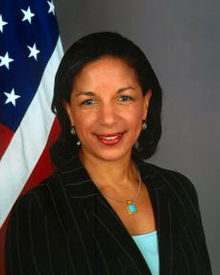
The window is closing fast on the chances of having an Africanist as US Secretary of State (Minister of Foreign Affairs). Republicans in the US Congress, human rights activists and a section of Africanists have come out in opposition to Ambassador Susan Rice. Republicans insist that she lied to Americans about the real masterminds of the attack on the US embassy in Libya that resulted in the deaths of four Americans, including the ambassador. The Africanists and human rights activists are not enthused by Ms Rice’s cozy relationship with the regimes of Paul Kagame of Rwanda and the late Meles Zenawi of Ethiopia. A section of African elites (the elitist sovereignty crowd) may also be wary of her support for interventionism on humanitarian grounds.

Source: Wikipedia

Source: Wikipedia

As things stand Pres. Obama might be forced to choose Sen. John Kerry over Ms Rice in order to avoid an unnecessary war with a section of Congress at a time when everyone and their dogs and cats should be worrying about the fiscal cliff.

John Kerry would not be a terrible choice. His past focus on drug trafficking in Latin America, free trade agreements and climate change would make him useful to Africa.

As I have written before, Africa is increasingly becoming a transit point for drugs from Asia and Latin America destined for the European market. Africa also needs more trade with the US beyond AGOA. And climate change will probably affect Africans the most since the vast majority of them depend on rain-fed agriculture and live under conditions that can least withstand natural disasters. But Kerry is not an Africa expert and has done little on the region beyond his support for the South Sudanese cause. This makes it hard to see how he will connect his global focus on these important issues to the African context.

Susan Rice on the other hand has studied Africa and has in the past shown a pragmatism that you want in the top US diplomat. Plus it helps that Ms Rice would have Obama’s ear as she is reported to be very close to the president. She has had successes at the UNSC, the highlight of which was the intervention in Libya to stop Gaddafi from butchering civilians in Benghazi. Rice is a smart straight-talker whose undiplomatic streaks can be a plus in a region full of under-achieving strongmen.

For a very long time Foggy Bottom has seen Africa through a humanitarian lens. Even Hillary Clinton, with all her awesomeness, has done little in new initiatives for Africa beyond human rights issues and a campaign that involved providing cameras for rape victims in eastern DRC. These are not unimportant issues. I am not saying that human rights catastrophes in Africa should be ignored. Just that this should not be a secretary of state’s pet project for the entire the region.

In my opinion Ms Rice’s biggest plus is that she gets one of Africa’s biggest challenges: state incapacity.

It would be nice to have a US secretary of state who takes state capacity development in the region as her pet project (and has the guts to at times subordinate democracy promotion to this project). Her praise of Kagame and Zenawi (no doubt both rabid and at times murderous autocrats) was centred around this very same idea (and to be honest, the ghosts of Rwanda circa 1994). Democracy promotion is a noble cause. But it must be done with a sober mind. The last thing you want is a procrustean approach to the promotion of rights, freedoms and liberties like we have seen in the past.

(Just for the record, I am pro-democracy and have criticized the likes of Kagame here and here, among other forums).

Anyone who reads the development reports side by side with the human rights reports from Rwanda and Ethiopia must be conflicted. I have talked to a senior opposition figure from Ethiopia who told me that she thinks the biggest challenge to fighting Meles Zenawi (at the time) is that “people see the dams and the roads.” It is hard to ignore revealed competence. I would hazard to guess that most people would rather live in autocratic Singapore than democratic Malawi. Yes, it is not an either/or argument with these regimes. All I am saying is that interventionism has to be constructive and not lead to the rolling back of hard fought gains against disease, illiteracy and poverty in these states.

As I opined following Obama’s reelection, I think that security will be at the top of the US Africa policy, of course dressed up in rhetoric about democracy and human rights. John Kerry will handle that on auto pilot. His focus will be on the Middle East and South Asia. It would have been better to have an Africanist at the helm who understands more about the continent and could sneak in a few policy agendas here and there that could make a difference on the ground. An aggressive focus on state capacity development could have been one of those policies.

This is a missed opportunity for Africa. For the first time in history Africa had a chance to have the number one American diplomat be a person who is an expert on a section of the region (Ms Rice wrote a thesis on Zimbabwe). Her defense of a couple of African autocrats aside, I think Ms Rice would have been better for Africa than John Kerry – who in all likelihood will focus on the Middle East and South Asia and continue Sub-Saharan Africa’s designation to the “humanitarianism column.”

Africa for Norway

Some light humour, because it is a nice and sunny Wednesday morning here in Nairobi and winter is about to get real for millions of hapless Norwegians.

[youtube.com/watch?gl=US&feature=player_embedded&v=oJLqyuxm96k]

More on this here.

H/T VKW

The state of the web

Internet access still relatively costliest in Africa.

source: This is Africa

I would argue, though, that in the case of Africa even as costs come down relative to per capita income, the latter has to go up as well from its present low point.

Kenyan Elections 2013 and The High Potential for Violence

In an excellent piece over at African Arguments Sheekh and Mosley give a comprehensive discussion of the recent outbreak of violence in the Tana Delta region of Coast Province, Kenya. According to the authors:

Long-standing competition and conflict over access to pasture and water resources were important factors, but did not alone provide the trigger for violence.  A range of political and economic factors have fed into the local dynamics in Tana Delta. These include longer-term trends related to alienation of local people from land due to large-scale government and private sector purchases, and shorter-term impacts related to the process of delineating electoral constituency boundaries and county districts in line with Kenya’s new constitution. The ready availability of small arms has also seen such conflicts intensify in recent decades. Lack of livelihood opportunities for the youth is also a major factor.

As such, the recent clashes are emblematic of wider trends.  Although the Tana Delta (along with the rest of Coast Province) has tended to be politically marginalised, tensions in other areas – such as Mt Elgon and parts of the Rift Valley including Eldoret, Nakaru and Naivasha, and counties in northern Kenya – could also be exacerbated by the same political factors.  Some of these areas were flash-points in the post-poll violence of late 2007 and early 2008, with major national and regional ramifications.”

Spot on.

The Tana Delta conflict is symptomatic of a larger dynamic that will play out in anticipation of the March 4th 2013 elections in Kenya. The new constitution has created 47 county governments, many of them multiethnic or otherwise diverse, that will each have three county-wide elected officials (a governor, deputy governor, and a senator). Ethnic and communal rivalries will inevitably surface in these county contests, with potentially disastrous outcomes such as what we’ve seen so far in Tana River County.

The potential for decentralized violence in Kenya’s 47 counties is a real cause for concern.

In order to limit the potential for violence, the national commission charged with policing ethnic harmony has initiated talks in potential flash-points to broker inter-ethnic power-sharing deals with the hope of avoiding a situation in which certain communities are totally excluded from county-wide elected offices. Sadly, so far there is no sign that these initiatives will work (Not to mention how un-democratic such back room arrangements will be). Plus the violence will not necessarily be exclusively of the inter-ethnic variety (which is what the commission is fixated on at the moment). Even ethnically homogenous counties might experience inter-clan violence.

While most of the attention in the next few months will be on how to avoid a repeat of the aftermath 2007-08 election, Kenya watchers should be warned that the problem will be much more complicated. If nothing is done, many counties will experience inter-communal violence. The new county governments will have real resources (about a third of national revenue) that will generate real patronage networks worth fighting for.

Given the nature of Kenyan politics, the race for the presidency (more blog posts on this soon) will inevitably hog all the attention in the next five months. I hope the contest for State House and its own risks for violence will not overshadow the county-level contests which will also be just as intense and likely to result in violence.

There is no way around the basics: Development will take time

I just read Chris Blattman’s response to the UK Prime Minister’s op-ed in the Journal. It reminded me of a lot of the things that I have been reading lately in preparation for my fieldwork (My dissertation will tackle the subject of legislative (under)development in Africa, with a focus on the Kenyan and Zambian legislatures).

Cameron’s sentiments in the op-ed are emblematic of the problems of development assistance. Like in all kinds of foreign intervention, developed states often try to externalize their institutions (and more generally, ways of doing things). These attempts often ignore the lived realities of the countries being assisted.

Forgetting the history of his own country (think autocratic monarchs, monopolies, limited suffrage), Cameron thinks that democracy, human rights and free markets (all great things) will magically create jobs in the developing states of the world. They don’t. In fact, they often lag the job creation process. For development assistance to be effective it must eschew these feel-good approaches to the problem of underdevelopment.

Blattman is spot on on a number of points:

  1. Unchecked leaders are bad for economic development (this is why I am so much into PARLIAMENTS!!!): Also, democracy is NOT synonymous with limited government. Heads of state like Queen Victoria or Hu Jintao or Bismarck or even Seretse Khama were in no measure democrats. However, they ruled under systems with strong (sometimes extra-constitutional) checks to their power. That made a difference.
  2. Institutions rule, yes, but the right kinds of institutions: 1688 moments do not drop out of the sky. They are often preceded by decades if not centuries of civil strife, economic change and plain old learning. Institutional development takes time. Plus each society requires its own unique and appropriate mix of institutional arrangements to meet unique economic and social needs. A procrustean approach to institutional development (embodied in global capacity building) will inevitably fail. Institutional development must never be allowed to be captured by those who think that we can transform Chad simply by having them adopt Swedish institutions.
  3. Growth will require creation of jobs, i.e. industrial development: The poor countries of the world need real jobs for high school-leavers and other less educated people. The present focus on the “sexy” entrepreneurial sectors – whether they are small businesses for the poor or tech hubs for the very highly educated – as the engines for growth in the developing world is misguided. I reiterate, starting a business is a very risky venture that should be left to the wealthy and the occasional dare devil. The poor in the global south need stable 9-5 jobs. Lots of them.

And lastly, where do strong institutions come from? There is no easy answer to this question. What we know is:

  1. History matters: Present countries with a long history of stateness have a better track record of building strong institutions for development. Yes, they may not always be democratic, but countries with a long history of centralized rule have strong states (and institutions) that deliver for their people (for more on this see Englebert and Gennaioli and Rainer).
  2. Democracy does not always create strong institutions: Since 1945 many have chosen to forget the fact that universal suffrage is a pretty recent phenomenon in the political history of the world. For the longest time world polities were ruled by power barons who held de facto power (as opposed to the procedural de jure power in democracies). When democracy came along after the Enlightenment the resulting structures of rule often reflected these de facto configurations of power. Over time institutions in these countries were cemented enough to allow for complete outsiders like say the current president of the United States to be elected without upsetting the balance of power (in another era he would have had to have mounted a coup). This is the challenge of the democratization in the new post-WWII states. How do you make democracy serve the interests of the people, rather that purely that of the elite? How do you use democracy to create strong institutions? Is this even possible? And if not, what other options do we have?

Quick Hits

Haiti wants to join the African Union 

Partisan stats: Of red-state moochers and blue state makers 

Romney’s elusive tax plan (funny)

Zuma’s failed presidency and South Africa’s labor unrest

Mo Ibrahim Prize goes unclaimed, again

Kenya might be seeing the origins of insurgency (More details on this soon)

Kismayu Falls, Potential for Consolidation of Gains Still Unclear

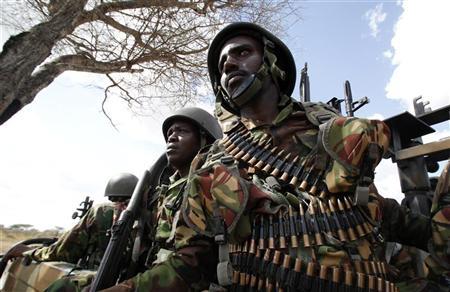
Kismayu, the southern Somalia town that was the last holdout of Al-Shabaab has fallen. Kenya Defense Forces (KDF) took control of the town early Friday. It is still unclear what happened to many of the fighters that had dug in to defend the town from KDF and AMISOM.

Somalia recently elected a new president and has shown signs of getting its act together after more than two decades of anarchy.

I hope that AMISOM will consolidate the recent gains and that Somali politicians will seize this opportunity to lay the groundwork for peace and stability moving forward.

I also hope that for KDF’s troubles Somali townspeople in Kismayu, Mogadishu and elsewhere will soon get to enjoy the services and products of Equity, KCB, Uchumi, Nakumatt, among other Kenyan companies. Economic integration of Somalia into the EAC, and similarly South Sudan and Eastern DRC, will be one of the key ways of guaranteeing a lasting peace in these trouble spots and in the wider Eastern Africa region.

More on the developing story here and here. You can also follow updates from the al-Shabaab’s twitter handle @HSMPress.

Photo credit.

Free Schooling and the Education Gender Gap

We identify the impact of the 2003 Kenyan Free Primary Education (FPE) programme on gender imbalances in the number of students graduating from primary school and achievement on the primary school exit examination. Our identification strategy exploits temporal and spatial variations in the pre-programme dropout rates between districts in a difference-in-differences strategy. We find that the programme boosted primary school completion rates of both boys and girls, but had a larger effect for boys, thereby increasing the gender gap in graduation. Additionally, the programme led to a widening of the achievement gap in government schools. Overall, FPE increased educational access, but did not close gender gaps, suggesting that complementary programmes that specifically target girls may be necessary to reduce these gaps.

That is Lucas and Mbiti writing in the latest issue of the Journal of African Economies.

More on this here.