Mitigating violence in Kenya’s 2013 elections

Joel Barkan has a CFR contingency planning memorandum on the Kenyan elections in which he notes that:

The United States and others may have limited leverage over Kenya’s domestic politics, but they are not without options that would significantly improve the prospects for acceptable elections and help avert a major crisis. However, with little more than two months before the elections, Washington must intensify its engagement or forsake its opportunity to make a difference.

But the window might be closing fast on the international community to help Kenya avoid a repeat of 2007-08, when 1300 died and 300,000 were displaced after a bungled election. According to a report by the Global Commission on Elections, Democracy and Security (yours truly was a research assistant for the commission), evidence suggests that international interventions to encourage reasonably free and fair and peaceful elections are most effective when done well in advance to the polling day. In the Kenyan case, the structural causes of previous rounds of electoral violence were never addressed, and may yet lead to the loss of life this election cycle.

What can now be done to avoid large scale organized violence is to credibly convince the politicians and those who finance youth militia (chinkororo, taliban, mungiki, jeshi la mzee, baghdad boys, etc) that they will be held accountable. So far, as is evident in Tana River and the informal settlements within Nairobi, the lords of violence appear to be operating like it is business as usual.

State of the Presidential Race in Kenya’s 2013 Elections

UPDATE:

Since this post went up Musalia Mudavadi joined the UhuRuto coalition. This sets the stage for a real two horse race for the presidency between Raila Odinga and either Mudavadi or Uhuru Kenyatta. It is very likely that Mudavadi will run as a compromise candidate due to the charges Uhuru is facing at the ICC. This development, considering Kenya’s ethnic arithmetic, essentially gives the Uhuru camp a head start ahead of the March 2013 presidential elections. Whatever happens, this promises to be a very interesting and close presidential election.

***************************************

The presidential race in Kenya’s 2013 elections is beginning to take shape. Yesterday Uhuru Kenyatta and William Ruto unveiled a political pact that will see them run on a joint ticket, with Mr. Kenyatta at the top of the ticket. Messrs Uhuru and Kenyatta both have pending cases at the ICC on charges that they were behind the post-election violence that rocked Kenya in 2007; leaving 1300 death and more than 300,000 displaced. This has led some to dub their joint platform the “ICC ticket,”  since many see the union of the two as solely driven by their joint desire to earn immunity from prosecution by the ICC once they secure the presidency.

uhuru

Uhuru Kenyatta

The second big coalition will see former allies turned foes and then allies – Raila Odinga and Kalonzo Musyoka – come together. Mr. Musyoka is the sitting Vice President while Mr. Odinga is the Prime Minister. The latter is believed by many to have been the winner of the disputed 2007 presidential election. The electoral commission at the time said it did not know who won the election and declared President Kibaki reelected, sparking two months of violence across the country.

The third potential political grouping might gravitate around Odinga’s former deputy, Mr. Musalia Mudavadi. Mr. Mudavadi has been rumored to be in talks with several smaller parties, including those of Peter Kenneth, Raphael Tuju, among others.

Raila Odinga

Raila Odinga

The latest developments will make for an interesting race moving forward. The ethnic arithmetic involved – Kenyans vote largely along ethnic lines – will make for a very close race (More on this soon). Messrs Odinga and Kenyatta are the clear front-runners, with the former having a slight lead in the most recent opinion polls. The constitution requires the president elect to win 50 percent plus one votes, making it very likely that there will be a runoff between the top two contenders after the first round. The ethnic calculations makes Odinga, a Luo, the likely winner in case of a runoff (Uhuru, a Kikuyu, is the son of Kenya’s first president. The current president, Mwai Kibaki, is also a Kikuyu.) But Mr. Kenyatta might still win in the first round.

The biggest uncertainty moving forward will be the candidature of both Uhuru and Ruto. Following the opening of their cases at the ICC they had to resign as cabinet ministers. Already there is a petition in court seeking to bar them from running in the upcoming elections on grounds that their integrity is questionable. The constitution requires only individuals of the highest integrity to be eligible to run for office (It is hard to see how any Kenyan politician will avoid having at least one strike against their candidature).

The supreme court may eventually bar Uhuru and Kenyatta from running – the talk in the street is that if they are unfit to be mere cabinet ministers then they should also not occupy the two highest offices in the country. Their supporters obviously disagree. In their rallies “UhuRuto” have played the nationalist card, insisting that not foreigners (read the ICC) but Kenyans will decide who will be their next president. It is still unclear what course of action they and their supporters would take were they to be barred from running.

More on this soon.

Justice, the ICC and Kenyan Politics

A panel of judges at the ICC will issue their ruling tomorrow afternoon on whether or not six accused Kenyans will stand trial. The six include two declared presidential candidates. Either way the ruling will have a non-trivial impact on the pursuit of justice for the victims of the 2007-08 post-election violence (PEV). It will also significantly shape the politics of coalition building in this year’s general elections.

Because of the ICC process, the Kenyan justice system has put on ice its own process of holding the perpetrators of the PEV to account. A non-confirmation of the charges against at least some of the six co-accused will add the 2007-08 PEV to the long list of crimes against Kenyans, many of which have been committed by the high and mighty, that have gone unpunished.

Justice is political. Therefore, there is no doubt that if the process of prosecuting the crimes committed in the PEV returns to Kenya none of the big fish will be held accountable. That is the sad truth.

This is why despite the noisy political environment, a majority of the PEV victims (and other Kenyans) still back the ICC process. At the very minimum they want justice to appear to be served.

At the moment the problem of justice remains a worry largely monopolized by the 300,000 or so Kenyans in IDP camps and the relatives of the over 1,300 who were killed. [The media and the political class are squarely to blame for this shameful situation.] For the rest of the country, focus has shifted to the politics of the general elections due later this year. To this we now turn.

Two of the accused, William Ruto and Uhuru Kenyatta have declared their interest in the presidency. Mr. Kenyatta is currently the second most preferred presidential candidate after Prime Minister Raila Odinga. Mr. Ruto, while not as popular nationally, still commands a sizeable chunk of the votes in the country’s most populous province – the Rift Valley. The Rift Valley has also been the hotbed of political violence in country’s history, most of it over land.

A confirmation of the charges will seriously dent the presidential ambitions of Messrs Ruto and Kenyatta. It will make it harder for either of them to sell their candidacy outside of their immediate ethnic constituency. It will also give their opponents (and there are plenty) an opportunity to hold themselves as the clean candidates that ought to succeed Kibaki. Needless to say, a non-confirmation would bolster the duo’s campaigns. What will this mean for the general election?

It is common knowledge that the man to beat in the 2012 election will be Mr. Odinga. The two scenarios above will impact the outcome of the election mainly through their influence on the coalition building abilities of the anti-Odinga crowd.

More on this tomorrow in reaction to the ICC ruling.

what next for the kenyan political class?

The truth of the matter is that the whole political class in Kenya is implicated in the murder of 1300 people and the displacement of hundreds of thousands following the post-election violence of 2007-08. Their continued contempt of the ordinary mwananchi is evident in the fact that three years on the displaced still live in IDP camps littered across the country. The lack of widespread moral outrage at this fact speaks boatloads about Kenyans’ moral character.

The ICC appears to be closing on the “Ocampo six” – individuals identified by the ICC prosecutor Moreno Ocampo as most culpable at the highest level for the violence that rocked parts of the Rift Valley in early 2008. An ICC pre-trial chamber ruled yesterday that there is evidence to suggest that six prominent Kenyans are criminally responsible for crimes against humanity committed in 2007-08. The six include Finance Minister Uhuru Kenyatta, Cabinet Secretary Francis Muthaura, former Commissioner of Police Hussein Ali, former ministers Henry Kosgei and William Ruto and radio personality Peter Sang.

After the 2007 general elections Kalenjin speaking supporters of Raila Odinga attempted to drive out members of the “Kikuyu diaspora” in the Rift Valley Province, the “ethnic homeland” of the Kalenjin. Raila’s opponent in elections, President Kibaki, is a Kikuyu. It is suspected that local ethnic leaders, including William Ruto, Henry Kosgei and Peter Sang, were in charge of directing these attacks. In the most gruesome episode in Kenya’s darkest hour mobs locked ethnic Kikuyu women and children in an Eldoret church and set it on fire. More than 30 perished. Kikuyu elites, allegedly lead by Finance Minister Uhuru Kenyatta and Cabinet Secretary Francis Muthaura, retaliated by mobilizing the proscribed Mungiki gang to carry out reprisal attacks. It is also alleged that the former Police Commissioner, Hussein Ali, conspired to keep the police off Mungiku’s back. Hundreds of ethnic Kalenjins and Luos, among other supporters of Raila Odinga, were killed or uprooted from their homes in Nakuru and Naivasha.

Ever since the announcement by the ICC prosecutor that he would go after the six a radically political realignment has taken place in the country. William Ruto and Henry Kosgei ditched the party led by Raila Odinga and joined alliances with Uhuru Kenyatta to oppose the ICC indictment. President Kibaki, who at the beginning appeared to be willing to throw Uhuru under the bus, also became wary of the ICC after his chief lieutenant Muthaura was named as a key suspect. Presently, Vice President Kalonzo Musyoka has embarked on a “shuttle diplomacy” mission to convince African leaders and the P5 of the UN security council to lean on the ICC to defer the charges against the Ocampo six. Many African leaders, given their own records at home, have supported the initiative. But the mission at the security council hit a snag yesterday when US representatives indicated that they will veto any attempts at deferral.

What then for Kenyan politics? Any analysis must focus on the Kibaki succession. President Kibaki is term-limited and must step down in 2012. Two members of the Ocampo six – Uhuru and Ruto – are key players in the succession game. If the two are convicted Raila Odinga stands to gain the most. But it all depends on what alliances ensue following such an eventuality. Uhuru and Ruto might remotely throw their weight behind Vice President Musyoka to enable the latter to capture State House. Indeed, the three have publicly declared to be members of the (unfortunately named) KKK alliance (the three are from Kikuyu, Kalenjin and Kamba ethnic groups, respectively). The more likely scenario, however, is that the Kikuyu and Kalenjin communities will experience internal fractures once their key ethnic chiefs are out of the game. Uhuru is already facing an insurgency led by the fire-breathing former Justice Minister Martha Karua. Ruto has maintained a facade of unity in his ethnic bloc but money can do wonders in Kenyan politics, and his potential detractors among the Kalenjin – including a son of former President Moi – have wheelbarrows of it.

In short, everything is in flux right now. The substantive reaction of the political class – beyond the shouting match that is currently underway – will only be apparent when parliament resumes in a few weeks. Lawmakers need to pass crucial laws needed to implement a new constitution that was ratified last August. The breakdown of the voting patterns will almost inevitably show some nascent realignment. Like the wikileaks records of Kenyan politicians bad-mouthing one another to low-level US embassy officials have shown, Kenyan politicians are an incorrigibly unprincipled bunch who will not hesitate to jump ship if they realize that their party leader is in trouble.

The political temperature in Kenya will no doubt go up in the next few days. The unfortunate thing in all this is that the hullabaloo is will continue to be a distraction from the fact that 1300 innocent KENYANS died and hundreds of thousands were displaced in 2007-08.
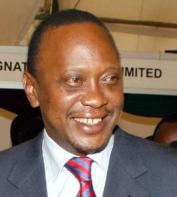
icc finds six kenyans culpable for ethnic violence

The ICC has ruled that six prominent Kenyans have a case to answer for the murder of 1300 people and the displacement of hundreds of thousands in the 2007-08 post-election violence in Kenya.

The spotlight is now on President Kibaki. About two of the president’s closest allies – Finance Minister Uhuru and head of civil service Muthaura – a local daily opines:

Retaining them in Government will send a signal to the ICC and the world that Kenya is not ready to co-operate and is a hostile State, putting it at par with Sudan, which has refused to hand over President Al-Bashir who is charged with crimes against humanity over Darfur.

More on the political reaction to this soon.

In related news, I am absolutely loving the wikileaks stuff on the drama that is Kenyan politics. Most politicians believe that Kalonzo is a janus-faced intellectual lightweight who pretends to love Jesus Christ. Raila is depicted as accessible but power-hungry and really bad at management. President Kibaki is sick, condones corruption and has been captured by vested interests in his inner circle. Ruto and Uhuru fret at the idea of taking all the blame for 2007-08. Uhuru Kenyatta is “lazy.”

This is valuable information, the effects of which will not be apparent any time soon. In the minds of Kenyans, a clearer image of these little men and women who parade as gods is slowly forming. It is only a matter of time before the myth of tribal loyalty is shattered and these tribal chiefs are seen for who they really are: a bunch of unprincipled and venal goons.


new lows for Kenyan politics

The battle lines have been drawn for a showdown in the Kenyan parliament tomorrow. Most reasonable Kenyans, including the current Chief Justice, the Attorney General (Mr. Kibaki’s government legal adviser) and Minister for Justice and Constitutional Affairs oppose the move by a faction allied to Uhuru Kenyatta and William Ruto to censure the speaker and shove president Kibaki’s questionable nominations to constitutional offices down Kenyans’ throats.

The media owners association, the Law Society of Kenya, and most of the Kenyan civil society have also rejected the unconstitutional nominations.

I have defended President Kibaki numerous times. I believe that it is because of his leadership style that Kenyans have experienced a resurgence of self-confidence that had long been lost after the fiasco that was 1966.

That said, I find his present actions deplorable. President Kibaki has chosen to risk plunging Kenya back into the abyss because of two of his lieutenants who masterminded the chaos that killed 1300 Kenyans and displaced hundreds of thousands. President Kibaki has chosen to spend public money and resources in defending this same duo. President Kibaki may also have been aware that state resources were used by his second wife and daughter to facilitate drug-trafficking. I stand disillusioned. For far too long I saw in the son of Othaya a Mang’u Man above petty the politics and mediocrity that characterizes Kenya’s political class. I may have been wrong.

The Kenyan presidency has been hijacked by Messrs Francis Muthaura and Uhuru Kenyatta. My only hope is that as they begin their descent for their sins from 2007-8 they do not take the rest of Kenya with them. I also hope that Mr. Kibaki will listen to the rest of Kenya, including the many bright legal minds allied to him, and rescind his wapende wasipende nominations.

His co-principal Mr. Odinga should also show some restraint and engage in grown-up politics. Engaging in a food fight with Mr. Kanyatta will not do Kenya any good.

Macharia Gaitho of the Daily Nation writes:

The crude personalised attacks both are displaying illustrate the depths to which Kenyan politics has sunk. Prime Minister Odinga and Deputy Prime Minister Kenyatta are demonstrating that they are truly the sons of their fathers.

They are privileged scions of the political and mercantile elite who got the best education money could buy and the richest heirlooms that could come out of public service, but when cornered, they abandon all pretence at cosmopolitan sheen and retreat to atavistic and crude ethnic demagoguery.

The saddest thing is that it might not just be a fight between two spoilt and overgrown brats, but a much wider one that carries their respective communities along.

The ordinary Luo or Kikuyu stands to gain absolutely nothing by hoisting Mr Odinga or Mr Kenyatta to reach the fruit. That fruit will not be shared, but kept within the family, as amply demonstrated by Kenyatta and Odinga Mark 1.

Yet you can bet that when it comes to reactions to the current Odinga-Kenyatta brickbats, it is the ordinary and downtrodden Kikuyu and Luo who will be incited to come out most rabidly in support of their man.

the African Union and its problems

The just concluded AU summit in Addis Ababa, Ethiopia had two key problems to address: the political crisis in Ivory Coast and the legal battles involving six Kenyans who face charges at the ICC. So far the continental body appears to have failed on its attempts to address both problems.

In the Ivory Coast, Mr. Gbagbo’s camp has already declared that the five person panel formed by the AU is dead on arrival unless Burkinabe president, Compraore is dropped. The Daily Nation reports:

The president of Burkina Faso, named on a high-level African Union panel tasked with settling Cote d’Ivoire’s leadership crisis, is “not welcome” in this country, a top ally of strongman Laurent Gbagbo said here yesterday.

And in Kenya, the political football involving the setting up of a credibly clean local judicial system to try perpetrators of the 2007-8 post election violence diminished the prospects of a deferral from the UN Security Council. Kenya must guarantee that it will try the suspects for the ICC to consider a deferral. It does not help that the appointment of high members of its judiciary, including the chief justice, the attorney general and the director of public prosecutions has already been soiled by political grandstanding.

provisional kenyan referendum results

Provisional results indicate that 67% of Kenyans voted in favor of the proposed draft constitution. In all provinces but the Rift Valley and Eastern, Kenyans voted overwhelmingly in favor of the document. Rift Valley saw the stiffest opposition to the new constitution, recording a 62% NO vote. This was however expected since the regional political supremos, William Ruto and former president Moi, had vigorously campaigned against the document. In Eastern Province vice president Kalonzo Musyoka was left exposed after a strong showing by the NO side in his backyard. The vice president campaigned for the document but faced insurgent local politicians who appear to have proved that Mr. Musyoka does not have as much influence in the region as he would have us believe. Given Kenya’s highly regionalized national politics, the poor showing by Mr. Musyoka in his own backyard will have interesting implications for the Kibaki succession politics.

Of interest later today will be the breakdown of how individual MPs fared in influencing the vote in their own constituencies. Sadly, outside of Nairobi and other major urban centres most voters did not vote for the new constitution on its merits but followed the advice of their representatives, or their opponents. The most vivid example of this was in North Eastern province where quite a few number of voters turned up expecting to vote in a general election. It might be time the government issued free radio sets to families in the arid north of the country.

In other news, Kenyans appear to have learned their lesson in 2007 about election-related violence. Throughout the last few days the tv screens have been filled with programs and advertisements reminding people to keep the peace.

sunday editorials that I liked

As usual, Mutahi Ngunyi has a provocative piece in the Sunday Nation. I am sort of sympathetic to his idea of ethnic suicide (by which he means dumping ethnic identities and what they stand for) – I was in Eldoret and Timboroa for two days this summer and saw with my own eyes the fruits of ethnic hatred. The short-term operationalization of the idea may be problematic though. To make Kenyans out of Luos and Kikuyus and Kalenjins will take time. Because of this the process of “ethnic suicide” ought to take place sub-consciously, for if it is “managed” the end results or the process itself may be nasty.

Gitau Warigi pours some cold water on Bethuel Kiplagat’s TJRC. I like his argument. I am always baffled by how much we spend on such useless commissions only to be rewarded with “classified reports” issued to the president.  Philip Ochieng‘ has an interesting piece on ethnicity and politics in Kenya. I wonder how many politicians read his column… And Kwendo Opanga just gave me one more reason to think that Vice President Kalonzo Musyoka is as misguided as ever. This is not to say that the alternatives to Mr. Musyoka in the post-Kibaki dispensation are any better. Woe unto Wanjiku.

And in other news, is this legitimising crime or what?

more reasons why Mang’eli should go home

Related to the previous post, here is Jaindi Kisero’s piece in the Daily Nation shedding some light on the validity of the sacking of Kioko Mang’eli, the former boss of the Kenya Bureau of Standards.

And in other news, where is the East African Standard? I keep being redirected to this website that says that the eastandard.net account has expired and is awaiting renewal or deletion. Really? Like seriously?

Kalonzo disappoints, again

Vice-President Kalonzo Musyoka is an embarrassment to Kenya. It is most disturbing when someone of his stature decides to play the ethnic card over the sacking of a government employee (In this case Dr. Eng. Kioko Mang’eli, former MD of the Kenya Bureau of Standards). I mean he is the Vice President of the Republic of Kenya. He is part of the same government that sacked the dude! Does he know this?? Why do we let our leaders get away with this sort of blatant tribalism?

Macharia Gaitho puts it best in today’s Daily Nation:

Why then, should Vice-President Kalonzo Musyoka, MP Johnstone Muthama and other two-bit politicians lower themselves to claim that Dr Mang’eli’s sacking was part of a push against their Akamba folk in the public service? Nobody ever told us that the Dr-Eng’s appointment in the first place, had anything to do with his being Mkamba!

anxiety as kenya awaits election results

It almost 36 hours after the official closing of polling stations across the country but Kenyans still do not know who will be their next president for the next 5 years. As things start the presidential race is still up in the air with Raila leading president Kibaki with just over two hundred thousand votes. Most of the votes in Central province and Rift Valley have been counted. The deciding votes, it seems, will come from Coast, Nairobi and the rest of Nyanza (mostly Luo Nyanza) that have not been counted yet.

The ECK is really underperforming right now. Its been 36 hours! How hard can it be to call Nairobi and inform the commissioners the outcome of results. It is also a shame that most of the delay is happening right under the commission’s nose in Nairobi. There have been allegations of rigging in various constituencies in Nairobi, by both PNU and ODM  candidates.

Mars Group gives Raila a lead of 3.8 m vs. Kibaki’s 3.4. Kalonzo is finally having a decent showing with about 8% of the national vote. This is still too close to call. It’s all wait and see. It’s about 6 am. in Kenya and everyone back there must be quite on edge right now after having waited for so long for the final results. I can only imagine what Kibaki and Raila and their families, friends and respective supporters are going through right now.