The globalization of terrorism over the last decade has created a situation in which the number one threat to international security is no longer strong, conquering states, but failing ones that provide safe havens for terrorist organizations. Drug trafficking in Africa reflects the heart of this concern. The illicit trade is both contributing to the deterioration of state institutions – which could result in state collapse – and financing terrorist groups like AQIM and Al-Shabaab. So far the international community has not treated the matter with the urgency it deserves. The consequences of inaction will be dire, as has already been seen in Central America. The region’s misfortune of being an important transit route between South American cocaine production centers and North American consumers has resulted in the highest murder rates in the world, fueled by transnational organized crime and drug trafficking. The statistics are astonishing: Among 20-year old men in some Central American countries, 1 in 50 will be murdered before they are 32. Africa, a region already replete with weak states, might be next if drug trafficking on the continent continues to grow.
Tag Archives: guinea
Guinea’s Alpha Conde attacked
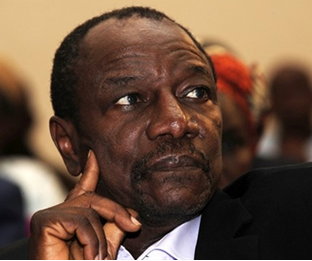
President Alpha Conde, Guinea’s first elected president since independence, appears to have survived a coup attempt in the early hours of Tuesday. Mr. Conde’s residence was hit by rocket fire in what appears to have been a coup attempt.
The latest turn of events makes one wonder if Paul Collier’s rather crazy unorthodox proposals might be worth a shot. [Collier, among other recommendations, proposes an international guarantee of sorts that democratically-elected governments that remain true to proper governance will be protected from the army and other armed thugs that might want to overthrow them.]
I believe that local horse-trading should always be given a chance before the internationals fly in to impose agreements on feuding factions. But when local factions have fought each other to a stalemate – as is the case in Chad, Central African Republic, Guinea, Guinea-Bissau and Somalia – it might be time for the international community to provide a helping hand. Millions of civilians should not be left to suffer simply because a few men cannot strike a stable deal. The interventions will be nuanced and complicated and messy – so I can’t spell out the terms here – but simply sitting back and watching is not an option.
Simply stated, the men with guns in Guinea are irresponsible.
Guinea is also a budding narco-state. I would not be surprised if the latest attack on the president is linked to the emerging drug problem in west Africa. It is common knowledge that the son of the immediate former president of Guinea, Ousmane Conte, has/had ties with the drug trade. President Joao Vieira of Guinea-Bissau and the country’s top military officer were killed in 2009 in what was rumored to be a drug-related feud.
Mr. Conde was elected in a run off with 52% of the vote. Two years earlier in 2008 the army carried out a coup following the death of the country’s second president, the late Lansana Conte. Mr. Conte himself came to power in a coup following the death of Guinea’s firebrand founding president Sekou Toure. Many hailed the generals’ decision to return to the barracks in 2010 as a new turn in Guinean politics. They were wrong.
The BBC reports that a former army chief, Nouhou Thiam, has been arrested in relation to the Tuesday morning attack.
Briefing from Malabo
The club of African autocrats African Union has its biannual summit in Malabo, Equatorial Guinea this week (This guy is the current AU Chairman, no joke).
The struggling AU has a lot on its plate at the moment (subject of an upcoming blog post). It is in the middle of trying to put out new fires in Sudan and Libya, while ignoring/recovering from the humiliation of its failures in Somalia, Cote d’Ivoire, and Zimbabwe – not to mention the region’s other problems.
All this while insisting on “African Solutions to African Problems,” despite the organization’s infamous reputation for incompetence.
Top on the agenda at the summit has been the ongoing hostilities (Obama might disagree) in Libya. According to the Oman Daily Observer, the AU has come up with a plan that
“envisages a ceasefire, humanitarian aid, a transition period, reforms towards democracy and elections, but the position on the future of Gaddafi has not been made clear.”
In other words the heads of state in Malabo, led by their Chairman Obiang, are hoping to do a Zimbabwe: Have Gaddafi in charge of the same reform process that is supposed to phase out his 42-year rule. I need not elaborate how this story ends.
Africa’s budding narco-states?
UPDATE:
The Kenyan Prime Minister just admitted to the presence of drug money in Kenyan politics. Huge. Also, check the UNODC’s drug trafficking patterns for East Africa.
Also, does anyone out there have a copy of the report on drug trafficking in Kenya? Care to share?
****************************************
I have written before about the growing problem of drug-trafficking that is creating new problems for already fragile African states.
Of note is the fact that the problem is not just limited to the usual suspects – weak or failing states – but also extends to countries that most would consider to have it together, like Ghana, South Africa and Kenya.
According to Reuters, “cocaine moves through West Africa” while “heroin transits through the eastern part of the continent.”
The most alarming thing about this new trend is that in most of these African countries drug-trafficking happens with the consent of those in government.
For instance, in Guinea the son of former president Conte was for a long time a leading drug kingpin. In Guinea-Bissau President Vieira’s and Gen. Na Waie’s deaths in March of last year were a result of drug-related feuds. In Ghana President Atta Mills has lamented that the drug lords are too powerful to rein in. In Kenya, a woman (rumored to be) close to the president and other elites have been linked to the drug trade. Indeed on June 1st President Obama listed a sitting Kenyan Member of Parliament (Harun Mwau) as a global drug kingpin.
In South Africa former Chief of Police, Jackie Selebi, was jailed for 10 years in 2010 on drug charges. More recently the wife of the South African Intelligence Minister (Sheryl Cwele) was found guilty of having connections to the illicit trade. In 2009 a Boeing 727 crashed and was later set ablaze by suspected drug traffickers in Mali. The plane is believed to have been a drug cargo plane from Latin America destined for Europe. Other African states whose drug connections have also come to light include The Gambia (where rumors abound that President Jammeh is himself involved in the trade in drugs and arms in collusion with the Bissauian army) and Mozambique (H/T kmmonroe). You can find related news stories here and here.
Clearly, this is a real problem that if not nipped in the bud has the potential of growing to Mexican proportions, especially considering the already low levels of state capacity in most of Africa.
The Global Commission on Drug Policy also addresses this issue in their newly released report:
In just a few years, West Africa has become a major transit and re-packaging hub for cocaine following a strategic shift of Latin American drug syndicates toward the European market. Profiting from weak governance, endemic poverty, instability and ill-equipped police and judicial institutions, and bolstered by the enormous value of the drug trade, criminal networks have infiltrated governments, state institutions and the military. Corruption and money laundering, driven by the drug trade, pervert local politics and skew local economies.
A dangerous scenario is emerging as narco-traffic threatens to metastasize into broader political and security challenges. Initial international responses to support regional and national action have not been able to reverse this trend. New evidence suggests that criminal networks are expanding operations and strengthening their positions through new alliances, notably with armed groups. Current responses need to be urgently scaled up and coordinated under West African leadership, with international financial and technical support. Responses should integrate
law enforcement and judicial approaches with social, development and conflict prevention policies – and they should involve governments and civil society alike.
drug trafficking and african politics
UPDATE: Obama names Harun Mwau as a drug kingpin.
President Obama, in a letter to the US Congress, named a prominent Kenyan member of parliament and one of the wealthiest Kenyans, Harun Mwau, as a drug kingpin. Mr. Mwau is a renowned Kenyan businessman with links to container depots, retail and banking interests, among other investments.
I am still waiting for official reaction from the Kenyan government on the Obama letter to the US Congress.
Kenya, Gambia, Ghana, South Africa, Guinea-Bissau, Guinea. All these countries have experienced allegations that people high up in government – sometimes individuals very close to the heads of state – are involved in drug trafficking. Africa is a major transit point for drugs from Latin America and Asia into Europe.
The latest news on this subject is the jailing of Sheryl Cwele, the wife of South Africa’s intelligence minister. Ms Cwele was found guilty of recruiting women to smuggle drugs in and out of the country. It is hard to imagine that the intelligence minister was not aware of the fact that his wife was a drug trafficker. Cwele refuses to resign.
In the recent past a woman close to President Mwai Kibaki of Kenya was allegedly linked to a ring of East European drug traffickers. The murder of President Joao Vieira of Guinea-Bissau was also thought to be connected to a dispute involving Latin American drug lords. Ghana’s President Atta Mills has publicly admitted that it is hard to deal with the problem of drug trafficking because powerful people in the country’s security apparatus are involved.
The South African, Kenyan and Ghanaian cases are particularly alarming. Most people would imagine that only incorrigibly inept kleptocracies such as Jammeh’s Gambia or Vieira’s Guinea-Bissau would engage in drug trafficking. If better run places with stronger states cannot tackle drug trafficking who will?
alpha conde confirmed winner of Guinea’s presidential poll
Update:
The Daily Nation reports:
Guinea’s losing presidential poll candidate Cellou Dalein Diallo (left) on Friday accepted results of the election, saying he had no choice but to comply with the Supreme Court’s decision.
The BBC reports that Alpha Conde has been confirmed the winner of Guinea’s (Conakry) presidential election. Mr. Conde got 52% of the vote. His opponent Mr. Cellou Diallo had gone to court challenging the results.
Mr. Conde won a mere 18% in the first round against Diallo’s 44% thus forcing the runoff. The standoff following the runoff threatened to plunge the country into chaos. If confirmed into office Mr. Conde will be Guinea’s first elected president since independence.
Guinea has been under an interim government led by Gen Sekouba Konate since the 2008 coup. The coup came after the death of Lansana Conte, dictator for 24 years. Mr. Conte himself rose to power in a coup following the death of Guinea’s founding president Sekou Toure.
crucial elections in west africa
The Ivorians have a runoff election tomorrow while the Guineans (Guinea-Conakry) get to find out who will be their president on December 2nd.
The Ivory Coast is still trying to recover from the disastrous turmoil and civil war that visited her following the death of founding president Houphouet Boigny. The civil war split the country in two, with the southerners (actually just nationalist Abidjanites) accusing most northern politicians of being foreigners. Among the said “foreigners” is the challenger in tomorrow’s election, Alassane Ouattara. Mr. Ouattara hopes to unseat Mr. Laurent Gbagbo who has been in power since 2000.
In Guinea the loser in the runoff went to the supreme court to challenge the results. The country is one of the more unstable places on the continent with a military that is lacking in discipline professionalism.
Out of the many trouble spots in West Africa at the turn of the century, Guinea (Conakry), Guinea-Bissau, Ivory Coast and Niger are the main laggards slowing down the region’s match towards political stability, irrespective of regime type.
The Gambia, Iran, Nigeria and the confusion over arms
Remember the story about the mysterious cache of arms found in Lagos Port, Nigeria? Well, turns out the story goes beyond Nigeria. FP reports that there is reason to believe that the arms from Iran were destined for The Gambia. Authorities in Banjul expelled the Iranian officials in the country, increasing speculation that the arms were meant for rebel groups linked to last year’s coup attempt against President Yahya Jammeh who by the way, cures AIDS on Thursdays.
Just as Libya is retreating from its bad habit of financing and arming rebellions all over the Continent Tehran appears poised to assume this role, especially in Muslim sub-Saharan Africa. There is not a clear strategic reason for this kind of involvement by Iran in The Gambia, although theories abound out there. To add to these, I think it might be that someone within the Iranian government is involved in the global drugs trade and wanted to use The Gambia as a transit to Europe. On November 19th Nigeria discovered US$ 10 million worth of heroine shipped from Iran.
West Africa plays a major role in the global drugs trade. Barely afloat West Africa states, particularly Guinea and Guinea-Bissau, are key transit points for drug shipments from Latin America and Asia into Europe.
guineans await final verdict
The military has declared a state of emergency and banned political protests amid anxiety over who should lead the world’s biggest exporter of bauxite. There is a risk of the political competition between Messrs Conde and Diallo degenerating into ethnic conflict, pitting the Malinke against the Peul. 40% and 30% of Guineans are Peul and Malinke, respectively. The International Crisis Group reports:
Following the announcement of presidential election results on 15 November, handing Alpha Condé victory over his rival, Cellou Dalein Diallo, the country has descended into violence, with two days of clashes in the streets of the capital, Conakry, and elsewhere. Defence and security forces have engaged in systematic attacks on supporters of Diallo’s Union des Forces Démocratiques de Guinée (UFDG), a party associated mainly with the Peul ethnic group in major urban areas in the Fouta region. Earlier on, UFDG supporters were involved in attacking and destroying properties belonging to ethnic Malinké and Peul supporters of Condé’s Rassemblement du Peuple de Guinée (RPG) party.
Mr. Conde has offered to form a government of national unity, that presumably would include Mr. Diallo, should the Supreme Court declare him the winner.
Guinea has nearly half of all declared bauxite (Aluminium ore) reserves. 76% of its 10.3 million people depend on the agricultural sector. 47% of Guineans live below the poverty line. Per capita income stands at US$ 1000. Someone born in Guinea can expect to live to be 58 years old. Since independence the country has been led by ineffectual, ideologically deficient and backward unimaginative dictators, from Toure to Conte to Konate.
alpha conde elected in Guinea
Opposition leader Alpha Conde has been declared the winner in the just concluded runoffs in Guinea. Mr. Conde garnered a mere 18% of the vote in the first round compared to his rivals 44%. 52% of the voters decided to side with him in the second round.
Guinea has been under an interim government led by Gen Sekouba Konate since the 2008 coup. The coup came after the death of Lansana Conte, dictator for 24 years. Mr. Conte himself rose to power in a coup following the death of Guinea’s founding president Sekou Toure.
some good news from Guinea
Abubakar Diakite, the guy who almost assassinated Guinean dictator Moussa Camara, should be handsomely rewarded. Well, unless he was actually responsible for the massacre of more than 150 pro-civilian-rule opposition protesters last year in which case he should be tried for crimes against humanity and locked away for life. Either way his actions may have put Guinea on the path towards civilian rule. Capt. Camara has agreed to “voluntary exile” (yeah right) in Burkina Faso. His henchmen (now led by his second in command) have also agreed to hand over power to civilians after a six-moth transition period. All active members of the armed forces are barred from running in the elections to be held in six months. This is a good start, although things may yet change.
In other news, the Senegalese President (Abdoulaye Wade) is not smart. Haitians do not need Senegalese land. Haitians need to get their act together in Haiti. He is like the bleeding hearts who are willing to help strangers in foreign lands while their own relatives starve. Senegal has an income per capita of $1600. Life expectancy stands at 59 years. The country also has the 40th worst infant mortality rate in the world. Mr. Wade’s nonsensical grandstanding is an embarrassment.
kibaki should not waste this opportunity to punish corruption
The Kenyan Education Minister Prof. Sam Ongeri is not among the big fish in Kenyan politics. Neither are his assistant and the Ministry’s permanent secretary. Firing them and making them face the law will not have any awful political consequences for the president and his non-existent party. But it will serve Kenya. I think that this is a wonderful opportunity for the president to demonstrate that there are sacred programs that should never be compromised with – like the free primary education program, or healthcare.
Several months ago I thought that the president and his premier would punish those who stole government maize for re-export even as Kenyans starved to death. No one has been punished yet. Word on the street is that bigwigs in the Agriculture Ministry and perhaps even the premier’s son were deeply involved, plus a number of MPs. Now almost SHS 200 million has disappeared from the Ministry of Education. This is money that was intended to finance free primary education. Kibaki cannot afford to turn a blind eye to this.
In other news, the UN wants Guinean dictator Capt. Moussa Camara (and his henchmen) to be tried for crimes against humanity following the massacre of over 150 protestors in late September. Mr. Camara is currently recovering in a Moroccan hospital following a botched assassination attempt. The attempt on his life is believed to be a result of infighting within the junta over who should take responsibility for the September massacre.
Elsewhere, the president of Nigeria continues to rule in absentia. President Umaru Yar’Adua has been ailing in a Saudi hospital for a while now, prompting calls for his resignation. Nigerian politics aside, I echo these same calls. Nigeria is the undisputed leading country in West Africa. The chaos in Guinea and to a lesser extent in Guinea-Bissau and the Ivory Coast require mediation and regional engagement. Nigeria can provide leadership on this front, plus it can send troops (to Guinea especially) to keep the peace. The region needs Nigerian leadership (yes, I know I just said that). And that means having a strong and engaged Nigerian president.
guineans have to elect Camara, or else…
Speaking to a French radio station Moussa Camara (junior officer who now leads the military junta in Guinea that just killed over 157 people this past week) intimated that the country was in danger of experiencing another military coup were he to step down. This by extension means that the country will experience a military coup if he doesn’t win in the general election in January because, he says, the army is “unstructed.” Now we have had this line before. And it works quite well. Charles Taylor threatened the Liberians into voting for him at the end of the that country’s bloody civil war. Camara seems to be employing the same tactic to armtwist poor Guineans into letting him hold onto the reins of power. And he is totally not ashamed of the transparency of what he is doing. May be it is a junior army officer thing.
I wonder why it is always this half-baked junior officers that take over in coups in (West) Africa – the worst ever being Liberia’s Samuel Doe. Where are the Sandhurst and Westpoint educated generals? I think they might do a better job running countries than these junior officers. Perhaps it might be that the generals are already in the pockets of the civilians being overthrown in the first place. But still.
on american involvement in Kenya
Macharia Gaitho, one of my favorite columnists at The Daily Nation captured my exact sentiments in his column today. I hope the American ambassador in Nairobi, and whoever it is that briefs Washington on matters Kenyan took note of this piece.
And in other news, Guinea has serious problems. The junior army officer who took over in a coup last year to “establish peace and democracy” has decided that he wants to hang on to power, inviting protests from Guineans not into such ideas. We’ve heard this story before, and we know how it ends.The Guineans should start reading on Samuel Doe, Jerry Rawlings, Idris Deby, Obiang, Museveni, Yahya Jammeh and the many others. Coups are the strongest predictor of future coups. A history of civil violence is also a strong predictor of future violence. Endemic poverty, an economy’s reliance on the export of commodities and weak to poor trade ties with the international community compound matters even more. The odds are stacked against the poor Guineans. They are in this for the long haul. And it sucks that the international community (including Sarkozy’s France) does not care about Guinea, as long as the generals keep exporting Bauxite.
Fun fact about Guinea: Guinea is a leading bauxite exporter, but most of its people live on less than $1 a day (courtesy of the BBC).
when will we get it?
I know it is the season of merry and I should probably be writing about some fun thing that is happening somewhere in Africa. I also know that the mainstream media in the West and in Africa have already covered this story at length and that I should probably give it a rest. But I can’t. I can’t because it amazes me that we keep making the same mistakes over and over and over again. Like little children without any knowledge of history we keep repeating the same mistakes that have been made on the continent of Africa over the last four decades.
I am talking about Guinea, the world’s largest exporter of Bauxite whose president just died and where there is an ongoing tussle over who really runs the country – the army or the civilian Premier? The army has concocted a name for itself – The National Council for Democracy and Development – and vowed to hold an election in two years. This sounds very much like the dictators that have run Liberia, Ethiopia, Sudan, Nigeria, Ghana and many other African countries at point in the last four decades. They are always pro-democracy and pro-development. They always promise to correct the ills of the civilians they’ve deposed and/or disposed of. It makes you wonder where these clowns (the Guinean army) have been over the last 24 years when the late President Comte had been milking Guinea dry and jailing and killing the opposition.
Can we ever learn? Do we ever feel jealous when we read about Taiwan, Korea, Indonesia and now India and China? Are we ever embarassed that we are the only region of the world that is still largely a basket case? Do we ever pause to think of what we are doing to future Africans? How are they going to compete in a world where everyone but Africans has broadband internet and no loner has to die of malnutrition? Do we ever pause to think of these things? Do we ever pause to think about why we need nation-states and what they ought to be doing for the people?
Things never seem to change. There is always some bloody country somewhere messing up and trying to take the entire neighborhood with it. Think of Kenya at the beginning of the year and what this did for East and Central Africa. Think of Zimbabwe and what it is doing to Southern Africa. Think of Sudan and Chad and how this has distabilised the entire region. Think of the DRC and Western Uganda, Rwanda, Burundi (and now Angola wants in on the action). Why can’t we just calm the hell down and start thinking about providing schools and indoor plumbing, and malaria medicines, and condoms and ARVs and TB medication? Why aren’t our governments ever concerned about laying the groundwork for every African to have a chance at a proper modern life?
These are the questions that have bugged me all of this year and will probably continue to bug me next year. It is really sad.
This Christmas think of the generic African kid that keeps appearing on the cover of every international newspaper, dusty, naked and with flies all over his face. Think of this kid and try and figure out how such images impact your life.
A more cheerful post is coming soon…
