The State of the 2013 Presidential Race in Kenya

 (1) The Presidential Debate:

On Monday Kenyans witnessed, for the first time ever, a live presidential debate. I must say I was surprised by how well this went. The moderators, at least in the first half of the debate, had very pointed hard-hitting questions – especially on ethnicity and the ICC question.

The top two candidates, Mr. Raila Odinga and Mr. Uhuru Kenyatta, were taken to task about the apparent ethnic arithmetic behind their campaign strategies and the perceived animosity between their respective ethnic groups, the Luo and Kikuyu. Both flatly denied the charges. But it nonetheless provided a moment of open discussion of negative ethnicity, which remains as the key organizing principle of Kenyan politics – with disastrous security and economic consequences.

Mr. Kenyatta was grilled on how he planned to govern from The Hague while on trial at the ICC; or whether it was legally or ethically tenable for him to be running in the first place. Mr. Odinga did not miss the moment and chimed in by stating that it would be logistically challenging to run a government via skype from The Hague. Many of those on stage – with the exception of Martha Karua and Abduba Dida – concurred that the trials should be held in Kenya and that Uhuru should be allowed to run (Today Kenya’s high court ruled that Uhuru and Ruto can run for office despite the charges at the ICC).

So who won the debate?

The simple answer is Mr. Kenyatta.

On negative ethnicity he shared the blame with Mr. Odinga. Mr. Odinga, as the Prime Minister, was often questioned, and himself answered questions like he was the only one on stage currently in government – Kenyatta and Mudavadi are his deputies, and Kenyatta was at one time Finance Minister. As a result he took a lot of flak for the failures of the current government.

Ironically, Mr. Kenyatta’s best moment in the debate was on the topic of the ICC charges against him and his running mate Mr. William Ruto. Because of the sovereignty overtones (Kenyans can “tribal”, but are also nationalist) in admitting that Kenya could not handle the cases, many on stage, including Odinga, said that Mr. Kenyatta should run – adding that the trials should be brought back to Nairobi.

One of the biggest obstacles to Kenyatta’s candidacy has been the ICC question – indeed he almost quit the race over the issue. Donors have given veiled threats of sanctions. Many Kenyans thought (or hoped) that the courts would bar him. But the way the ICC issue played out in the debate reduced its significance as a wedge issue, and may influence a few undecideds. I get the sense that many left the debate with an excuse to vote for Kenyatta despite the ICC charges.

(2) The Numbers:

The numbers have not changed much since my last analysis, save for the fact that Kenyatta’s and Odinga’s numbers have begun to converge.

race

In the presidential debate Mr. Odinga complained that it smirked of ethnic dog whistling to try and predict the outcome of the election based on ethnic blocs (The combined ethnic blocs of Kenyatta and Ruto make up about 43% of Kenyans). His complaint exposed his biggest fear. His party did a poor job of mobilizing voters to register.

While I disagree with the quality of punditry around this issue so far (the talking heads on TV often merely use raw voter registration numbers to predict outcomes) I don’t see anything wrong with trying to predict the outcome based on polling data.

In essence the outcome of this election will not only hinge on how many people registered where but also on how many of them actually turn up to vote. As I have argued before, this will mainly be a turnout election. Mr. Kenyatta leads by between 650,000 – 740,000 votes based on my turnout models. But Mr. Odinga can seriously dent this lead by simply matching Mr. Kenyatta’s stronghold turnout rates. If he does that and has a good day in Western region on March 4th he will win in round one. Otherwise we are most likely headed for a runoff, after Kenyatta wins the first round.

Either someone in Mr. Odinga’s campaign reads my blog (wishful thought of the day!) or they are sober with the numbers and have realized that they need a high turnout on voting day. Mr. Odinga this week launched a countrywide get out the vote drive.

The latest opinion poll (Friday 15th Feb) show a dead heat between Odinga and Kenyatta at 46% and 43% respectively. Such close numbers, coupled with Mr. Kenyatta’s head-start in voter registration and historically relatively higher turnout rates in his strongholds, do not bode well for Mr. Odinga’s chances.

 (3) On the Consequences of a Uhuru Victory:

In the last two weeks the diplomatic community in Nairobi have had a mini freak-out after coming to the realization that Mr. Kenyatta has a good chance to be Kenya’s 4th president. Many embassies insisted that they are neutral, but some also warned that the outcome would have consequences.  Barack Obama, the US President, even made a youtube video urging Kenyans to vote peacefully. France bluntly stated that they would only have essential contact with a Uhuru government if he wins.

Their freak-out betrays the knowledge that there is little they can do either before or after the election. Kenya gets about 5% of its development budget from donors; the rest comes from domestic taxes.  Nairobi can tell them to take a hike. Plus there’s China. And Somalia and South Sudan to be taken care of by a big international community based in Nairobi. The country is the diplomatic hub of the region, and indeed the continent. Nairobi houses the biggest US embassy in Africa and UNEP headquarters, the only UN office of its kind in the global south. In short Western leverage is limited both before and after the election.

In any case, the ICC case against Uhuru and Ruto appears to be crumbling. The prosecution significantly altered the charges, leading to a request yesterday for more time from the defense teams. The cases may start well after the elections in Kenya are over and done. Or they may be taken back to the pre-trial chamber and dismissed.

All things considered, I would not wish to be in Mr. Odinga’s or his strategists’ shoes right now.

Who will win the Kenyan presidential election? A look at the numbers

With elections less than a month away many in Kenya are reading the tea leaves and making predictions as to who they think will win the March 4th presidential election. Unfortunately, many of these self-styled political analysts – including the most celebrated one Mutahi Ngunyi – are merely using the raw IEBC voter registration numbers and assumptions about ethnic bloc voting.

The reality, however, is that there will be differential voter turnout in the many ethnic zones regions of the country in a manner that will have a non-trivial impact on the outcome of the election. As I highlighted in a previous post, this will be a turnout election. Everyone knows who their voters are. The swing voters will be few. And the two major contenders don’t appear to have any intention or strategy to eat into each other’s perceived strongholds.uhuru

And so just as I did last time, I ran the numbers from the latest opinion poll from Ipsos Synovate with regional breakdowns to estimate the winner of the presidential election. This time round my turnout model also includes variables on income, voter registration, and whether a region has a top presidential contender or not.

So what do the numbers say?

Well, if the polls are right Uhuru Kenyatta still leads Raila Odinga by about 740,000 votes.  I estimate that Mr. Kenyatta will get 48.87% of the votes cast to Mr. Odinga’s 41.72%, which means that a run-off is almost inevitable. I don’t expect Mr. Kenyatta to hit the 50% mark since my model is slightly biased in his favor (especially coming from the Rift Valley turnout figures from 2007 that I use as a basis of estimating turnout in 2013).  Below I show the regional tallies according to my turnout model.

A few caveats to go with my estimates: 

  • Of course the polls could be all wrong, in which case none of what I say here matters. 
  • The result of the election will hinge on the turnout in the respective candidates’ strongholds. As it is my model estimates a turnout rate in Mr. Kenyatta’s strongholds at 77.33 to Mr. Odinga’s 66.68. Mr. Odinga can easily erase Mr. Kenyatta’s lead by matching his stronghold turnout rate and having a respectable showing in Western region (by eating into Mr. Mudavadi’s vote share) on March 4th.
  • In the event of a run-off, all bets are off. Most likely the election will then centre on Mr. Kenyatta’s ethnicity (which is the same as that of the outgoing president) and his tribulations at the ICC thereby handing Mr. Odinga a lead straight off the gates.
REGION Uhuru Kenyatta Raila Odinga
Coast 64,064 410,012
North Eastern 103,978 115,531
Eastern 865,432 732,612
Central 1,623,483 113,266
Rift Valley 1,655,262 695,972
Western 58,040 444,974
Nyanza 282,626 1,299,053
Nairobi 406,099 507,624
TOTAL 5,058,984 4,319,044

For those interested in looking under the hood of Ipsos Synovate’s polls go here.

Will turnout disappoint Odinga tomorrow?

Travel, conference and more travel have kept me from blogging in the last few days. I am back online. Kenyans go to the polls tomorrow. This is a post from a few days ago.

I am in New Haven (great to be back!) for a conference and visiting with friends before going back to Nairobi for Monday’s election and wanted to make a quick post on the latest in the upcoming Kenyan elections.

1. The Second Presidential Debate:

The second presidential debate was rather dull, to be honest.

The entire first half was supposed to be dedicated on the economy but mostly dwelt on the specific subject of corruption at the expense of other more pressing concerns like jobs and the modernization and formalization of the Kenyan economy (Not to trivialize Kenya’s obscene levels of corruption, but apparently the moderators do not read Blattman’s blog. The problem is huge, but there were other pressing economic issues that could have been addressed.)

The candidates were, as expected evasive over the matter – mostly giving vague answers to pointed questions on scandals they were rumored to have been involved in; from Goldenberg to Anglo Leasing to Maize to typos at the treasury.

The jester Candidate Dida provided a light moment when he asked the moderator if she expected thieves to admit that they had stolen.

The second half was better. It dealt with the issue of land. Again, no real answers emerged but it put Mr. Kenyatta – who’s family owns large tracts of land – on the hot seat. Land is an issue that has been the cause of ethnic clashes in every Kenyan election since 1992. Voters may just have got one more thing to think about before casting their votes on Monday.

Overall, I cannot say that any one candidate won the debate. However, Mr. Kenyatta lost a few points due to the amount of time spent on the land question. His main opponent Mr. Odinga even came to his rescue at one point, reminding viewers to cut Mr. Kenyatta some slack since he only inherited land that may have been dubiously appropriated by his father while he was president.

2. Election Day’s Big Unknown: TURNOUT

As I have pointed out before, the outcome of the presidential election in Kenya next Monday will hinge on turnout. Whether we shall wake up on March 5th with a president-elect or have to go for a runoff will depend on regional turnout rates.

As it is most public opinion polls point to a runoff.

However, the polls do not give us a sense of what proportion of registered voters are likely to vote.

One private poll that I have seen suggests that 98.3% of those polled said they would show up to vote. Such turnout numbers belong in Belarus. I expect average turnout to be between 75-85%.

Below is a table with the turnout rates in the last three presidential elections. (The 2007 figures should taken with a pinch of salt, for obvious reasons). As you can see history seems to be on Mr. Kenyatta’s side. Central Kenya and the Rift Valley, the two most populous regions of the country both support him overwhelmingly (according to the latest Ipsos Synovate poll) and have the highest average historical turnout rates.

Region/Turnout 1997 2002 2007 Kenyatta Support Odinga Support
Central 74.1 66.1 82.1 88.1 6.4
Rift Valley 75.9 60.8 72.8 69 23.3
Eastern 72.6 60.9 65.9 41.8 52.7
Nyanza 67.2 55.6 76.2 9.8 83.8
Western 68.1 57.1 62 3.4 53.6
North Eastern 55.9 57.8 61.3 37.9 44.1
Coast 50.6 42.1 57 18.3 73
Nairobi 50.2 42 51.5 39.6 51.9

Could turnout rates be different this time?

The answer is maybe, due to the following new variables:

  • New positions created in the constitution – governor, senator, and women rep – might attract new voters in addition to those who have in the past voted for the three other posts – president, MP and councillor (now county rep). This might increase turnout across the board, but since Mr. Kenyatta is already “maxing” his turnout rates Odinga might benefit from an overall increase in turnout rates.
  • The dropping of calls for “six piece” vote. Earlier in the cycle both candidates had insisted that voters should vote one straight ticket for the party for all six posts. However, since the nominations for both leading parties/coalitions were a total mess many popular candidates did not get nominated on the “right parties.” Insisting on a six piece vote would have lowered turnout. However, without it everyone has a candidate to vote for in their preferred presidential candidate’s stronghold. This may increase turnout since it gives incentive for say someone running in an Odinga stronghold, who supports Odinga, but is not in Odinga’s party to still mobilize his supporters to the polls in competition with the candidate in Odinga’s party. Again, a higher average turnout rate will benefit Mr. Odinga.

3. The Numbers:

The last polls before the election (about five of them) show a slim national lead for Mr. Odinga over Mr. Kenyatta, 45% to 43% on average. But since we do not know the make up of likely voters I would be reluctant to declare Mr. Odinga a favorite going into Monday. Mr. Kenyatta’s strongholds have historically had better turnout rates than Mr. Odinga’s.

And on the matter of polls, the following factors may lead to surprises on Monday night:

  • Desirability biases in the survey: We do not know to what extent those interviewed lied about who they support. And on this count Mr. Kenyatta runs the highest risk. Because of the ICC cases he and his running mate face, many higher income and educated Kenyans have had concerns about their ability to run the country “via Skype.” If such people residing in the Rift Valley and Central regions lied to pollsters because they were expected to like Kenyatta then we may be in for a surprise on Monday night. If Mr. Odinga gets more than 35% of the votes in Rift Valley and about 15% in Central Kenya he will win the presidential election in the first round. 
  • Strategic voting: One of Mr. Odinga’s many challenges has been the Western Kenya region where Musalia Mudavadi comes from. Mr. Mudavadi is the third candidate, getting 6% on most polls nationally and about 34% in Western region. Mr. Odinga gets 53% in the region and Kenyatta 3%. In the event of a runoff, most of Mudavadi’s voters will break for Odinga. Mr. Mudavadi’s candidature centres on becoming a King maker and elevating his stature as a serious contender in the next elections (2017). But if Western voters who would support Odinga in the second round decide to do so in the first round Odinga will have an outright victory in the first round.

Barring any surprises on Monday (esp with regard to turnout) the state of play is that the first round will be a close contest between Kenyatta and Odinga, with one or two percentage points separating them.

Mr. Kenyatta is a slight favorite to win the first round, but will be short of the 50% required for an outright win. In the second round, however, I expect Mr. Odinga to be a clear frontrunner since most of Mudavadi’s voters in Western Kenya will break for him. I also expect a little bit of anti-Ruto (Kenyatta’s running mate) votes in the Rift Valley going to Mr. Odinga. I am very curious as to what President Moi’s promised major announcement on March 5th will be…. perhaps an endorsement?

All in all I would put my money on Mr. Odinga becoming Kenya’s fourth president.

Quick Hits On Development

Dear readers, this is your quarterly reminder to remind your friends (because I know you wouldn’t fall for this) in the development industry to shake off the messiah complex they may have developed in the course of their work.

1. Satire, courtesy of I Studied Abroad in Africa:

You go to one of those fabulously elitist schools where everyone talks about privilege, classism, racism, sexism, etc. as if they don’t practice it in real life. But in order to really see the world, they decide to go somewhere where they can understand what their privilege looks like. So they choose AFRICA! Yay! A whole continent dedicated to helping [non-Africans] people understand what it means to be poor and undeveloped.

2. Bill Easterly on the Ideology of Development: This is an old piece (from 2007) but which should be required reading every week for development expats experts and the wider Global Bleeding Hearts Industrial Complex.

The ideology of Development is not only about having experts design your free market for you; it is about having the experts design a comprehensive, technical plan to solve all the problems of the poor. These experts see poverty as a purely technological problem, to be solved by engineering and the natural sciences, ignoring messy social sciences such as economics, politics, and sociology [This is also a warning to all you mono-issue activists out there. Life is complicated. Accept that fact and move on].

3. And this is how the Canadian International Development Agency, CIDA, defines international development on its website (granted it is in the youth, 13-16, section, but still):

International development is the term used to describe the activities that developed countries, called donor countries, like Canada, carry out to help poor or developing countries lift themselves out of poverty and raise their standard of living to one that is closer to the standard of living we have in Canada. About 2.6 billion people (about two out of five) live on less than $2 per day.

To reduce poverty, donor countries, like Canada, provide developing countries with technical expertise, goods and money.


Latest polls, Kenya Decides 2013

Ipsos Synovate just released another poll on the upcoming presidential election. The poll shows Prime Minister Raila Odinga leading his deputy Uhuru Kenyatta by 46% to 40% in approval rating. 10% of of those polled were undecided. More on the latest polls this weekend after I get a regional breakdown of the data.

For the historical trend in the polls, including today’s, see below.

Image

On a related note, the Guardian Africa Network has a piece on the threat of violence leading up to and after the March 4th poll. Some call such warnings fear-mongering, but I’d rather have everyone freaking out about violence and thus sort of prepared than a repeat of 2007 in which everyone – including Kenya’s intelligence services – was caught flatfooted.

Elite Political Instability Still a Major Problem in Sub-Saharan Africa

Jay Ulfelder over at Dart-Throwing Chimp is at it again forecasting likely coup events in 2013. The one thing that jumps at you from his global relative coup risk map (see below) is Sub-Saharan Africa’s over-representation in the highest risk category of states. ImageWhy does Sub-Saharan Africa have much higher relative levels of predicted elite political instability?

The political science literature has varied answers including: high levels of poverty, state incapacity, high levels of ethnic fractionalization and or polarization, limited state consolidation due to having relatively young states, etc.

Jay’s forecast, like recent events in Eritrea, South Sudan, Sudan, Mali, the DRC, CAR, Guinea-Bissau and Guinea, is a reminder that there is no escaping the reality of state under-development in Africa. It also suggests that despite our best efforts the process of achieving state-ness in Africa will be a messy affair that will at best only be mildly ameliorated, if not made worse, by inconsistent and contradictory meddling by major world powers. Even the magic wand of political democracy might not be of much help in this regard.

Uhuru Kenyatta Emerges as 1st Round Favorite in Kenya’s March 4th Poll

OK, so as promised, here is my first attempt at looking at the numbers and what they are telling us about the outcome of the March 4th general election in Kenya.

14.3 million Kenyans registered to vote this year. Out of this (based on historical turnout rates) about 11 million will actually show up to vote. If the opinion polls are right, neither Uhuru Kenyatta nor Raila Odinga (the top two frontrunners) will get the requisite 50% plus one vote required to win the election. It is likely that there will be a runoff. About 4% of voters remain undecided. The polling trend (see below) suggests that the race will tighten over the next six weeks before the election.

Image

The first opinion polls after the party nominations show Deputy Prime Minister Uhuru Kenyatta ahead of Prime Minister Raila Odinga in the raw vote, at least according to my analysis. The overall national head to head match up in the two polls released Monday show Mr. Odinga leading Mr. Kenyatta by (48-40, Infotrak) and (40-36, Ipsos).

The regional poll tallies, on the other hand, show a different story. In these Mr. Kenyatta emerges with a lead of between 490,000 and 630,000 of the accounted for votes depending on the turnout models used. The average of the tallies show that if elections were held over last weekend Mr. Kenyatta would garner 4.5 million votes to Mr. Odinga’s 3.9. This leaves about 24% of the (potential) votes cast either spread out among the other presidential contenders or undecided.

Here is how I arrived at the numbers:

The surveys by Infotrak and Ipsos (the two firms correctly predicted the outcome of the 2010 referendum) gave regional tallies of how the top two coalitions did among those surveyed. With a few modifications (like assigning the GEMA counties in Eastern region the Central region poll results), I assigned these tallies to the different counties within the regions. I then estimated voter turnout using the numbers from the three most recent national voting exercises – 2002 and 2007 elections and the 2010 referendum. Because of the anomalies in the presidential election in 2007, I used the constituency turnout figures (In these figures, for instance, Juja and Nithi did not have turnouts exceeding 100% as was the case in the presidential election in 2007). Of course there are counties in which the popularity of either Kenyatta or Odinga vary by constituency but this is the best we can do for now. I then used the estimated county turnout rate and the regional polling results to estimate the expected vote count for either candidate in each county using IEBC’s figures of registered voters.

It is important to note that among the two polls, Infotrak asked respondents about their preferred ticket (Kenyatta and Ruto vs. Odinga and Musyoka) while Ipsos asked about individual presidential candidates. The discrepancy in the national polling average and the raw numbers I show here might be because of incorrect weighting of the different regions by the polling companies. The fact that Kenyans vote along ethnic lines and voters are geographically concentrated means that the regional polling numbers might provide a better picture than the national numbers. National polls appear to be over-estimating Odinga’s support by about 3 percentage points on average.

Uhuru Kenyatta is ahead in the raw figures for the following reasons:

  1. The first reason is that Mr. Kenyatta has the numbers. The combined GEMA registered voters number 3.9 million. That is 27.3% of the registered voters. Mr. Kenyatta obviously won’t bag 100% of these votes but it doesn’t hurt to have a vote rich base.
  2. His stronghold of the wider Mt. Kenya region had the highest voter registration rate in the country. This, combined with the fact that his running mate brings in the populous Rift Valley region, gives Kenyatta a slight edge off the gates.
  3. Kenyatta’s strongholds (Mt. Kenya) and Rift Valley have historically had higher turnout rates than the regions that Odinga will need to win on March 4th. In 2002 Kenyatta’s strongholds had a higher turnout rate by 5 percentage points. In 2007 it was 10%.
  4. The combined high population, higher registration rates and expected higher turnout means that Mr. Kenyatta is presently the favorite to win the first round of the March 4th presidential poll.

How can Odinga win?

  1. A lot of voters (24%) remain spread out among the smaller candidates or are undecided. Come election day these voters may break for Mr. Odinga for the reasons I gave in an earlier post.
  2. Mr. Odinga’s other path to victory is by ensuring high turnout in his strongholds of Nyanza, Western and Coast regions. Just by matching the expected turnout in Mr. Kenyatta’s strongholds he would reduce the deficit to about 250,000 votes.
  3. He must also eat into some of Mr. Kenyatta’s support in the Rift Valley and Central regions. If the election is a mere census then Mr. Kenyatta will win the first round (the second round is another story all together). For Mr. Odinga to win he must convince voters in Mr. Kenyatta’s strongholds that he is the better candidate.

Facing reality:

For a while it seemed like this election was Mr. Odinga’s to lose. I have since softened on this a little bit. Despite his many problems, Mr. Kenyatta can still win this election, at least the first round. In the second round everything will be contingent on who between Messrs Kenyatta and Odinga can bag the roughly 20% of votes that will go to various smaller candidates in the first round. As things stand Mr. Odinga is the likely beneficiary of these votes.

A lot will happen between now and March 4th. But key things to consider include:

  1. If turnout is low on March 4th Mr. Kenyatta will emerge the winner. His (national) base is relatively wealthier and more urban (or more accurately, more politically engaged – if you doubt this see the voter registration numbers for Kiambu county alone) than Mr. Odinga’s and thus will have a higher turnout. Having failed to match Mr. Kenyatta’s voter registration rates, Mr. Odinga needs upwards of 80% of those registered in his strongholds to show up to vote, or else he will lose.
  2. Mr. Kenyatta appeared to be the better organized candidate in getting his base to register to vote. And given the way in which his party handled the nominations exercise, it is likely that he will out-organize Mr. Odinga in getting his supporters to the polls. This spells more trouble for Mr. Odinga.
  3. The nominations exercise gave Mr. Odinga’s coalition bad press for four consecutive days. His home base of Nyanza was the worst affected. Seemingly undemocratic nomination exercises – in which Odinga’s allies controversially won party primaries – in the region may depress turnout, something that Odinga should be worrying about A LOT. Watch out for how Mr. Odinga’s party handles the nominations fallout in his Nyanza backyard.
  4. Musalia Mudavadi appears to have made gains in Western province – he is polling there at 26%. His gain is Odinga’s loss. If Mr. Mudavadi continues to gain in the next 40 days then we shall almost be assured of a run off, after Mr. Kenyatta wins the first round.

More on State Building and the International System

This is a guest post in response to a previous blog post by friend of the blog Matthew Kustenbauder.

Your post highlights the contradictions between today’s human rights regime (which is based on universal concepts of humanity and has its origins in European anti-slavery campaigns and traditions of humanitarianism, and before that debates in Christian theology) and the post-imperial international order (based on the nation state as the fundamental political unit).

Since the rise of nationalism after WWII, new states that were historically part of empires (and thereby incorporated under their systems of law, governance, and trade) have had to make their own way. For most of these states, and especially for the people living within them, the new era of national self-determination has been no more kind than was the Age of Empire. The withdrawal of imperial powers left a vacuum that today’s international system struggles to address with any effect. There are many reasons for this, not the least of which is that it is a fragmented and cumbersome system that gives the impression all states are “equal” — clearly they are not. It also tends to be a forum in which smaller and poorer states invoke language of victimhood in an effort, ironically, to get larger or more wealthy states to step in and do the work that states are meant to do for themselves — namely, govern those residing within their boundaries.

What do I mean by this last point? An illustration by way of anecdote may help clarify. I was recently frustrated watching a BBC World Report special (an outlet for the Bleeding Hearts Industrial Complex that you mentioned in your post) about multinationals and poor working conditions in the developing world. Cotton and chocolate were featured. The reporter investigated big cotton operations in India and cocoa plantations in Cote D’Ivoire. What registered as surprise to the BBC reporter was no surprise to me — He found lots of young women and children working there. But instead of asking why the local government didn’t regulate the industry or why they didn’t enforce the regulations already on the books, he ran off to Switzerland and the UK and America to ask why Nestle and Tommy Hilfiger, etc. don’t monitor their supply chains. I was baffled. This is a classic example of how an international system based on the sovereignty of individual nation states is at odds with universal notions of human rights. In many ways, it is the modern-day replacement for the old global-local tensions that existed between the imperial metropole and its colonies. We might ask, however, whether the current framework in which human rights activism operates is really any better suited to address the ongoing problems that plague developing nations. To my mind’s eye, the focus is on the wrong place … or is at least too focused on the role of businesses and advanced economies and not focused enough on working with multinationals in order to help citizens in poor countries put pressure on their governments to be accountable, competent, and truly sovereign.

The emphasis on human rights by Western governments and development work by NGOs in African countries have, more often than not, undermined the sovereignty of national governments since decolonization. More recently, however, China has emerged as the largest trading partner with many African countries. This is a game changer, not only because the Dragon does not hold human rights sacrosanct, but also because, unlike its Western counterparts, China considers economic growth and trade essential to establishing national sovereignty and the nation-state (not the international community) as the principal guarantor of the well-being of its citizens. The degree to which China can be ‘socialised’ in the ways of the international system, which was after all created by the Great Powers to replace the disintegrating world that western empires had made, remains to be seen. In any event, the long-standing tensions between universal principals of human rights, on the one hand, and the limits placed on intervention into the affairs of one state by another in the name of national sovereignty, on the other, will endure.

=======
Matthew Kustenbauder is a PhD candidate in history at Harvard University.

Odinga cracks 50% rating in opinion poll

The Odinga/Musyoka ticket leads the Kenyatta/Ruto ticket in an opinion poll on the electorate’s preferred president and running mate ahead of the March 4th 2013 general election. Odinga’s lead (51-39) is well outside the margin of error of the poll.

The chart below shows the Infotrak Harris tracking poll since early 2010.

kenpollsJanThe most interesting data points in the poll are (1) the level of support (at 36%) for the Odinga/Musyoka ticket in the backyard of William Ruto, Mr. Kenyatta’s running mate; (2) the fact that the former Western Province is not really a swing region after all, with Musalia Mudavadi being preferred by a meager 23% of registered voters; and (3) The geographical limits, albeit in relatively higher population density areas, of the Kenyatta/Ruto ticket – the Odinga/Musyoka ticket leads in 6 of Kenya’s 8 provinces.

According to my own estimations (more rigorous analyses coming after 17th of this month) Odinga/Musyoka have the lead in 23 counties perceived to be CORD’s strongholds. Kenyatta/Ruto and their Jubilee Alliance lead in 20 counties. 4 counties are truly swing.

The Kenyatta/Ruto alliance however have a vote lead of about 292,000. 2.5 million votes are still up for grabs, enough to swing the election in CORD’s favor. .

The latest polls continue to confirm that Mr. Odinga remains a slight favorite to become Kenya’s 4th president. But as I have said before, this will be a close election.

Mitigating violence in Kenya’s 2013 elections

Joel Barkan has a CFR contingency planning memorandum on the Kenyan elections in which he notes that:

The United States and others may have limited leverage over Kenya’s domestic politics, but they are not without options that would significantly improve the prospects for acceptable elections and help avert a major crisis. However, with little more than two months before the elections, Washington must intensify its engagement or forsake its opportunity to make a difference.

But the window might be closing fast on the international community to help Kenya avoid a repeat of 2007-08, when 1300 died and 300,000 were displaced after a bungled election. According to a report by the Global Commission on Elections, Democracy and Security (yours truly was a research assistant for the commission), evidence suggests that international interventions to encourage reasonably free and fair and peaceful elections are most effective when done well in advance to the polling day. In the Kenyan case, the structural causes of previous rounds of electoral violence were never addressed, and may yet lead to the loss of life this election cycle.

What can now be done to avoid large scale organized violence is to credibly convince the politicians and those who finance youth militia (chinkororo, taliban, mungiki, jeshi la mzee, baghdad boys, etc) that they will be held accountable. So far, as is evident in Tana River and the informal settlements within Nairobi, the lords of violence appear to be operating like it is business as usual.

Kenyan Elections 2013 Polling Trends (Presidential Race)

It is less than two months to the Kenyan general election on March 4th 2013. In the next ten days political parties will nominate candidates (either directly or through primaries) for various elective posts – Governor (for the 47 counties), MP (290 of them), Senator (one per county), Woman MP (representing each county), and several County Representatives per county. I suspect the next round of polls will come out after the nomination exercises, which will undoubtedly result in further realignment of the political landscape.

Kenyan political parties are not known for their democratic credentials and I expect quite a few candidates (and their supporters) to shift their support if they feel that they’ve lost unfairly in the party primaries.

As I noted in my last post on the Kenyan elections, the institutional incentives have made it such that the presidential race is one between two main contenders – Uhuru Kenyatta and Raila Odinga. (Mr. Musalia Mudavadi has since fallen out with Mr. Kenyatta and is also running for president, although his candidature is mainly a strategy designed to maintain his political relevance in Western Kenya moving forward.)

Mr. Odinga’s biggest strength is his national appeal and name recognition – having been co-president of some sort (at least on paper) over the last 5 years he is running like an incumbent. He is also widely viewed as a reformer who can be trusted to implement the new constitution. His weaknesses include his proclivity to radicalism, a tendency to surround himself with yes-men from his ethnic group, and the failure to foster democratic competition within his own party – the Orange Democratic Movement.

Mr. Kenyatta’s strengths include his youth, name recognition (he is the son of Kenya’s first president), and his massive wealth (he is perhaps the richest Kenyan). His base (central Kenya and surrounding areas) is the most populous in the country and registered the highest rates of turnout in the voter registration exercise. Added to all of this is the fact that in his running mate, William Ruto, he has one the best, if not the best, political campaigner this election cycle. Mr. Ruto knows how to get the masses excited with memorable talking points. His phrase “kusema na kutenda” (saying and doing) is the main rallying call of this election.

The duo’s biggest weakness is their impending case at the ICC. Mr. Kenyatta is also of the same ethnicity as the outgoing President Kibaki. Many in Kenya feel that the presidency should go to a different region this time round, central Kenya having had it twice. Mr. Ruto is from the same ethnic group as Kenya second president Daniel Moi. Both Ruto and Kenyatta are suspected to be lukewarm with regard to the new constitution. Mr. Kenyatta only reluctantly backed the document while Mr. Ruto campaigned against it.

As we await the next round of polls and the final picture of regional alignments, below is a snapshot of the polling trends over the last 18 months. Mr. Odinga (in my view the slight favorite to be Kenya’s 4th president) has consistently led in the polls since March of 2010. No one has so far cracked the 50% mark. The Kenyan constitution mandates that the winning presidential candidate garner 50%+1 of the votes cast.

Does this mean that there will be a runoff after March 4? The answer to this question depends on how well Mudavadi performs in his Western Province backyard. Having registered the second highest number of voters this cycle (behind Mr. Kenyatta’s Central Province (and its “diaspora”) base), Western Province (and its “diaspora”) is the biggest swing region. Mr. Odinga is banking on the Western vote and may win in the first round if Mudavadi doesn’t have a good showing on March 4th.

click on image to enlarge.

polls

Poll numbers from Infotrak Research.

Thoughts from Sierra Leone

“Many Westerners I met in West Africa took it as an article of faith that all of the region’s woes were the result of outside malfeasance – someone else’s fault, going back to colonialism and the slave trade. After two years in Freetown I not only cannot agree, but I think such views – promulgating as they do an abdication of responsibility – are bad for Africa. The Western world undoubtedly committed atrocities to the continent. But today it is up to Africans to carve out a brighter future for themselves.”

That is Simon Akam in a piece reviewing his time in Sierra Leone that has sort of gone viral.

It is the kind of thinking that I wish informed all of the West’s engagement with Africa. Most of Africa’s problems are African. Period.

Africa does not need Oxfam to tell the world to forget about its wars and famines and instead focus on its natural beauty or whatever else that is more positive. It is not the responsibility of Oxfam to feed Africans but that of the kleptocratic African ruling elite. The Oxfams of this world only serve to let Africa’s Mobutus off the hook.

When an African head of state appoints his son as defense minister and then cannot beat back a ragtag rebel alliance armed with AKs on jeeps we should not send troops to help him. He should be left to stew in his own soup.

For far too long the predominantly humanitarian approach in dealing with Africa has allowed the absolute triumph of absolute mediocrity in much of the continent. This must change if Africa is to consolidate the political and economic gains made over the last two decades.

State-building is not a walk in the park

 “Mauritius’s state building success came on the backs of relentlessly exploited slaves and indentured labourers. Sugar planters compelled the government to ignore mistreatment on sugar estates, implement unreasonable fines and annual passport fees in the name of preventing ‘vagrancy,’ and harass those workers who tried to search for a better life in urban professions. Planters’ actions were expressly designed to subjugate and repress the politically powerless in order to maximise their economic power. Moreover, the fact that class divides coincided with racial difference meant that economic and political contention between elites and labourers on Mauritius became imbued with what was, at times, virulent racism. The worst of these endeavours were related to the planters’ quest to secure an adequate labour supply in the four decades after 1825. Later initiatives, such as railway construction and research and development programmes, were fairly benign. Together, these undertakings transformed the island’s economy and governmental capabilities. In Mauritius, then, one finds something of a developmental paradox: although the long- term consequences of state building have led to a regional ‘miracle’, the way in which the island’s elite and government laid the groundwork for it was normatively reprehensible.”

That is Ryan Saylor writing in the latest edition of Review of African Political Economy.

The paper mostly focuses on the success story that was Mauritian state (capacity) building. But this paragraph is a reminder to those who imagine a whiggish history for much of the developing world to go take a hard, honest look at history.

Throughout most of history, in order to have barons that successfully limited the power of the king or his equivalent (thus creating the roots of post-enlightenment democracy) you needed barons who could extract the life out of peasants. Wars that made states killed lots of young conscripts, confiscated private property and led to the demise of whole peoples’ ways of life (Not all French had French speaking ancestors, for instance). And speaking of the French, they went through lots of republics and dictatorships to become what they are today. Further afield, following its own civil war the institutions of government designed to protect human rights in the US had to look the other way until the 1960s in order to preserve its democracy. In the 20th century, decades of intolerant Kemalist ideological orthodoxy laid the foundation for the Islamic world’s most resilient democracy in Turkey.

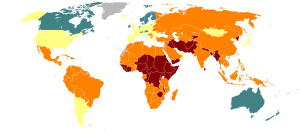
Source Wikipedia. Darker shades indicate state failure.

Source Wikipedia. Darker shades indicate state failure in 2011.

Will Egypt, Rwanda, Kenya and the rest escape these patterns if they are ever to become Denmark, the supposed paragon of liberal democracy?

How does one go about state-building in a modern world with sacrosanct borders and a saner human rights regime?

Recent events in the DRC and CAR confirm the urgency with which we ought to address the question of state-building in the developing world in general, and in Sub-Saharan Africa in particular (see map).

Wars of conquest (which probably would have resulted in Rwanda, Angola and Uganda carving up the DRC) are no longer kosher. Add to that the demands of a tighter and saner human rights regime and you are left with little room to maneuver if you are trying to create an effective state (which occasionally may involve curtailment of political rights). Unless you can somehow insulate yourself from the so called stakeholders, including the International Bleeding Hearts Industrial Complex – like much of east Asia did through the 70s and 80s – you are left with a rather tricky situation of trying to forge a unified state with a million and one centrifugal forces with communal rights backed by threats of donor sanctions. The same system ensures that every rebel group that can cobble together a few guns gets to sit at the table (see Sudan, Mali, Burundi, DRC, CAR, Chad). The UN or some Nordic state pays the hotel bills. Western observers and their sponsoring organizations write reports. Some of them meticulously document human rights abuses by rebels and government troops alike.

Meanwhile censuses are never taken. Taxes are never collected. Little economic activity takes place. And millions of people continue to live just a little bit better than they would in some stateless state of nature.

The present international consensus appears to be one that believes in state-building through democracy and institutions. Lived reality for much of world history appears to contradict this consensus. In most cases democracy and the phantom great institutions appear to lag state-building.

The challenge for those of us interested in state-building is to think of ways to go about the effort in a manner that is sensitive to the present human rights regime and structure of the international system. The present urgency, occasioned by widespread human suffering in the less governed spaces of the globe, requires that all reasonable options (including some uncomfortable ones) be put on the table.

So you want to get a PhD?

US Africa Policy, A Response

This is a guest post by friend of the blog Matthew Kustenbauder responding to a previous post.

On the question of human rights guiding America’s foreign policy in Africa, I agree with you; it shouldn’t be the first priority. The US needs a more pragmatic development diplomacy strategy, which would help African countries develop just as it would help American businesses thrive.

But I disagree with your characterization of Hillary’s position in this respect. Here’s Secretary Clinton’s own words:
“Last year I laid out America’s economic statecraft agenda in a series of speeches in Washington, Hong Kong, San Francisco, and New York. Since then, we’ve accelerated the process of updating our foreign policy priorities to take economics more into account. And that includes emphasizing the Asia Pacific region and elevating economics in relations with other regions, like in Latin America, for example, the destination for 40 percent of U.S. exports. We have ratified free trade agreements with Colombia and Panama. We are welcoming more of our neighbours, including Canada and Mexico, into the Trans-Pacific Partnership process. And we think it’s imperative that we continue to build an economic relationship that covers the entire hemisphere for the future.” 
“Africa is home to seven of the world’s ten fastest-growing economies. People are often surprised when I say that, but it’s true. And we are approaching Africa as a continent of opportunity and a place for growth, not just a site of endless conflict and crisis. All over the world, we are turning to economic solutions for strategic challenges; for example, using new financial tools to squeeze Iran’s nuclear program. And we’re stepping up commercial diplomacy, what I like to call jobs diplomacy, to boost U.S. exports, open new markets, lower the playing field – level the playing field for our businesses. And we’re building the diplomatic capacity to execute this agenda so that our diplomats are out there every single day promoting our economic agenda.” 

One of the problems, however, is that the pragmatic approach articulated by the Secretary doesn’t trickle down through the bureaucracy. This is especially true, ironically, of the State Department’s primary development diplomacy arm, USAID, which has a deeply entrenched culture of being anti-business. It’s a huge problem, and part of the reason why American foreign policy in Africa has been so slow to adjust to new economic realities.

Security drives US Africa Policy

Security drives US Africa Policy

Academics schooled in all the latest development orthodoxies but lacking the most basic understanding of economic or business history have flocked to USAID, so that the suggestion that American economic interests should guide development policy – making it a win-win for Africa and America – is anathema. It’s also why the Chinese are running all over the US in Africa.

As a prominent economic historian recently remarked in the Telegraph, “While we [Western governments] indulge our Victorian urge to give alms to the Africans, Beijing is pumping black gold.” And this is just it. As long as the US approaches Africa as a beggar needing to be saved and not as a business partner worthy of attention, both sides will continue to lose out.

In this respect, what Africa does not need is another “old Africa hand” steeped in conventional development ideas and old dogmas about what’s wrong with Africa and why the US must atone for the West’s sins. For this reason alone, John Kerry – not Susan Rice – probably stands a better chance, as the next Secretary of State, at putting American foreign policy toward Africa on a more solid footing.

– Matthew Kustenbauder is a PhD candidate in history at Harvard University.