How to avoid the resource curse, or how Norway spends its $882 billion global fund

This is from the Economist:

This week the “Pension Fund Global” was worth Nkr7.3 trillion ($882 billion), more than double national GDP. No sovereign-wealth fund is bigger (see chart). It owns over 2% of all listed shares in Europe and over 1% globally. Its largest holdings are in Alphabet, Apple, Microsoft and Nestlé, among 9,000-odd firms in 78 countries.

In designing the fund, Norway got a lot right. Its independence is not constitutionally guaranteed, but it is protected as a separate unit within the central bank, overseen by the finance ministry and monitored by parliament. It is run frugally and transparently; every investment it makes is detailed online.

Other funds might copy those structures, but would struggle to mimic the Nordic values that underpin them. Yngve Slyngstad, its boss, says growth came “faster than anyone had envisaged”, and that a culture of political trust made it uncontroversial to save as much as possible. A budgetary rule stops the government from drawing down more than the fund’s expected annual returns (set at 4% a year). The capital, in theory, is never touched. Martin Skancke, who used to oversee the fund’s operations from the finance ministry, attributes the trust the institution enjoys to relatively high levels of equality and cultural homogeneity. It also helps that many rural areas recall poverty just two generations ago.

Consider this your regular reminder that the “resource curse” is not a universal phenomenon. See also Botswana, the United States, Chile, Canada, and Australia.

More on this here.

Political Developments in the DRC

Podcast: Renowned Africanist historian Crawford Young talks with Jason Stearns about politics in the Democratic Republic of Congo.

It looks like Joseph Kabila may be able to extend his stay in office at least until 2018. The constitution bars him from being in office beyond 2016.

The decision to extend Kabila’s stay in office is likely the beginning of a bloody phase in the DRC’s political saga. Opposition groups claim that at least 50 people have died since Monday in clashes with the army and police.

Kabila now joins his neighbors Paul Kagame of Rwanda and Denis Sassou Ngwesso of the Republic of Congo as the latest in a small but growing list of African presidents who continue to buck the trend by abrogating constitutional presidential term limits.

This should not come as a surprise to students of political development.

Leadership transitions are notoriously difficult to manage. Especially in relatively shaky states like the DRC. In case it is not obvious, there will not be any easy solutions to the current impasse. Kabila clearly has the support of a sufficient number of elites that want him to stay in power — primarily for their own benefit. Enough that they are willing to send in the troops to kill protesting civilians.

This means that moralizing about Kabila’s disrespect for electoral democracy will not work. It is not just Kabila on the hook here. His domestic elite-level allies and foreign business associates who pillage the DRC’s resources are also on the hook. And they can’t simply be wished away. Furthermore, the ghosts of the Two Congo Wars will likely inform any regional intervention to try and resolve the constitutional crisis. Nobody wants to ignite more killings and instability.

Unfortunately for Congolese people, Kabila and his allies know this. And have revealed that they are willing to blackmail everyone into letting him stay in power.

How to Eliminate Malaria

Sri Lanka is the latest country to be declared malaria free by the WHO.

How did they do it?

According to the New York Times:

In 2000, outside the rebel-controlled areas in the northeast, malaria cases began dropping as the government, with donor help, deployed a mix of indoor spraying, bed nets, rapid diagnostic kits and medicines that combined artemisinin, an effective treatment, with other drugs.

The government also screened blood samples drawn — for any reason — in public clinics and hospitals for malaria infection, and officials established a nationwide electronic case-reporting system.malariaeradication

In war-torn areas, the disease retreated more slowly, although the Tigers often cooperated with malaria-control teams because their villages and fighters also suffered.

Nonetheless, in a population of 20 million, it took years to get rid of the last few hundred annual cases. Most were soldiers and itinerant laborers, often from India, who worked in remote slash-and-burn farming areas and in logging and gem-mining camps.

Someone tell African policymakers that bed nets and behavior change are not enough.

Every other region of the world appears to be willing and able to combine vector (mosquito) control with other strategies of containing malaria with success (and enthusiastic donor support). But for some reason mosquito control is still lagging in Africa, even in otherwise strong and stable states. In some instances this has been due to environmental concerns while in others it has been due to the misplaced priorities of public health officials, donors, development agencies, and academic researchers.

The result:

About 3.2 billion people – nearly half of the world’s population – are at risk of malaria. In 2015, there were roughly 214 million malaria cases and an estimated 438 000 malaria deaths. Increased prevention and control measures have led to a 60% reduction in malaria mortality rates globally since 2000. Sub-Saharan Africa continues to carry a disproportionately high share of the global malaria burden. In 2015, the region was home to 89% of malaria cases and 91% of malaria deaths. 

214 million malaria cases amount to lots and lots of lost productivity. Also, losing one Miami every year in deaths is simply unacceptable.

More on this here. 

South Sudan: A runaway kleptocracy or a gradual evolution towards statehood with an encompassing interest?

The Sentry, a project co-founded by George Clooney and John Prendergast, has a nice report that details corruption at the highest levels of the South Sudanese government.

How do President Kiir’s children afford to live in such apparent luxury? Corporate records for Combined Holding Limited (CHL), a South Sudanese holding company incorporated in February 2016, provide one clue. These records reveal basic information about the company: the date of incorporation, names of shareholders, their contact information and a copy of their passport. One of CHL’s shareholders is a 12- year-old child with the surnames “Salva Kiir Mayardit” whose passport lists his occupation as “Son of President.” But, this hardly makes this child unique among members of President Kiir’s immediate family.

In total, The Sentry found that at least seven of President Kiir’s children have held stakes in a wide range of business ventures, especially in the extractive and financial sectors. Corporate filings obtained by The Sentry show that South Sudan’s first family appears to be active in the country’s oil and mining industries. Another document obtained by The Sentry, dated June 26, 2015, indicates that Thiik Kiir—the president’s 28-year-old son—owned 35 percent of Nile Link Petroleum. Adocument filed in 2014 lists Mayar Kiir—Thiik’s 29-year-old brother whose passport also confirms he is the president’s son—as owner of half of Oil Line & Hydrocarbons Limited, with the remaining shares held by three Kenyan businessmen.

A document dated May 25, 2015, lists Mayar Kiir as a 50 percent shareholder in Specialist Services Co. Ltd., a company that describes itself as being involved in “oilfield services and petroleum supply.” Another document indicates that Adut Salva Mayar, the president’s daughter, has owned shares of Rocky Mining Industries Limited. Yet another document reports that Anok Kiir, President Kiir’s 29- year-old daughter, has held a 45 percent stake in CPA Petroleum. And, according to another corporate record, Winnie Salva Kiir, the president’s 20-year-old daughter, held an 11 percent stake in Fortune Minerals & Construction. The same document indicates that, as of March 2016, the three largest shareholders of Fortune Minerals are Chinese investors.

You should read the whole thing here.

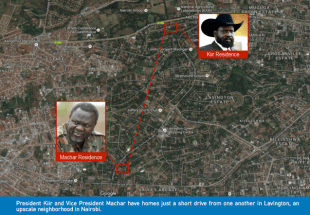
You’d be interested to know that Salva Kiir and Riek Machar live screen-shot-2016-09-12-at-4-55-03-pmonly a short drive from each other in Nairobi, Kenya.
The idea that the leaders of South Sudan are stealing state resources left, right, and centre is totally abhorrent. Tens of thousands have died since the resumption of civil conflict. Millions are in dire need of humanitarian aid.

The international community has its work cut out for it. South Sudan lacks a functional state apparatus. It is yet to get to the point of stationary banditry.

Which is why I think that it would be misguided to presume that the key problems with South Sudan are endemic corruption or the lack of “good governance.”

Should we really expect the president of a (struggling) oil producing 5-year old state to make $60,000 a year and not dip into state coffers once in a while? After all, Kiir’s *perceived* peers are likely not some low-level bureaucrats here in DC but other leaders of the world and the Davos crowd. This is not to say that if Kiir were paid more he would necessarily be less corrupt. The point is that I am not particularly shocked that Kiir and his collaborators in the pillaging of South Sudan want and have acquired the same material comforts that most leaders in the world have.

The historically inclined might even argue that this is South Sudan’s enclosure movement.

Should one take that view, then the solution to the current problem would not be the *relative* impoverishment of the South Sudanese putative “upper class,” but investments in the expansion of this social category so that there is sufficient intra-elite accountability across the different socio-cultural groups in the country. The strategy of integrating rebel leaders into the SPLA could have served this purpose, but the downside is that it incentivized the proliferation of warlordism in the hope of being bought off by Juba.

Perhaps one of the most important questions to ask about South Sudan is how the international community can help Kiir and his henchmen invest their (ill-gotten) wealth in Juba instead of Nairobi or Kampala.

If left alone, South Sudan will likely remain to be a runaway kleptocratic failed state instead of gradually moving towards a stable state with sufficient coercive powers.

The student of the political economy of institutions in me is somewhat convinced that horizontal intra-elite accountability is probably the best way out for South Sudan (if they can establish intra-elite political stability to begin with). The hope that vertical accountability through regular “free and fair” elections will help keep a globalized elite running a fractious post-conflict state honest and accountable is phantasmic. At the moment the domestic audience costs for engaging in corruption are very low for Kiir and other elites, and will likely stay that way for the foreseeable future.

And don’t even mention “political will.” There are no “good” leaders in the world. Just properly incentivized individuals.

Again, definitely read the report.

Interesting Somalia fact of the day

This is from the Economist:

Even if elections pass off well, it is unclear that they will deliver much legitimacy. One problem is that the entire process is dominated by diaspora Somalis. Some 55% of MPs have foreign passports, and while Mr Mohamud [the president] himself has never lived abroad, almost all of his advisers are either British or American Somalis. They are not always popular.

Also, here’s a primer on Somalia’s upcoming legislative and presidential elections.

The 2016 elections will have a bigger selectorate (14,025 delegates) than in 2012 (only 135 elders), but is still far from the global norm of universal suffrage. This is probably a good thing, for now.

Population trends and the potential for a demographic dividend in Africa

Bloom, Kuhn, and Prettner write:

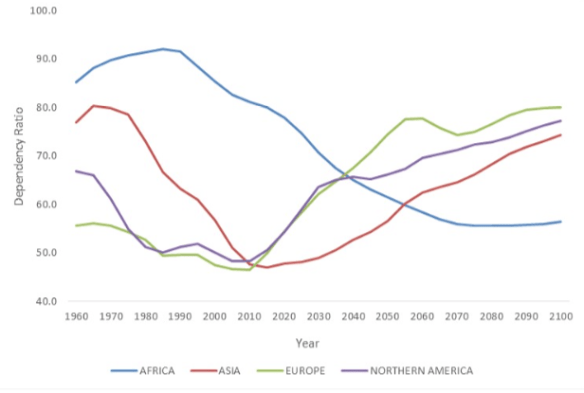
We assess Africa’s prospects for enjoying a demographic dividend. While fertility rates and dependency ratios in Africa remain high, they have started to decline. According to UN projections, they will fall further in the coming decades such that by the mid-21st century the ratio of the working-age to dependent population will be greater than in Asia, Europe, and Northern America. This projection suggests Africa has considerable potential to enjoy a demographic dividend. Whether and when it actually materializes, and also its magnitude, hinges on policies and institutions in key realms that include macroeconomic management, human capital, trade, governance, and labor and capital markets. Given strong complementarities among these areas, coordinated policies will likely be most effective in generating the momentum needed to pull Africa’s economies out of a development trap.

screen-shot-2016-09-07-at-7-23-46-pm

Dependence Ratios Across Different Regions


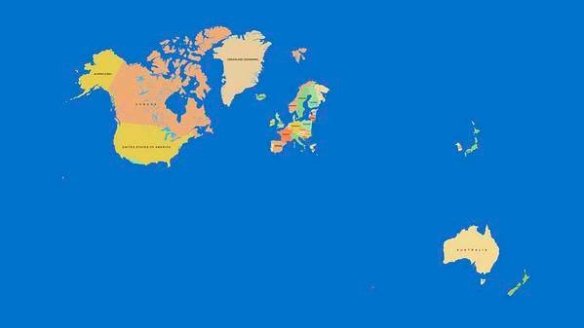
“The International Community”

internationalcommunity

It is one of those silly unspoken truths.

Conventional wisdom also holds that only these countries have national interests. Everyone else just does what these mostly WENA countries asks them to do.

For more on this subject see herehere, and here.

H/T Adam Johnson.

Do you need a reason to visit Kenya?

Kenya’s economy is growing at 5.9%. It is a frontier economy of 46 million with lots of opportunities for investment in sectors as diverse as tech, infrastructure, agribusiness, and light manufacturing. Kenya is also a gateway to the wider Eastern Africa region, with a market of about 120 million.

But if you are not a potential investor and just want to visit, here are some pictures to help you along…

Facebook founder Mark Zuckerberg visited Nairobi this week for business. He also found time to visit Lake Naivasha, a quick two hour “safari lite” destination to the northwest of Nairobi. The best thing about Nairobi is that it is the only city in the world with a national park (not a zoo) within city limits. Zuckerberg could have gone for a game drive in Nairobi, if he wanted to. The pictures were posted on Zuckerberg’s Facebook account.

Now go ahead and book those tickets.

Was the Election in Gabon rigged?

Here is a potential answer to this question:

Thanks to the last minute Haut Ogooué results, Mr. Bongo was able to win by a margin of 5,594 votes, securing 49.8% of the vote to Mr. Jean Ping’s 48.2%. Opposition representatives refused to sign papers validating the results.

According to the electoral commission, 99.9% of Haut Ogooué’s population casted their votes at the ballot boxes, which is a slight anomaly to the rest of the country where the average turnout was 59%.

A career diplomat, Ping, who previously served as the chairman of the African Union Commission, disputes the result. “To use one province to impose a coup in the country could have serious consequences for national unity,” Ping said.

Ping, of course, is the same guy who while at the AU Commission (2008-2012) turned a blind eye to instances of election fraud in several African states. It will be interesting to see where he turns to for help.

Meanwhile protesters burned down the Gabonese Parliament yesterday. Authorities then blocked the internet early Thursday.

The Bongo family has ruled Gabon since 1967. Ali Bongo became president in 2009 following the death of his father Omar Bongo who was president for a staggering 42 years.

Mahmood Mamdani on South Sudan

Nigeria has a shockingly tiny government

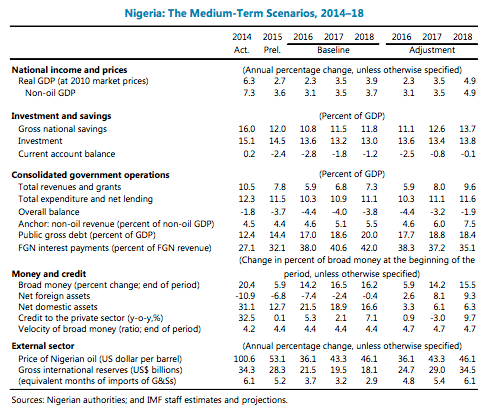
These are figures from an IMF Article IV country report in April of this year:

Screen Shot 2016-08-30 at 11.22.55 AM.png

The one thing that jumped at me from this table was how little(as a share of total national output) the Nigerian public sector spends. The government barely takes in 10% of GDP in revenues; and spends between 11-12%. Also, for a country at its level of development (and with an economy of its size), Nigeria is weirdly debt free (relatively speaking).

You may be thinking that these figures must exclude state government expenditures — and you are wrong. The 11-12% figure is inclusive of state government expenditures.

In my view, this is a PFM smoking gun on the distortionary effects of oil dependence. Nigerian policymakers appear to be sated with the little revenue they are consuming (as a share of GDP) from the oil sector.

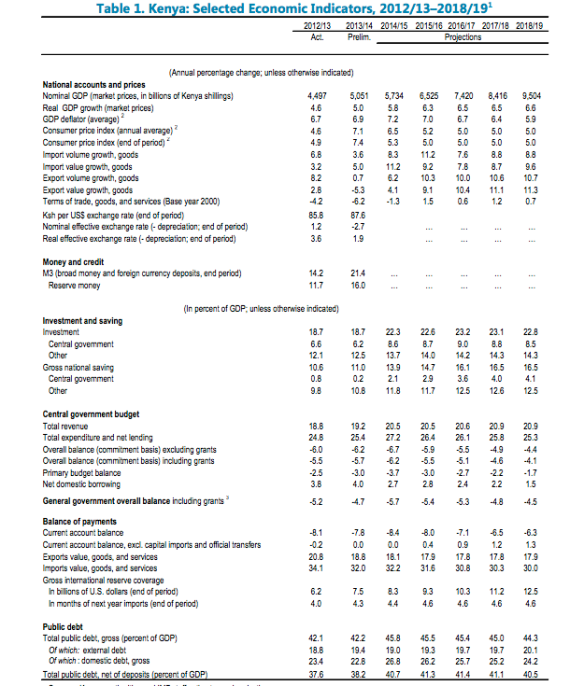
For a comparative perspective, take a look at Kenya’s numbers:

Screen Shot 2016-08-30 at 11.36.28 AM.png

The Kenyan government gobbles up about a fifth of GDP in revenues, and spends about a quarter. The Nigerian government only takes in a tenth of GPD and spends just a little over a tenth. In addition, the Kenyan government’s debt/GDP ratio is twice Nigeria’s.

General government spending as a share of GDP within the OECD ranges from 33.7% in Switzerland to 58.1 in Finland. The OCED debt/GDP ratio average is 90%.

Back in grad school I took Avner Greif’s economic history class in which he emphasized the importance of organizations for economic development. Societies, big and small, organize out of poverty — by building and maintaining socially-attuned institutions that lower transaction costs. The scope and intensity of organizational capacity therefore matters for economic development (For more see here). It takes a well ordered state.

And from these two tables, it is fair to say that the Nigerian state is underperforming relative to its organizational potential. Perhaps it’s time more people in Abuja started reading Alexander Gerschenkron (however dated this might be).


Politifact (The Debates are Coming)

Screen Shot 2016-08-29 at 6.49.41 PM

Source: xkcd

Workshop Fatigue: Residents of Kibera Demand Sitting Allowances to Attend NGO Meetings

The residents of Kibera, in Nairobi,  have a message for foreign aid groups in their community: if you want us to come hear what you have to say, you need to pay us.

So many non-governmental organizations (NGOs) have flooded this poor area that many locals have become disillusioned by the foreigners who say they want to help.

Inundated by invitations to go to meetings and trainings put on by NGOs, the  residents now seek compensation for their time. The handouts, known as “sitting allowances,” generally range from about $1 – $3 per hour, which can buy a fair amount here.

“Trust me, no one will go without the sitting allowance,” said Sharon Ogolla, 20, as she stands outside the hair salon she runs with her mother.

Asked whether most locals go to hear what the NGOs have to say, or just to collect the payment, Ogolla said, “Well, both, but mostly, honestly, to get the fee.”

For more see here. You should also read it for commentary on misguided foreign interventions.

H/T Laura Seay.

When Markets Discipline Politics

President Jacob Zuma continues to be in conflict with his own Finance Minister, Pravin Gordham, over fiscal policy (and propriety in the management of public finances). The markets trust the latter. The former has more power, including the coercive apparatus of South Africa’s administrative state. Having just presided over a disastrous outing for the ruling ANC in this month’s municipal elections, Zuma needs to create more policy wiggle room for his floundering administration. And Gordham’s commitment to fiscal discipline stands in the way. So far the markets’ reaction to Zuma’s machinations at the Finance Ministry have managed to discipline intra-ANC elite politics. But as Zuma gets closer to retirement (or being forced out) it is unclear how much he is willing to continue humoring the markets…

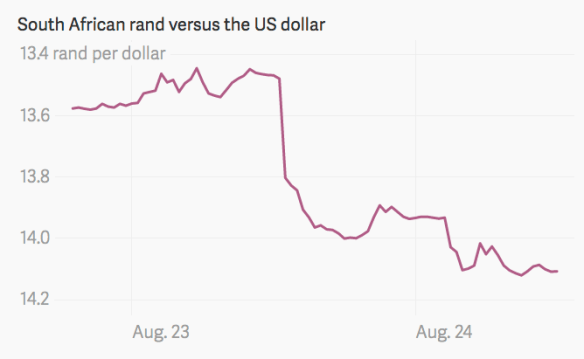
The revelation on Tuesday that Gordham may be forced out via (likely dubious) charges of improper conduct while he served as head of the South African Revenue Service sent the rand tumbling, again.

This is the third time the police unit, known as the Hawks, have questioned Gordhan. Earlier this year, just days before he was set to deliver a crucial budget speech, the Hawks demanded Gordhan answer written questions. Then in May, rumors of Gordhan’s imminent arrest sent the currency tumbling, just as ratings agencies were assessing South Africa. Gordhan was not arrested then, and went on lead South Africa’s recent economic recovery, assuring international investors of the country’s stability.

Screen Shot 2016-08-24 at 11.13.59 AMAnalysts believe Gordhan is the target of president Jacob Zuma and his political allies. The two are reported to be at loggerheads over the management of South Africa’s state-owned enterprises, especially the national carrier South African Airways. Gordhan’s office has delayed bailing out the embattled carrier until a new board is appointed (effectively removing those close to Zuma, according to reports). Gordhan’s office has also curbed spending on plans to build a new nuclear power plant.

Earlier this week, a cabinet briefing announced that Zuma himself would now directly oversee state-owned companies. Analysts say the move allows Zuma to maintain political power and protect his interests after historic losses in this month’s local government elections. Zuma’s office has denied that there is a rift between the president and the finance minister. According to reports, Gordhan is determined to resist pressure to resign

For more on this visit Quartz Africa:

The Secret to Autocratic Success (The Example of China)

This is from The Economist:

Even so, Mr Xi’s authority remains hemmed in. True, his position at the highest level looks secure. But among the next layer of the elite, he has surprisingly few backers. Victor Shih of the University of California, San Diego, has tracked the various job-related and personal connections between the 205 full members of the party’s Central Committee, which embodies the broader elite. The body rubber-stamps Mr Xi’s decisions (there have been no recent rumours of open dissent within it). But the president needs enthusiastic support, as well as just a show of hands, to get his policies—such as badly needed economic reforms—implemented. According to Mr Shih, the president’s faction accounts for just 6% of the group. That does not help.

Admittedly, this number should not be taken too literally: it is difficult to assign affiliations to many of the committee’s members. Doubtless, too, many members who are not in Mr Xi’s network support the president out of ambition or fear. Still, Mr Xi can rely on remarkably few loyal supporters in the Central Committee because he did not choose its members. They were selected at the same time he was chosen as party leader in 2012, a process overseen by the dominant figures of that period, Mr Hu and the long-retired Mr Jiang.

Most people who laud China’s autocratic success conveniently choose to ignore two important facts:

  1. That China’s rulers, at least since the late 1970s, have not been totally unaccountable. The country is a dictatorship by committee. And a large committee at that. It is not a personalist one man show.
  2. The the Chinese party-state works tirelessly to reduce the cost of compliance among its citizens — through conscious state building, coercion, and public services.

What this means is that in order to replicate China’s autocratic success, would be little Chinas must invest in both state capacity and intra-elite accountability (perhaps by building strong, institutionalized parties).

Absent this, what you are likely to get are mediocre petty tyrants running disorganized non-states with infant mortality rates straight out of the 16th century.