Is regionalism helping the East African Community

Evidence seems to suggest it is:

Trade between the EAC countries almost doubled from $2.2 billion in 2005 to $4.1 billion in 2010, although regional trade with the rest of the world expanded faster, meaning that the relative share of intra-EAC trade has stayed around 21 per cent since 2005 [The African Average is 11 %]. “Europe enjoys 64 per cent internal trade; our 21 per cent is better than we thought, but we have to make efforts to do better,” said Betty Maina, chairperson of the Kenya Association of Manufacturers.

Kenya still remains the biggest economy in the region, although some convergence is definitely likely to happen in the next decade or so given the large hydrocarbon discoveries in Uganda and off the Tanzanian coast.

The region’s oil consumption rose from 96,000 barrels per day in 2003 to 144,000 barrels per day in 2010, with Kenya consuming more than all the other EAC countries put together. East Africa now accounts for 10 per cent of all mobile subscribers in Africa, with the number of mobile subscribers surging from just three million in 2002 to a staggering 64 million in 2010.

More on this here.

Bingu wa Mutharika, Malawian President, is dead

The Daily Nation reports the passing away of Malawian President Bingu wa Mutharika (May he rest in peace).

Vice President Joyce Banda is next in line to run the country, according to the constitution.

But her succession to power could create new political tensions, because Mutharika kicked her out of the ruling party in 2010 as he chose to groom his brother as heir apparent instead of her.

The official silence has heightened anxieties in Malawi, which has seen growing discontent with Mutharika’s government over the last year. Rights groups have accused Mutharika of mismanaging the economy and trampling on democracy.

Mutharika’s death is a trend that will continue in the next couple of years; of Africa independence-era leaders passing on due to natural causes.

The last time I counted about six current African presidents were born after 1959. This number will only go up in the next couple of years. Hopefully, this will mean a new crop of competent leaders without  the baggage of the anti-colonial movement and with enough confidence to chart a new course for their respective countries rather than merely trying to recreate what their dad’s bosses had back home.

This is not to say that younger leaders will automatically be better. Gambia’s Jammeh and the DRC’s Kabila are constantly redefining the possibilities of youthful mediocrity in important leadership positions.

The looming generational change of guard will mostly benefit the few African states (like Malawi, Kenya, Senegal, Tanzania, Zambia, etc) that avoided the scourge of the junior officers in their political history.

President Macky Sall of Senegal could prove to be the first of this new generation of leaders.

Bongo jams

It is week 10, the end of the quarter, and time to be just a little home sick – and listen to some bongo flavour. Found this PSA on letting girls go to school.

Swahili speakers out there, enjoy.

[youtube.com/watch?v=qjB15H1xUOs&feature=related]


Kenyan Court Orders Bashir Arrest, Sudan Expels Kenyan Ambassador

UPDATE:

The BBC reports:

Sudan ordered the expulsion of the Kenyan ambassador after a Kenyan judge issued an arrest warrant for Sudan’s President Omar al-Bashir, Sudan’s foreign ministry has said.

Mr Bashir is wanted by the International Criminal Court (ICC) for alleged war crimes in Darfur.

Sudan has ordered the Kenyan ambassador to leave the country within 72 hours.

It has also ordered the Sudanese ambassador in Kenya to return to Khartoum.

*************************************************************

A Kenyan court has issued an arrest warrant for Sudan’s President Omar al-Bashir over alleged war crimes in Darfur.

The ruling came after Kenya allowed Mr Bashir to visit in August in defiance of an International Criminal Court (ICC) warrant for his arrest.

The judge said he should be arrested if he “ever set foot in Kenya” again, the AFP news agency reports.

Kenya is a signatory to the treaty which established the ICC in 2002.

The new Kenyan constitution requires that the government implements its international treaty obligations. The ruling, though without much bite – I doubt Bashir will need to be in Kenya any time soon, has immense symbolism in the region.

It also matters for Kenyan domestic politics. Presently, a few high ranking Kenyan politicians – including the Finance minister, two former ministers and former police boss – are on trial at the ICC for crimes against humanity. The accused await judgment on the admissibility of their cases later this year or early next. The Bashir ruling means that if the charges against the “Ocampo Six” are confirmed but the government drags its feet in implementing an arrest warrant then the courts will step in.

More on the Bashir case here and here.

In other news, Uganda and Tanzania have rejected Khartoum’s petition to join the East African Community, citing “several issues like their democracy, the way they treat women and their religious politics.” Yeah right.

Kenya at War

UPDATE II: John Campbell over at the Council on Foreign Relations discusses the extent of US and French assistance to the Kenyan invasion of al-Shabab controlled regions of Somalia. Check it out here.

UPDATE: Reaction to the Expert Comment from Middleton at Chatham House:

Middleton makes good points about the Kenyan invasion of al-Shabab-held regions of Somalia. The Ethiopian failure in 2006 and potential for a humanitarian crisis must certainly be part of the cost-benefit analysis on the Kenyan side. Failure to establish a secure buffer zone in Southern/Western Somalia and/or to defeat the al-Shabab will definitely have serious consequences.

But the alternative is worse. Al-Shabab elements kidnapped aid workers in Dadaab, in a clear signal that they are willing to disrupt humanitarian aid not only within the areas they control but also within Kenyan. In addition, it is important to appreciate the gravity of the al-Shabab threat to Kenyan security. If al-Shabab is allowed to continue operating within Kenya it may morph into a more dangerous domestic insurgency with a ready supply of disaffected groups – Kenyans in the North East who for decades have been neglected by Nairobi and have legitimate reasons to express those grievances by organizing around such a movement.

In addition, unlike Ethiopia in 2006, Kenya is in Somalia purely for national security purposes. Ethiopia had the baggage of the Ogaden War and the Somali-backed insurgency in its own Ogaden region. Plus it was very clear at the time that the US was bankrolling the Ethiopian war effort – the ICU obviously used this to develop a narrative of western-backed “Christian Ethiopia” invading a Muslim country. Al-Shabab, at least for the moment, does not have the advantage of defining the Kenyan military operation in their own terms

[It is interesting that neither the Kenyan parliament nor presidency has officially declared war on anyone. It is the internal security and defense ministries that have been running the show].

Al-Shabab has been severely weakened around Mogadishu. The ongoing famine has also served to weaken their control of Somalis’ hearts and minds. Their remaining stronghold is the port town of Kismayu whose capture will deprive them of an important supply route and source of revenue (via Indian ocean piracy). If there was ever a good time to try and defeat the group in the battlefield (especially since they have refused to negotiate with anyone), this is it.

********************************************************

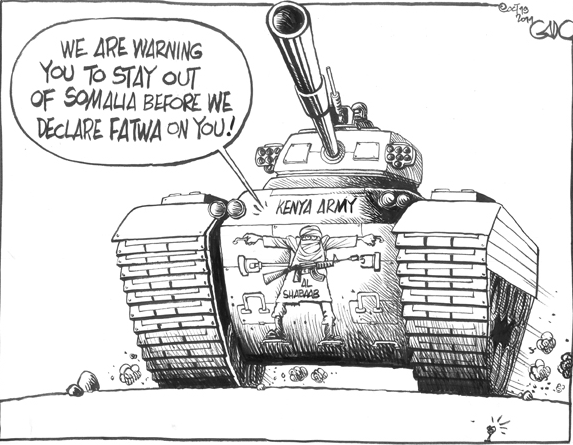
On Sunday the Kenyan armed forces moved into Western/Southern Somalia. The invasion was occasioned by recent kidnappings of tourists and aid workers near the border with Somalia. Al-Shabab, the proscribed terror group in Somalia, is suspected to have been behind the kidnappings, although it denies the charge.

The invasion is a clear signal of the failure of Kenya’s previous policy of strategic containment of the “Somalia problem.”

Source: Gado, Daily Nation

As of Tuesday the Kenyan army had advanced more than 100 miles into Somali territory, although bad weather has significantly slowed the advance. The target town is Al-Shabab’s stronghold port town of Kismayo. The DoD spokesperson Emmanuel Chirchir is reported to have said that “The troops are ready for anything. If it takes us to December they are willing to celebrate Christmas there.”

The invasion comes at a difficult time for the country and will no doubt generate significant economic and political consequences.

Inflation is at over 17%. The Kenyan Shilling is struggling against the US dollar. And the rate of economic growth appears to have slowed from a projected annualized rate of 5.6%. The increase in military expenditure amid high inflation, a severely weakened Shilling and calls for fiscal austerity will surely have a negative impact on future growth prospects. For more on this check out the Business Daily.

On the political side, success in routing al-Shabab will be another feather in retiring President Kibaki’s hat.

Failure might ignite a backlash against the country’s military establishment. It will be interesting to see how the political class deals with failure, since this is the first time that Kenya has ever undertaken a military operation of this scale. My take is that the military, as an institution, will take the fall in case of failure. Because of their ethnicized nature, previous lapses in security in the borders with Ethiopia and Uganda did not create that many problems for the pols in Nairobi. That said, this time might be different because of the nature and scale of the threat.

Of interest will also be how this military operation affects civilian control of the military.

Experience in many less institutionalized countries shows that heightened militarization results in diminished civilian control of the military – with the potential for coups.

I doubt this will be the case in Kenya. However long “Operation Linda Nchi” takes the result will be closer to the Tanzanian invasion of Uganda in the late seventies than to cases where military adventurism resulted in the overthrow of an incumbent (like in Siad Barre’s Somalia). Civilian control of the military in Kenya remains stronger than in most African countries.

Beyond matters of civilian control of the military it is important to consider what the repercussions will be for ordinary Kenyans. Many fear that the al-Shabab might strike Kenya where it hurts most – in Nairobi. This is a real possibility that one hopes the Kenyan government has planned for.

Also, in the event of a protracted war or a major terrorist attack by al-Shabab within Kenya there is the possibility of a backlash against Kenyans of Somali extraction. While this might happen among the masses I doubt that any of the major political figures will actively promote such a misguided reaction. North Eastern Kenya is an important voting bloc that the presidential front-runners in next year’s general election will want on their side (Mr. Odinga, the Kenyan Prime Minister is particular keen on this voting bloc). In this regard the fact that blatant scapegoating of Somalis will have negative political consequences is a source of mild comfort.

The editorial pages of the major newspapers in Kenya have all been solidly behind the invasion. Quoting the Business Daily:

Kenya’s foreign policy has at best been mild and at worst meek.

The nation has been out of the regional combats even when incursions took place in its territory, opting for peaceful resolutions.

This has happened in the Kenya-Ethiopia border during the Oromo wars and during the Ogaden War when Kenya opted for peace parleys rather than battlefield tussles.

But this dud non-aligned policy of the 1960s, exacerbated by the extinguished Cold War, holds no place in the current political order where terrorism and banditry has replaced conventional wars.

There were few options left for Kenya. One, they cannot let the al-Shabaab militia group continue to with their raids oblivious of our military power. Secondly, the sovereignty of our nation, and our pride was undergoing severe test.

The al-Shabab extremism must come to an end.

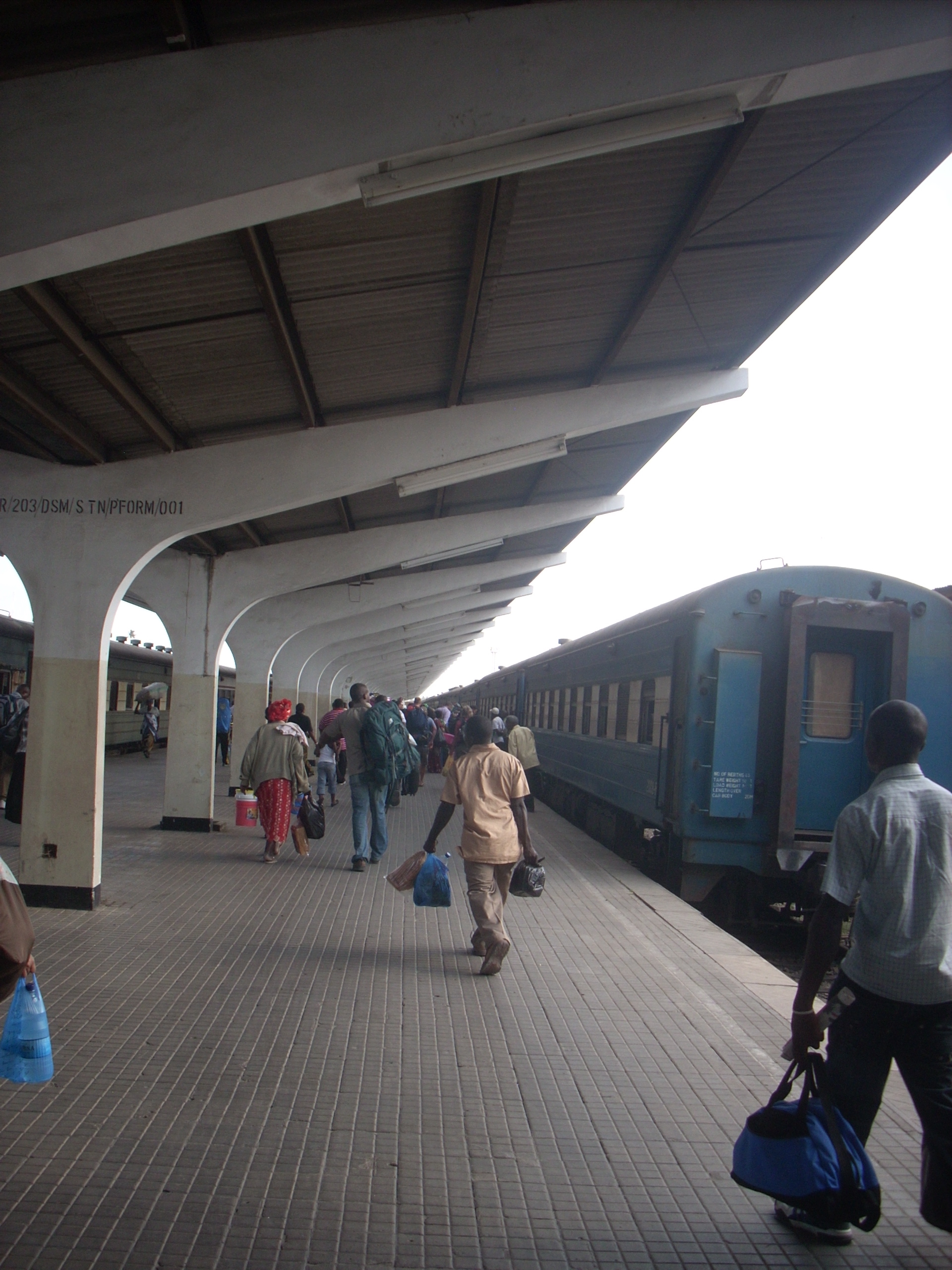
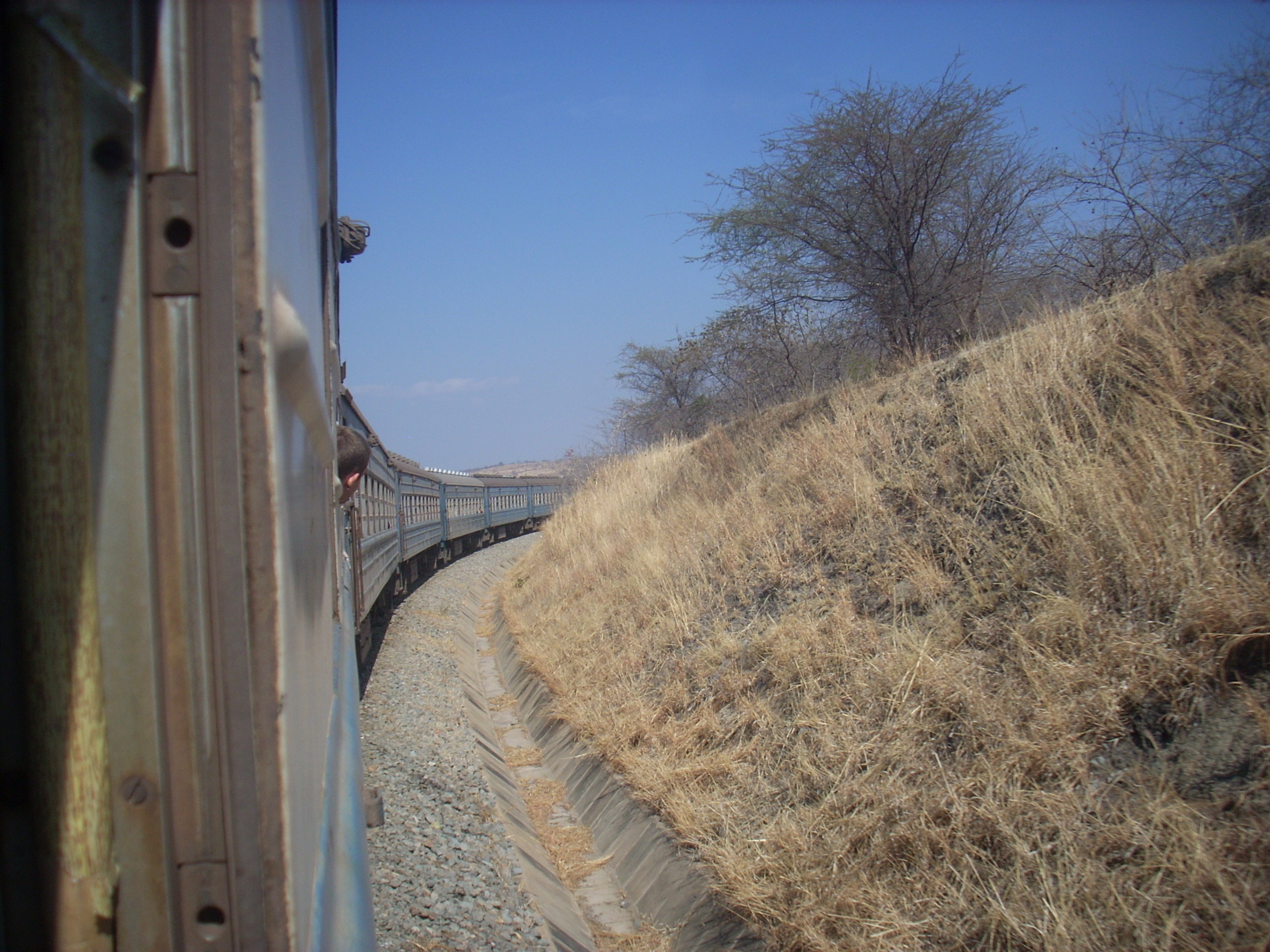
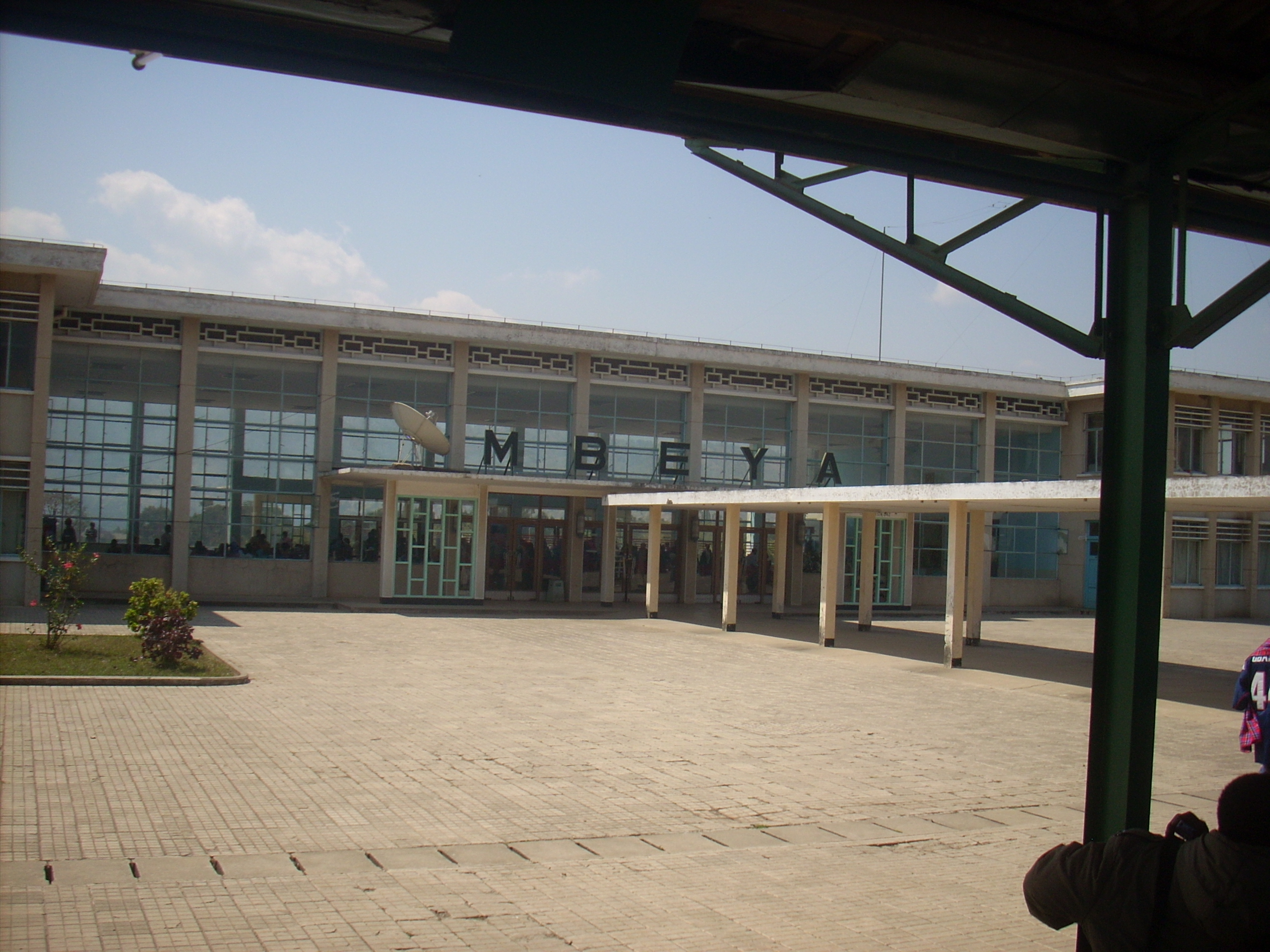
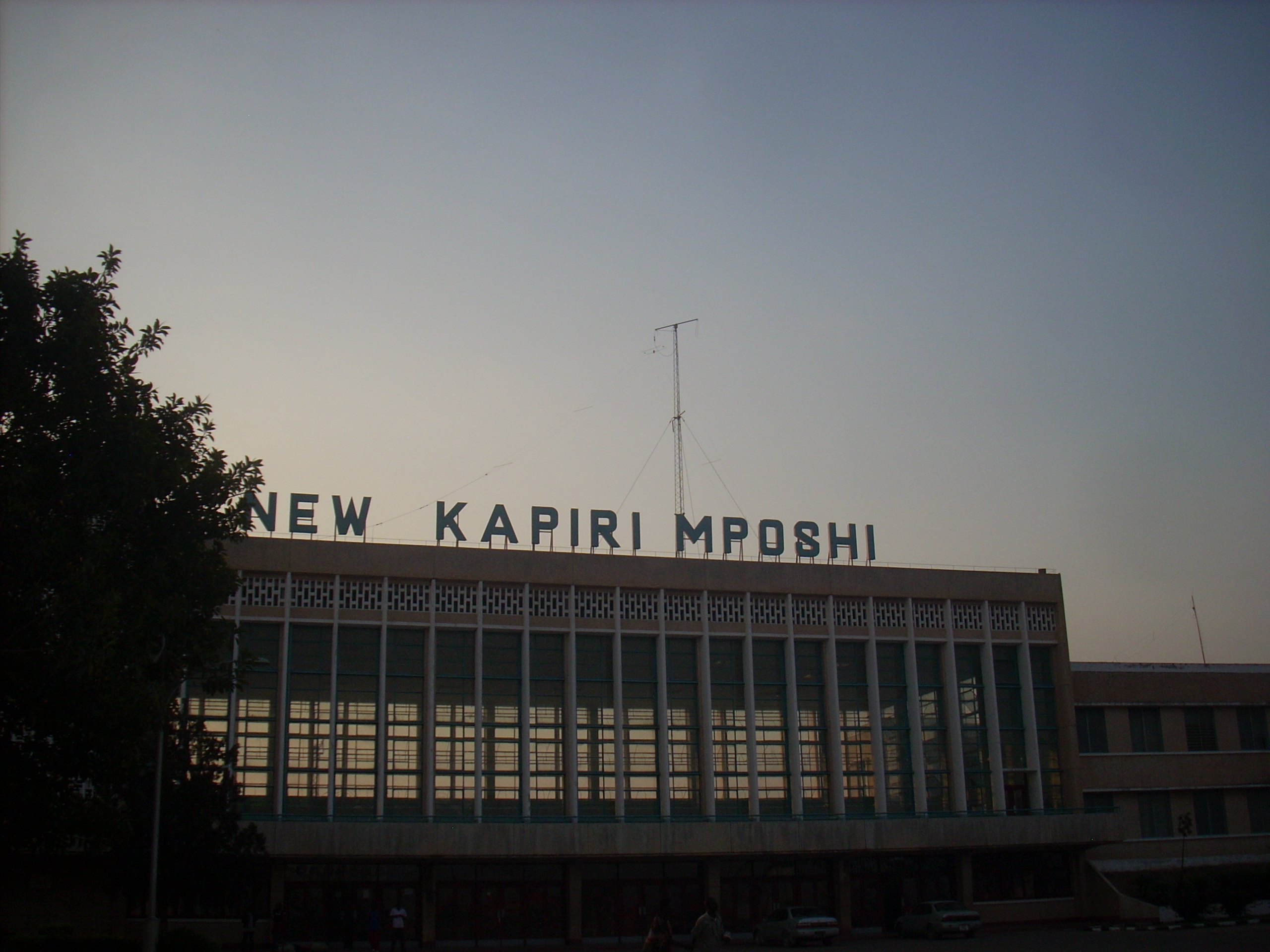
TAZARA Pictures (Preview, see link to original post and more pictures below)

Richard White’s Railroaded proved to be an appropriate reading for the trip

Leaving Dar es Salaam

Most of the two-day ride was across the empty countryside

Mbeya is the biggest station before Kapiri. We broke down here for almost 5 hours

Of course the picture collection wouldn’t be complete without the African sunset

Just a reminder of who built the railway line

Kapiri Mposhi, final stop on the TAZARA line

The original post is here.

THE TAZARA (TOTAL TIME: 2 DAYS 1 HOUR 26 MINUTES)

UPDATE: The photos to accompany this post can be found here.

Note: I will post some photos to accompany this post as soon as I get to a place with a faster internet connection. The post is from Friday, September 2nd.

Over the last two days I have been on the TAZARA from Dar es Salaam to Kapiri-Mposhi. The ride lived up to my expectations, despite the many unexplained delays along the way – the longest was a 4-hour wait in Mbeya (where we stopped either to have the engine serviced or wait for the other train from Zambia).

The train was rather old and showed years, if not decades, of disrepair. That said it was clean and livable. The sleeper coaches had two bunk beds each and were swept twice over the whole journey. They had pillows, a bed sheet and a blanket for the beds. The bathrooms were cleaned every few hours by the tireless crew. The train had lounge and restaurant cars. The lounge had a bar with an assortment of beers from Kenya and Tanzania (I had Tusker the whole way). The restaurant had a limited menu of rice or chips and beef or chicken. In the morning they served breakfast of egg, sausage and sliced bread with tea. Food is served both in the restaurant and in the passenger cars.

The view along the way was fantastic. The Tanzanian side was sparsely populated while the Zambian side was almost empty. We were unfortunate to pass through Selous Reserve (in Tanzania) during the night so we didn’t see any wild animals on the way. Perhaps the ride from Zambia back to Dar passes through the reserve whilst the sun is still up. But animals aren’t the only natural attraction on the Dar-Kapiri line.

The stunning beauty of the Tanzanian and Zambian countryside more than made up for not having seen any wildlife. The sunrise and sunsets were spectacles to behold. The mountains and rolling hills also provided great views. And then there are the smooth endless rides across the plains of northern Zambia between Mpika and Serenje and again onwards toward Kapiri-Mposhi. 

The ride also exposes the endemic poverty in rural Tanzania and Zambia. Quite frankly this was the low-point of the two days.

And it is not just the grass-thatched structures that betrayed their occupier’s meager incomes. At every stop kids with their whole bodies covered in dust would run along the tracks screaming “kopo kopo” (kopo is Swahili for bottle) in a rather bizarre re-enactment of The gods Must be Crazy. People on the train threw empty water bottles, sweets and other items at the kids. Some of them begged for money from the handful of passengers on first and second class cars in the rear of the train.

Day One (Tuesday-Wednesday): 


The departure from Dar was delayed.

The previous day I had missed my Akamba bus out of Nairobi in the morning (I overslept and even my older brother’s valiant attempt to get me there on time did not help) and so had to fly to Dar in order to not miss the Tuesday afternoon train. I arrived in Dar on Monday at around 2 PM in the afternoon. Traffic was terrible. I could not find accommodation at the first three places I checked. The fourth place looked rather sketchy – enough to spook even a true Nairobian like me.

So I settled for the pricier Rainbow Hotel close to downtown. The room was very nice – it had a hot shower, air-conditioning and satellite TV. It also had an over-priced restaurant on the second floor that served very well made Indian food. 

On arrival in Dar and before going on my hotel hunt I asked the Taxi driver to take me to the train station so I could book my ticket for the next day. The lady at the counter calmly told me that the train was fully booked (first class) until the following Tuesday.

I did not have a week to spend in Dar so I pleaded with her, to no avail. She directed me to the coach class counter with the option of upgrading to first class along the way. I was not wiling to risk sitting in coach for two days. So I bought a first class ticked for the 6th of September (a week later) but decided to try my luck anyway the following day (Tuesday) in case there were any cancellations.

The next day the same taxi driver drove me to TAZARA two hours before the 2 PM reporting time. He then asked one of the luggage handlers if there was any way we could get a ticked before the 2 PM departure time. The man directed us to the office of the stationmaster. It is in there that the lady in charge called the ticket office and asked the person on the other end of the line to sell one Ken Opalo a ticket in first class for the 2 o’clock train. She then took my other ticket. No questions asked.

Because of my desperation to take the TAZARA, I had just been robbed of US $80. Thanks very much TAZARA.

It turns out this is an elaborate scheme: The lady at the counter puts up a sign saying that tickets are sold out until the following weak at which point passengers must see the stationmaster and pay a premium for available tickets. This elaborate scheme has its glitches. For half the trip we had in my compartment a guy who had been sold a ticket in a women only compartment. He slept on the couches in the lounge car the first night.

Departure time was 4.30 PM. In just under two hours dusk was upon us and with it came the darkness that is the African countryside at night. I tried reading but promptly fell asleep. I was however woken up by the loud snoring for the guy on the top bunk and couldn’t go back to sleep for the better part of the long stop at a town called Mrimba.

Wednesday morning I was up by 6.30 AM. I read until the breakfast guy came to the compartment. Thereafter I continued reading until the 4-hour stop at Mbeya where I managed to get off the train and stretch my legs. After Mbeya I went to hang out in the lounge and read a bit more until it was dinner time. By the time the sun set I was so tired that I fell asleep as soon as I finished dinner.

Day Two (Thursday):

Thursday morning I woke up at 5.35 AM. One of the guys in my compartment was getting off at Kasama. He and I had build a sense of camaraderie since leaving Dar es Salaam several hours earlier. He is a globe-trotting businessman and evangelist from Kasama – the Capital of Zambia’s Northern Province. He passionately assured me that Michael Sata will win the Zambian presidential election in three weeks and that the opposition “will not accept anything but victory.” The opposition slogan is “Don’t Kubeba” or don’t say.

The main opposition party is urging its supporters to take all the government money being dished out but not say who they’ll vote for. We helped him offload his many bags and gifts for his family through the window of our compartment. The train then left for Mpika.

Northern Zambia is mostly empty. For hours upon hours we did not see much except trees and the occasional telephone masts and power lines. Human settlements were rare and far in between. The long monotonous ride offered me time to read Railroaded by Stanford’s Richard White. The book provides an excellent account of the political economy of the development of North America’s great transcontinental railroads – I believe that at its inception in the 1970s TAZARA had the same dreams of linking the continent of Africa from coast to coast.

Soon the lunch waiter came knocking. At this point the ware of being in a loud and shaky contraption for almost two whole days was beginning to show. People were quieter. The train was emptier. Everyone was dying to get to Kapiri-Mposhi. I had my last meal on the train – kuku na wali. I then went back to reading in anticipation of the last stop at Kapiri-Mposhi. Even the fact that I still had another leg of the journey to Lusaka (this time by bus) and that I had not yet confirmed my accommodation once I got there did not interfere with my sense of accomplishment. In a few hours I was about to have endured one of the longest train rides in the world.

We arrived at Kapiri-Mposhi at 4.56 PM. The whole journey had take exactly 2 days 1 hour and 26 minutes. The two days without a shower or change of clothes was definitely worth it.

Now I had to endure another one and a half hour bus ride to Lusaka.

As I mentioned above the train schedule was rather unpredictable. But I managed to note down the times on which we arrived at some of the main stations along the way. Here is the schedule for the August 30th train from Dar to Kapiri-Mposhi:

Dar es Salaam 4:30 PM

Nzenga 5:38 PM

Watu 6.00 PM

Kisaki 8.21 PM

Mrimba 11:30 PM

Makambako 8:30 AM

Kangaga 10.08 AM

Rujewa 10:30 AM

Inyala 1:28 PM
Yore 1:53 PM

Mbeya 2:14 PM (we stopped here for 4 hours!!)

Mabrizi 6:33 PM

Idiga 7:05 PM

Tanduma-Nakonde 10:00 PM (Tan-Zam border. We left at 11.15 PM)

Kasama 5.35 AM (Central African Time. The rest of the times below are also CAT)

Mpika 8.45 AM

Kalonje 10.23 AM

Serenje 1.03 PM

Kapiri-Mposhi 4.56 PM

TOTAL TIME: 2 DAYS 1 HOUR 26 MINUTES
Will be blogging sporadically for the next week

Dear readers, I have been away for a bit. Research/work and running the San Francisco half marathon (see images below) have kept me from blogging. I am back but will only be blogging sporadically for the next week or so.

In other news, next Thursday I head home to Kenya for a short vacation. My trip will also include brief visits to Uganda and Tanzania and an extended trip to Zambia (I will be there for the elections) before coming back to the Bay Area for year 3 of (hopefully) 5 of grad school.

Stay tuned.

Here are my marathon pictures.

The EAC needs a defense pact

UPDATE: The Government of South Sudan has barred people of Somali origin from entering the country by road for “security reasons.” This wrongheaded move has created an awkward situation since not all people of Somali origin are from Somalia. In Kenya, for instance, a good chunk of the long haul transport sector is run by Kenyans of Somali origin.

********************************************************

The Ugandan government recently went on a $1 billion shopping spree for six fighter jets. The deal, which almost broke the bank, made a significant dent on Uganda’s forex reserves. Many, while acknowledging the risks that might have motivated the purchase, have questioned the wisdom of spending that much money on six jets.

For those not in the know, the key motivation for Museveni’s purchase was a desire to project military power in the region for two key reasons:

Firstly, in order to create a market for Ugandan light industries – cooking oil, soap, etc – Kampala has had to project military power to help in the pacification of pockets of eastern DRC and northern Uganda/South Sudan. These markets are crucial because they create jobs in Uganda, allowing Museveni some room as he continues to preside over Uganda’s decline into a dysfunctional police state.

The second reason was Museveni’s desire for military grandeur in the region. Kigali and Khartoum are not in the best of terms with Kampala. Museveni is probably suspicious of a potential Odinga presidency in Kenya. For these reasons, the Ugandan military establishment – the real rulers of Uganda – might have wanted to ensure that non of their neighbors are in a position to bully them in the near future.

While most of Museveni’s militarism is inspired by a mentality from a bygone era, I find Kampala’s fears against Khartoum as legitimate grounds for a regional defense pact. It is an open secret that Khartoum will try as much as it can to destabilize the new government of South Sudan (and by extension the wider region). And they have a few options:

  • They can foment civil war within South Sudan – there are a lot of disgruntled armed bands within South Sudan who might decide to take their chances with Khartoum; Remember that even Riek Machar, the current vice president of South Sudan, formed a Khartoum-backed splinter group (SPLA-Nasir) that fought Garang’ back in the early 1990s.
  • They can use armed groups in the wider central African region – including Kony’s LRA and the plethora of roving bandits in eastern DRC to engineer insecurity in South Sudan. Khartoum has used the LRA against SPLM in the past.
  • They can invade in an all out war. This option is the riskiest because of its potential to generate international opprobrium. But remember that Ethiopia and its secessionist former province Eritrea fought a bloody war that generated nothing but “stern” warnings from the UN and the wider international community. The US even armed Ethiopia because it needed Addis Ababa to fight its war in Somalia.
  • Lastly, they can use non-conventional tactics. Terrorism is slowly growing in the wider east African region. So far Eritrea has been the biggest state sponsor of terror in the region – mostly aimed at Ethiopia in the Ogaden, Oromo land and Somalia. The involvement of Ugandan and Burundian troops in Somalia has created even more enemies for these groups. There is no reason to believe that Khartoum would not use these same groups to destabilize South Sudan, if for nothing then as a survival tactic for a beleaguered Bashir administration that will forever be blamed for having lost the South’s oil.

Needless to say, an unstable South Sudan is bad for the region. Period.

The proliferation of small arms is already a major problem in the areas bordering the Ilemi triangle and eastern Uganda. That instead of sticks pastoralists have to roam around with AK-47’s says it all. More conflict in South Sudan will only make a really bad situation even worse. The potential for proxy wars within the region would also be an unnecessary drain on limited resources. Because of various interests in Juba, an aggression by Khartoum against South Sudan will definitely be met with reaction in one form or another from Kenya, Ethiopia and Uganda.The conflict will definitely be regionalized. Lastly, Eritrea’s bad habit of supporting terrorists should not be permitted to catch on. Khartoum must know that if it tries this dirty tactic it will be met by more than just resolutions from the AU, IGAD or the UN.

Which is why I think that the EAC should have a robust defense pact. War should have to be a last resort. But that does not mean that the East African Community should not prepare for such an eventuality, if it arise.

That way, no single country will be burdened with the task of buying all the necessary hardware needed to keep Khartoum deterred.

Such a plan would face significant challenges, of course – key among them the fact that the region’s armies are non-professionalized. A functional defense pact would require near total civilian control of the army. Only Kenya and Tanzania come close to this in the EAC. Rwanda, South Sudan and Uganda are dominated by their respective armies. Burundi can’t even win against rebels within its territory and remains a militarized tin pot dictatorship. And Ethiopia, if it were to join, is still dominated by the remnants of the rebellion that ousted Mengistu.

These challenges aside, it might be worth a try. Such a pact might even help professionalize and de-politicize the officer corp in the region’s armed forces.

And the biggest winner if this were to happen is MORE regional trade.

Mastermind of 1998 bombings in Nairobi and Dar killed in Mogadishu

The man behind the US embassy bombings in Nairobi and Dar es Salaam has been killed by Somali government forces at a roadblock in Mogadishu.

The Saturday Nation reports:

The mastermind of the 1998 twin bombings in Nairobi and Dar es Salaam Fazul Abdullah has been killed by Somalia government forces in Mogadishu.

Mr Abdullah, who holds a Kenyan passport, was wanted for the fatal bombing of US Embassies in Kenya and Tanzania that left at least 250 people dead and many injured.

He was reportedly killed by the Transitional Federal Government (TFG) forces on Wednesday at a roadblock.

The run-away terrorist, who was on the Federal Bureau of Investigations (FBI) watchlist of most wanted terrorists, is believed to have taken over the leadership of al Qaeda’s branch in Somalia, al-Shabaab from where he directed world attacks and African terror operations.

Confirming the reports, Kenya’s Police Commissioner Mathew Iteere said he was working with security officers in Somalia to get a comprehensive report.

will the latest land grab help africa?

Update: You can find individual country reports from the Oakland Institute, a California based think tank, here.

I am on record as having reservations about the latest scramble for Africa African governments leasing vital arable land to foreign companies and governments (esp. in the face of high levels of food insecurity in the region).

Like many, my first reaction was to protest against these land deals. Like most natural-resource concessions on the Continent, they appeared to favor only the foreigners and a tiny clique of well placed individuals in African governments – at the expense of the many.

But I am beginning to have second thoughts. This latest land grab on the continent maybe the catalyst of an African green revolution. Most African governments gave up on non cash-crop agriculture in the 1970s. Some, like Nigeria, abandoned agriculture wholesale and quickly became net exporters of agricultural goods. Bad policy (see Bates) and non-agricultural resources (mostly oil and metals) were to blame.

While my general skepticism remains, here are potential upsides:

  1. Commercialization of non cash-crop agriculture: The vast majority of agricultural production in Africa takes place in smallholder farms that are hard to finance or insure (tea, coffee, and other cash crops get all the money). Their small sizes also limit the economic feasibility of improvements such as mechanization, irrigation, etc. The advent of commercial production of food crops in the region will have market effects, for sure. Agricultural SM&Es and even Big Agriculture will bring much needed capital to this vital sector of the economy.
  2. Land consolidation: This is already happening (and is the main source of my skepticism regarding the benefits of these deals). With consolidation comes economics of scale, R&D, mechanization, etc. I hope that African governments will ensure that this latter day enclosure movement takes place in a humane manner. It is in their own interest since most of these governments’ political bases reside in the countryside and live on subsistence agriculture. Consolidation might also spur further growth by creating demand for more goods (people earn wages and their are no longer producing their own food). Remember that specialization determines the extent of the market (Adam Smith).
  3. Technological diffusion: With commercialization will come irrigation, mechanization, use of fertilization, R&D, etc that will most certainly diffuse to the local agricultural sector. Rain-fed agriculture when you have the Nile, the Niger, the Voltas, the Congo, the Zambezi, Tana, Athi, etc, is so pre-Mesopotamia.
  4. Political reforms: In my view, one of the key impediments to political reforms in Africa has been the persistence of what Hyden called the “uncaptured peasantry.” A landed peasantry that can live off the land allows politicians to play with the macro-economy like there is no tomorrow. If the people get off the land, the general performance of the national economy will have a bigger impact on their lives. Suddenly, reaction to stratospheric inflation rates and other failures in the macroeconomy will not be confined only to urban centres. This will, in part, serve to end Africa’s tyranny of the countryside – a situation in which ethnic chiefs elected from the countryside ignore the underrepresented urban dwellers – and spur real democratic accountability.

Discussion of the downside of these deals is already out there. It also helps to look at the potential upside (at least in the long-run). I remain convinced that the real pro-poor growth in Africa will come from SM&Es and big business, whether in agriculture or other sectors.

foreign acquisitions of land in africa

For half a century they have done nothing but run their economies aground, jail, kill or exile dissidents and steal as much as they could from their economies. All in the name of the people. Now (a subset of) African leaders are busy selling or facilitating the sale of arable African land away – for bio-fuel production or for production of food exportions – while their own people starve.

At this rate the Continent, despite its massive agricultural potential, will remain a net food importer for a very long time to come.

The Economist reports:

THE farmers of Makeni, in central Sierra Leone, signed the contract with their thumbs. In exchange for promises of 2,000 jobs, and reassurances that the bolis (swamps where rice is grown) would not be drained, they approved a deal granting a Swiss company a 50-year lease on 40,000 hectares of land to grow biofuels for Europe. Three years later 50 new jobs exist, irrigation has damaged the bolis and such development as there has been has come “at the social, environmental and economic expense of local communities”, says Elisa Da Vià of Cornell University.

More on this here.

Tanzania elections

There are no surprises expected from the general elections in Tanzania, held on Sunday. The electoral body has not declared the presidential results yet (leading to reported riots) but no one expects Jakaya Kikwete to lose to Chadema’s Willibrod Slaa. Chama Cha Mapinduzi (CCM), the hegemonic party that has ruled Tanzania since unification, is also expected to maintain its majority in parliament.

More on this as soon as the final official figures become available. Mr. Kikwete won 80% of the vote in 2005.

“the town seemed to exist only for sickness and death”

Time has this story about the “most malarial town on earth,” Apac in Uganda. The pictures tell it all, life in Apac appears to be singularly harsh.

The story also reports that malaria steals away 1.3 percentage points off Africa’s annual growth rate. It is encouraging, though, to know that the fight to eradicate malaria is not yet lost because “the logistics of such a plan are less complex than they seem, because while malaria affects half the world’s countries, just seven — the Democratic Republic of Congo, Ethiopia, Kenya, Nigeria, southern Sudan, Tanzania and Uganda — account for two-thirds of all cases.”

As is the case with most failures on the Continent, failure to eradicate malaria can be attributed to bad leadership and state incapacity. Time reports:

What do these failures have in common? Bad government.

To paraphrase Achebe, the trouble with Africa is STILL simply and squarely a failure of leadership. There is nothing basically wrong with the African character. There is nothing wrong with the African land or climate or water or air or anything else. The African problem is the unwillingness or inability of its leaders to rise to the responsibility, to the challenge of personal example which are the hallmarks of true leadership . . . . in the meantime, millions on the Continent continue to die of treatable illnesses while tens of millions more live like it’s still 1600.

corruption in South Africa

South African democracy still has a long way to go. My greatest fear is that ANC supremacy might get into the heads of the party bosses and have them collapse the distinction between party and state. There are already allegations of corruption within the top ranks of the ANC. Ironically, if corruption is to be tackled head on within the ANC, Jacob Zuma is the right man for the job, his own failings notwithstanding. He seems to have a direct connection with average ANC supporters and could use this to rein in party bosses, or at least make them steal less.

It is hard being a disciplined hegemonic party. Tanzania’s CCM is a lesson in what the ANC should avoid. Botswana’s BDP might be a better example of a relatively disciplined hegemonic party. The party has ruled Botswana since 1966 without falling into the temptations of grand corruption and power grabbing.

Edit: Recent events have shown cracks beginning to form within the BDP. The world is watching what Ian Khama, son of Seretse Khama is prepared to do to secure his presidency in the face of increasing opposition.