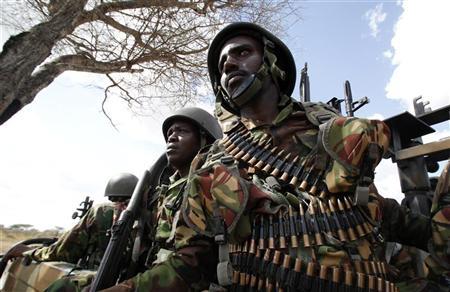
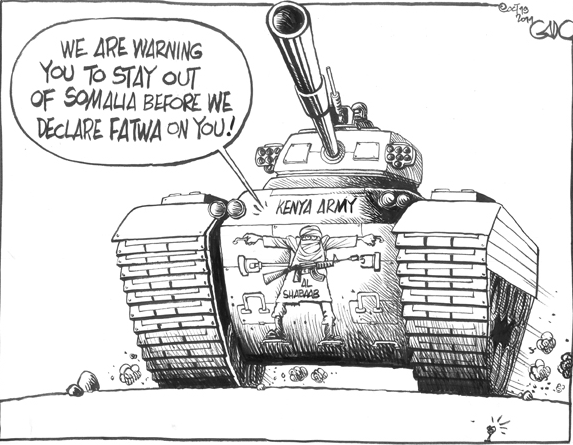
Will rampant corruption jeopardize Kenya’s ability to prevent future terror attacks?

There is an interesting debate on this question over at the Guardian. Following the terror attack at Westgate Giles Foden made the following claim:

In Kenya crime and terrorism are deeply linked, not least by the failure of successive Kenyan governments to control either……… These attacks are part of a spectrum of banditry, with corruption at one end, terrorism at the other, and regular robbery in the middle. Some Kenyans will feel that the conditions in which the attacks have happened have arisen because of economic growth in a vacuum of governance. Money that should have been spent on security and other aspects of national infrastructure has been disappearing for generations.

Two days ago the Kenyan Cabinet Secretary for Foreign Affairs, Amina Mohamed, responded to Mr. Foden with a denial of the charge that corruption in the country was in any way related to the failure of security forces to thwart the attack at Westgate. She reminded readers that:

The disasters of 9/11 or the more recent Boston marathon in the US and 7/7 in the UK – both highly developed countries – could hardly be blamed on corruption, so why Kenya? We do not recall Foden blaming corruption within the security agencies involved.

So what is the relationship between corruption and the likelihood of successful future terror attacks in Kenya?

There is no denying the fact that corruption is a huge soft underbelly in the Kenyan state’s fight against al-Shabaab. As I have pointed out before, the attack at Westgate  showed Kenyans that AK-47s are not a menace only in the hands of cattle rustlers or carjackers. They can also be weapons of mass murder. So reports of police reservists renting out their AKs to criminals or being paid by the same criminals to look the other way do not inspire confidence in the government’s ability to prevent future attacks. Indeed last Friday Reuters reported that:

security officers, diplomats and experts describe a security apparatus that may be squandering skills built with the help of U.S., British and other trainers because suspects can buy their way through police checks and poor inter-agency coordination means dots are not joined up.

Add to this the fact that the country has about 600,000 light weapons and small arms in civilian hands (pdf) – including 127,000 illicit guns in Turkana County alone – and you begin to get the picture of why lax law enforcement, partly fueled by lack of funds and poor training and pay of regular police, but also by higher-ups’ venal proclivities, does not bode well for the likelihood of future Westgate-style attacks.

That said, to put terrorism on the same scale as carjacking would be a mistake, especially with regard to how the Kenyan state is likely to react to future threats of terrorism in the wake of Westgate. Obviously, due to entrenched interests and the administrative power (pdf) of the Civil Service the president cannot simply wish away corruption with a stroke of a pen. But he will be under tremendous pressure from the business community (which, in my view, is his number one constituency) to make sure that things that are singularly bad for business – like Westgate-style terror attacks – do not happen in the future.

Regularized murderous banditry in the less governed spaces in Kenya or carjackings in Kileleshwa are different from terror attacks in that the former are often localized “micro-events” on the national stage (even when they are of Baragoi or Tana River or Bungoma proportions) that rarely ever have systemic effects. Westgate, on the other hand, did have a systemic effect. And in a big way. As such I expect that the government will follow the trail and start closing loopholes wherever they are that might be exploited by terrorists in the future. This includes reforming the Kenya Police Service, to the extent that is necessary. It is hard for me to imagine that the president would risk failing to secure reelection just to keep a few corrupt officials happy.

So on balance Westgate might actually lead to a major push to rid critical state institutions of the scourge of corruption and to strengthen them with a view of increasing state capacity.

I could also be totally wrong.

There is a scenario in which the response to Westgate is al-Shabaab-focused and purely driven by the military (which presently has a huge PR problem with the Kenyan public and would want to save face) and other security agencies with little input from the political class. Such an eventuality would be a double bad because of the risk of erosion of civilian control of the military in Kenya (at least at the policy level) as well as a failure to reform critical domestic institutions to reduce the likelihood of future attacks (or attempts to bring back the bad old days…)

All this to say that on the off chance that someone asks you the question in the title of this post, the simple answer would be probably.

What next for Kenyan Policy on Somalia?

For two years it almost seemed too good to be true. Kenya had invaded Somalia and occupied Kismayo, a key Al-Shaabab-held city in southern Somalia without carnage visiting the capital Nairobi. The group instead opted for sporadic attacks against churches and police installations in the border regions of North Eastern and Coast. A few explosions rocked the capital, but these were never spectacular. Indeed, some of them appeared to have been motivated by local business rivalries and not some revenge mission by the Somali Islamist group Al-Shaabab. Within Somalia, the African Union Mission in Somalia (AMISOM) mission made quick gains that left Al-Shaabab backpedaling. With a few exceptions, the Al-Shaabab was reported to have been severely weakened and on the run. Before the recent uptick in bombings, Mogadishu was slowly becoming a reasonably peaceful boomtown.
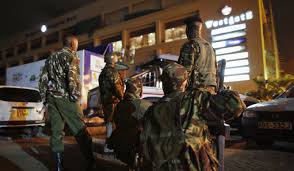
scenes from the Westgate Mall

A scene from the Westgate Mall siege

And then Westgate happened. At around noon on September 21st three groups of armed men (and allegedly at least one woman) stormed the upscale mall in Nairobi and started shooting indiscriminately. Several hours after the attack started Al-Shaabab claimed responsibility via twitter. A day later, the Islamist group gave an alleged list of the gunmen, all men between the ages of 20-27. Six were from the US, two from Somalia, and one each from Kenya, the UK, Finland and Syria. More than 36 hours after the attack began at least 69 people had been confirmed dead, including one gunman and two Kenyan officers. A visibly incensed President Uhuru Kenyatta condemned the attacks, and reassured Kenyans of a swift response to punish the perpetrators. Just a few minutes earlier Al-Shaabab had claimed responsibility for the attacks, terming them a retribution for Kenya’s invasion of Somalia in 2011. The Kenyan Defence Forces, under Operation Linda Nchi, invaded Somalia following sporadic kidnappings and attacks along the Kenya Somalia border. The forces still remain in Somalia under the command of AMISOM.

So how will Kenya respond? There will be both short-term and long-term responses to the daring terrorist attack. The likely short-term response holds more risk, and may even jeopardize the strategic objectives of the long-term response.

Understandably, in the short-term there is going to be considerable public pressure for a swift military response from the government. In the coming weeks the government’s response will likely involve both domestic crackdowns in suspected Al-Shaabab havens in Kenya (most likely in Nairobi, the Coast and North Eastern regions) and military operations against Al-Shabab targets within Somalia.
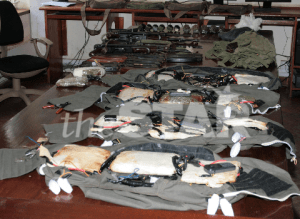
eastleigh

police recover suicide bombs in a past operation in Eastleigh (Courtesy of the Star Newspaper)

Crackdowns within Kenya will come with a lot of risk. Depending on how they are carried out, the government could end up walking right into Al-Shaabab’s trap by alienating Kenyan Muslims and ethnic Somalis who make up the majority of residents in Coast and North Eastern regions of the country that border Somalia.

Ethnic Somalis (both Kenyan and Somali nationals) also make up the majority of residents in Eastleigh, a district of Nairobi that has in the past witnessed government crackdowns targeting cells linked to the Al-Shaabab militant group.

Kenyan security forces must therefore proceed with extreme caution to ensure that as few innocent civilians as possible are arrested or roughed up by security forces in any operations within the country. A repeat of reported cases of police brutality in North Eastern following the murder of army officers by gunmen would be a terrible mistake. It is also vital that the government stresses the unity of all Kenyans of all ethnic extractions against terror attacks. Any victimization of ethnic Somalis must be met with swift punishment.

Military operations within Somalia will likely involve significant cooperation with Mogadishu, pro-AMISOM militia in Jubaland, AMISOM and the US and may not be completely under the control of Nairobi. I suspect that Nairobi might push for a more aggressive hunt for the leaders of Al-Shaabab, including Samantha Lewthwaite a.k.a. the “white widow,” a British national that is rumored to have been the mastermind of the Westgate Mall attack. Lewthwaite, the widow of London 7/7/2005 suicide bomber Jermaine Lindsay, is suspected to be on the run in Mombasa, Kenya with her four children. Crucially, any military operations in Somalia must be informed by analysts’ observation that it might be the case that Al-Shabaab is a group on the decline that is just lashing out to maintain relevance.
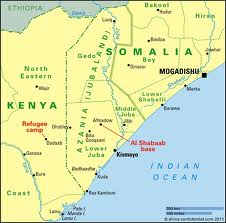
jubaland

An outline of the Jubaland region of Somalia

In the long-run, Nairobi will most likely push for a more robust Somali solution to the security crisis posed by the lack of a functional state in its backyard. Top on the agenda will be the strengthening of the security apparatus in the administration of Jubaland, the Somali state that is on the border with Kenya (For a detailed analysis of the situation in Jubaland see here). The creation of Jubaland has long been a goal of the Kenyan government as a buffer against the chaos that has been Somalia for the last two decades. Despite obvious objections from Mogadishu, Nairobi has never publicly denounced this policy goal. The brazen attack in the capital creates even more need for a strong buffer region that can help the Kenyan security forces to deal effectively with a terrorist group that appears desperate and willing to do just about anything to remain relevant. The success of this policy will depend on Mogadishu’s ability to veto it, and support from Ethiopia and AMISOM.

Ethiopia, Djibouti, Somaliland, Puntland and Kenya all have reasons to support the creation of Jubaland, or in general, a more decentralized state in Somalia. Kenya, Djibouti and Ethiopia remain wary of a potential rise in Somali nationalism and any irredentist attempts that might follow to unite all lands that make up the so called Greater Somalia – which would include the Ogaden in Ethiopia, North Eastern region of Kenya, and Djibouti. This is not a crazy fear. Mogadishu once attempted this in the late 1960s in a botched operation (in the Shifta and Ogaden wars) that ultimately led to a military coup and the rise of Siad Barre to power (See Laitin, 1976 [gated]). Ethiopia has the most to worry about regarding this potential risk. The Ogaden remains at the periphery of the Ethiopian state, giving the Somali population lots of reasons to rebel against Addis Ababa.

In the recent past Kenya has experienced an increasing level of integration of the Somali elite into the Kenyan state. Prominent Kenyans of Somali extraction include the leader of Majority in the National Assembly, the Foreign Minister, the Industrialization Minister, the head of the electoral management body (IEBC), among others.

Furthermore, many Somalis both Kenyan and from Somalia have in the recent past made significant investments in Kenya, most notably in the real estate sector. A lot of the investments have been means of laundering money got from illicit activities (some say including piracy). Indeed the governor of the Central Bank of Kenya is on record to have said that he could not account for billions of shillings in the economy. With an estimated total of only 20,000 mortgage accounts, most of the Kenya’s real estate boom has so far been financed by cash.

Yes, a lot more needs to be done for the average Kenyan of Somali extraction in North Eastern region, but the Somali elite in Kenya have every reason to not rock the boat and remain wedded to Nairobi. This same elite has so far tacitly supported Nairobi’s policy regarding the creation of an autonomous region in Jubaland.

The powerful imagery of a picture that went viral showing a Kenyan police officer, who also happens to be an ethnic Somali, carrying a baby while shielding three adults as they ran for safety at Westgate is hard to miss.

A domestic outcome of the Westgate attack will likely be greater scrutiny of the police and intelligence forces. The Kenyan police have been exposed in the past for having looked the other way in exchange for bribes to allow gun-runners to do their thing along the country’s highways. President Kenyatta will likely call for a cleaning of house both at Vigilance House and at the NSIS headquarters. All security agencies will likely see closer scrutiny from the political class and calls to pull up their socks. The minister in charge of internal security, Joseph Ole Lenku, probably has his days numbered on the job.

The quest for greater security will be completed by the proliferation of small arms and light weapons in the country on account of civil wars and general insecurity in the border regions with Uganda, South Sudan, Ethiopia and Somalia. According to a 2012 a study by the Small Arms Survey and the Kenya National Focus Point on Small Arms and Light Weapons, there are between  530,000 and 680,000 firearms in civilian arms across the country. The government must tighten its disarmament operations. Westgate has shown that AK-47s are not just the weapons of cattle rustlers, bank robbers and carjackers.

Will the reforms succeed? Very likely. The Kenya Revenue Authority is a testament to the fact that when it matters, the Kenyan government can reform key state institutions. The security sector is need of just such a reform drive. Insecurity is on the rise across the country, both from common criminals and organized gangs and terrorists. The Kenyan leadership appreciates that insecurity is not just bad in terms of risk to human lives. It is also bad for business.

If Mr. Kenyatta’s first term is to achieve even a modicum of success, the security sector must be reformed.

In all likelihood the president’s quest for a successful first term will outrank a few officers’ venal machinations within the administration. Police ineptitude in dealing with common petty and not-so petty crime creates loopholes for spectacular attacks like Westgate. Reform will therefore need to go beyond capacity building within the Special Forces and dedicated anti-terror units.

For regular Kenyans, life in Nairobi will never be the same again. It is almost impossible to imagine that things that most only read in the news could happen right at home; that a Saturday afternoon at the mall could turn into a ghastly massacre. It will take time before the capital, and the nation, finds its new normal, if at all it does.

blooddrive

Kenyans queue to donate blood at Uhuru Park on Monday Sept. 23rd (Source: The Standard)

So far Kenyans’ resiliency has been outstanding. People showed up in their thousands to donate blood. Buses in Nairobi lowered their fares to take people to blood donation points. More than 40 million Shillings has so far been raised through MPesa for affected victims. Never before in my life have I felt or seen this level of patriotism from fellow Kenyans.

I hope it sticks. Especially because the country will need it in the next few weeks and months as the government formulates and effects a response to the Westgate Mall attack.
Did we count the chickens too soon in Somalia?

May be.

First, the foreign purveyors of peace and stability involved appear to be working at cross-purposes. The US, and presumably the AU, are working for a stable Somalia. Kenya appears to be more concerned with establishing a buffer autonomous state in Jubaland with a capital in Kismayo, even at the expense of souring relations with Mogadishu (I wrote on this more than two years ago here, although my views on Jubaland have since changed). Second, the al-Shabab is regrouping, in part thanks to the activities of the same chaps that were supposed to have wiped them out. 

In August, 2011, a U.S.-backed African peacekeeping mission wrested control of the capital of Mogadishu, helping to deliver a rare respite of calm. It set the stage for the September 2012, election of a new, Western-backed President Hassan Sheikh Mohamud. Another key American ally, Kenya, last year joined forces with a Somali clan and seized control of al-Shabab’s principle stronghold, Kismayo.

But those gains are being threatened by rampant corruption within the U.S. backed government’s weak institutions, al-Shabab’s infiltration in the “highest levels” of the Somali government, and continued attacks against targets inside Somali, including a recent deadly strike on a U.N. humanitarian aid compound in Mogadishu.

Even worse, Kenyan forces in Kismayo have clashed with clans loyal to the U.S.-backed federal government while colluding with financial backers of al-Shabab in the lucrative and illicit charcoal trade, enabling the Islamist movement to refill its war chest. “The revenue that al-Shabaab currently derives from its Kismayo shareholding, its … exports and the taxation of ground transportation likely exceeds the estimated U.S. $25 million it generated in charcoal revenue when it controlled Kismayo,” the report stated.

That is Lynch over at FP in an excellent piece on the apparent increase in US involvement in the war in Somalia. 

Also, now you get the charcoal reference in my previous blog post…. Shame on the KDF, if this is true [I need a cure for denial].

Kismayu Falls, Potential for Consolidation of Gains Still Unclear

Kismayu, the southern Somalia town that was the last holdout of Al-Shabaab has fallen. Kenya Defense Forces (KDF) took control of the town early Friday. It is still unclear what happened to many of the fighters that had dug in to defend the town from KDF and AMISOM.

Somalia recently elected a new president and has shown signs of getting its act together after more than two decades of anarchy.

I hope that AMISOM will consolidate the recent gains and that Somali politicians will seize this opportunity to lay the groundwork for peace and stability moving forward.

I also hope that for KDF’s troubles Somali townspeople in Kismayu, Mogadishu and elsewhere will soon get to enjoy the services and products of Equity, KCB, Uchumi, Nakumatt, among other Kenyan companies. Economic integration of Somalia into the EAC, and similarly South Sudan and Eastern DRC, will be one of the key ways of guaranteeing a lasting peace in these trouble spots and in the wider Eastern Africa region.

More on the developing story here and here. You can also follow updates from the al-Shabaab’s twitter handle @HSMPress.

Photo credit.

Meles Zenawi, Prime Minister of Ethiopia, is dead at 57

The BBC reports:

Ethiopian Prime Minister Meles Zenawi has died at the age of 57, state media say, after weeks of illness. A government spokesman said Mr Meles had died in a hospital abroad – but did not say exactly where or give details of his ailment. Speculation about his health mounted when he missed an African Union summit in Addis Ababa last month.

Mr. Zenawi is believed to have died in a Belgian hospital – the Saint-Luc University Hospital in Brussels (where he was allegedly receiving treatment for an acute case of hematologic cancer). The last time he was seen in public was on the 19th of June 2012 at the G20 summit in Mexico.

For now the leadership transition in Ethiopia, Sub-Saharan Africa’s second most populous country, appears to have gone smoothly. According to the BBC report, the deputy Premier – Hailemariam Desalegn – will take over.

Mr. Desalegn is from the south of Ethiopia, away from the political centre of gravity of the country, which for centuries has been to the north – in Tigray and Amhara dominated areas.  

It is not yet clear if the smooth transition will stick. As the Economist reported a couple of weeks ago:

“power [in Ethiopia] has still rested with a clutch of Mr Meles’s comrades from his home area of Tigray in northern Ethiopia, many of them once members of a Marxist-Leninist group that used to admire Albania’s long-serving Communist leader, the late Enver Hoxha. This hard core, including the army’s chief of staff, General Samora Younis, retains a “paranoid and secretive leadership style”, according to a former American ambassador to Ethiopia, David Shinn. Were Mr Meles to leave in a hurry, relations between the young modernisers and the powerful old guard might fray.”

Under Mr. Zenawi (May 1991- Aug. 2012) Ethiopia was a mixed bag. His rule was characterized by one of the worst human rights records in the world. But he also brought some semblance of stability following the misguided and murderous Marxist-Leninist dictatorship of the Derg under Mengistu Haile Mariam; and presided over an economy with one of the fastest growth rates on the Continent.

It is also under Meles Zenawi that Ethiopia invaded Somalia to rid it of the Islamic Courts Union (ICU) which was beginning to spread Somalia’s chaos into Ethiopia’s Ogaden region (it helped that the U.S. also wanted the ICU ousted from Mogadishu because of their alleged links of al-Qaeda).

A recent profile in the Atlantic summarizes it all:

“for every Muammar Qaddafi there’s a Meles Zenawi, the shrewd, technocratic Prime Minister of Ethiopia. Inside of the country, he’s known for imprisoning his political opponents, withholding development assistance from restive areas, stealing elections, and cracking down on civil society NGOs. In the rest of the world, he’s often praised for his impressive economic record, though not for his human rights. Zenawi has attracted Western support by being a responsible steward of aid money, a security partner in a rough region, and a G20 summit invitee.”

I remain cautiously optimistic that the Ethiopian ruling elite will pull through the rocky transition period. The next elections are due in 2015. In the current parliament the ruling party, the EPRDF, and its allies control nearly all of the 547 seats.

Beyond Ethiopia’s borders, the absence of Mr. Zenawi will certainly be felt in Somalia (which is presently struggling to get on its feet after decades of total anarchy and whose government partly depends on Ethiopian troops for security) and South Sudan (where Addis Ababa has been a broker in past conflicts between Khartoum and Juba). Ethiopia’s hostile relationship with Eritrea might also experience some change, most likely for the worse as whichever faction emerges victorious in Addis engages in sabre rattling in an attempt to prove their hold on power.

Quick hits

UPDATE:

The Atlantic has a nice piece on the legacy of Meles Zenawi, the ailing Ethiopian Premier.

*************************

The African Union elected South African Nkosazana Dlamini-Zuma to head its executive arm, the AU Commission. Ms Dlamini-Zuma is a former wife of the polygamist South African President Jacob Zuma. I hope that with Pretoria’s success in having her elected to head the AU South Africa will take a more proactive role in leading the regional organization. As I have stated before, I think the organization needs “owners” in the form of diplomatically powerful custodians. Being the region’s biggest economy, South Africa is well placed to provide strong leadership to the African Union, if it wanted to.

Still on the AU Summit, Ethiopian Prime Minister Meles Zenawi has been conspicuously absent, fueling speculation that he is critically ill. Rumors abound that Mr. Zenawi has left the country for a Belgian hospital – the Saint-Luc University Hospital in Brussels (where he is believed to be receiving treatment for an acute case of hematologic cancer). Some opposition groups have suggested that Mr. Zenawi may have died in hospital. The last time he was seen in public was on the 19th of June. Mr. Zenawi has led Ethiopia since 1991. His record has been a mixed bag of aggressive and ambitious development projects (with results, growth has averaged over 8.4% over the last ten years) and militarism and authoritarian tendencies that have seen many opposition members detained, exiled or killed.

And in Somalia, BloombergBusinessweek reports on the massive corruption in the Transitional Federal Government.

The nearly 200-page report lists numerous examples of money intended for Somalia’s Transitional Federal Government (TFG) going missing, saying that for every $10 received, $7 never made it into state coffers.

The report, written by the U.N. Monitoring Group on Somalia and Eritrea and obtained by The Associated Press Monday, says government revenues aren’t even clear: The Ministry of Finance reported revenues of $72 million in fiscal year 2011, while the accountant general reported revenues of $55 million.

The Somali Government remains an unrepresentative shell, propped up by African Union forces and barely in control anywhere outside of Mogadishu. No elections are in sight (and rightly so. I have never been a fan of rushed post-conflict elections. See Liberia circa 1997 for details), instead the UN and the AU are presiding over a process in which Somali power brokers will put together a list of electors to appoint the next parliament. The current government’s mandate expires the 20th of August (next month).

Lest we forget…

There was a time when Somalia was different…

Democracy is also a deeply rooted Somali political principle which, I suspect, continues much as usual in the more remote parts of the nomadic interior. How long it will be before it reasserts itself in the central political life of the state remains to be seen.

We are still waiting.

For an account of the politics of the Siad Barre coup of 1969 check out Lewis (1972)

Kenyan Intervention in (al-Shabab dominated) Southern Somalia

The ICG has an excellent new report on the state of the the Kenyan military intervention in Somalia.

The pressing issues raised in the report include economic, political and social concerns:

The slow pace of the military operation and the high cost of keeping troops in the field are the main reasons behind Nairobi’s desire to operate under AMISOM command. The treasury would then not have to pay the full cost of the campaign. It is estimated that Linda Nchi is costing the government at least KSh 210 million ($2.8 million) per month in personnel costs alone in a year of a record KSh 236 billion ($3.1 billion) budget deficit. If the interven- tion’s cost is not contained, already high inflation will spiral, and local discontent could become more serious…..

The intervention in Somalia is likely to have a complex impact on Kenyan Somalis’ political positions, because their attitude toward it is not straightforward. The government’s desire to establish a buffer zone between the border and the rest of Somalia privileges the Ogaden, the majority Kenyan-Somali clan. The possibility of a semi-autonomous state in the south of Somalia politically dominated by Ogaden may not be favoured by the minority, marginalised clans of north-eastern Kenya, such as the Ajuran and Degodia…..

Views within the ethnic Somali and wider Muslim community regarding the war are mixed but predominantly critical. Even those now mildly supportive could easily become hostile, especially if things go badly wrong, and civilian deaths mount. The notion that the war is popular within the Muslim community is wishful thinking, and the potential to exacerbate already worrying radicalisation in the country is very real. The police and other security services have shown some restraint in bigger cities, but there have been numerous reports of abuses in North Eastern Province.

Africa’s most forgotten Democrat

Who was the first leader of independent Africa who lost an election and agreed to step down?

No, it was not Mathieu Kerekou of Benin.

Because my adviser [I doubt he reads this blog] spent some of his early years in academia working and publishing on Somalia, I have been reminded quite a few times that back in 1967 Somalia’s president Aden Abdulle Osman Daar was actually the first leader of independent Africa to lose an election and agree to step down [see here].

This is a fact that many Africanists and journalists have forgotten. Please give credit where it is due.

Kenya’s stalled operation in Somalia

The East African reports:

There are four major factors that have bogged down the military campaign. They are: Lack of finances to run a long-drawn war; the differences between interested parties over whether to divide Somalia into autonomous regions or maintain one united country; differences over the option to engage Al Shabaab in a political dialogue, and the ambivalence of Somalia’s President Sheikh Shariff Ahmed.

Kenya’s intention has always been to create an autonomous region in southern Somalia to act as a buffer to the chaotic mix that is central Somalia. The plan has apparently become even more ambitious:

Kenya is proposing the division of Somalia into eight autonomous regions: Central region or Hiran; Somaliland; Puntland; Bay Bakool; Jubaland; Shabelle; Gedo and Mogadishu, commonly known as Banadir.

But it is increasingly becoming apparent that the cost and politics of such an operation may not be as palatable as the planners had initially thought.

President Sheikh Shaiff’s ambivalence is intended for the domestic audience and also motivated by his desire to concentrate power in Mogadishu (he dislikes the idea of autonomous regions proposed by Kenya).

The first source of ambivalence is reasonable. No president wants to be in support of a foreign invasion that occasionally results in the death of innocent citizens. I hope the Kenyan commanders, under AMISOM or not, do not pay too much attention to his flip flopping on how to engage the al-Shabab.

The second is not. Two decades of warfare have made it clear that trying to solve Somalia’s problems from Mogadishu may not be a good idea. The only way that might happen is through a force like the Islamic Courts Union. But the international community will not allow a pure military solution, given the human rights implications.

Perhaps it is time a decentralized peace initiative got underway.

Finally, it is encouraging that after weeks of pro-war jingoism the news media in Nairobi have begun to question the execution of the war in Somalia. More public discussion about the logic and cost of the war needs to take place in order to keep both the generals and politicians on the straight and narrow.

More on this here.


donkey markets and the al-shabab

Kenya’s invasion of al-Shabab held parts of Somalia has inadvertently elevated the demand for donkeys. Because of the rains (making the use of vehicles a nightmare) and a desire to disguise their transportation of arms, the al-Shabab have resorted to the use of donkeys.

The BBC reports:

In his latest series of tweets, the Kenyan military spokesman said that the price of donkeys had risen from $150 (£100) to $200 following the increased al-Shabab demand for the animals.

“Any large concentration and movement of loaded donkeys will be considered as al-Shabab activity,” he wrote, suggesting they would be targeted by Kenyan firepower.

“Selling Donkeys to al-Shabab will undermine our efforts in Somalia,” he continued.

Somalis’ improvisation in warfare is well known. The technical (which has been ubiquitous in Libya in recent months) is their key contribution to military technology, and has been the go to battle wagon in many civil wars since the early 1990s.

More on donkey markets  here.

Quick hits

Jesus! Good intentions are not enough. (Properly regulated) Markets rule.

Kenya and Eritrea appear to be on a collision course. The Horn might get a little bit hotter in the next few months.

Some insights into politics and development in Nigeria. I hold the minority opinion that Nigeria might yet surprise those short selling it at the moment. The political situation is almost good enough. Remember, all you need (at least for the initial stages of growth) is predictability, not Sweden’s institutions.

AFRICOM has a blog. The posts are sporadic but it’s worth checking out once in a while.

Our man in Mogadishu

QUICK UPDATE:

Two separate minor explosions rocked Nairobi in the last 24 hours, one at a club on Mfangano Street and another at OTC. One person has been confirmed dead and several people were injured. By targeting ordinary Kenyans in the eastern reaches of the city (instead of other soft targets in upper class parts of town) al-Shabab’s strategy seems to be one of forcing the Kenyan public to pressure the government to stop the military operation in Somalia.

My hunch is that they are mistaken. The Kenyan military did not go into Somalia because of public pressure but because of a desire to restore confidence in the tourism sector and possibly after a little prodding from the US and France. And killing innocent Kenyans will only harden public resolve to have the al-Shabab kicked out of Eastleigh.

*********************************************

Somali President Sheikh Sharif Sheikh Ahmed says Kenya’s campaign against Al-Shabaab rebels should not go beyond training Somali soldiers and provision of logistical support in specified and agreed areas.

Speaking while on a visit to the the frontline of the war between his government’s forces and the Al-Shabaab, President Sharif stated that many Somalis were anxious to know more about the military operations reportedly being carried out inside Somalia by Kenyan troops.

Several factors can explain why a beleaguered president, unable to leave a restricted section in his capital, would oppose help that could help stabilize his country.

  1. It could be a domestic politics issue. Leaders of occupied states – e.g. Afghanistan and Iraq – often have to juggle the dual roles of public opposition and private support of foreign troops in their territory. Understood this way, we should brush aside Sharif Sheikh Ahmed’s opposition to the Kenyan troop presence in Somalia as a mere PR exercise.
  2. The invasion could be harming the president’s interests. After two decades of life without a central government nearly all of the Somali elite have dirty hands. Mr. Ahmed, himself was once the commander in chief of the Islamic Courts Union, a parent of al-Shabab. He is also from South Somalia, where Kenyan troops are currently stationed. By routing al-Shabab and all potential for organized armed organization, the Kenyan invasion might actually be taking the rug from under Ahmed’s feet. His election to the Somali presidency was not because he was the most peaceful of the warlords.
  3. The invasion might undermine other interests within Somalia that the president relies on. The piracy trade on the Indian Ocean is a lucrative business that is allegedly fueling the property boom in Kenya, especially in Nairobi. I would be surprised no one in Mogadishu had a hand in this and other shady operations such as gun-running in the wider Eastern African region. Kenyan stated goal of capturing Kismayu will most certainly disrupt these businesses, with huge financial consequences for the real Big Men involved. Mr. Ahmed might just be protecting the interests of those he depends on.

Whatever the case one hopes that Somalis in the south of the country will not, in their president’s utterances, find justification to actively undermine the Kenyan mission to deny al-Shabab of an operating base.

Meanwhile two grenade explosions have hit Nairobi in the last 24 hours, with one person confirmed dead.

Also, after a week of rallying around the flag in support of Operation Linda Nchi, the Kenyan media is beginning to ask questions about planning and long-term efficacy of the Somalia mission. It is unclear just how much uncertainty, about their own physical security, Kenyans will tolerate as the government continues to execute the war against Al-Shabab.

Kenya at War

UPDATE II: John Campbell over at the Council on Foreign Relations discusses the extent of US and French assistance to the Kenyan invasion of al-Shabab controlled regions of Somalia. Check it out here.

UPDATE: Reaction to the Expert Comment from Middleton at Chatham House:

Middleton makes good points about the Kenyan invasion of al-Shabab-held regions of Somalia. The Ethiopian failure in 2006 and potential for a humanitarian crisis must certainly be part of the cost-benefit analysis on the Kenyan side. Failure to establish a secure buffer zone in Southern/Western Somalia and/or to defeat the al-Shabab will definitely have serious consequences.

But the alternative is worse. Al-Shabab elements kidnapped aid workers in Dadaab, in a clear signal that they are willing to disrupt humanitarian aid not only within the areas they control but also within Kenyan. In addition, it is important to appreciate the gravity of the al-Shabab threat to Kenyan security. If al-Shabab is allowed to continue operating within Kenya it may morph into a more dangerous domestic insurgency with a ready supply of disaffected groups – Kenyans in the North East who for decades have been neglected by Nairobi and have legitimate reasons to express those grievances by organizing around such a movement.

In addition, unlike Ethiopia in 2006, Kenya is in Somalia purely for national security purposes. Ethiopia had the baggage of the Ogaden War and the Somali-backed insurgency in its own Ogaden region. Plus it was very clear at the time that the US was bankrolling the Ethiopian war effort – the ICU obviously used this to develop a narrative of western-backed “Christian Ethiopia” invading a Muslim country. Al-Shabab, at least for the moment, does not have the advantage of defining the Kenyan military operation in their own terms

[It is interesting that neither the Kenyan parliament nor presidency has officially declared war on anyone. It is the internal security and defense ministries that have been running the show].

Al-Shabab has been severely weakened around Mogadishu. The ongoing famine has also served to weaken their control of Somalis’ hearts and minds. Their remaining stronghold is the port town of Kismayu whose capture will deprive them of an important supply route and source of revenue (via Indian ocean piracy). If there was ever a good time to try and defeat the group in the battlefield (especially since they have refused to negotiate with anyone), this is it.

********************************************************

On Sunday the Kenyan armed forces moved into Western/Southern Somalia. The invasion was occasioned by recent kidnappings of tourists and aid workers near the border with Somalia. Al-Shabab, the proscribed terror group in Somalia, is suspected to have been behind the kidnappings, although it denies the charge.

The invasion is a clear signal of the failure of Kenya’s previous policy of strategic containment of the “Somalia problem.”

Source: Gado, Daily Nation

As of Tuesday the Kenyan army had advanced more than 100 miles into Somali territory, although bad weather has significantly slowed the advance. The target town is Al-Shabab’s stronghold port town of Kismayo. The DoD spokesperson Emmanuel Chirchir is reported to have said that “The troops are ready for anything. If it takes us to December they are willing to celebrate Christmas there.”

The invasion comes at a difficult time for the country and will no doubt generate significant economic and political consequences.

Inflation is at over 17%. The Kenyan Shilling is struggling against the US dollar. And the rate of economic growth appears to have slowed from a projected annualized rate of 5.6%. The increase in military expenditure amid high inflation, a severely weakened Shilling and calls for fiscal austerity will surely have a negative impact on future growth prospects. For more on this check out the Business Daily.

On the political side, success in routing al-Shabab will be another feather in retiring President Kibaki’s hat.

Failure might ignite a backlash against the country’s military establishment. It will be interesting to see how the political class deals with failure, since this is the first time that Kenya has ever undertaken a military operation of this scale. My take is that the military, as an institution, will take the fall in case of failure. Because of their ethnicized nature, previous lapses in security in the borders with Ethiopia and Uganda did not create that many problems for the pols in Nairobi. That said, this time might be different because of the nature and scale of the threat.

Of interest will also be how this military operation affects civilian control of the military.

Experience in many less institutionalized countries shows that heightened militarization results in diminished civilian control of the military – with the potential for coups.

I doubt this will be the case in Kenya. However long “Operation Linda Nchi” takes the result will be closer to the Tanzanian invasion of Uganda in the late seventies than to cases where military adventurism resulted in the overthrow of an incumbent (like in Siad Barre’s Somalia). Civilian control of the military in Kenya remains stronger than in most African countries.

Beyond matters of civilian control of the military it is important to consider what the repercussions will be for ordinary Kenyans. Many fear that the al-Shabab might strike Kenya where it hurts most – in Nairobi. This is a real possibility that one hopes the Kenyan government has planned for.

Also, in the event of a protracted war or a major terrorist attack by al-Shabab within Kenya there is the possibility of a backlash against Kenyans of Somali extraction. While this might happen among the masses I doubt that any of the major political figures will actively promote such a misguided reaction. North Eastern Kenya is an important voting bloc that the presidential front-runners in next year’s general election will want on their side (Mr. Odinga, the Kenyan Prime Minister is particular keen on this voting bloc). In this regard the fact that blatant scapegoating of Somalis will have negative political consequences is a source of mild comfort.

The editorial pages of the major newspapers in Kenya have all been solidly behind the invasion. Quoting the Business Daily:

Kenya’s foreign policy has at best been mild and at worst meek.

The nation has been out of the regional combats even when incursions took place in its territory, opting for peaceful resolutions.

This has happened in the Kenya-Ethiopia border during the Oromo wars and during the Ogaden War when Kenya opted for peace parleys rather than battlefield tussles.

But this dud non-aligned policy of the 1960s, exacerbated by the extinguished Cold War, holds no place in the current political order where terrorism and banditry has replaced conventional wars.

There were few options left for Kenya. One, they cannot let the al-Shabaab militia group continue to with their raids oblivious of our military power. Secondly, the sovereignty of our nation, and our pride was undergoing severe test.

The al-Shabab extremism must come to an end.

Drought is an act of nature, famine is man-made

Check out this new campaign video by ONE.org

[youtube.com/watch?feature=player_embedded&v=dzcRSr6PW_o]

You can sign the petition here.

HT HuffPost