Nairobi to Lusaka, Part II

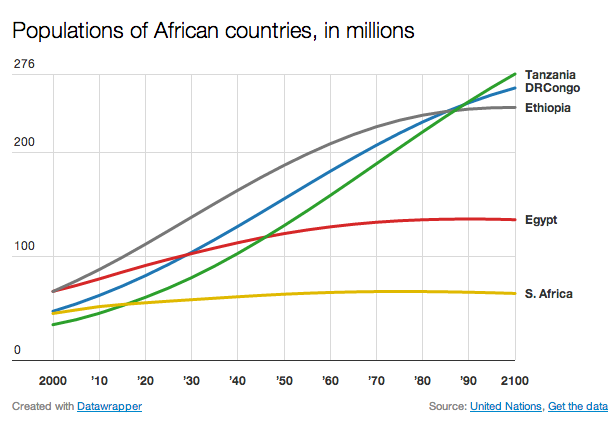
Dar es Salaam is a pleasant town in late June. I had only been there once before, back in 2011 when I stayed for a day and a half to catch the Tazara. I didn’t like it then because of the heat and humidity (humidity is up there with cats – I am allergic – on the list of things I cannot stand). But this time round it was nice, I managed to walk around town marveling at the pillars of concrete and glass that are rising up in every corner of the city. The construction boom puts even Nairobi to shame, enough to make me think that the suggestions that Tanzania may soon eclipse Kenya as the place where all the action is in East Africa are not that far fetched after all (see image and this piece).  Image
My only complaint was that a prime section of the beach front still remains under-utilized, although this might be because of the presidential palace nearby. I hear you can’t drive there at certain times of the day (Stop channeling Mugabe, Bwana Kikwete. Also, let Chadema be). Oh, and I did manage to drive on the Kibaki road. I thought it was a new road, but it is not. Sections of it are actually pretty bad. Apparently, the Tanzanian government is planning an upgrade soon. I also drove past Mwalimu Nyerere’s home. It made me respect the man even more.

I arrived in Dar late on Tuesday night after many hours of travel by bus. On Thursday morning I was scheduled to continue with the second leg of the journey to Lusaka. I was at the bus stop by 5:45 AM, still sleepy. I had stayed up late the previous night, watching the Confederation Cup matches of the day, reading and writing my Saturday column. I fell asleep as soon as I got to my seat.

Image

Dar’s public housing units. For a moment I thought that the choice of color was meant to discourage applicants. Until I saw the pink public housing headquarters. Some of the units are in really nice parts of town.

The bus left the station promptly at 6:15 AM. Tanzania is huge. From Dar es Salaam to the Tunduma border is about 931 kilometres. The drive to the Zambian border took a total of 16 hours.

As I said in the previous post on this trip, I regretted taking the bus. If you want to travel overland between Dar and Lusaka, take the train. It is a million times more pleasant. There is a restaurant and a bar (that serves Tusker) on the train. There are bathrooms. And you have a bed. Plus the train is just slow enough that you can read and truly appreciate the empty Tanzanian countryside.

But the trip wasn’t all gloomy. The scenery was still enjoyable. Sections of Tanzania are quite hilly, with amazing views of cliffs and rivers and rock formations. At some point past Iringa I saw what seemed to be the biggest tree plantation in the world. For miles and miles all I could see were rows and rows of trees. And when there were no trees there were rows and rows of sisal. Someone is making bank off the land in that part of the country.

Also, western Tanzania is a lesson on how hard it is to achieve economic development in the context of a sparsely populated country. Such situations make it impossible to reach everyone with the grid and water pipes. Either the government has to wait for demographics to work its magic (again, see figure above – and be sure to check out this story on the Africa-driven demographic future of the world) or provide smart incentives to accelerate the process of urbanization.

For those who went to high school in Kenya, journeying by land through Tanzania reminded me of Ken Walibora’s Siku Njema. I felt like I was retracing the steps of Kongowea Mswahili. Some day I would like to go back and spend some time in Morogoro and Iringa. By the way, Siku Njema is by far the best Swahili novel I have ever read (which reminds me that it has been eight years since I read a Swahili novel. Suggestions are welcome, preferably by Tanzanian authors). It is about time someone translated it into English for a wider audience.

We reached Tunduma some minutes past 10 PM. The border crossing to Nakonde on the Zambian side was closed. Some passengers on the bus left to rent out rooms for the night. I decided to tough it out on the bus with the crew and a few other guys. Desperate for something warm to eat, I had chicken soup and plain rice for dinner. The “restaurant” reminded me of the place in Tamale, Ghana where Vanessa and I got food poisoning two months earlier. But I was desperate. I quickly ate my hot soup and rice and hoped for the best.
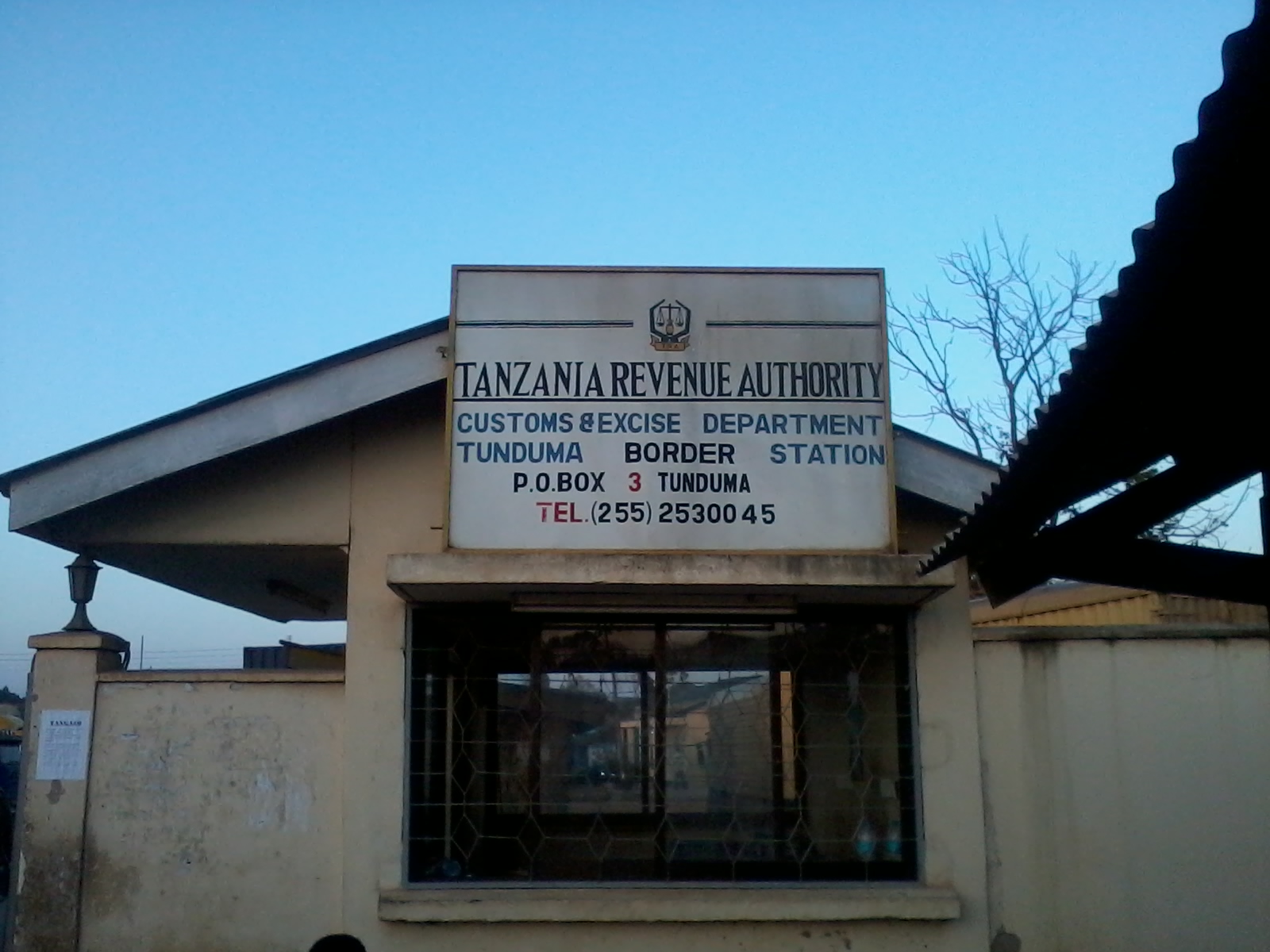
ImageI crossed the border early in the morning on foot. The bus had to wait in line for inspection and to pay duty for its cargo (It is at this point that I learned that the bus was actually going all the way to Harare in Zimbabwe). I am usually very careful with money changers, but perhaps because of my tiredness and lack of sleep the chaps in Nakonde got me.

If you ever cross to Nakonde on foot wait until you are on the Zambian side to exchange cash at the several legit forex stores that line the streets.

The bus finally got past customs at noon (on Friday). In Nakonde we waited for another two hours for more passengers and cargo.

I took the time to get some food supplies. Lusaka was another 1019 kilometres away. 

By this time I was dying to have a hot shower and be able to sleep in a warm bed. It was cold. Like serious cold. And Lusaka was still another 14 hours away.

I slept lightly through most of the 14 odd hours. In between I chatted with two Kenyan guys that were apparently immigrating to South Africa, with little more than their two bags. They said that this was their second attempt. The previous time they found work in Lusaka and decided to stay for a bit before going back to Nairobi. They were part of the bulk of passengers from Nakonde who were going all the way to Harare. Apparently, this is the route of choice for those who immigrate from eastern and central Africa into South Africa in search of greener pastures.

Before it got dark we saw several overturned trucks on the road. I slept very lightly, always waking up in a panic every time the driver braked or swerved while overtaking a truck just in time to avoid oncoming traffic. My only source of comfort was the fact that the driver was a middle aged man, most likely with a family to take care of and therefore with a modicum of risk aversion.

I arrived in Lusaka at around 4 AM, more than three days and 2871 kilometres since leaving Nairobi.

I said goodbye to my two Kenyan countrymen and rushed out of the bus as soon as I could. On the way to my hotel I couldn’t stop thinking how much I would like to read an ethnography of the crew of the bus companies (and their passengers and cargo) that do the Dar to Harare route.

At Lusaka Hotel that morning I had the best shower I had had in a very long time. And slept well past check out time. I had two months of fieldwork and travel in Zambia to look forward to.

Happy 95th Madiba!!!

Image

nelson mandela

Are large cities bad for dictators?

How does redistributive policy affect the survival of authoritarian regimes? I argue that redistributive policy in favor of cities, while temporarily reducing urban grievances, in the long-run undermines regime survival by inducing urban concentration. I test the argument using cross-national city population, urban bias, and nondemocratic regime survival data in the post-WWII period. The results show that urban concentration is dangerous for dictators principally by promoting collective action, that urban bias induces urban concentration,and that urban bias represents a Faustian bargain with short-term benefits overwhelmed by long-term costs.

That is Jeremy Wallace in a new paper in the JoP. The full article (pdf) is here.

H/T War of Ideas.

Pockets of California amid sub-Saharan Africa?

Rant and rave alert. 

As an undergrad at Yale I took several classes in which professors, TAs and fellow students would casually say things that insinuated that all of Africa (read sub-Saharan Africa) was a cross between a hospice, a giant slum and a war zone. Let’s just say that it all made me a little bit uncomfortable, and sometimes forced me to over-compensate in discussions and with papers and homework. I was particularly disappointed in my professors for not knowing any better. It probably also played a big role in my choice to pursue a career as an academic in the social sciences. 

The quote below reminded me of those episodes:

Despite considerable economic growth and increasing self-confidence as a major global player, modern India is a disaster zone in which millions of lives are wrecked by hunger and by pitiable investment in health and education services. Pockets of California amid sub-Saharan Africa, sum up Sen and Drèze.

It’s one thing when an ignoramus who imagines Kenya to be a town in South Africa that does a mean giraffe barbecue says something nasty about an entire region and its people. But it’s quite another when it comes from a college professor or from people that you expect to know better. 

For instance, when we say California, are we talking Palo Alto or East Palo Alto? I must add here that because it is Sen (my beloved author of The Idea of Justice), may be he meant the “median Californian experience” vs the “median African experience” as opposed to simply comparing Palo Alto with Kibera. May be.

I admire Prof. Sen. Very much.  But I would like to register my disappointment over this offending line. The full article in the Guardian is actually quite illuminating regarding inequality in India. 

If you ever teach a class or write a book or newspaper article or give a talk, please know that it is not kosher to use the word Africa as short hand for everything that you imagine to be wrong with this world. Always remember that part of your audience might include real flesh and blood Africans. Spare us the awkwardness. Please. 

The decline of Economic History at MIT

What is the cost of not having economic history at MIT? It can be seen in Acemoglu and Robinson, Why Nations Fail (2012). This is a deservedly successful popular book, making a simple and strong point that the authors made originally at the professional level over a decade before (Acemoglu, Johnson and Robinson, 2001). They assert that countries can be “ruled by a narrow elite that have [sic] organized society for their own benefit at the expense of the vast mass of people” or can have “a revolution that transformed the politics and thus the economics of the nation … to expand their economic opportunities (Acemoglu and Robinson, 2012, pp. 3-4).”

The book is not however good economic history. It is an example of Whig history in which good policies make for progress and bad policies preclude it. Only transitions from bad to good are considered in this colorful but still monotonic story. The clear implication is that if countries can copy the policies of English-speaking countries, they will prosper. No consideration is given to Britain’s economic problems over the past half-century or of Australia’s relative decline for a century.

That is Peter Temin writing about the story of Economic History at MIT in the 20th century. For more click here (H/T Greg Mankiw).

Also, to be honest, one of the reasons I am into development (and the politics around it) is because of my fascination with economic history. I wish more development practitioners and theorists alike cared a little bit more about economic history. At the very least, looking at how things really actually worked out in the past serves to temper the urge to completely fall for the latest fad within the development industry. 

What explains voter turnout inequality across the world?

We find that in countries with a high degree of bureaucratic capacity (i.e. ability to tax the rich), the wealthy turn out at higher rates than the poor. Consistent with our theory, we find that the turnout of the poor is largely unaffected by bureaucratic capacity. This finding is robust to a variety of measures of state capacity. We also provide evidence for an additional implication of our theory. If turnout rates amongst the wealthy are driven by their potential tax exposure, it ought to be the case that where redistributive politics on a tax-and-transfer dimension are salient, the rich turn out to vote at higher rates than the poor. We show that where the rich and the poor support different political parties, the rich turn out to vote at higher rates. We also provide evidence that likely confounds, reverse causation, and social desirability bias in reported turnout cannot account for the patterns we find in the data.

That is Kimuli Kasara and Pavithra Suryanarayan of Columbia [h/t monkeycage] in a paper explaining global variation in turnout rates by income. In a roundabout way the paper speaks to the factors that enhance democratic stability. Low state capacity (in this case with regard to tax collection) is bad for democratic stability because, among other things, it denies young democracies the stabilizing effect of the middle and upper classes in the democratic process thereby making them continue to behave like autocracies (Did you know that autocracies in Latin America redistributed land more than democracies?) It also takes away the taxation-based implicit contract between the voter and the state, thereby giving politicians a free hand to do as they wish with public resources.

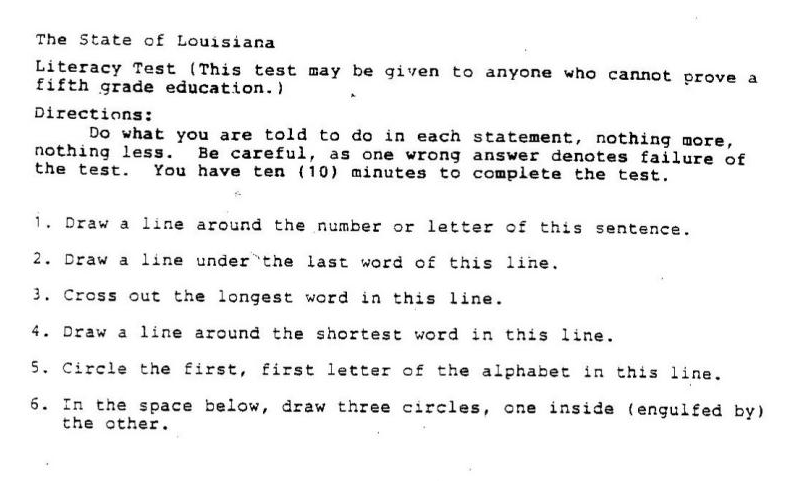
In related news, following the US Supreme Court decision on the Voting Rights Act Rebecca Onion at Slate posted a nice piece on the original literacy tests in Louisiana that were designed to keep minorities away from the polling stations. Interesting stuff. I wonder what the average score would be if the tests covered all voting age Americans…

Image

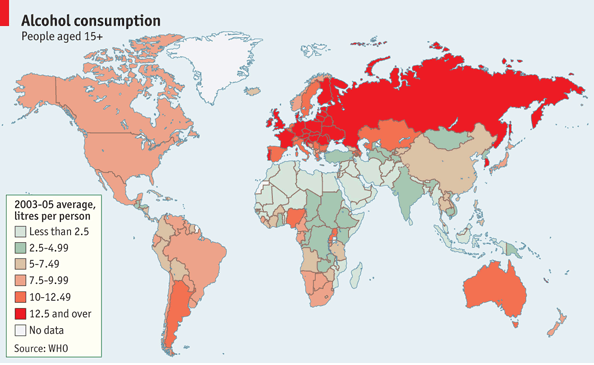
So Tanzanians drink more than Kenyans?

Kenyans pride themselves in their ability to consume machozi ya simba (lion’s tears) and have a good time, more so than their regional neighbors, especially the polite Tanzanians to the south. But the data, at least between 2003-05, says something different. Kenyans drink the least in the EAC (which is a testament to the strong conservative undercurrents in Kenyan society despite the outward liberalism that we (almost exclusively Nairobians) all like to wear on our sleeves).

Image
Source: The Economist
It is also in Kenya that there is an anti-drinking law forbidding the sale of alcohol before 5 PM on weekdays and 2 PM on weekends and after 11 PM. Of course the law is almost never enforced and seems to only benefit the police whenever they need extra cash from bar operators. That said, sections of Kenyan society have a serious drinking problem that the government continues to ignore at enormous social and economic cost. Incidentally, like all good Commanders in Chief, ours is no stranger to booze, although he must’ve ditched the habit now that he is lives in the House on the Hill.

Are some Guinean government officials idiots, criminals or both?

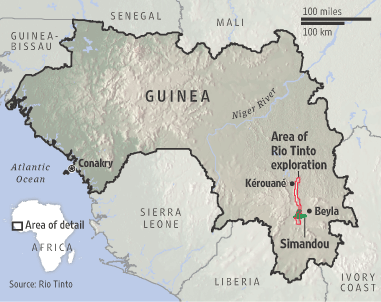
This was an extraordinary windfall: B.S.G.R. had paid nothing up front, as is customary with exploration licenses, and at that point had invested only a hundred and sixty million dollars. In less than five years, B.S.G.R.’s investment in Simandou had become a five-billion-dollar asset. At that time, the annual budget of the government of Guinea amounted to just $1.2 billion. Mo Ibrahim, the Sudanese telecom billionaire, captured the reaction of many observers when he asked, at a forum in Dakar, “Are the Guineans who did that deal idiots, or criminals, or both?”

Image

Source: WSJ Online

That is Patrick Keefe in a long but fantastic piece in the New Yorker detailing the web of corruption that characterizes resource sector deals on the Continent. It is an account of mining executives so daring that they even sign contracts on kickback.

The villains the piece are not just the mining executives but also government officials who are too lazy to even do the required due diligence to ensure that, at the very minimum, they get a “fair value” in kickbacks from the companies to which they readily mortgage their countries.

The answer to Mo Ibrahim’s question above lies in the quote below:

During our meeting in the whitewashed building, I asked Touré how it made him feel to learn of such allegations about former colleagues. He paused. “The feeling of shame,” he said at last. “Because, finally, what they have got personally—let’s say ten million U.S. dollars, twelve million U.S. dollars—what does that amount to? Compared with the lives of the whole country?” The lights in the room suddenly shut off, and the air-conditioner powered down. He didn’t seem to notice. “I don’t think that it is tolerable or acceptable from the investors,” he continued. “But I’m more shocked by the attitude and the behavior of the national decision-makers” [Note: the new president of Guinea has been waging a war against shady deals from past administrations]

As I have complained before, something needs to be done about the way African states deal with multinationals in the resources sector (beginning with getting the skill set of government workers in the responsible ministries to match those of the oil company reps).

Also, every time I read such stories I can’t help but think, where are the African Beny Steinmetz’s? When will the African political class transition from being petty brokers to actual investors in their own resources?

Africa’s newfound love with creditors: Bond bubble in the making?

I know it is increasingly becoming not kosher to put a damper on the Africa Rising narrative (these guys missed the memo, H/T Vanessa) but here is a much needed caution from Joe Stiglitz and Hamid Rashid, over at Project Syndicate, on SSA’s emerging appetite for private market debt (Africa needs US $90b for infrastructure; it can only raise $60 through taxes, FDI and concessional loans):

To the extent that this new lending is based on Africa’s strengthening economic fundamentals, the recent spate of sovereign-bond issues is a welcome sign. But here, as elsewhere, the record of private-sector credit assessments should leave one wary. So, are shortsighted financial markets, working with shortsighted governments, laying the groundwork for the world’s next debt crisis?

…….Evidence of either irrational exuberance or market expectations of a bailout is already mounting. How else can one explain Zambia’s ability to lock in a rate that was lower than the yield on a Spanish bond issue, even though Spain’s [which is not Uganda…] credit rating is four grades higher? Indeed, except for Namibia, all of these Sub-Saharan sovereign-bond issuers have “speculative” credit ratings, putting their issues in the “junk bond” category and signaling significant default risk.

The risks are real, especially when you consider the exposure to global commodity prices among the ten African countries that have floated bonds so far – Ghana, Gabon, the Democratic Republic of the Congo, Côte d’Ivoire, Senegal, Angola, Nigeria, Namibia, Zambia, and Tanzania.

In order to justify the exposure to the relatively higher risk and lending rates on the bond market (average debt period 11.2 years at 6.2% compared to 28.7 years at 1.6% for concessional loans) African governments must ensure prudent investment in sectors that will yield the biggest bang for the buck. And that also means having elaborate plans for specific projects with adequate consideration of the risks involved.

Here in Zambia (which is heavily dependent on Copper prices), the Finance Minister recently had to come out to defend how the country is using the $750 million it raised last year on the bond market (2013-14 budget here). Apparently there was no comprehensive plan for the cash so some of the money is still in the bank awaiting allocation to projects (It better be earning net positive real interest).

“They are fighting each other. By the time they have projects to finance, they will have earned quite a lot of interest from the Eurobond money they deposited. So, all the money is being used properly,” he [Finance Minister] said.

Following the initial success the country’s public sector plans to absorb another $4.5b in debt that will raise debt/GDP ratio from current ~25% to 30%. One hopes that there will be better (prior) planning this time round.

Indeed, last month FT had a story on growing fears over an Emerging (and Frontier) Markets bond bubble which had the following opening paragraph:

As far as financial follies go, tulip mania takes some beating. But future economic historians may look back at the time when investors financed a convention centre in Rwanda as the moment that the rush into emerging market bonds became frothy.

The piece also highlights the fact that the new rush to lend to African governments is not entirely driven by fundamentals – It is also a result of excess liquidity occasioned by ongoing quantitative easing in the wake of the Great Recession.

I remain optimistic about the incentive system that private borrowing will create for African governments (profit motive of creditors demands for sound macro management) and the potential for this to result in a nice virtuous cycle (if there is one thing I learned in Prof. Shiller’s class, it is the power of positive feedback in the markets).

But I also hope that when the big three “global” central banks start mopping up the cash they have been throwing around we won’t have a repeat of the 1980s, or worse, a cross between the 1980s (largely sovereign defaults) and the 1990s (largely private sector defaults) if the African private sector manages to get in on the action.

African governments, please proceed with caution.

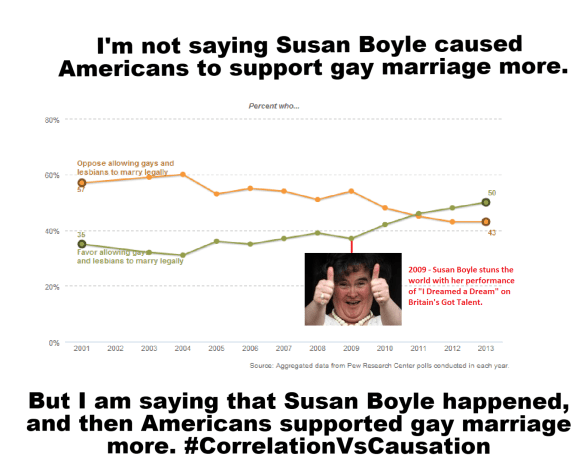
Correlation vs Causation

Image

Correlation vs Causation

Why are some African governments so bad at managing their countries’ resources?

UPDATE: According to Reuters,  Israeli billionaire businessman Dan Gertler sold one of his Congo-based oil companies to the government last year for $150 million – 300 times the amount paid for the oil rights – in a deal criticised by transparency campaigners.

*************************************************************

Resource mismanagement in Africa is not just a story of rampant corruption and the complete lack of political will for reform. It is also a story of governments that remain completely out-staffed by multinationals with far superior technical capacities. Improving resource management on the continent will therefore have to be as much about government technical capacity development as it will be about political reform.

Vale, for example, employs nearly 200,000 people around the world and has annual profits equivalent to nearly four times Mozambique’s state budget. It can recruit, train, and compensate employees to represent its interests on a scale far beyond what the government can do. Without Vale’s capacity for number crunching, Mozambique’s regulators lean on the companies they oversee for all manner of important data.

In 2011, the Mozambican government published an independent study of the country’s mining, oil, and gas industries. Conducted by a Ghanaian consulting company, Boas and Associates, the report was part of Mozambique’s application to the Extractive Industries Transparency Initiative, a World Bank-funded program designed to encourage an honest accounting of mining revenue and payments by participating countries and corporations alike. Mozambique’s candidacy was ultimately denied on the basis of its failure to publish what it earned from the companies involved, [but the report also noted a lack of qualified personnel in the agencies governing almost every aspect of the extraction of Mozambique’s natural resources]: licenses, prospecting, mining and drilling, sales, export.

According to the report, the [Mozambican government has no way of verifying the quality and quantity of minerals in the concessions it leases to private companies, and it depends on those companies for data on what is ultimately mined and exported]. Worse, the government has no system for monitoring global commodity prices or of tracking companies’ investment costs, which means it cannot independently verify a company’s profits.

Lesson? It’s not all corruption. It is also about the incentive structure that has resulted from government’s reliance on the word of profit-maximizing mining companies.

Improving government capacity to regulate resource sector operations is a key pillar of accountability and transparency that is currently missing from the discussion on how to manage Africa’s resources. It is easier to blame it all on thieving politicians and mining executives.

Not all governments might find it useful to improve their technical capacity (it is easier for them to steal if the valuation of state assets remain uncertain) but I bet many African states, especially those with moderately democratic regimes, can be persuaded to boost their technical capacity, if not for anything then just to improve their bargaining position vis-a-vis mining companies. At a minimum, this would mean more money for their pockets, and perhaps also more money for roads, schools and hospitals.

Nairobi-Lusaka by road, Part I

Image

The towering Uhuru Heights under construction in Dar es Salaam combines office space with residential apartments

Lusaka must be the only African capital (or major city) that is not a frenzied construction site. No new major roads are being constructed downtown. My quick look only found two new constructions of tall-ish buildings downtown. Lusaka feels really sleepy compared to the three other African capitals/major cities that I have been to in the last three months  – Dar es Salaam, Nairobi, Accra. Dar es Salaam, in particular, is impressive. The city is constructing a rapid bus transportation system with a dedicated lane. Citywide construction of “office space cum residential apartments” mark the landscape promising a rich experience of downtown living for city residents in the near future (I wish Nairobi did more of this….)

The guy who runs the place I am staying at in Lusaka tells me that the only construction going on in town is of shopping malls and expensive residential houses that no one will afford. President Michael Sata, he argues, is bent on turning Zambia into Zimbabwe.

Michael Sata (a.k.a King Cobra) may not go the way of uncle Bob in Zim but he is definitely not the hope for change that Zambians voted for back in 2011. The growth in the economy (6% on average in the last decade, 7.3% last year) is barely trickling down and the ruling PF seems too preoccupied with killing the opposition to care. The old duo of  Scott and Sata seem out of ideas on how to translate the country’s economic growth into wider socio-economic transformation.

Indeed the African Development Bank in its latest report on the Zambian economy noted that “Zambia has yet to achieve significant gains in social and human development. The poverty headcount remains high, with about 60% of the population still living below the poverty line.” The economy is imbalanced, heavily dependent of capital-intensive copper mining that it barely taxes (80% of exports, but paltry a 6% of revenue).

I was first here two years ago for reconnaissance research and have come back for more work. The pace is a nice change from Nairobi. It is also warmer than Nairobi at this time of the year (well at least before nightfall) – just after three years in California and seven months in Nairobi and I have become a little soft on cold weather (Moving to Chicago this fall will be fun!!)

This time round instead of doing air (Nairobi-Dar), rail (Dar-Kapiri) and road (Kapiri-Lusaka), I decided to do it all by road. This turned out to be a terrible idea.

Image

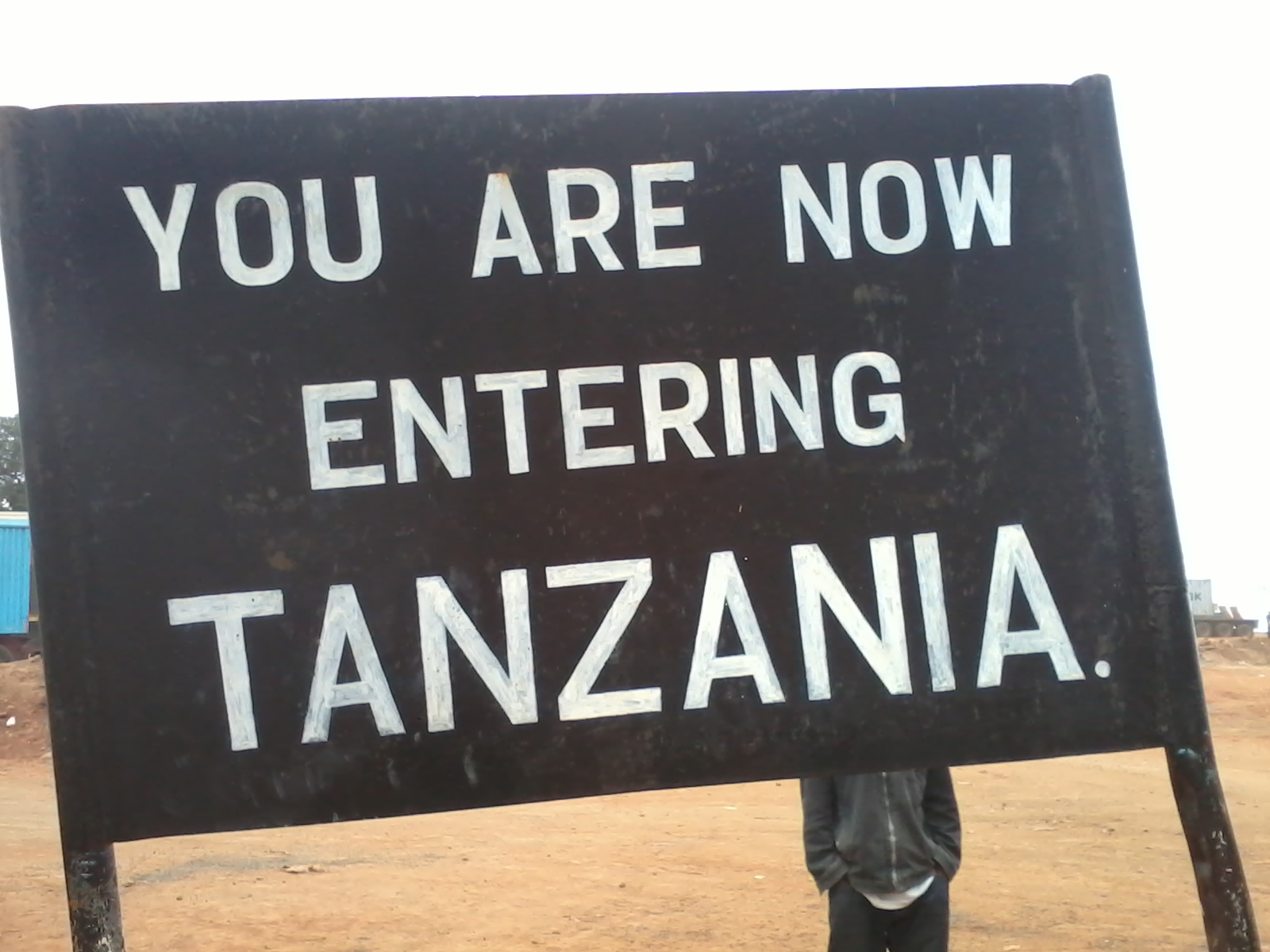
Sign post on the Tanzanian side of Namanga

Leaving Nairobi was itself an adventure. Despite Vanessa’s well-intentioned “alarm clock” calls to make sure I was up and ready by 5 AM, I missed my bus (I also missed my bus the first time, which is why I flew to Dar es Salaam). However, this time round it was my dad who was dropping me off and because he is a lot more daring that me and my brother, he decided to chase the bus (we were barely five minutes late, thank you very much Nairobi traffic at 5:45 AM). We did not catch my bus (Dar Express), but caught up with its competitor (name withheld for legal reasons, see below) after it had been stopped by the traffic police on Mombasa road for lack of a passenger license (it had a cargo license). Let’s just say that I was mightily impressed by my dad’s driving skills. I wish I were as daring.

So after the police got their cut (which I later found out was Kshs 5000, about US $60) we set off on the journey to Dar. The conductor on the new bus was kind enough to give me a free ride to Namanga (only Tanzanians can do this!!!) with hopes of catching up with Dar Express – in the end we did not, and I had to pay Kshs 2000 for the rest of the journey. The last time I was on the Nairobi-Arusha road was in 2009 when it was all no more than a dirt track that left you caked in thick red-brown dust. Now it is all paved. Nairobi-Namanga took a dizzying three hours. Just over an hour and a half after that we were in Arusha. After Arusha we sped to Moshi where we were caught up in the Prime Minister’s motorcade as he went to the city referral hospital to visit victims of the recent bombing at an opposition rally in Arusha (Arusha is the Chadema (Tanzania’s main opposition party) stronghold; but even in Dar the few people I spoke to about politics did not have nice things to say about the CCM government, especially with regard to rising inequality and corruption – yeah, I just totally Tom-Friedmanned that one).

Image

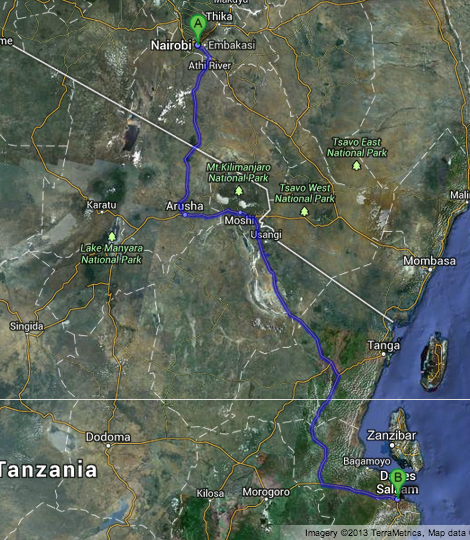
The 922 kilometer (573 miles) Nairobi-Dar road

I must say that the Nairobi-Dar road is impressive. Save for about one hour total of patches that were still being done about two hours outside of Moshi, most of the road is paved. Sometimes I forget how massive (and hence empty) Tanzania is. Namanga-Arusha is marked by flat plains, rolling hills and mountains. In the plains cattle rearing appeared to be the economic mainstay (unfortunately, with school age kids herding tens of cattle and sheep – wake up, Tanzania ministry of education). The hilly and mountainous areas mostly have maize and coffee. After the hills there are vast sisal plantations that stretch from horizon to horizon. Arusha and Moshi are the only big towns on the Namanga-Dar route. I particularly like Moshi (or may be I just don’t like touristy, expensive Arusha). It is a town with character, combining a provincial feeling with urban comforts. It also has some nice public monuments.

I rarely see weigh bridges on Kenyan roads (besides the infamous two in Gilgil and on Mombasa road) but in Tanzania they are plenty. And they are not just for the trucks, but also cater for passenger buses. Most of the trucks on the route were connecting Uganda, Rwanda, Burundi and the eastern DRC to the port in Dar. The passengers on the bus consisted of businesspeople (mostly Kenyans and Congolese), random travelers like myself, and tourists (most of who alighted at Arusha). On the Kenyan side, between Nairobi and Namanga we had a total of 5 police stops. On the Tanzanian side between Namanga and Dar there were 6 police stops and about 4-5 weigh bridge stops – the Tanzanians definitely police their roads more keenly. The police on the Tanzanian side were on the lookout for khat/miraa (illegal in Tanzania, and a beloved commodity of truckers) from Kenya and other contraband. True to EAC hospitality, I did not have any problems with immigration at Namanga (unlike in Nakonde, Zambia) or at any of the police check points (officers came on board to check passports). Talking to Tanzanians reminded me of just how bad Kenyan Swahili is – we must sound to Tanzanians like the Congolese sound to us whenever they speak whatever it is they call Swahili (*ducks and runs*).

The bus arrived in Dar es Salaam about 20 hours after leaving Nairobi (Not bad for a US $42 ticket), despite having been made to believe that the trip would take 13 hours. It didn’t help that I ignored Vanessa’s advice to pack food, hoping to buy stuff on the road – the first food stop was six hours into the trip, I had not had breakfast. Exhausted, hungry and mad at myself for taking the hard way to Dar I decided to get a room at the Peacock Hotel. It is not fancy (probably a 4 star?) but it has hot water, the rooms are spacious, and there’s fast internet. They also have a nice restaurant downstairs (Tausi) and are within walking distance to the port and other sites of interest in Dar – a Subway, Indian restaurant, the national library, banks, etc.

I had a day to burn in Dar reading, writing and walking around in readiness for the second leg of my trip to Lusaka, again by road.

Daron Acemoglu talks State Building

Last month MIT Economist Daron Acemoglu (co-author of Why Nations Fail) gave the Nemmers lecture at the Northwestern Econ Department (see video here).

In the lecture he defines inclusive institutions as having two components: (i) pluralism and (ii) political centralization.

Now, when most people talk about institutional development they like to focus on the first component. This is the crowd that will tell you that what Rwanda needed after 1994 was electoral democracy and free market institutions and all would be well (Did you know that Mali has elections this July?) But history teaches us that that is not the whole story. There is also the problem of Stateness (aka political centralization), and how it comes about.

Finally Acemoglu and Robinson are addressing what I think is a weakness in their inclusive-institutions-as-the-fundamental-cause-of-long-run-growth argument – the question of the need for political centralization through state building (and the messiness it entails). In the lecture, Acemoglu makes the argument that pluralism can actually lead to state building (or makes it easier) through the creation of “consensually strong states”; and that the process of state building can lead to pluralism due to the centralizing leader’s need to cut deals with local elites. In other words, there is reverse causation between pluralism and stateness.

The takeaway is that inclusive institutions result from the joint development of sustained economic growth and a wider distribution of political power.

This is all good, although I wish Acemoglu and Robinson explored the role of coercion in state-building. My reading of history may be completely out of whack, but when I look back in time I see a lot of conquests and forcible inclusion into states and a lot less “deal making.” Conquests not contrasts appear to be the modal MO of state formation.

The State of the Media in Kenya

Although it seems like ages ago, it has only been three months since Kenya’s 2013 General Elections. Back then, as we Kenyans were busy bashing the international press for biased and inaccurate coverage of our affairs, our own domestic media, having drunk gallons of the peace Kool-Aid, were busy self-censoring and, in some instances, plain ignoring important news for the sake of keeping the peace. All this was done in order to avoid a repeat of 2007-08 when media coverage is believed to have fueled inter-ethnic violence across the country.

Image

Cartoonist Gado recently captured what Gathara describes as “the triumph of form over substance, showmanship over journalism, entertainment over information.”

But the Kenyan media’s retreat from hard-nosed news coverage and analysis was not limited to the elections. Even now the mainstream outlets routinely ignore important news. Recently, I was surprised when one of the main TV stations’ second news item was a story about Kisumu residents’ fascination with a snake that was supposedly being kept by a business owner to bring him good luck. This story, which was aired primarily for entertainment value as no analysis of the situation was given, came before the story on the British apology and token compensation to the Mau Mau victims of the State of Emergency (1952-9) that resulted in scores murdered or maimed through torture. Every night during the news the Kenyan twitterati express their discontent with the quality of coverage, or in some cases the complete non-coverage of important news.

No one has captured this absurd turn in Kenyan journalism, both during the elections and after, like Gathara over at Gathara’s World (a blog that you should definitely start reading, if you don’t already do so):

Like the poor coverage of stories such as the Garissa “anti-terror” operation, the lack on interest in the delays and shenanigans leading to the release of the TJRC report, the blind fascination with the new administration and mindless parroting of government propaganda, the triumph of form over substance, showmanship over journalism, entertainment over information.

Perhaps the media could start to tackle the undisguised misogyny that has become a staple of our news. Like the humiliation of seven young women whom the media publicly accused of bestiality without offering a shred of proof. Like the Nation publishing a suggestion from one of our prominent psychiatrists that victims of sexual abuse may themselves be mentally ill for wishing to report their abusers. Like TV anchors seeing the funny side of a woman being stripped in public for supposedly dressing indecently. Like the recent article that observed that though still “wonderful, colourful creatures,” women still need men to help them run companies and to presumably cheer the inevitable cat-fights.

Gathara’s call for a review of the editorial process in Kenyan media houses is spot on. I would also add the need to (re)train our journalists. Many of them seem to imagine their primary role to be that of celebrities who constantly retweet the praises they get from viewers as they ignore their duty to inform and analyse the news in the least biased way possible.

Last afternoon I watched in horror (yes horror, because of the subject of my dissertation – see above) as a reporter told Kenyans that government proposals in the budget statement read by the Treasury Secretary would “take effect tonight at midnight.” The reporter clearly had no idea about what the law is on the budget process. The “budget analysts” back at the station had no clue either. Kenyans interviewed after remained equally clueless about the fact that it is their members of parliament that will have the final word on whether or not they pay 16% VAT on unga and other essential commodities that were previously zero rated. It is hard to imagine how Kenyans will be able to have reasonable debates on important national issues in a situation like this.

Sparse blogging over the next few weeks

Dear readers, the dissertation, work and life have conspired to keep me away from blogging. As such posts will not be as frequent as usual over the next few weeks.

Also, Vanessa and I will be in Zambia for work (and hopefully travel) for much of the summer (ahem, Southern winter), so expect travel posts to  dominate once blogging resumes.

In the meantime you can read my Saturday op-eds in the Standard (www.standardmedia.co.ke).