Top posts of 2013

Borrowing from Jay Ulfelder here is a list (by total views) of the top ten posts on An Africanist Perspective in 2013. Incidentally, Jay was the inspiration behind four of the top ten posts of the year – he nudged me to stick my neck out and predict the outcome of the Kenyan election. Also, this month the blog turned six. Many thanks to Chris Blattman and other academic bloggers out there for inspiration back in the day when as an undergrad in New Haven I kept writing even though no one was reading the blog.

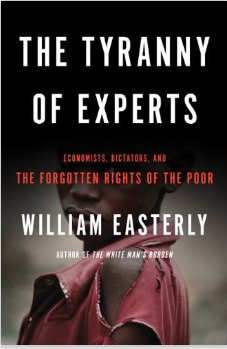
10. Who is the African child on the cover of William Easterly’s new book? (as I noted in the post below this one was a hit on twitter, and earned a spot on the top ten list even though I only posted it this month).

9. Sloppy reporting on the Kenyan elections (some of you might remember that Kenya had elections earlier in the year in which Kenyans, including yours truly, criticized some of the coverage by the international press).

8. What next for Kenya’s policy on Somalia? (this was a reflection on what Kenya might do in reaction to the Westgate terror attack that killed dozens of Kenyans and foreign nationals).

7. Corruption under apartheid South Africa, 1976-1994 (and its present institutional legacy) (this was my attempt to link present corrupt practices in the government of South Africa to their historical institutional basis – a running theme in my thinking and writing, you may have noticed, is that discontinuities are often a mirage; things only change marginally most of the time. INSTITUTIONS RULE!).

6. Kenyan Elections 2013 Polling Trends (Presidential Race) (Posts on the Kenyan election were a hit earlier in the year).

5. Why Raila Odinga Lost (For many observers the 2013 election was Raila Odinga’s to lose. So why did he lose?)

4. Who will win the Kenyan presidential election? A look at the numbers (Just for the record: (i) I got Kenyatta’s margin of victory right; (ii) I still do not think he got passed the constitutionally required 50%+1 votes; (iii) I was wrong in predicting an Odinga victory in round 2, Kenyatta would have won a round 2 easily because of Odinga’s woeful performance in the Rift Valley and failure to match Kenyatta’s turnout rates – see number 5 above).

3. KCSE results to be released monday (National exams at the end of secondary school are a big deal in Kenya – they determine one’s placement and major in the public universities; notice that the post is from 2011 but got hits from Google searches this year).

2. The Presidential Race in Kenya’s 4th of March 2013 Election (More on the Kenyan election; again I was wrong on the possibility of an Odinga victory in the second round).

1. Uhuru Kenyatta Emerges as 1st Round Favorite in Kenya’s March 4th Poll (Did the outcome of the presidential election reflect the will of the Kenyan people, i.e. the majority of voters? My answer is yes. I still think that there were shady tricks involved in pushing Kenyatta past 50% – he got a mere 9000 votes out of over 12 million votes cast past 50%. But he was on course to win the second round. I still wish the Supreme Court had ordered a runoff in order to give Mr. Kenyatta a cleaner mandate than he presently has and to dampen the feeling among the vast majority of Odinga supporters (and the wider left in Kenya) that the election was stolen by the conservative establishment).

If you ask me, this was my favorite post of the year.

Happy Holidays! 


William Easterly responds to my blog post about his new book

As some of you already know yesterday I wrote a post complaining about book publishers’ habit of using images of poor Africans (and especially children) on the cover of books on global poverty and underdevelopment. In my post I used the example of William Easterly’s new book, The Tyranny of Experts, which has the image of an African child, face partially obscured by text and in a torn t-shirt, on the cover. The post got a fair amount of attention on twitter and last night William Easterly emailed me about it (see email below). As suggested by Easterly in the email, let’s keep the conversation going in the comments section and elsewhere.

Dear Mr. Opalo, thanks for your comment in your blog. I understand your concern about exploiting images of African children, I have voiced the same criticisms myself. The book itself is a strong protest of paternalistic and racist tendencies in development and a demand to recognize poor people’s rights, including their right to be treated with dignity and respect. I would be happy to send you an advance copy.

The exploitative images usually fall into two categories: either (1) a smiling adorable child meant to imply gratitude for the aid donors as paternalistic saviors, or (2) a child with extremely degraded conditions such a swollen belly or flies mean to evoke pity. I respectfully submit that my book cover is in neither category.

I would be happy to continue the dialogue further, and you are welcome to post this response on your blog.

Best wishes, Bill Easterly

Many thanks to William Easterly for responding to the post. It was nice to hear from such a legend in the field of development economics.

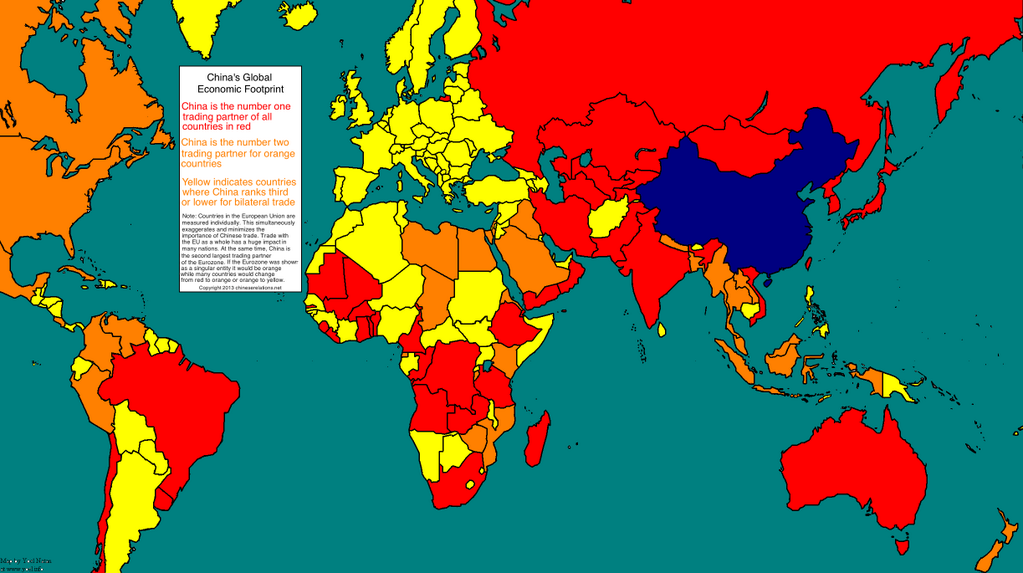
Will trade win China the battle for supremacy in Asia-Pacific and the Indian Ocean?

China is the number one trading partner for all the countries in red; and number two for the countries in orange. 

Image

This image reminded me of Gowa and Mansfield (1993); and got me thinking about whether trade links (and associated opportunity costs) would ever matter in the choices to take sides of the two European offshoots in Asia-Pacific (and Japan) if stuff ever hit the fan in Sino-American relations. But then again that might not happen any time soon since China is already America’s No. 2 trading partner, and the US is still by far the strongest super-power the world has ever seen. By a massive margin. 

That said, the Great War is still an important cautionary tale about the dangers of getting all giddy and complacent about the end of Great Power wars on account of trade and global interconnectedness. Let’s hope that power transition theory will not apply to the case of Chinese economic (and military) rise to rival the United States of America.

Who is the African child on the cover of William Easterly’s new book?

ImageUPDATE: A reader, C. Mwangi, just brought to my attention this quote from William Easterly’s 2009 review of Dambisa Moyo’s Dead Aid.

Moyo is onto something important but, as she says, seldom discussed openly. One of development’s dark secrets is its still-influential origins in the “poor people are children” view, a view with a deeply rooted and very long history. The “development” metaphor was itself is a biological one: poor people “develop” from childhood (poverty) into adulthood (prosperity). Some of the signs of this mindset are subtle but unmistakable. Just think of who was pictured in the last glossy “aid to Africa” brochure you saw? I am willing to bet it was African children. As David Rieff said in his classic book A Bed for the Night, “There are two groups of people who like to be photographed with children: dictators and aid officials.” And of course, you don’t let children manage their own affairs; the adults must do it for them.

The rest of the review, originally meant for publication in the LRB, is available here.

***********************************************

They say don’t judge a book by its cover, but if it wasn’t for Bill Easterly’s reputation for sound thinking on matters to do with Development, I would not have pre-ordered his upcoming book The Tyranny of Experts.

Seriously, as a new year resolution can we all promise never to fall into the temptation to include anonymous African children (invariably looking poor and shabby with flies on their faces or carrying guns, among other things) on the cover of books on poverty and development?

PLEASE? It is no longer good form (and never has been), especially coming from people who ought to know better. Were the boy’s parents or guardians consulted? Do they even know that their kid is on the cover of Easterly’s book?

The book title suggests that Easterly cares about the forgotten rights of the poor, yet the use of the cover image violates an important right of the poor: the right against unfair objectification. There is research out there suggesting that African states face an FDI inflow penalty simply because they are African. Images like these on the cover of books do not help the cause to reverse this reality.

To be fair (as a commenter pointed out to me on twitter) it is the publishers who decide these things to drive sales. But authors still have a right (and in my view, a duty) to ensure that this sort of stuff doesn’t happen.

I feel bad calling out Easterly on this because he is one of the more nuanced and very sane development economists/practitioners out there (and there are certainly far much worse instances of this phenomenon out there); but the habit of using a whole region and its peoples as shorthand for poverty, underdevelopment and dysfunction has to stop. And it starts with each and every one of us.

Michael Clemens and Justin Sandefur review Paul Collier’s new book

Sometimes even the output of independent intellectuals cannot escape the spirit of the times. It appears that Paul Collier’s new book embodies this challenge by reflecting Europe’s current struggles with immigration. I haven’t read the book, and still might read it, but the review by Clemens and Sandefur (both of CGD) in Foreign Affairs does not paint the picture of an objective academic argument on the merits/demerits of immigration. Here’s an excerpt: 

Paul Collier, has just published an extended apologia for the tight strictures on immigration [that led to this raid], arguing for a global system of coercive quotas on people moving from poorer countries to richer ones. Such quotas, he writes in Exodus, would serve the “enlightened self-interest” of immigrants’ host countries and constitute an act of “compassion” for immigrants and their countries of origin. Collier argues that at a certain point, immigration begins to harm both host and origin countries, that many countries are near or past that point, and that even in countries that have so far remained unharmed, “preventative policies are greatly superior to reactive ones.”

It is refreshing to see the grand case against immigration served up by someone of Collier’s intelligence and credentials. But although Collier styles his book as a balanced review of the research literature, it is in fact a one-sided polemic that stands mostly outside academic research — by Collier or anyone else. Far from advancing a convincing case for a moderate middle path, the book offers an egregious collection of empirical and logical errors about the sociological and economic consequences of immigration. And they lead Collier to propose policies that would greatly harm, not help, the millions of people seeking to escape their homelands in search of a better life.

…… Collier has written a text mortally wounded by incoherence, error, and overconfident leaps to baseless conclusions.

The whole review is definitely worth reading. It provides great analysis, albeit in abbreviated form, of some of the benefits of immigration, both for immigrants and natives (or earlier immigrants as might sometimes be the case). 

Econometric evidence against Dodd-Frank as applied in the DRC

This study is the first to provide econometric evidence of the relationship between conflict and mineral endowments in the DRC. While there are vivid debates and speculations around the motives of armed groups, I find that price shocks lead to armed groups violence, between groups and in order to acquire territory hosting the mineral (not to more pillages). This result is in line with other reports based on qualitative data, such UN (2002). Second, I find that interventions aimed at constraining armed groups ability to collect taxes increase violence against civilians in the short-run. Interventions that attempt to weaken armed groups finances have become dominant among policy circles. In particular, the United States issued the Dodd-Frank legislation in 2012, aimed at constraining purchases of minerals whose trade is a source of finance to armed groups. Governments interested in “cleaning” the mineral chain, thus, may need to protect civilians in the aftermath of these interventions, and provide alternative occupations to combatants who lose access to revenues from taxes as a result of these interventions. 

That is Columbia’s Raul Sanchez de la Sierra in a neat paper on the origins of states. Check it out here (H/T Chris Blattman)

For more on this subject see this over at HuffPost.

HAPPY JAMHURI DAY!!!A very short political history of Kenya

Image

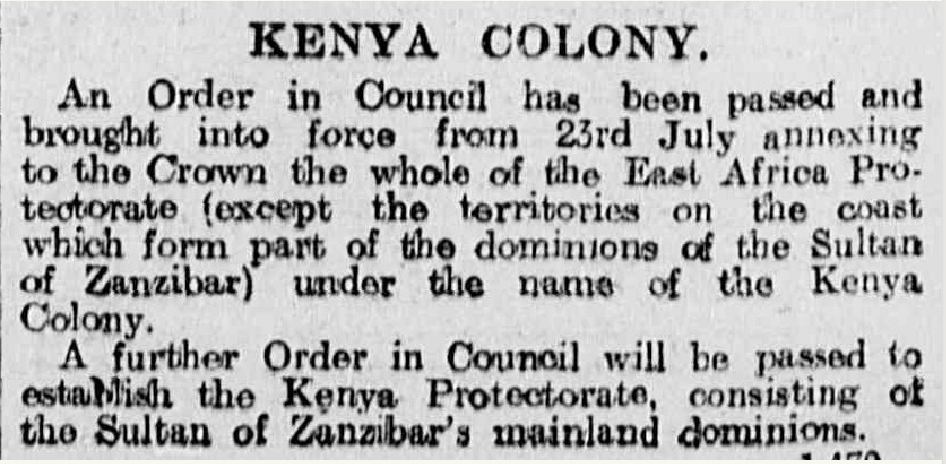
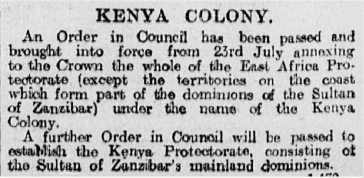
Financial Times reporting on the creation of the Kenya Colony

Kenya is 55 today. Or 98 if you take the Order in Council of July 1920 creating the Kenya Colony to be the founding instance of the geographical entity that became Kenya (well, most of its land anyway. The coastal strip was then still a property of the Sultan of Zanzibar). I would actually suggest a different date, 1907, to be the instance when the Kenyan state opened shop. This is when the first rudimentary legislature was established (in Nairobi) within the East African Protectorate, thereby enabling settlers, and by extension indigenous Kenyans, a little more say on government policy. Yes, you are very right in thinking that this view has nothing to do with the fact that I am writing my dissertation on African legislatures.

Direct representation came in 1944 with Eliud Mathu, but settler demands brought to the fore issues of the welfare of indigenous Kenyans as well. It was unlike the IBEAC days when the locals had almost no say at all. Speaking of the IBEAC, you could make the argument that Kenya is actually 118 – going by the date, 1895, when IBEAC officially handed over the managed of British East Africa to the Foreign Office.

Anyway, since much of the period between 1895 and 1963 was marked by the exclusion of the vast majority of indigenous Kenyans form the political process let’s take 1963 as the starting point. However, the significance of the other dates shouldn’t be lost on us. Kenyan history did not begin in 1895 or at midnight on December 12th 1963. This account will be brief. Feel free to add to it in the comments section.

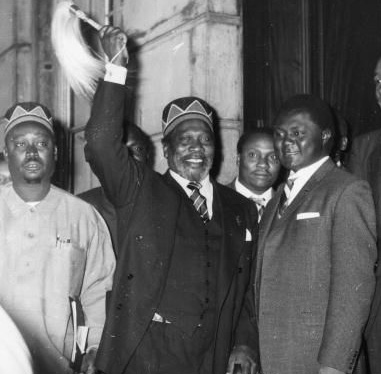
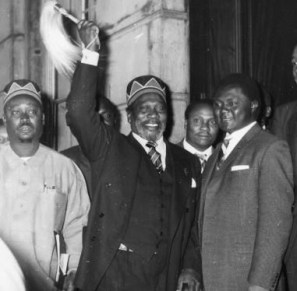
Independence in 1963 came on the heels of a brief period of partial self-government. Official history taught in schools puts President Jomo Kenyatta as the first indigenous leader of government. Most Kenyans don’t know that Ronald Ngala was official leader of government business in the LEGCO and even became Chief Minister. At the time Kenyatta was in prison, KANU had just won elections but refused to form a government until Kenyatta was released from prison. Back in 1958 Jaramogi Oginga Odinga had adamantly insisted in the LEGCO that “Kenyatta Tosha” [my own rendition] and that a precondition for independence and self government was the release of Kenyatta from prison.
Image

Kenyatta with Odinga and Mboya

When Kenyatta was released from prison he found two dominant parties, KADU and KANU. Both tried to persuade him to be their chairman since it was clear that whoever had Kenyatta on their side would win the independence elections (Daniel arap Moi, a KADU man, had even visited Kenyatta in Kapenguria). Because of interests (especially around land; KADU was then perceived as a tool of the settler community) and historical reasons (James Gichuru, a KAU man, was a founder member of KANU) Kenyatta chose KANU over KADU. At independence he inherited a state that was dominated by the Civil Service and Provincial Administration. Kenyatta kept this intact. Sons of collaborators who hunted down the Mau Mau inherited the colonial state. Unlike in many African countries where independence brought about a steep discontinuity – think about Guinea, for instance – in Kenya there was a good amount of continuity.

It was almost as if the Ashanti aristocracy and colonial era collaborators had inherited the reigns of power in the Gold Coast in 1957 and not the outsider mass mobilizer, Kwame Nkrumah; Or the Kabaka, instead of Obote, had inherited power in Uganda in 1962.

The nature of colonial transition explains Kenya’s political stability and reasonable economic success since independence (at least compared to its African peers). It is Sub-Saharan Africa’s biggest non-mineral economy and has never experienced a successful military coup (though attempts were made in 1971 and 1982).

Kenya is a lesson on the difference state capacity can make. Any attempts at separatist armed struggle – from the Shifta War, to the Sabaot Land Defense Force, to the Mombasa Republican Council – have been crushed (sometimes with foreign help). Civilian insecurity is a serious problem that is getting worse. But the state is not one that can be toppled by bands of armed men on technicals (see here (pdf) for reasons as to why).

The country got a stable start (and many may argue normatively unjust system) because the indigenous upper class inherited the economy and a strong and moderately developed state (largely because of the need to defeat the Mau Mau insurgency) almost intact. Individuals close to Kenyatta took over settler farms almost intact. The last British Officer in the Kenyan military left in the 1970s. The social foundation of the state ensured continuity (redistribution of land to the masses was a non-starter) and the inherited strong bureaucratic-state had the capacity to suppress any form of dissent (of course starting with ex-Mau Mau freedom fighters who demanded for a greater degree of land redistribution). It also helped that Kenyatta and his close associates were from Central Kenya, the economic heart of the country.
Image

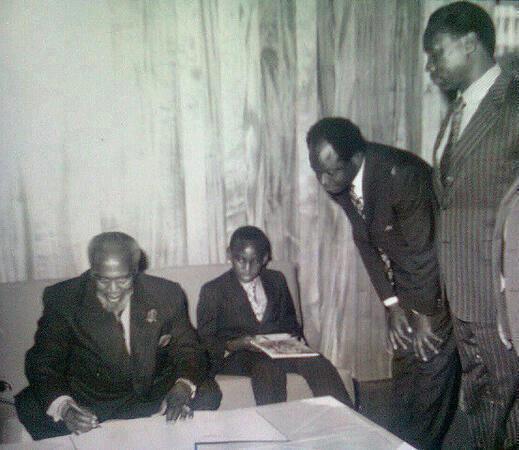
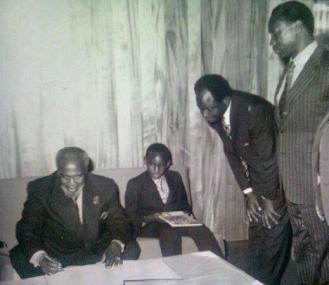
Snapshot of the triumph of conservatism: Kenya’s Four Presidents, Kenyatta I, Kenyatta II, Kibaki and Moi

The confluence of economic and political power (in Kenyatta and his close co-ethnics) made redistributive policies unworkable. As Bates has ably argued, this explains the great investments that the Kenyan state made in agriculture. This also explains why Kenya never flirted with socialism, unlike nearly all of its African (Ghana again being a good example) peers. Leftist elements within KANU lost out in 1966.

Even among the Kenyan public, the idea of individual ownership of property – and especially land – had become accepted as sacrosanct. Many had come to a pragmatic acceptance of inequality as a feature of life. It was OK for the big men to appropriate thousands of acres of land as long as ordinary families got a few acres for their own use. Right from the beginning, prevailing socio-economic conditions and the attitudes of politically relevant groups made it easy for the conservative ruling class to pursue right of center economic policies. There was no land revolution in the 1960s.

When Kenyatta died in 1978 a lot of things had gone wrong. Many freedom fighters had been neglected by the very people who collaborated with the colonial administration and who now had control over the state. Negative ethnicity had irredeemably corrupted the state and made Kenyatta’s co-ethnic unwilling to share state power or wealth with non co-ethnics. Pio Gama Pinto, an active backbencher in Parliament was assassinated in 1965. Tom Mboya, a charismatic likely successor to Kenyatta was assassinated in 1969. Josiah Mwangi Kariuki, a populist co-ethnic of the president who advocated for more redistributive policies, was also assassinated in 1975. The main opposition party had been banned in 1969. A raft of constitutional amendments had destroyed the regionalist structure of the Kenyan government and centralized power in the hands of the president.

But even at the most trying of times, twice in 1969 (the assassination of Mboya, the riots in Kisumu during a Kenyatta visit and the subsequent banning of the main opposition party KPU) and again in 1975 (following the murder of J. M. Kariuki), the Kenyan state held strong. Order was restored. For better or worse conservatism triumphed over populism and radicalism.

Moi’s succession brought new hope; like all good future dictators he started off by releasing political prisoners of his predecessor. But his security of tenure was never a given. He barely survived attempts to exclude him from succeeding the president as required by law. My own reading of the situation is that a key factor in the lawful succession in August 1978 was Charles Njonjo, the unashamedly Anglophile son of a colonial era chief from Kabete (some call him Sir Charles, others the Duke of Kabeteshire). As the Attorney General Njonjo probably eyed the presidency. Yet he wanted to get there lawfully. Moi was his way of outfoxing the Mungai-Koinange. Njonjo, like all good Kenyans, had internalized whatAtieno-Odhiambo calls the country’s pervasive “ideology of order.” Moi probably knew this. And the fact that there was an intra-Kikuyu split along the flow of River Chania. The Kenyatta presidency was a mostly Kiambu affair. Nyeri Kikuyu (who bore the brunt of the Mau Mau insurgency and counterinsurgency were largely excluded). Moi appointed a Nyeri man, Mwai Kibaki as Vice President. For good measure, he kept Njonjo – well until he got rid of him in 1985.

Daniel Toroitich arap Moi, a man that many in Kenyatta’s inner circle had viewed as a passing cloud, then went on to rule Kenya for 24 years. As an outsider his rule was marked by redistribution (as in the District Focus for Rural Development, gated); an attempt at greater control of the political sphere (he turned Kenya into a party-state); and poor economic performance (Kenya’s dominant economic group was excluded from political power). The coup attempt in 1982 was a reaction to Moi’s controlling tendencies. Earlier in the year he had engineered a change in the constitution to make Kenya a one party state. By 1990 a combination of economic collapse and increasing popular resentment made political liberalization inevitable (it also helped that democracy promotion by Western governments became sexy).

The most high profile political assassination during Moi’s rule was that of Robert Ouko in February 1990. Initially the government tried to suggest that the Foreign Minister committed suicide by shooting himself in the head, breaking his legs, and setting himself on fire. He then somehow found himself atop Got Alila where his remains were recovered by a herds-boy. Like all the high profile  political assassinations before it, it is not clear whether this was a result of intra-palace rivalry or whether it was conducted on the orders of the Big Man.

Despite his many faults, Moi maintained the hold of the center. He saved the elite around Kenyatta from self-destructing by refusing to share power and wealth. More crucially, under Moi order continued to be a key pursuit of the state. In other words Kenya did not fall apart under the pressure of demands for political reform like most of its African peers did.

Multipartyism was reintroduced and elections held in 1992. Moi survived with 36% of the vote. The opposition was divided. Their only victory was getting Moi to concede to term limits. Worst case scenario the man would only be in power until 2002.
ImageMoi retired after the 2002 election. In that year Mwai Kibaki won in a landslide, defeating current President Uhuru Kenyatta. The Kibaki presidency brought success and decline in equal measure. The economic consequences of the Kibaki presidency were largely positive. Kenyans acquired greater freedoms. It became OK to hurl abuses at the head of state without risking torture. The 2010 Constitution was enacted under Kibaki. But it is also under Kibaki that the country almost descended into civil war in 2007-08 following the rigged 2007 elections. Corruption and the ethnicization of state administration continued unabated. The euphoria and hope for genuine reform that marked the 2002 transition varnished. Earlier this year Kibaki retired to be succeeded by Uhuru Kenyatta, effectively bringing to power a significant portion of the group that lost the 2002 presidential election.

Moi was Kenyatta’s vice president, Kibaki was Moi’s vice president. President Uhuru Kenyatta is the son Kenya’s founding father.

As is implied by this account, the political history of Kenya has tended to revolve around key personalities, and the presidency. One defining characteristic of the Kenyan saga is the invariable triumph of conservatism over radicalism and progressivism. Great progressives from Pinto to Jean-Marie Seroney to Oginga Odinga, to Bildad Kaggia to J. M. Kariuki to Raila Odinga, to Wangari Maathai have fought hard and long to improve the lives of ordinary Kenyans. But the empire always strikes back. And wins. The Kenyan story is one of the triumph of conservatism over progressivism.

Indeed, most progressives eventually get swallowed up by the system.

Moving forward, it will be interesting to see how the new institutions created by the 2010 Constitution evolve. The Kenyan legislature is strong and continues to evolve (be sure to read my dissertation and book on this); the system of county governments will definitely chip away at the hitherto cohesive bureaucratic-administrative state; and the desire for rapid development and the management of economic equality will raise new problems of the conservative core of the Kenyan state. Will the centre continue to hold? Will Kenya continue to be economically center-right despite freer elections?
“Only four shooters at Kenya mall (Westgate) and they may have escaped alive, says NYPD”

On Tuesday morning the NYPD issued a damning statement [full report here] that pointed fingers at the Kenyan government for its handling of the terrorist attack at the Westgate Mall in September. Dozens of people were killed in the attack.

According to the statement:

  • Despite conflicting reports from the Kenyan government, “evidence suggests that there were only four attackers, who may have escaped alive.”
  • The commander of the police tactical team that went to quell the siege was most likely killed by the KDF. “The police department tactical team entered the mall at 3 p.m., without police markings or identifications, and were fired on by Kenyan soldiers, killing the commander of the unit.”
  • The security team “had no idea what the mall looked like internally, and didn’t know they could access the closed circuit television system.”
  • The NYDP “didn’t know what had caused the mall to collapse,” but it is likely that “the Kenyan military may have used rocket-propelled grenades and anti-tank missiles on the building, and that heat from fires caused by the explosions may have weakened the poorly built structure.”
  • And lastly, “the Kenyan military may not have killed any of the attackers, there was “significant” physical and video evidence that they had looted the mall.”

[UPDATE: A reader, @ZiadFazel, just reminded me of the KTN documentary in October that questioned the official line about the attack. Back then the government dismissed the documentary as inaccurate and alarmist and even threatened to arrest KTN journalists. This new statement from the NYPD adds credibility to the evidence previously dismissed by the government]

Westgate is not just an indictment of the KDF (a force that has and continues to sacrifice a lot for regular Kenyans in the north east and in Somalia) but of the entire security apparatus in Kenya. For the longest time Kenyan civilian administrations have obsessed with issues of coup-proofing, maintenance of public order and the suppression of dissent over actual provision of security.* Urban crime, banditry in the north and pockets of rural areas even in the more governed south and latterly the threat of terrorism have exposed the underbelly of the Kenyan security system.

President Uhuru Kenyatta praised the KDF and the police following the botched operation at Westgate. Was this an attempt to boost the morale of the boys or was he simply continuing the tradition of appeasement with the aim of keeping the army in the barracks and the paramilitary GSU and police ever ready to “restore order” whenever necessary?

Whatever the case, it may be that President Kenyatta and his administration have found themselves in an unfamiliar territory. Kenya’s much touted bureaucratic-executive state may have worked well against internal dissent, but can it effectively deal with current security threats? Civilian control over the security apparatus demands for accountability and performance; and whenever there is failure, an attempt at correction. Is the Kenyan system capable of sustaining a civilian-military relationship that is responsive to the public and based on performance and accountability?

Kenyans were told many tales following that tragic Saturday afternoon in September and the ensuing four day siege. But the more Secretary Ole Lenku spoke of “exploding mattresses” the more questions emerged. The NYPD report is yet another reminder that the security system failed Kenyans, and that the civilian administration was unable to stand up to those responsible and demand for accountability.

*Read E. S. Atieno-Odhiambo’s chapter on “Democracy and the Ideology of Order in Kenya” and Tamarkin’s “The Roots of Political Stability in Kenya.”

Ethiopia’s Gibe Dam Threatens Kenya’s Lake Turkana, and Why the Kenyan Government Doesn’t Care

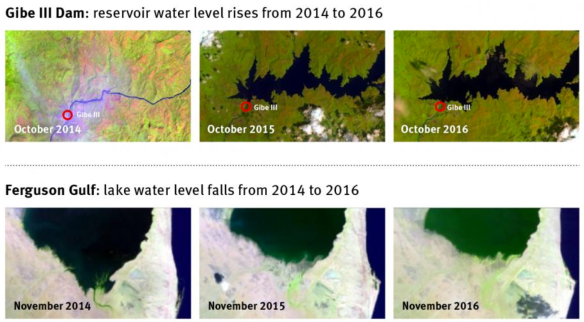
Six hundred miles upstream from the northern tip of Lake Turkana in Kenya, the Ethiopian Gibe III dam is nearing completion. According to Africa Confidential the dam will produce 1860 MW, making it the biggest hydro-electric power plant in Africa.

No doubt the developmental impact of the Gibe projects will be huge. Despite doubling Ethiopia’s 2007 installed power generation capacity, the project will bring more than 150,000 hectares (about 580 sq. miles) of land under irrigation (this will be more than the total acreage under irrigation in the whole of Kenya as of 2011). In addition, the boost in power generation capacity will feed into the East African Power Pool, thus helping alleviate power problems in Kenya and beyond.

But will the benefits of the Gibe projects outweigh the potential human cost, especially considering externalities that will spread beyond Ethiopia’s borders?

screen-shot-2017-02-14-at-11-04-21-pmAccording to Sean Avery, the Omo-Gibe project intends to divert as much as 32% of the Omo River’s waters for irrigation and other uses upstream. But the Omo River is the main inlet of Lake Turkana, Kenya’s largest by area (Kenya owns the smallest bit of Lake Victoria) and Africa’s fourth largest lake.

Lake Turkana gets as much as 90% of its inflow from the Omo River.

In a new Oxford study, Avery notes that one of the planned Ethiopian irrigations schemes alone, the Kuraz Sugar Scheme, will gobble as much as 28% of Omo inflows into Lake Turkana at 70% efficiency and a whopping 40% if the project inefficiently uses water! The same study notes that construction of Gibe III may lower the water volume in Lake Turkana by as much as 41-58% (or an average drop in lake level of 22 metres) over a period of time. This will have a significant impact on the Lake’s salinity (being the biggest desert lake in the world) and suitability of its water for human consumption and agriculture. To put this in perspective, the average depth in the lake is 30 metres. Without proper water management upstream Lake Turkana faces hydrological collapse akin to what happened to the Aral sea or what is happening to Lake Chad.

These findings have been echoed in this Human Rights Watch report.

Screen Shot 2017-02-14 at 11.06.32 PM.pngAt this juncture you may ask, why isn’t the Kenyan government up in arms over the Gibe projects?
Well, the simple answer is that a confluence of factors have made it such that Nairobi does not have an incentive to care about the 170,000 odd people that will be adversely affected by a decline in water volume and economic viability of Lake Turkana. Three of these factors stand out.

  1. Turkana, being largely rural, sparsely populated, poor, and with a low literacy rate, does not make a fertile ground for pressure groups to form. Complaints over the potential impact of Gibe III have mostly come from academics and international NGOs that, lacking political salience, are very easy to ignore. Historical low voter turnout in the region also does not help matters. This has made it easy for the government to pretty much ignore the region over the years. Residents of Turkana often talk of “going to Kenya” whenever they venture into the southern regions of the country.
  2. A more important reason than the one above is perhaps that Gibe III will provide power to the Kenyan grid. Kenya’s Vision 2030 development plan includes a raft of projects that will require increased generation capacity in the next couple of decades that the country will surely not meet. Gibe III will be a much needed plug in the expected energy capacity gap. Notice that most of the projects will benefit the more politically powerful pockets of the Kenyan electorate to the south of the country, most of whom have never and will probably never hear of the human impact of Gibe III in Turkana unless it leads to something catastrophic enough to attract national media attention.

    Image

    Source: Gado, Daily Nation

  3. Oil. Oil. Oil! As if things could not get worse for residents to the north of Turkana county, commercially viable deposits of oil have been discovered to the south of the county. It goes without saying that moving forward most of the economic focus will be in that part of the county, at the expense of most other economic activities (and Turkana residents’ most pressing needs, see image) – including fisheries on Lake Turkana.

Admittedly, the fault here lies not with Addis Ababa. Ethiopia had to do what it had to do to meet its development needs. The fault is Nairobi’s for not having the foresight to strike a workable “Coasian bargain” with Addis on an arrangement that would be less harmful to residents of Turkana. This post has attempted to sketch some of the reasons why this is the case.

In an ideal world Nairobi would have negotiated with Addis Ababa for a discount rate for power from Gibe III and pledged to invest the difference in compensating residents of the Lake Turkana basin who will be adversely affected by the planned projects on the other side of the border. Unfortunately, for the three reasons stated above and others, I doubt that this happened or will happen in the near future.

To paraphrase a famous quote from a couple of millennia ago, in the world we live in those with political power get what they want and those without suffer what they must.

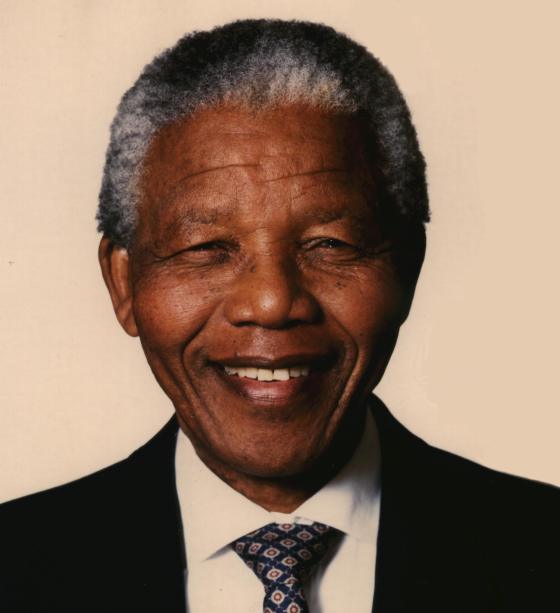
Remembering Nelson Mandela and his legacy

Charles Kenny over at BloombergBusinessweek writes about Mandela’s often forgotten economic legacy (Perhaps because of the continued entrenchment of economic inequality and injustice in South Africa):

South Africa’s GDP growth rate, meanwhile, picked up considerably under Mandela. Economic growth rose from less than 1.5% between 1980 to 1994 to slightly under 3% between 1995 and 2003. Despite the sudden influx of internal migrants with the legal right to compete equally for jobs, average personal incomes for white South Africans increased by 62% between 1993 and 2008, according to University of Cape Town economist Murray Leibbrandt. Average incomes for Africans themselves increased even faster—by 93% over that same period.

The huffingtonpost has a collection of speeches to remember Mandela in his own words.

[youtube.com/watch?v=-Qj4e_q7_z4]


Richard Stengel over at Time explores the idea of Mandela the freedom fighter and leader who possessed almost mythical qualities in the eyes of many:

In many ways, the image of Nelson Mandela has become a kind of fairy tale: he is the last noble man, a figure of heroic achievement. Indeed, his life has -followed the narrative of the archetypal hero, of great suffering followed by redemption. But as he said to me and to many others over the years, “I am not a saint.” And he wasn’t. As a young revolutionary, he was fiery and rowdy. He originally wanted to exclude Indians and communists from the freedom struggle. He was the founder of Umkhonto we Sizwe (Spear of the Nation), the military wing of the African National Congress, and was considered South Africa’s No 1. terrorist in the 1950s. He admired Gandhi, who started his own freedom struggle in South Africa in the 1890s, but as he explained to me, he regarded nonviolence as a tactic, not a principle. If it was the most successful means to the freedom of his people, he would embrace it. If it was not, he would abandon it. And he did. But like Gandhi, like Lincoln, like Churchill, he was doggedly, obstinately right about one -overarching thing, and he never lost sight of that.

Back in 2011 writing in the Journal Peter Godwin noted that Mandela’s real legacy was his refusal to become life president, like many independence heroes before him on the Continent:

If anyone was well positioned to launch a political personality cult it was Mr. Mandela. His refusal to do so is probably his greatest legacy to his homeland. It set South Africa on a course different from most other African nations. Seventeen years into its post-apartheid incarnation, South Africa is already on its fourth president. This has radically reduced the danger of a single leader dominating the state.

As the world pays its last respects there will be nagging thoughts and questions of what next for South Africa. I am reminded of Eve Fairbanks’ piece earlier this year in which she cautioned that a lot more needs to be done to ensure that all South Africans benefit from the freedoms (political, social and economic) that Mandela fought for:

Many South Africans under 40 feel little connection to the father of their nation. Articles about Mandela’s many health scares late in life (at press time, the former president had been in a hospital on life support for more than a month, battling a lung infection) often feature laudatory quotes from two kinds of South Africans—whites and older blacks—while leaving out the voices of young blacks, who have a more ambivalent relationship with their founder-saint. Some even resent him.

The point here is that Mandela’s legacy will only be protected if the government facilitates greater economic inclusion of young South Africans. Simply replacing Smiths, Krugers and Plaatjes with with politically connected Khumalos, Gcobanis, and Phumlanis in the economic sphere as has happened under BEE will not cut it.

The statues and all sorts of honors that will undoubtedly come from around the world will not matter if the Madiba legacy does not get to live in the hearts and minds of South Africans of all generations, now and in the years to come.

The man gave up a lot for his country. Now that he is gone, it is time for South Africans (and especially the leadership) to honor him by keeping his dream of a more just South Africa alive. This is the least they could do for a man who is arguably top of the list of the greatest Africans of the 20th century.

Rest in peace Madiba. 


RIP Nelson Mandela

Image

RIP Nelson Mandela

RIP Tabu Ley (1937-2013)

The Rhumba legend Tabu Ley has passed on. For Kenyans of my generation his songs are a reminder of a childhood marked by our parents’ great love of Congolese music (dominated by Tabu Ley and Franco Luambo Makiadi). Back then Kinshasa seemed like the most fun place on the planet (and probably is/was, as I have never been) and a bustling centre of cultural production. We didn’t know what the songs were about, but we knew the lyrics (or what we imagined them to be). I particularly grew to love “Muzina.”

[youtube.com/watch?v=J2GCPUArIwI]