On MLK’s Yale Honorary Degree

MLKI am proud of my alma mater for having done the right thing.

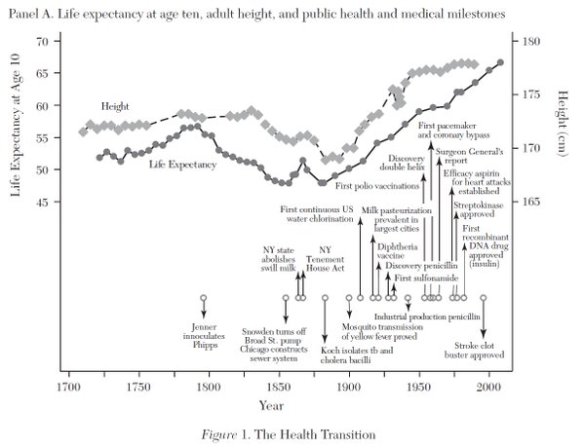
Public Health is Awesome, nth Edition

This is from a paper on health and the economy in the United States.

ushealth

H/T Michael Clemens.

Powering Africa: “Off-grid” is not the answer

This is from the Economist:

Generating power at home may transform life in rural areas for the better, but factories, mines and mills need a reliable, large-scale power supply. If Africa is to industrialise, it needs power plants.

More here.

Also, a little known fact is that in the next five years nearly all of eastern Africa will have an energy surplus (everyone is increasing their installed capacity). But the power lines need to be upgraded, extended, and integrated (see here); and governments need to come up with policies (mostly related to financing) to get more people living under the grid (close to power lines) on the grid.

On Field Experiments

Two quick thoughts:

  1. The world is a better place because more and more policymakers realize that evidence-based policymaking beats flying blind in the dark. Now if only we invested more in passing policy design, implementation, and evaluation skills to bureaucrats….
  2. Whenever academics get involved in field experiments, we typically try to maximize the likelihood of publication (see Humphreys below). But what is good for journal reviewers may not always be useful for policymakers. This is not necessarily a bad thing. We just need to be up front about it, and have it inform our evaluation of the ethics of specific interventions.

Below are some excellent posts (both old and new) on the subject.

NYU’s Cyrus Samii:

Whether one or another intervention is likely to be more effective depends both on the relevant mechanisms driving outcomes and, crucially, whether the mechanisms can be meaningfully affected through intervention. It is in addressing the second question that experimental studies are especially useful. Various approaches, including both qualitative and quantitative, are helpful in identifying important mechanisms that drive outcomes. But experiments can provide especially direct evidence on whether we can actually do anything to affect these mechanisms — that is, experiments put “manipulability” to the test.

Columbia’s Chris Blattman:

I’m going to go even further than Cyrus. At the end of the day, the great benefit of field experiments to economics and political scientists is that it’s forced some of the best social scientists to try to get complicated things done in unfamiliar places, and deal with all the constraints, bureaucrats, logistics, and impediments to reform you can imagine.

Arguably, the tacit knowledge these academics have developed about development and reform will be more influential to their long run work and world view than the experiments themselves.

Columbia’s Macartan Humphreys on the ethics of social experimentation:

Social scientists are increasingly engaging in experimental research projects of importance for public policy in developing areas. While this research holds the possibility of producing major social benefits, it may also involve manipulating populations, often without consent, sometimes with potentially adverse effects, and often in settings with obvious power differentials between researcher and subject. Such research is currently conducted with few clear ethical guidelines. In this paper I discuss research ethics as currently understood in this field, highlighting the limitations of current approaches and the need for the construction of appropriate ethics, focusing on the problems of determining responsibility for interventions and assessing appropriate forms of consent.

…. Consider one concrete example where many of the points of tension come to a head. Say a researcher is contacted by a set of community organizations that want to figure out whether placing street lights in slums will reduce violent crime. In this research the subjects are the criminals but seeking informed consent of the criminals would likely compromise the research and it would likely not be forthcoming anyhow (violation of the respect for persons principle); the criminals will likely bear the costs of the research without benefitting (violation of the justice principle); and there will be disagreement regarding the benefits of the research—if it is effective, the criminals in particular will not value it (producing a difficulty for employing the benevolence principle). Any attempt at a justification based on benevolence gives up a pretense at neutrality since not everyone values outcomes the same way. But here the absence of neutrality does not break any implicit contract between researchers and criminals. The difficulties of this case are not just about the relations with subjects however. Here there are also risks that obtain to nonsubjects, if for example criminals retaliate against the organizations putting the lamps in place. The organization may be very aware of these risks but be willing to bear them because they erroneously put faith in the ill-founded expectations of researchers from wealthy universities who are themselves motivated in part to publish and move their careers forward.

University of Maryland’s Jessica Goldberg (Africanists, read Golberg’s work):

Researchers have neither the authority nor the right to prohibit a control group from attending extra school, and they cannot require attendance from the treatment group. Instead, researchers randomly assign some study participants to be eligible for a program, such as tutoring.  Those in the control group are not eligible for the tutoring provided by the study, but they are not prohibited from seeking out tutoring of their own.

The difference may seem subtle, but it is important.  The control group is not made worse off or denied access to services it would have been able to access absent the experiment. It might not share in all of the benefits available to the treatment group, but that disadvantage is not necessarily due to the evaluation.

Georgetown’s Martin Ravallion:

I have worried about the ethical validity of some RCTs, and I don’t think development specialists have given the ethical issues enough attention. But nor do I think the issues are straightforward. So this post is my effort to make sense of the debate.

Ethics is a poor excuse for lack of evaluative effort. For one thing, there are ethically benign evaluations. But even focusing on RCTs, I doubt if there are many “deontological purists” out there who would argue that good ends can never justify bad means and so side with Mulligan, Sachs and others in rejecting all RCTs on ethical grounds. That is surely a rather extreme position (and not one often associated with economists). It is ethically defensible to judge processes in part by their outcomes; indeed, there is a long tradition of doing so in moral philosophy, with utilitarianism as the leading example. It is not inherently “unethical” to do a pilot intervention that knowingly withholds a treatment from some people in genuine need, and gives it to some people who are not, as long as this is deemed to be justified by the expected welfare benefits from new knowledge.

Tanzania suspends construction of $10b Bagamoyo port

An agreement for the initial development of the Bagamoyo Port Project was signed in March 2013 during the visit of the Chinese President Xi Jinping as part of the Tsh1.28 trillion infrastructure package deals. The agreement specified that $500 million would be designated for port financing for the year of 2013 to allow the project to start.

Tanzania and Kenya are locked in a competition for the title of gateway to East and Central Africa, and so far Kenya is winning. Transportation costs on the southern corridor are almost 1.5 times those on Kenya’s northern corridor. Bagamoyo was supposed to take the fight to Mombasa (and Lamu). Now Dodoma will focus on upgrading the ports in Dar and Mtwara (and Tanga).

The cancellation of the project is a reasonable policy move. The cost would’ve severely stressed Tanzania’s fiscal position; and the 20m container capacity was a little too ambitious, to say the least.

Also, this development probably increases the probability that Uganda’s oil pipeline to the coast will be routed through Kenya (see here and here).

Do host governments necessarily “do development” better than foreign donors?

A common complaint you hear against donor-driven development projects is that they are typically at variance with local priorities; and make no attempts to work along the grain, or build upon existing systems. It turns out that governments in developing countries aren’t any different.

Take the example of the slum upgrading project in the infamous Kibera slum in Nairobi:

A keen look at the Open Street Map for Kibera and Mathare Valley before the NYS initiative started reveals the existence of services such as education, health, water and sanitation points. In Korogocho, Mukuru, Mathare and Kibera self help groups had emerged even before NYS Initiative start to earn daily income from activities such as urban farming, garbage collection and water delivery services. It is a fact that most toilets are not connected to the main sewer and private clinics are either not registered or managed by quacks, while illegal power connections abound.

The NYS Initiative would have scored big by establishing connections with already existing services providers in poor neighbourhoods by either improving their capacity to offer quality and affordable services to the urban poor or by trying to create an enabling environment for slum entrepreneurs to be part of formal and legal business entities. It is a mistake to assume that  there are no service providers within poor neighborhoods. Poverty and lack of basic services is an urban reality which has motivated the establishment of civil society groups to initiate health, education and income generating activities for women and youths as a supplement to government efforts in meeting its obligations. No government in the world can be able to solve the complex community problems of the poor by itself.

And there is an interesting twist to this story…

Experience from Dar es Salaam in Tanzania and the Urban Poverty and Slum Upgrading Project funded by the World Bank might be instructive. The project has some similarities with the NYS project in terms of targeting poor neighborhoods but was able to achieve more success because it worked more closely with local communities and partnered with Dar es Salaam Municipal Council officials from conception to implementation and monitoring stages, a situation which is totally lacking with the National Youth Service projects. The NYS Initiative seems to be a duplication and competition with the mandate of mandate of Nairobi City County.

I do not know about the veracity of the claims about the Dar slum (and I think the NYS budget is fully domestic — after the initial Chinese boost) but right now it’s hard not to feel like Tanzanians are doing everything right; while Kenyans are perennially running around in circles. The Mara Derby is on.

Read the whole thing here.

What should we learn from knowing the UN Library’s most checked-out book?

Mark Kersten over at Justice in Conflict writes:

The most checked-out book was entitled Immunity of Heads of State and State Officials for International Crimes.

Then adds:

This isn’t exactly great news for proponents of international justice and, in particular, the principle of universal jurisdiction.

Weirdly, the UN Library sort of bragged about the book on Twitter – despite the institution’s mission to, you know, fight global impunity. As Hayes Brown rightly chirped: “…Guys. Why would you brag about this [-] this is not good.” There is a silver lining, though. Clearly diplomats are taking international criminal justice seriously and evidently some (rightfully, we should add) see it as threatening. Like it or not, the possibility of heads of state being prosecuted for international crimes is indelibly part of the world of diplomacy.

The institutionalist in me agrees.

Do we want to live in a world in which world leaders do not care about the rules, and therefore do not bother to check how to circumvent them? Or a world in which leaders respect the rules enough to invest in getting their way but within the rules?

I am reminded of a point my adviser David Laitin once made in his class on political culture — that rules by themselves are never final, but are constantly re-litigated and renegotiated during implementation. In other words, that at some level rules exist to define the acceptable scope of (re)negotiation over implementation.

At first this point may seem obvious. But you will be surprised how often rule-makers imagine they can legislate their way out of problems without giving any consideration to the political economy of implementation.


Daily Nation suspends editor for strong criticism of President Uhuru Kenyatta

After a rather hard-hitting editorial appeared in the Daily Nation voicing criticisms of the Kenyatta Administration, the newspaper has suspended the editor behind it. An internal memo cited the reason for the suspension as:

The lack of consultation and review of the editorial on the material day – where one writer takes a strong position on such an important issue single-handedly without broad consultations – is a significant departure from established procedure…

Two quick thoughts:

  1. If we take the CEO at his word, it says a lot about the management of the Nation’s newsroom that such a piece could be published without robust internal review and consensus on both content and tone.
  2. What is more likely is that the paper’s editorial team wants to do independent journalism, but the NMG business team is worried about losing advertising revenue from the central government (does anyone know what share of the paper’s (or NMG’s) ad revenue comes from the government?)

This is rather embarrassing coming from one of the Continent’s most reputable news establishments. I am sure president Kenyatta has enough thick skin to weather criticism in the editorial pages. The matter could have been handled without making it clear that the government implicitly dictates the tone of the Nation‘s editorial pages — you know, media independence and all that…

It looks particularly bad as it comes right before Kenya gets into full election mode.

Moving on, it’ll be hard to be sympathetic with the NMG when Kampala or Dodoma harasses the The Daily Monitor or The Citizen.

Update: Here’s a comment from Macharia Gaitho, a former Managing Editor at NMG:

It’s true that at NMG Leaders on a sensitive topic must go through a consultative process. This ensures that they reflect the Group position rather than personal opinion, and that whoever needs to know is in the know. If procedures were flouted and the Group left exposed, it would best have been handled quietly and internally. As it is, action taken against an individual has doubly exposed NMG. For more than a generation the Group has struggled to counter perceptions that it is pro-government. Now it has reinforced those perceptions with action that will be widely interpreted, even if wrongly, as punishing an editor for espousing a view that angered State House. The damage will be almost impossible to undo. And never in the history of the Nation has an individual responsible for a Leader been publicly ‘outed’. The remedy here will prove more damaging than the original offense.

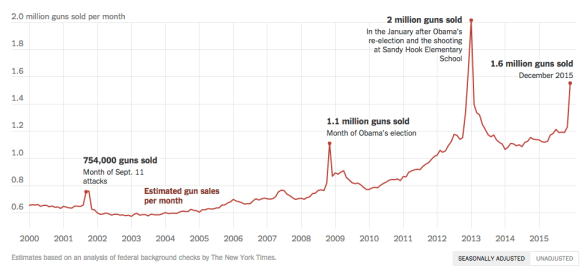
Obama and Guns in the United States

Screen Shot 2016-01-05 at 11.36.01 AM

More over at the New York Times.

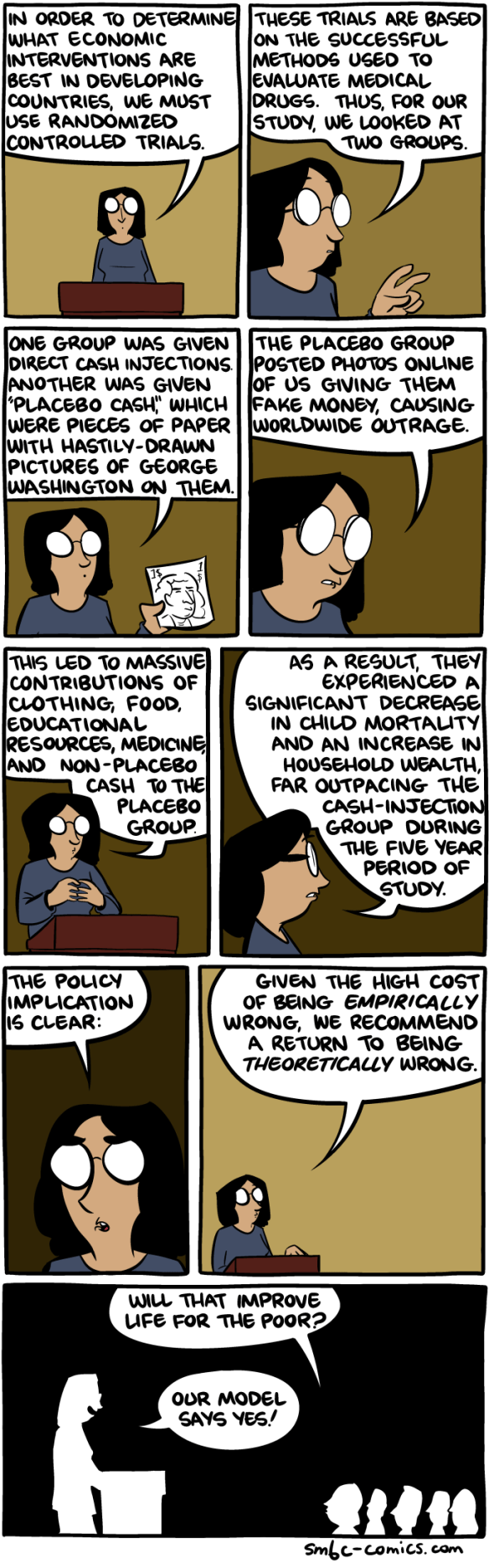
A comic on randomized controlled trials

rctcomic.png

H/T Tyler Cowen.

Harambee!! When did people stop caring about the optics of political action?

Screen Shot 2016-01-04 at 11.30.36 AM.png

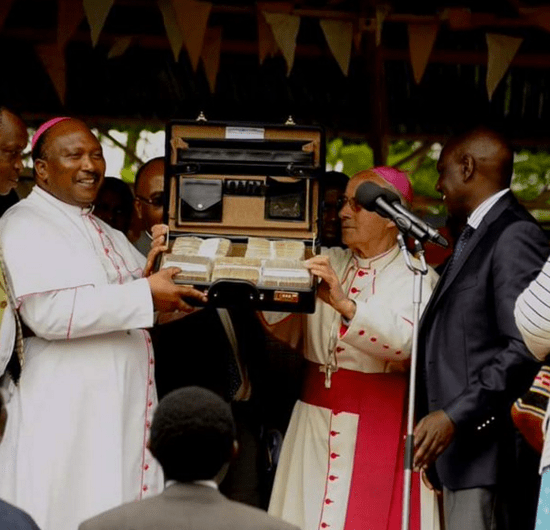
That is the Deputy President, William Ruto, at a Catholic church harambee. Late last year Mr. Ruto donated about Kshs. 17m (USD 170,000) over the span of two months.

May be I have watched too many crime shows. But bundles of cash in a briefcase sounds and looks bad. Even with Catholic bishops in the picture.

Also, Kenya has a pretty sophisticated financial system with a population that is the most banked in Africa. Why not write cheques for these big harambee contributions? Without casting aspersions on the character of the Hon. Deputy President, it might be good for the overall health of the Kenyan financial system if it was possible to keep track of such huge financial transactions. May be Governor Patrick Njoroge can require that any donations above Kshs. 10,000 must be in the form of a cheque. Commercial banks have incentives to lobby hard for this, no?

Of course there is also the possibility that some banks are actually benefitting from this cash-based charitable industry — by dabbling in the business of cleaning up would-be donations. Just a random thought.

Also, does the government of Kenya offer any tax incentives for charitable donations? And how big of an incentive would be needed for generous politicians to start keeping track of all their harambee contributions?

Thoughts on the Uhuru Kenyatta Administration in 2016

This is from Kenya’s leading newspaper, the Daily Nation, addressing the president:

We acknowledge the fact that it has been a tough year for leaders across the world — what with global economic upheavals and terrorists wreaking havoc everywhere.

However, we reject the almost criminal resignation and negligence with which your government has responded to our national crises this past year. We need not recount the number of lives lost, the losses incurred by businesses and opportunities wasted for millions of Kenyans due to the incompetence of the Executive.

With the exception of a few family businesses and tenderpreneurs who raked in billions of shillings — thanks largely to political patronage — everyone is losing money in this country.

More on this here. Read the whole thing.

This is pretty direct, and articulates a narrative of the middle class’ general dissatisfaction with President Uhuru Kenyatta’s administration.

It will also have very little political impact.

First, the Kenyan middle class (the primary audience of the Nation) is tiny. Second, the same middle class is as much a hostage of identity politics as is the rest of the country (this is true of even for the Nation‘s editorial team) — and on this score Kenya’s demographic profile favors Mr. Kenyatta in the next election scheduled for August next year (All indications suggest that a breakup of the Jubilee Alliance ahead of 2017 is a low probability event). Third, there still exists a wide chasm between the middle and upper middle classes and the vast majority of working class and rural Kenyans (with the former group perpetually wondering why the latter group doesn’t vote for its interests). This is why identity politics continue to dominate even cosmopolitan counties like Nairobi, Kisumu, Nakuru, and Mombasa.

That said, here are some quick thoughts on the Jubilee Administration as it enters its fourth year:

  1. President Uhuru Kenyatta is a politician: That means that he will invariably only take action that is consistent with his perceived political interests — getting reelected in 2017; keeping his political lieutenants and the wider Jubilee coalition happy; taking care of his core base; et cetera. Reformists who imagine that the president can operate outside of Kenya’s political system are bound to be disappointed. And those who equate Uhuru Kenyatta to Daniel arap Moi are missing the point by miles. Moi micro-managed. Kenyatta II delegates (Kibaki and Kenyatta I delegated, but with relatively better monitoring).
  2. The Kenyatta Administration’s biggest problem is too much delegation without sufficient monitoring: Much of the criticism of the Administration tends to be packaged in the language of “political will” — if only Kenyatta REALLY wanted to change things. The truth, however, is that the president faces both political and organizational obstacles to reform. Administrators continue to stonewall reform at will; and the administration remains too top heavy for its own good. What needs to happen is a radical restructuring to empower the equivalent of “mid-level managers” in the Civil Service. This should be accompanied by a shift from an internal police patrol system of monitoring (characterized by an extreme form of siege mentality) to a fire alarm system — Civil Servants should be judged by what the public thinks of their work. And those found wanting should be fired. Incentives matter. Focusing on these administrative and organizational reform agendas, rather than the politics of “political will” might be more amenable to the president (see 1 above) and could yield good results — especially if they come with sufficient political cover for the president.
  3. State House is not focused on any key signature policies: Most governments tend to be judged by a few signature achievements. President Kibaki will forever be remembered as Mr Infrastructure. Thus far Mr. Kenyatta has not staked his legacy on any pet projects or policies — most of the big investments he has made (in rail, roads, and power) are on Kibaki legacy projects. This makes it very hard for him to sell any “successes.” Back in 2013 I proposed housing, agriculture, and education as possible areas in which the president could make significant improvements while building on Kibaki’s legacy. The lack of focus at State House creates the impression of an administration that dabbles in everything but closes on nothing. It also allows Civil Servants to shirk a lot. They are doing everything, but have nothing to show for it. The president would be better served if he told his staff that he will no longer show up at the launching of anything, and instead will only be available for commissioning of fished projects. Incentives matter.
  4. Perception is everything in politics: Narratives matter in politics. They also tend to be sticky and self-fulfilling. It is going to be hard for the president to sell his successes — including in energy and electricity access and continued investment in Kibaki legacy projects — if the public is convinced that his administration is failing on every front.
  5. What is William Ruto’s strategy? President Kenyatta has had a rough three years. By his own admission the war on corruption and malaise in the public service has proven to be a lot harder than he imagined it to be. But he is a Kenyatta, and will most likely be reelected next August. Ruto, the Deputy President, hopes to succeed Kenyatta in 2022. However, Ruto’s electoral success will hinge on the Administration’s performance over the next seven years. Also, Vice Presidents typically take the fall for the boss if things go wrong. It is not clear to me how Ruto would be a successful candidate in 2022 if the Kenyatta II era is judged to have been a failure (especially since it will be judged against the Kibaki era). Given this reality one would expect Ruto to do his all to make the administration work for Kenyans, instead of relying solely on patronage. Kenya has changed a lot since 2010; and will have changed even more by 2022. Performance will matter a lot more then that it does now, even for rural Kenyans. I am constantly surprised that this fact does not seem to bother the man from Eldoret.
  6. What to look for in 2016: The management of Kenya’s public debt (which will impact movements in domestic interest rates, with knock on effects on growth); continued investment in key infrastructure, including transportation and power generation (by year end nearly all primary schools in the country will be on the grid, a pretty big deal); a rebound in tourism (he has his faults, but CS Najib Balala is probably the best man for the job at tourism); and continued growth in construction (which grew by 14.1% in Q3 of 2015). I remain cautiously optimistic about the handling of monetary policy. The Governor of the Central Bank, Dr. Patrick Njoroge, is probably the most respected technocrat in the country.

Historically, growth in the Kenyan economy tends to slow down by about 0.5 percentage points during election years. This time is probably not going to be different. That said, I expect the economy to remain on a positive growth trajectory (above 5% growth p.a.) going into 2017.

On the political front, the role of the Governors of Kenya’s 47 counties will the biggest wildcard. Many of these mini-presidents have amassed financial war chests and created networks that will prove consequential in 2017. True to Kenyan form, a number of them are already founding their own parties (the true District Parties are back, with cash). The balancing effects of governors (vis-a-vis established national politicians) creates a reality in which no one is fully “in charge” in the Jamuhuri, a fact that comes with all sorts of frustrations and fears. But sometimes that is a good thing. Especially when Kenyans and their indefatigable biashara habits are involved.

Lastly, expect to see more hard-hitting criticism of Mr. Kenyatta in the Kenyan press in 2016, much of it inspired by Kenya’s deep-seated Tanzania envy. If Tanzanian president John Magufuli maintains his reformist zeal there will be a lot of pressure on Mr. Kenyatta (#WhatWouldMagufuliDo?). Very few Kenyans will care to remember that the two presidents serve under two completely different constitutional and party regimes.

Happy New Year!

On oil and political risk in Uganda

The problem Uganda now faces has been made possible by the Bilateral Investment Treaty signed in 2000 with the Netherlands. According to the treaty, all Dutch investors in Uganda have the right to pursue arbitration before the World Bank court if they feel treated unfairly. The French company Total Uganda registered itself as a Dutch company.

This is known as the Dutch Sandwich; you put a Dutch company in between and then you become a Dutch investor. Which turns the treaty into a tool to drag a state before a tribunal of three men in Washington, having a commercial background and the ability to award billion dollar fines, without a possibility to appeal. If Uganda is condemned to a compensation but refuses to pay, the company has the right to seize Ugandan assets in the world.

…. A new interactive map made by Dutch journalists, with all known ISDS cases in the world, shows that ISDS is mainly used against developing countries. Sometimes because they clearly behaved badly towards an investor, but in other cases it’s more likely that it is used as a bargaining tool and a threat by multinational companies for better deals. Litigation costs amount to 8 million dollars on average, calculated the Organisation for Economic Co-operation and Development.

More on this here.

Total Uganda (or is it Total Netherlands?) is probably trying to dodge taxes in Uganda. But the Ugandan government lacks the means to effectively counteract this since it insists on keeping the details of its production sharing agreement with the French Dutch company secret. So there’s that.

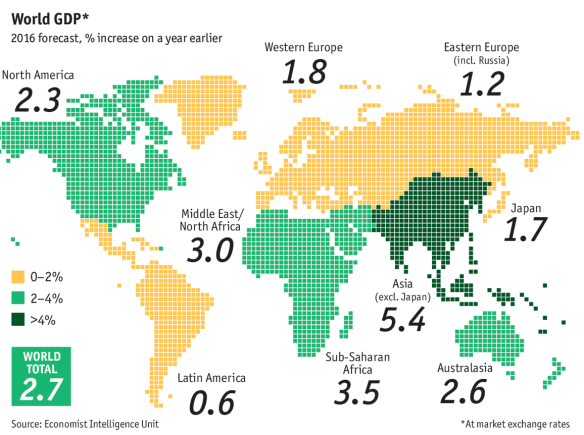
Global growth in 2016

HAPPY NEW YEAR!

Screen Shot 2016-01-01 at 4.10.10 PM

Via The Economist

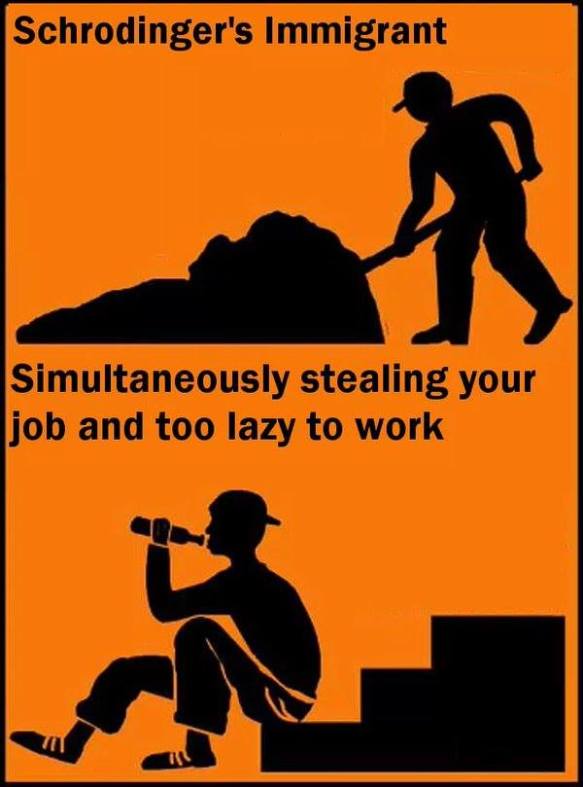
Schrodinger’s Immigrant

immigrant

H/T Marc Bellemare