Paul Staniland has a great piece over at Lawfare on the need to see post-war Pax Americana for what it has been:
Pushing back against Trump’s foreign policy is an important goal. But moving forward requires a more serious analysis than claiming that the “liberal international order” was the centerpiece of past U.S. foreign-policy successes, and thus should be again. Both claims are flawed. We need to understand the limits of the liberal international order, where it previously failed to deliver benefits, and why it offers little guidance for many contemporary questions.
…. analysts have persuasively argued that these accounts create an “imagined” picture of post-World War II history. Patrick Porter outlines in detail how coercive, violent, and hypocritical U.S. foreign policy has often been. To the extent an international liberal order ever actually existed beyond a small cluster of countries, writes Nick Danforth, it was recent and short-lived. Thomas Meaney and Stephen Wertheim further argue that “critics exaggerate Mr. Trump’s abnormality,” situating him within a long history of the pursuit of American self-interest. Graham Allison—no bomb-throwing radical—has recently written that the order was a “myth” and that credit for the lack of great power war should instead go to nuclear deterrence. Coercion and disregard for both allies and political liberalism have been entirely compatible with the “liberal” order.
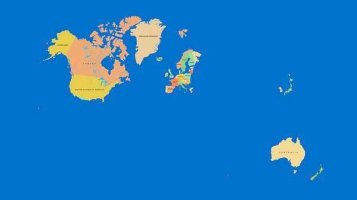 Staniland makes great points throughout the piece, especially when he looks at the so-called liberal international order from the perspective of people in the Middle East and Asia. The same would be true if he were to look at it from Africa. The Continent’s Mobutus, Bongos, and Biyas have always been loyal water-carriers for the “liberal international order”, which existed primarily to advance the interests of the “international community” as seen in the image above. For this reason, keen observers from countries not considered to be part of the “international community” have repeatedly argued that the current U.S. administration merely presents a congruence of American rhetoric and action on the global stage. For better or worse, the mystique is dead. Western Ambassadors can no longer claim the moral high ground to give lectures on democracy, human rights, and good governance while also facilitating corrupt contracts for natural resources and security assistance to dictators.

 …. In a display of unexpected warmth, Abiy Ahmed, Ethiopia’s new prime minister, embraced Issaias Afwerki, the ageing Eritrean dictator. In the Eritrean capital, Asmara, which no Ethiopian leader had visited since the war, the two pledged to normalise relations, putting an end to one of Africa’s most bitter conflicts. “There is no border between Ethiopia and Eritrea,” Mr Abiy declared in a televised address. “Instead we have built a bridge of love.”

 In recent years, the volume of heroin shipped from Afghanistan along a network of maritime routes in East and southern Africa appears to have increased considerably. Most of this heroin is destined for Western markets, but there is a spin-off trade for local consumption. An integrated regional criminal market has developed, both shaping and shaped by political developments in the region. Africa is now experiencing the sharpest increase in heroin use worldwide and a spectrum of criminal networks and political elites in East and southern Africa are substantially enmeshed in the trade. This report focuses on the characteristics of the heroin trade in the region and how it has become embedded in the societies along this route. It also highlights the features of the criminalgovernance systems that facilitate drug trafficking along this coastal route.
 kenopalo.com