You knew this was coming.
[youtube.com/watch?v=ur5fGSBsfq8]Notice that Greece wins, at least according to monty python.
You knew this was coming.
[youtube.com/watch?v=ur5fGSBsfq8]Notice that Greece wins, at least according to monty python.
Elise Huillery writes in the Journal of Economic History:
What share of French expenditure was allocated to West Africa? What share of West Africa’s revenue was provided by France? These two questions are crucial since scholars and politicians who claim colonization had a “positive role” make essentially the two arguments that the colonies benefited from imperial public investments and that mainland taxpayers sacrificed local investments for investments in the colonies.
I find that the costs of AOF’s colonization for the metropolis were low. From 1844 to 1957 France devoted on average 0.29 percent of its public expenditures to AOF’s colonization. Colonization of French West Africa was profitable for France to the extent that the impact on cumulative domestic production exceeded 3.2 billion 1914 francs. The military cost of conquest and pacification accounts for the vast majority (80 percent) of the average annual cost. The cost of central administration in Paris accounts for another 4 percent. So subsidies to AOF account for only 16 percent of the average annual cost, meaning that less than 0.05 percent of annual total metropolis public expenditures were devoted to AOF’s development.
For French West African taxpayers, French contribution was not as beneficial as has been argued. From 1907 to 19578 the metropolis provided about 2 percent of French West Africa’s public revenue. Local taxes thus accounted for nearly all of French West Africa’s revenue. These resources supported the cost of French civil servants whose salaries were disproportionally high compared to the limited financial capacity of the local population. Administrators, teachers, doctors, engineers, lawyers, and so on, were paid French salaries and got an additional allowance for being abroad. Thus, in the colonial public finance system, most revenues were collected on an African basis while being spent on a French basis. To illustrate this point, I show that colonial executives (eight governors and their cabinets) and district administrators (about 120 French civil servants) together accounted for more than 13 percent of local public expenditures.
The rest of this very fascinating paper is here.
Besides the headline finding, also interesting in the paper are: (i) the extent to which Paris subsidized private firms involved in the colonial enterprise; and (ii) the structure of the public finance system that allowed the AOF administration to borrow directly from French banks with the full backing of Paris (which allowed for lower rates). This might explain the persistence of the monetary relationship between former AOF territories and Paris in the form of the CFA and a common central bank (BCEAO).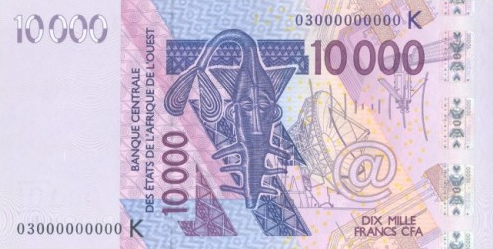
As I keep saying, Economic History is hot again. And sooner rather than later it’s going to become more apparent to more people that African political and economic history did not begin in 1960, or for that matter in 1884-5. And neither was it just about the unimaginably catastrophic Atlantic experience.
Howard W. French, associate professor at the Columbia University Graduate School of Journalism says:
In the final analysis, though, the reason to pay attention to Africa is not China. We need to get over the idea that one needs an excuse to pay attention to Africa. That, too, is a holdover from the Clinton era, when they came up with out-migration and the threat of epidemic diseases as an excuse to have a look in on the continent, perhaps as a response to Robert Kaplan. The best reasons to pay attention to Africa are inherent to Africa itself. They go to extraordinary demographics, with an upside at least as full of opportunity as the downside is full of risk. They go to the immense opportunity for both Africans and Americans represented by economic growth on the continent, which needs to be enhanced and broadened. They go to urbanization. And, finally, they go to matters of universal interest related to the environment, in other words, helping ensure that Africa, which is a late-starter in many economic processes, can both maximize its potential and get things right environmentally. As long as we cast our interest in Africa in negative frames, of security, or rivalry with China, we’ll continue to miss this hugely important big picture. Similarly, as long as we continue to play small ball, politically, calling an Africa policy the occasional gathering of “young entrepreneurs,” hosting four or five African leaders together at once for a photo op at the White House, and making a mere one or two visits to the continent at the presidential level per term, we’ll be failing to engage the continent’s potential and simply missing out.
As usual, French is spot on. You can read the whole Q&A with Laura Seay on his latest book here.
 kenopalo.com