Can you train people to be financially competent?

Margaret Miller and co-authors try to answer this question in a new paper in the World Bank Research Observer. The paper does a meta-analysis of 188 studies conducted in Africa, Asia, Latin America, the United States and Europe.

Are there approaches to teaching financial skills or modifying financial behaviors through educational programs, training, or other outreach activities that have reliable, positive results? The objective of this paper is to analyze the evidence of impact for financial literacy and capability interventions through a systematic review of the evidence. The review includes the use of meta analysis, a statistical technique that pools data from different studies to test for significance in the enlarged sample of observations this creates. This paper is different from most previous narrative reviews in that it focuses exclusively on research that analyzes the impact of financial education interventions. Key characteristics of 188 papers are coded to create a rich data set with the characteristics of the interventions, as well as statistical information on the impact of programs on outcome variables such as general savings, retirement savings, and credit performance. This data set is then used for a descriptive analysis of the literature and for empirical tests using meta-analysis.

…. we find that financial education can affect financial outcomes such as savings and improved record keeping, but does less well in preventing negative outcomes such as loan defaults. These results suggest a role for financial education in improving behaviors where individuals have the ability to exert greater control. Arguably, loan default is imposed by external agencies (banks or other financial providers), and hence can only be avoided secondarily or over the long term if financial education leads to more prudent borrowing decisions. Savings and record-keeping, in contrast, are immediate and primary decisions that can be acted upon by targeted consumers.
More on this here.

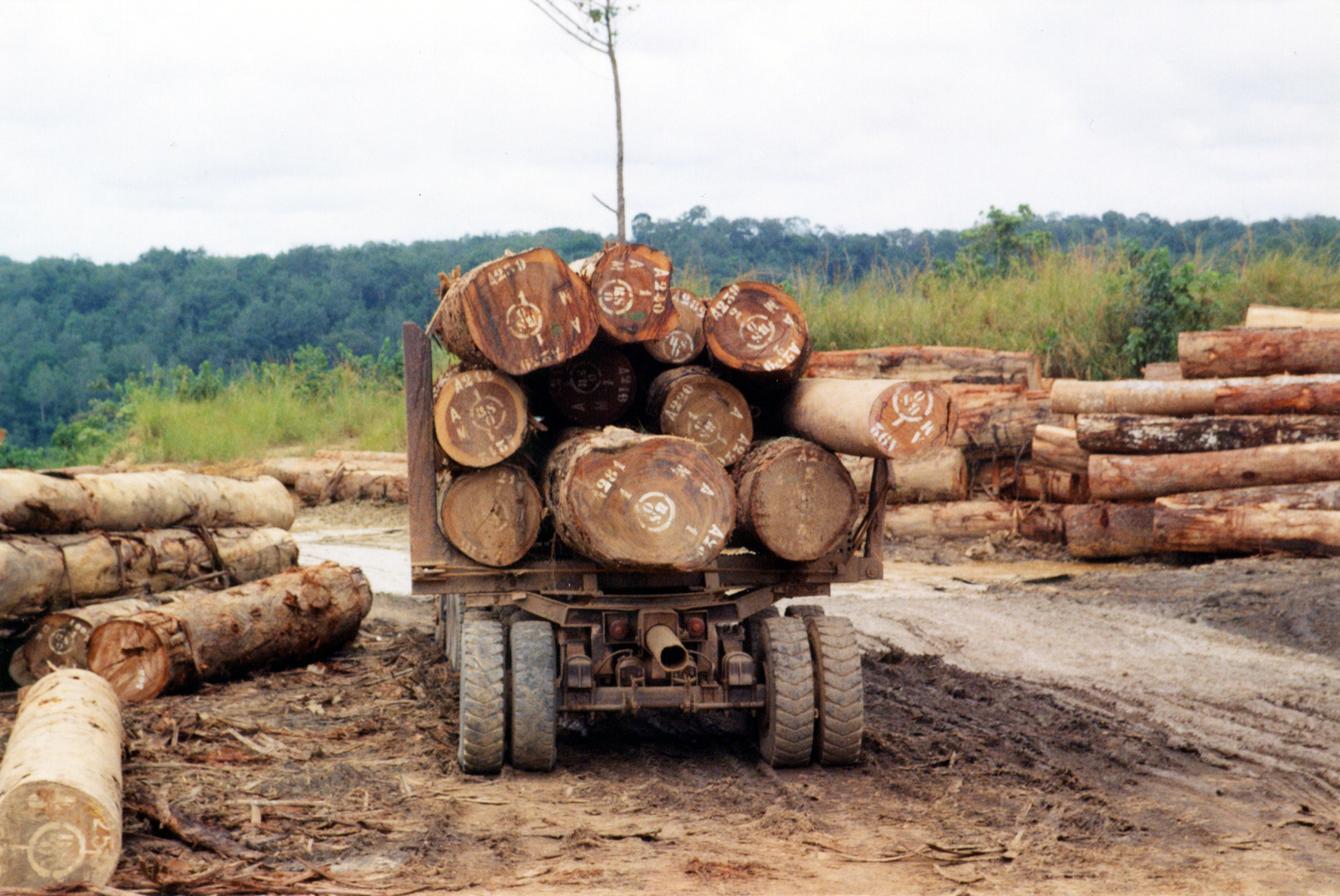
European logging firms are financing rebels in CAR

According to Global Witness:

CAR’s trade in timber – the country’s number one official export – has assisted the war effort. Logging companies have paid millions of euros to armed groups to ensure that they can continue operating. Under the cover of conflict they have also been stripping out CAR’s rainforests.

Throughout this period, European companies have continued to offer CAR timber for sale on EU markets, which Global Witness believes violates the EU’s flagship timber law, the EU Timber Regulation.  China is another major market for CAR wood, but has no regulations in place that could help halt the import of illegal or conflict timber.

[youtube.com/watch?v=QAVhfaX78g4]

At some point in the video an officer in one of the French firms involved says:

“But it’s Africa. It’s so common we don’t pay attention. It’s not really a concern. It’s not a war where they attack white people. It’s not a war we have to avoid.”

This honest assessment of the situation in CAR highlights one of the reasons why wars in places like CAR or Liberia and Sierra Leone in an earlier time tend to be so intractable.

Source: Wikipedia

Source: Wikipedia

Research shows that sources of finance determine the industrial organization of rebel groups and their propensity to commit atrocities against civilians (see also here). The ready availability of shady firms like Tropica-Bois and Société d’Exploitation Forestière Centrafricaine (SEFCA) make it possible for rebel leaders to raise funds for their war effort in the international commodity market. This in turn makes it possible for them to buy arms and recruit locally, but without maintaining strong ties with the very communities in whose name they raise arms (call it the rebel’s resource curse). The resultant incentive system is one in which CAR warlords can obtain material benefit from the rents on illicit trade without capturing Bangui, as long as their maintain access to the global market of timber.

The Global Witness report adds to complaints about French intervention in the ongoing CAR conflict. In April news broke that more than a dozen French soldiers abused children in Bangui in exchange for food. The six children who came forward with the complaints were aged between eight and 15 and at the time lived in a center for displaced people in Bangui. The centre was under the care of French peacekeepers.

Tropica-Bois must be paying a lot of taxes to the French treasury, or oiling the electoral machines of key French politicians.

According to the UN Comtrade database  in 2013 wood comprised 40% of all commodity exports from CAR, second only to diamonds (45.8%).